A luxury tent under a sky full of stars sounds like the perfect desert escape, until the doubts creep in. Will the summer heat ruin everything? Will you freeze once the sun goes down? And how far ahead do you actually need to book before every good site is gone? These are the questions that stop most travelers from turning the idea of glamping in the Mojave desert into a real reservation.
The good news is that all of these worries have straightforward answers, as long as you plan around the desert’s rhythms instead of against them. This guide walks through the whole trip, starting with when the Mojave is at its best and what you should expect to pay per night. From there, we cover where to base yourself near Joshua Tree, how far in advance to book, what to pack for dramatic temperature swings, and how to shape your days around park time, stargazing, and slow desert mornings. A quick summary at the end pulls it all together.
When to Go: Reading the Mojave’s Seasons
The Mojave Desert has two genuinely comfortable windows each year, and almost everything about planning a glamping trip flows from them. March to May and October to November are the sweet spots, with daytime highs typically in the 70-85°F range and evenings cool enough to enjoy a fire or a soak in a hot tub without melting. Wildflowers add an extra bonus in spring, and fall brings crisp, clear skies that photographers chase year after year.
Summer is a different story. From June to September, temperatures regularly climb above 100°F, which makes canvas tents and off-grid sites risky rather than romantic. Many glamping operators either discount their rates heavily or close entirely during these months, so if you do try a summer stay, expect reduced services and check directly with the host about shade, cooling, and water.
Winter: Quiet, Moody, and Cold at Night
Winter stays from December to February are the desert’s best-kept secret for atmosphere. Campgrounds and glamping sites are quiet, the light is soft, and crowds at nearby attractions thin out considerably. The tradeoff is the cold: nights can fall below freezing, so confirm that your tent or dome has a reliable heat source before you commit. If you sleep warm and don’t mind frost on the canvas in the morning, winter can be the most peaceful season of all.
For most first-time visitors, the shoulder seasons are the safest bet. You get warm days, usable evenings, and the full range of sites open and operating.
What Glamping in the Mojave Desert Costs
Glamping in the Mojave Desert spans a wide price range, and knowing the tiers before you search helps you match a stay to your budget instead of falling for the prettiest listing. Standard canvas tents and rustic cabins typically run $150-$400 per night. These are the workhorses of desert glamping: real beds, often solar power or shared bathhouses, and plenty of character without the frills. For many travelers, this tier is the sweet spot — you get the dark skies and desert quiet without paying for extras you barely use.
At the top end, premium domes, Airstreams, and stargazing suites reach around $600 per night. These stays usually add features like panoramic windows, private bathrooms, kitchenettes, and outdoor soaking tubs positioned for the night sky. The premium is real, but so is the difference in experience, especially if you plan to spend evenings at camp rather than out on the trails.
What Drives the Price Up or Down
- Weekend timing: Rates spike sharply on spring and fall weekends, when demand peaks and sites fill first. The same tent can cost noticeably more on a Saturday in April than on a Tuesday.
- Midweek savings: Booking Tuesday through Thursday often saves 20-30% compared to weekend rates, which can be the difference between a standard tent and an upgrade.
- Off-grid setups: Sites without grid power or running water usually sit at the lower end of the range, while fully plumbed domes and trailers command the top rates.
- Seasonal discounts: Some hosts cut prices in summer or winter to attract hardier guests, so flexible travelers can find deals outside the peak windows.
Always check what’s included before comparing prices. A $200 tent with no water supply and a $350 dome with a private bath are not the same product, and the cheaper option isn’t always the better value. Ask hosts about heating and cooling, potable water, and bathroom access, then weigh the total against what you’d realistically use. A bare-bones site can be a bargain for self-sufficient campers, while a family or first-time glamper may find the mid-range dome worth every dollar.
Where to Base Yourself: Joshua Tree, Yucca Valley, and Beyond
Where you base yourself shapes the entire trip, because the Mojave is vast and driving adds up fast. Joshua Tree and Yucca Valley offer the widest choice of glamping stays and the quickest access to the national park, which makes them the natural first stop for most travelers. You’ll find everything from simple canvas tents to high-end domes here, plus grocery stores, coffee shops, and restaurants for resupply days.
Staying near the park entrances matters more than many first-time visitors expect. Most glamping hubs sit roughly 30-60 minutes from the park’s entrances, and once you’re inside Joshua Tree National Park, distances between trailheads and viewpoints stretch further still. A base close to your target entrance can easily save you an hour or more of round-trip driving each day, which translates directly into more trail time and less windshield time.
Going Farther Out for Darker Skies
If stargazing is your priority, consider the remoter parcels around Pioneertown and Landers. These areas trade convenience for some of the darkest skies in the region, with less light pollution from town and a stronger sense of isolation. The tradeoff is real: you’ll drive farther for groceries, restaurants, and park access, and some sites are genuinely off-grid with limited water and power.
A practical approach is to match your base to your trip style. If you plan to spend full days hiking in the park, stay close to Joshua Tree or Yucca Valley. If your dream is lying in a hammock under the Milky Way with nowhere to be, the quieter outskirts will reward you. Some travelers split the difference by booking their first night in town and moving farther out for the rest of the stay.
Booking Timeline and How to Lock In the Best Sites
Glamping around Joshua Tree is no secret anymore, and the best sites — the ones with real views, outdoor showers, and a proper stargazing deck — go fast. The most photogenic domes and Airstreams are often reserved weeks in advance, especially by travelers chasing the same handful of standout properties. A little planning makes the difference between snagging that dome with the panoramic window and settling for whatever is left. Here is how to work the booking process in your favor.
- Book spring and fall weekends 2-3 months out. These dates are the peak of demand, when the weather is at its best and rates climb. If you wait until a few weeks before, expect thin pickings or steep prices.
- Target midweek dates in shoulder months for the easiest wins. A Tuesday or Wednesday in a quieter stretch of the season is typically the cheapest and most available combination, and you will share the desert with fewer people too.
- Read the cancellation terms before you pay. Desert trips get reshuffled by weather, work, and road closures, so know whether you can move your dates or get a refund, and how far in advance you need to decide.
- Confirm the climate and water setup. Ask specifically whether the unit has heating and cooling — nights can get genuinely cold and afternoons hot — and whether drinking water is provided on site. Off-grid properties vary a lot, and this detail changes how you pack and plan.
One more practical tip: book directly with the host when you can, since it is usually easier to sort out questions about access roads, check-in, and amenities before you arrive. Dirt roads in this region can be rough after rain, and a host who knows the route can save you a stressful arrival. And if your first-choice dates are gone, ask about nearby openings — hosts often know their own calendar better than any listing page does, and some will flag last-minute cancellations if you ask politely.
Packing for 30-40 Degree Desert Swings
Desert packing is all about one word: layers. Even in the pleasant shoulder months, a day that feels like a warm spring afternoon can end with a night that is 30-40°F colder. You will want to add and shed clothing all day long, and a light jacket you can stuff in a daypack earns its place quickly.
Beyond clothing, think about the ground, the sun, and the dark. The Mojave is rocky underfoot, the sun is intense even when the air is cool, and most glamping sites sit far from town lights — wonderfully dark, but pitch black once the sun drops. Bring more water than you think you need, especially if your site is off-grid, since many have limited or no potable supply on site.
- Layers you can add and remove: a base layer, a warm mid-layer like a fleece, and a windproof outer jacket cover the full swing from afternoon warmth to a chilly evening around the fire pit.
- Sun protection: a wide-brimmed hat, sunglasses, and sunscreen with a high SPF — the desert sun reflects off pale rock and sand, and overcast days can still burn you.
- Closed shoes with grippy soles: trails and campsites are full of sharp rock, cactus spines, and uneven ground; sandals will not cut it.
- A headlamp with fresh batteries: paths between tents and bathrooms are unlit at most sites, and a headlamp keeps your hands free for the gate latch and the water jug.
- Extra water, carried in: plan on more than a gallon per person per day for drinking and basic needs, and confirm with your host how much is available at the site.
A few small extras worth tossing in: lip balm, moisturizer, and a reusable water bottle you can refill. The dry air is no joke, and cracked lips are the most common complaint guests bring home from the desert.
Building Your Days: Park Time, Stargazing, and Slow Mornings
The biggest mistake first-time desert visitors make is treating the Mojave like an ordinary destination — sleeping in, arriving at the park at noon, and wondering why everything feels harsh. The desert rewards people who work with the light, not against it.
Time the park around the sun
Plan your Joshua Tree visits for early morning or late afternoon, when the light is soft, temperatures are comfortable, and the rock formations and Joshua trees photograph beautifully. Midday glare flattens the landscape, drains your energy, and sends you searching for shade. A typical good day looks like this: enter the park early, hike while it is cool, head back to camp for a long lunch and a rest, then return in the late afternoon for another trail or a scenic viewpoint at golden hour.
Evenings and slow mornings are the real prize
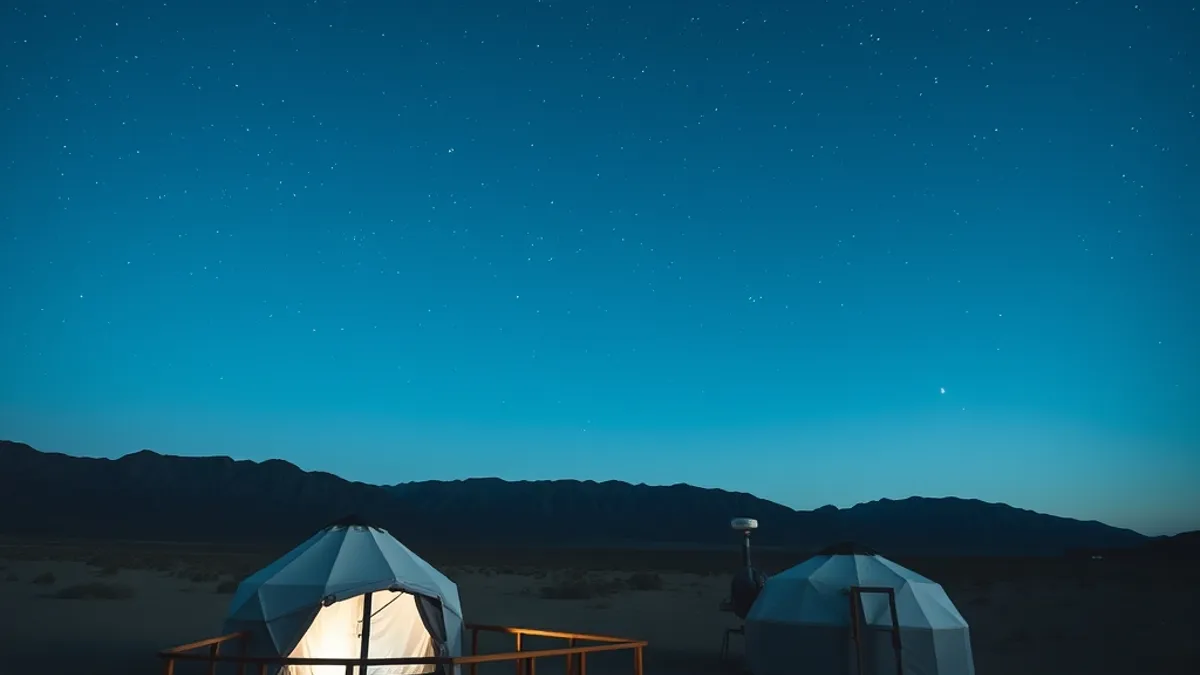
Save your evenings for stargazing. The Mojave’s dark skies are one of the core reasons to glamp here rather than stay in a hotel, and on a clear night the Milky Way is visible to the naked eye. Give your eyes twenty minutes to adjust, skip the phone screen, and simply lie back — most sites have a fire pit or lounge chairs positioned for exactly this.
And keep at least one unhurried morning at camp. Sunrise light turns the desert a soft pink and gold, wildlife is active, and the quiet before the day starts is the highlight many guests miss because they rush off to the park. Brew a coffee, wrap up in a blanket, and watch the light move across the rocks. That slow hour will likely be what you remember most.
Your Mojave Glamping Trip at a Glance
A glamping trip in the Mojave comes down to three simple decisions: when to go, where to stay, and what to pack. Aim for March to May or October to November, when daytime highs sit in a comfortable 70-85°F range and the worst heat and freezing nights are behind you. Book 2-3 months out for spring and fall weekends, and budget between $150 and $600 per night depending on how much luxury you want.
Base yourself near Joshua Tree if quick park access matters most, or choose a remoter parcel for darker skies. Pack for temperature swings of 30-40°F between day and night, and plan your days around early and late desert light rather than midday glare. Get those pieces right, and the extreme-heat and cold-night worries that hold most people back simply fade away. If this helped you plan your trip, leave a comment or share the article with a fellow traveler.