Most travelers have done it: hung the do-not-disturb sign on the door and headed out for the day without a second thought. Yet that small plastic hanger has a bigger impact than many guests realize. A hotel’s do-not-disturb policy does more than block a vacuum cleaner for an hour—it reshapes the entire housekeeping schedule, can delay your fresh towels by a full day, and interacts with safety checks in ways that surprise people.
This article explains what a do-not-disturb policy actually covers, how housekeepers reshuffle their routes when rooms are skipped, and the situations where hotels may still enter despite the sign. You’ll also learn how to signal when you do want service, some etiquette tips that keep things smooth, and how to choose hotels with flexible housekeeping policies in the first place. By the end, you’ll know exactly when to hang the sign—and when to take it down.
What a Do-Not-Disturb Policy Actually Covers
When you hang a DND sign, you’re telling the hotel that you decline all non-essential entry to your room. That includes the daily cleaning service, towel and linen replacement, and turndown service in hotels that offer it. Housekeeping will simply pass your door by, no matter how much the room might need it.
Here’s the part that catches many guests off guard: in most hotels, the sign applies to the whole day, not just the moment the housekeeper walks by. Standard housekeeping service runs roughly 9:00-16:00 in most full-service hotels, and the team usually works through each floor once. If your sign is still up when the housekeeper reaches your room, there is typically no catch-up visit later that day. Your next chance at service is the following morning, assuming the sign comes down.
Door hanger versus digital DND
Not all DND signals work the same way. The classic door hanger is still the most common, but many modern properties let you activate a digital DND setting from the room phone, the in-room tablet, or the hotel’s app. The effect is similar, though digital systems can be easier for the front desk to track and clear. Some properties treat the two differently—for example, a digital setting may automatically reset at checkout time while a physical hanger stays put until someone removes it. If you’re unsure which system your hotel uses, a quick question at the front desk at check-in saves confusion later.
How Housekeeping Adjusts Its Schedule
From the housekeeping side, a DND room is a skipped room, not a forgotten one. Housekeepers usually clean 12-18 rooms per shift, so every skipped door frees up real time in a schedule that is already tight. That time gets reallocated to the remaining rooms on the list, which often means the other guests on the floor get more thorough service than they otherwise would.
Why the skipped room rarely gets a second visit
Cleaning order is usually planned floor by floor, and the route is set at the start of the shift. Once the housekeeper has moved on to the next floor, backtracking to your room would throw off the timing for everyone else. That’s why a DND sign left up in the morning typically means no service until the next day—the schedule simply doesn’t allow a return trip.
The good news is that you don’t have to choose between total privacy and leaving DND up all day. If you want service later, call the front desk and request a specific cleaning window. Guests can often book a 1-2 hour block that fits their plans, and the housekeeping supervisor will slot your room into the route accordingly. This approach gets you a clean room while still guaranteeing you an undisturbed morning or afternoon. It’s a far better system than the all-or-nothing door hanger, and front desk staff are generally happy to arrange it.
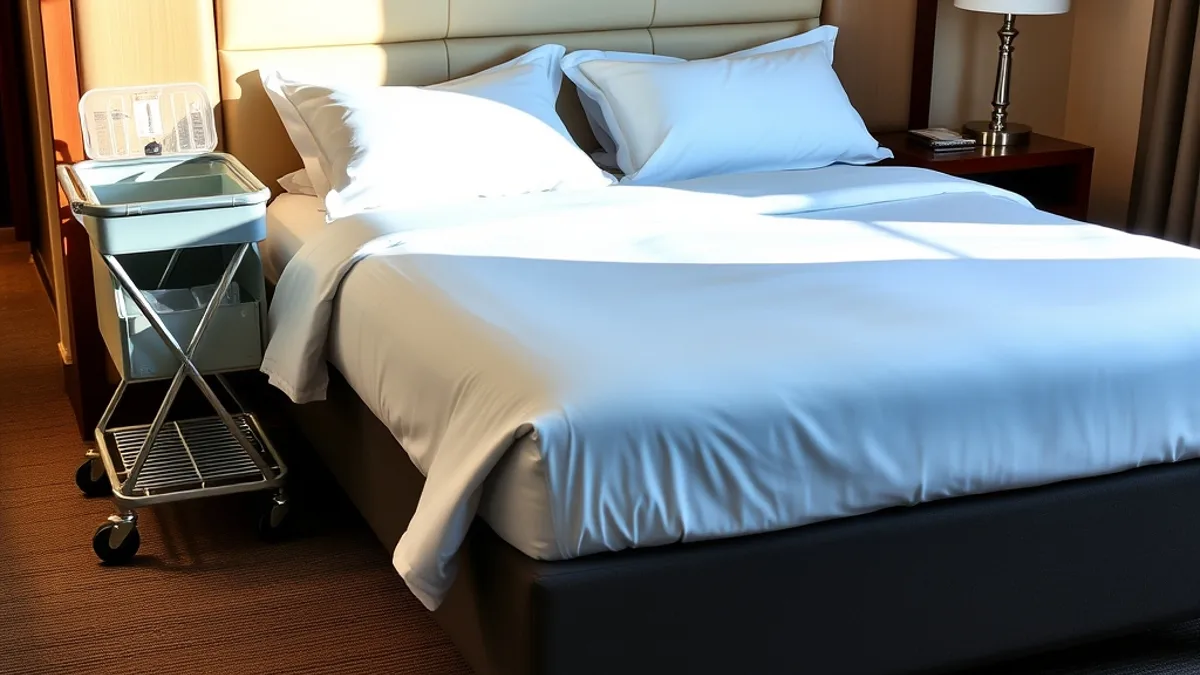
When Hotels May Still Enter a DND Room
A do-not-disturb sign is a strong signal, but it is not absolute. Hotels retain the right to enter a DND room in specific situations, and knowing them helps you understand both your privacy and your safety. The most common example is the welfare check: hotels commonly check on rooms displaying DND for 24 hours or more, because an unbroken sign over a full day can indicate a guest who is unwell or worse. A quick knock and phone call are usually all it takes to clear the room.
Emergency maintenance is another clear override. If the room above yours springs a water leak, or the fire alarm system needs access to your room’s sensor, the sign comes second to the problem. In these cases, staff should still knock and announce themselves before entering whenever the situation allows.
There are also situations driven by local rules rather than hotel preference, and the front desk should disclose these when you check in:
- Security sweeps: In some jurisdictions, hotels are required to run periodic security checks of occupied floors, and staff may need to enter rooms as part of that process even with a DND sign displayed.
- Mandated inspections: Local authorities or licensing bodies can require entry for fire safety, health, or equipment inspections that the hotel cannot legally refuse or reschedule around your sign.
If entry rules matter to you, ask at check-in how the property handles DND rooms and what local requirements apply. A transparent front desk will explain the policy without hesitation.
How to Signal When You Do Want Service
A do-not-disturb sign tells housekeeping to stay away, but most hotels offer the opposite signal too, and knowing how to use it well makes a real difference. If your room looks like a tornado hit it and you actually want fresh towels, a made bed, or a full clean before dinner, you need to make your wishes visible and specific rather than hoping someone guesses right. Here is how to do it well.
- Flip the signal. Many hotels provide a “please make up my room” card or door hanger that works as the direct reverse of DND. Hang it on the outside handle before you head out, and the housekeeper will treat your room as a priority during the standard 9:00-16:00 service window.
- Tell a human what you need and when. If you want fresh towels by mid-afternoon or a bed change before dinner, say so at the front desk or mention it directly to your housekeeper. You can often request a specific cleaning window in 1-2 hour blocks, which makes the timing predictable. A precise request, such as towels only or a full clean, gets handled far more reliably than a vague hope.
- Set a schedule for longer stays. If you are in the room for a week or more, agree on a fixed routine with housekeeping, for example a full cleaning every second day during the standard service hours. This gives the staff a predictable plan and gives you a room that is always clean when you want it to be.
The main idea is simple: housekeeping responds to clear signals, not guesswork. A housekeeper working through a dozen or more rooms per shift has limited time, so a hung card or a quick word at the desk puts you on the list at the right moment. Whether you use the reverse hanger, a scheduled block, or a standing arrangement, you will get service that fits your day instead of interrupting it.
Etiquette and Practical Tips for Guests
That little door hanger does more than keep people out of your room. Housekeepers plan their day around the rooms on their list, usually somewhere between 12 and 18 of them per shift, so how you handle your sign affects more than just your own room. A little courtesy goes a long way, and it often means faster, friendlier service for you too.
The most common mistake is leaving the sign up by accident. If you hang it while getting ready and then head down for breakfast, the housekeeper will pass your door and move on, and your room may not be touched again that day. Another frequent issue is using DND as a shield against maintenance visits you would rather avoid. That rarely works in your favor and can create real problems for the property.
- Take the sign down before you leave in the morning. If you want the room serviced while you are at breakfast, remove the hanger on your way out so the housekeeper can enter during the normal morning rounds rather than skipping you entirely.
- Never use DND to block a legitimate maintenance visit. If there is a reported leak, a smoke detector check, or an air conditioning repair in your room, call the front desk and arrange a time that suits you instead of leaving the sign up and hoping the issue disappears.
- Tip separately for off-schedule service. If you ask for cleaning outside the standard 9:00-16:00 block, leave a tip in cash marked for housekeeping, since the staff member who comes back for you is often rearranging their own workload to do it.
Treat the hanger as a scheduling tool rather than a barrier, and both you and the housekeeping team will have a smoother stay. When you genuinely want privacy, that is exactly what it is there for; when you do not, a quick flick of the wrist on your way out keeps everything running the way the team expects.
Choosing Hotels with Flexible Housekeeping Policies
If flexible housekeeping matters to you, the type of property you book makes a real difference. Large resorts often run on rigid schedules, with fixed cleaning windows and little room to adjust. Boutique inns and small residences tend to work the other way around: with fewer rooms to manage, the staff can usually clean when it suits you, and a quick word at the desk is often all it takes. If you want a sense of how relaxed a small-scale property can feel, look at these quiet wooded retreats near Clervaux for an example of guest-led service done well.
How upscale hotels handle it
Upscale properties have a built-in advantage when it comes to do-not-disturb flexibility. Because they typically offer turndown service in the evening, usually between 17:00 and 20:00, the housekeeping team effectively gets two chances to service your room. If you keep DND up all morning while you work or sleep, the evening crew can still refresh the room later, so a skipped morning rarely means a skipped day.
Questions to ask before you book
The simplest approach is to ask at the time of booking how the property handles DND. Find out whether a skipped morning can be caught up the same day, whether they offer a request card for reverse service, and whether you can book a specific cleaning window. A front desk that answers these questions easily is usually a good sign that the whole operation runs with the guest in mind.
Wrapping Up the Do-Not-Disturb Policy
That little door hanger does more than most guests realize. Once it goes up, cleaning pauses for the entire day, and the housekeeper simply moves that time to the other 12-18 rooms on the shift list. The sign also does not make the room off-limits forever: hotels may still enter for safety checks after 24 hours of continuous DND, or immediately in an emergency such as a leak or alarm.
The good news is that you never have to choose between privacy and a tidy room. A clear “please make up my room” signal, or a simple request at the front desk for a 1-2 hour window, gets you service on your terms without leaving the sign up all day. If this helped you decode the DND system, leave a comment or share the article with a fellow traveler.