You’ve seen the photos: a canvas tent tucked into its own patch of woodland, no neighbor in sight, steam curling from a private hot tub. Then you arrive, unzip the door, and realize the next unit sits just a few meters away with a clear view straight into your deck. It’s one of the most common letdowns in glamping, and it usually comes down to layout rather than luck.
This guide to glamping privacy explains how site design actually works, from why orientation and terrain matter more than raw distance, to typical spacing between units, the most common layout styles, and how to judge a site before you book. We’ll also look at how the season changes how private a site feels, which extra features are worth paying for, and how to choose a stay that matches the photos.
Why Glamping Privacy Depends on Layout, Not Just Distance
Ask a site owner how far apart the units are and you’ll get a number. Ask how the units are angled and you’ll get a much better answer. A tent pointed away from the main path, the fire pit and the communal lodge can feel genuinely secluded even at 20-30 meters, because nobody ever walks through its sightline. Orientation blocks views in a way that raw spacing alone never does.
Clusters versus scattered sites
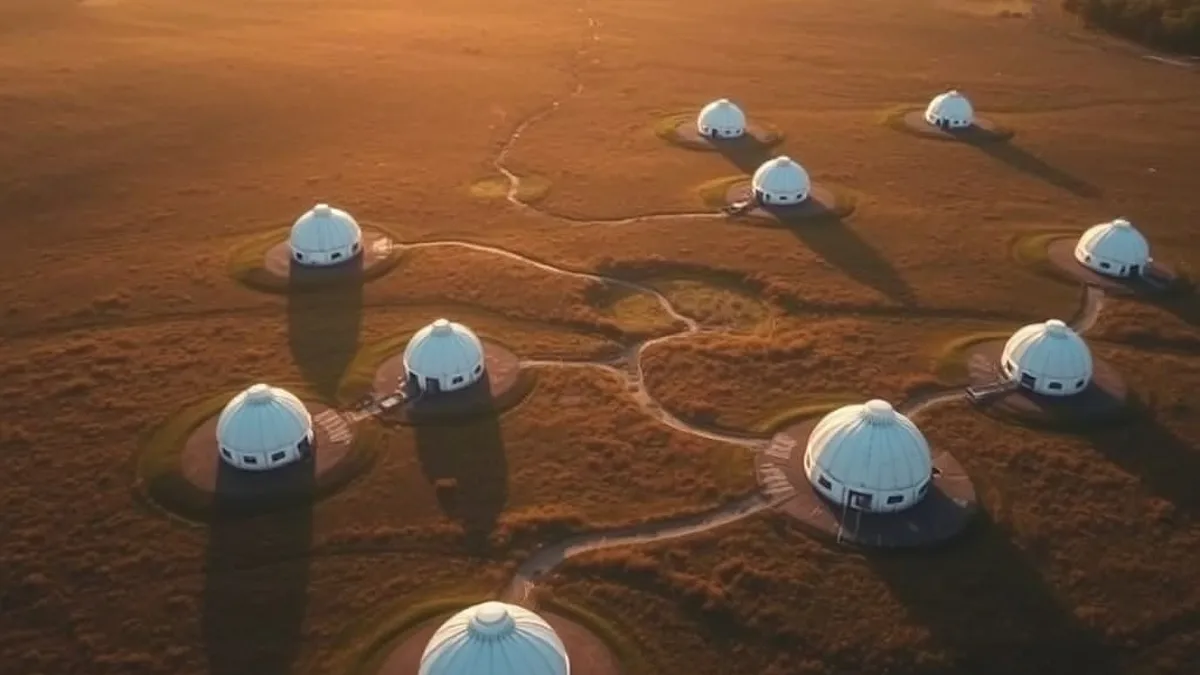
The two broad approaches to layout produce very different experiences. Hub-style sites group tents around a shared lodge or kitchen, which makes them sociable and easy to run, but you’ll see and hear neighbors all day. Dispersed sites hide each unit in its own clearing, connected by winding paths, so you might go a whole stay without spotting another guest.
Terrain does the rest of the work. A unit set on a slope above the path, tucked behind a tree line or dropped into a natural hollow gets screening for free. The same distance across a flat, open field offers no protection at all, since anyone strolling past has a straight line of sight. When comparing sites, look at what sits between units, not just how many meters separate them.
Typical Spacing Between Glamping Units Explained
So how far apart should units actually be? On well-designed sites, glamping tents typically sit 20-50 meters apart. That’s enough for real visual separation: you won’t watch your neighbor eat breakfast, and they won’t watch you. What it won’t give you is total sound isolation. Conversation, music and children playing all carry across that kind of distance, especially on still evenings or across open ground, so if quiet matters to you, treat spacing as a floor rather than a guarantee.
At the top end, premium secluded pitches can sit 100 meters or more from the nearest neighbor. These are usually the units sites market hardest, often shown in their best photos and named individually on the booking page. They tend to carry a booking premium because genuinely isolated pitches are limited on any given property, and once they’re gone, the remaining options are noticeably closer together.
Screening changes the math considerably. A hedgerow or dense tree line between two units can substitute for roughly 10-15 meters of open distance, which is why two sites with identical measurements can feel completely different on the ground. When you compare sites, ask what sits between pitches, not just how far apart they are.
- Vegetation type matters: an evergreen hedge or thick conifer belt screens year-round, while a deciduous tree line thins out noticeably outside summer, leaving gaps you didn’t see in the booking photos.
- Screening only works in the right direction: planting between two units does nothing to block the view from a path that runs past your deck, so check where the planting sits relative to walkways and shared areas.
- Distance and screening compound: a 25-meter gap with good planting can feel like 40 open meters, which is why some mid-sized sites outperform larger ones on privacy despite having less room to work with.
Common Glamping Layouts and How They Feel On Site
Layout style shapes your stay as much as spacing does. Two sites can both place units 20-50 meters apart, yet one feels like a private retreat and the other like a village. The difference usually comes down to one of three common arrangements.
Ring layouts place units around a central fire pit, lodge or communal kitchen. They maximize community: everyone shares the same space, guests chat across the circle, and it works brilliantly for groups booking a whole site. For couples, though, it minimizes privacy, because every unit faces inward toward the same shared activity.
Linear layouts run units along a trail, ridge or shoreline. Each unit gets a one-sided view, often out over water or open country, with no neighbor directly opposite. You’ll still see guests passing along the trail, but nobody looks straight into your living space.
Scattered layouts in woodland or on hillsides offer the strongest privacy of all. Each unit sits hidden in its own clearing, connected to the rest of the site by winding paths, so you can stay for days and barely register other guests.
- Ring layouts vary by unit position: the units at the outer edge of the ring, with their backs to open countryside, feel noticeably more private than those flanking the lodge.
- Linear layouts depend on trail traffic: a shoreline row stays quiet if the path is for guests only, but a unit beside a public footpath loses much of that one-sided seclusion.
- Scattered sites trade convenience for calm: expect a longer walk from parking, and ask whether luggage is ferried to your clearing or you carry it yourself.
How to Judge Privacy Before You Book
Photos on a booking page rarely tell you how private a pitch actually feels. A wide-angle shot can make a packed field look like a lonely hillside, and a carefully cropped gallery will never show the car park three steps from your deck. The good news is that you can find out before you pay, with a little digging and a couple of direct questions. Operators know which of their units are genuinely secluded and which sit in the thick of the action, so a short email exchange often reveals more than any marketing image. Here is how to separate genuinely secluded sites from tightly packed ones.
- Study the site map or ask for a pitch plan. Many operators publish a layout on their website, and those that don’t will often email one on request. Look for units set well back from car parks, reception and communal kitchens, since these are the areas with the most foot traffic. A tent near the parking area may be technically spacious but will see every arrival and departure, and you will hear car doors from breakfast onwards.
- Read reviews with specific words in mind. General praise like “lovely stay” tells you little about privacy. Search reviews for phrases such as “overlooked”, “close together” or “felt private” — these reveal how the layout performs in practice, especially when reviewers return in peak season when every unit is occupied. Multiple mentions of feeling overlooked are a warning sign that no marketing photo will fix.
- Ask the operator directly. Email or call and ask two things: how far your chosen unit sits from its nearest neighbor, and whether the screening between pitches is planted or natural. Established tree lines and hedgerows block sightlines far better than young, newly planted shrubs that will take years to fill in. A confident, specific answer is a good sign; a vague “all our pitches are private” usually is not.
- Book 3-6 months ahead. The most isolated pitches are usually the first to go, especially at smaller sites with only a handful of units. Booking 3-6 months ahead gives you first pick before those secluded spots are allocated to early birds, and it also gives you time to swap units if the operator’s answers raise doubts.
None of these steps takes more than a few minutes, and together they paint a far more accurate picture than any gallery of carefully angled photographs. Check the map, scan the reviews, put the key questions to the operator, then reserve early. A short email exchange now can save you a disappointing stay later — and it costs nothing but a few minutes of your time.
Season and Timing Effects on Glamping Privacy
Even the best-designed layout changes character depending on how full the site is. A tent positioned 40 meters from its neighbor feels completely private when that neighbor stands empty, and far less so when it is occupied by a family with excitable children. Timing your trip is therefore one of the most powerful privacy tools you have, and it costs nothing except flexibility.
Why high season feels busier than the map suggests
High season, which runs from June to August in the northern hemisphere, fills most sites to capacity. Every unit is occupied, so sound carries between tents and paths see constant use. Even well-spaced pitches can feel sociable rather than secluded when the whole site is full, and that gap between tents does less work for you than the site map promised.
The shoulder season advantage
Shoulder season months like May, September and October often leave neighboring units empty, which effectively doubles your perceived privacy without changing anything about the layout itself. You get the same pitch, the same screening and the same views, with far fewer people around to appreciate them.
There is a financial bonus too. Shoulder season rates typically run 20-40% below peak summer prices, so the secluded-feeling stay you were considering for July may cost noticeably less in late September. If your schedule allows any flexibility at all, shifting your dates by a few weeks is often the cheapest privacy upgrade available.
Extra Privacy Features Worth Paying For
Some glamping sites sell privacy as an add-on: private hot tubs, screened decks and standalone bathrooms that keep you away from the communal areas. These features can genuinely transform a stay, but it helps to understand exactly what you are paying for before you upgrade.
Facilities that keep contact to a minimum
Most on-site contact with other guests happens around shared facilities — the washrooms, the dishwashing station, the communal kitchen. Private hot tubs, decks screened with canvas or timber panels, and standalone bathrooms cut down those trips dramatically. A unit with its own bathroom means you can go a full day without walking past a single neighbor, which in practice matters more than a few extra meters of spacing.
Access and arrival matter too
Arrival and departure are the moments when you are most visible, dragging bags across a shared car park or past the reception tent. Units with their own access paths or dedicated parking let you come and go without crossing communal areas at all. Once you are settled, you can effectively disappear for the length of your stay.
The catch is cost. These features usually add a premium to the nightly rate, so weigh them against the simpler alternative: choosing a well-spaced pitch in a scattered layout. A secluded woodland pitch without a hot tub can feel more private than a tightly grouped unit with one, and it may cost less. Decide which kind of privacy you value most before you book.
Choosing a Glamping Site Where Privacy Matches the Photos
If you have ever booked a glamping tent expecting seclusion and arrived to find the next unit just meters away, the gap usually comes down to layout and spacing rather than luck. Privacy on a well-run site comes from three combined factors: spacing of 20-50 meters or more between units, smart orientation away from shared areas, and natural screening such as tree lines or hedgerows.
The good news is that checking the layout, timing your stay in shoulder season and booking 3-6 months ahead often matter more than the price tier of the tent itself. With the right questions asked before booking, a glamping stay can deliver the secluded escape the photos promise. If this helped you plan a quieter trip, leave a comment or share the article with a fellow traveler.