Glamping promises a proper bed, a wood stove and starlit skies without the backache of traditional camping. Yet packing for a glamping trip trips up even seasoned travelers, because the whole point — comfort in the wild — depends on a handful of items that canvas walls and remote sites simply don’t provide. First-timers routinely arrive missing the one thing that decides whether the stay feels luxurious or miserable: a warm layer for a night that turns far colder than the afternoon, a headlamp for a tent with no lighting, or a towel for the outdoor shower.
This checklist walks you through every step, starting with how to match your kit to the season and the site’s amenities before you pack a single bag. From there, we cover clothing layers for big day-to-night temperature swings, sleep comfort upgrades even when bedding is provided, lighting and off-grid essentials, a practical kitchen and outdoor dining kit, toiletries and weather-proof extras, and a final summed-up checklist you can screenshot for your next canvas adventure.
Before You Pack: Match Your Checklist to the Season and Site
The single biggest packing mistake is treating every glamping site as identical. A safari-style tent with a wood-burning stove and a shared kitchen barn demands a completely different kit than a bell tent pitched in a field with no power at all. Before anything goes into your bag, check the site’s provided amenities list. Most glamping tents include bedding — duvets, pillows and linens — but not towels for outdoor use, so if there’s a hot tub, an outdoor shower or a wild swimming spot nearby, that towel is on you.
Timing your booking around the season
Peak glamping season in most temperate regions runs from May to September, and weekends in those months fill up fast. If you want a prime tent on a Saturday night, book 2-4 months ahead rather than hoping for a last-minute cancellation. Prices and availability both work against late planners in summer.
Shoulder-season trips in April or October are the savvy traveler’s workaround. These stays often cost 20-40% less than peak dates, and you’ll often have more space and quiet around the site. The trade-off is kit: colder nights and damper ground demand a warmer, more weather-ready packing list than a midsummer trip would.
Questions to ask before you pack
Finally, message the host or read the site’s facilities page carefully. Ask whether there are shared kitchen facilities, a fire pit with cooking grate, or a full off-grid setup with no power or running water at all. The answers determine how much cooking gear, lighting and water capacity you need to bring — and they’re the difference between a well-packed duffel and a car full of duplicates.
Clothing Layers for a 20°C Day-to-Night Swing
Glamping weather rarely behaves. A day that starts at a pleasant 20°C can end with night temperatures falling 10-15°C below daytime highs, even in midsummer. Canvas tents hold heat during the day and lose it fast after dark, so the clothes you lounge in at noon are not the clothes you’ll want at 10 p.m. The fix is a simple three-layer system you can adjust without thinking.
Start with a breathable base layer against your skin — merino or a synthetic blend works far better than cotton, which stays damp and cold. Add an insulating mid-layer of fleece or wool for the evening, and top it with a windproof shell for breezy mornings by the fire or walks along exposed coastal paths. With these three layers, a 20°C swing between day and night stops being a problem and becomes just part of the rhythm.
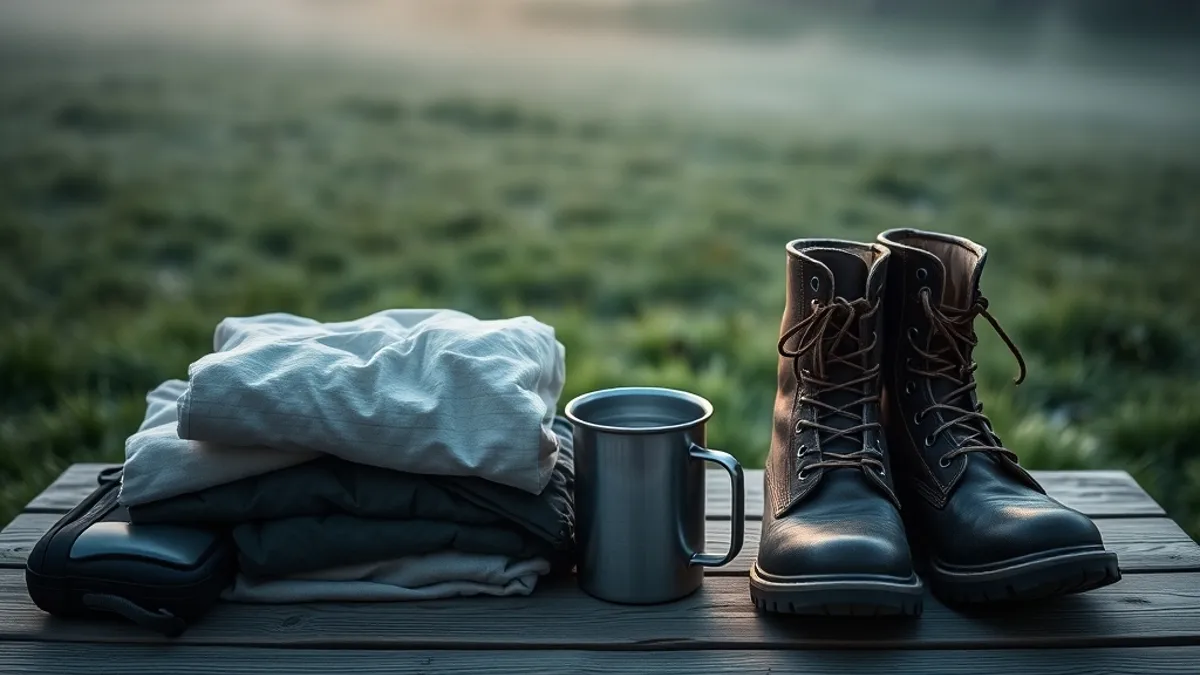
- Waterproof footwear: ankle-high boots or trail shoes with a waterproof membrane, because dew-soaked grass and muddy paths are near-certain even when the forecast looks clear.
- Camp shoes for evenings: a dry pair — slip-on sneakers, sandals or wool-lined slippers — so your feet can recover at the tent while your boots dry out by the door.
- Thick evening socks: a dedicated pair kept dry in your bag and worn only indoors, since nothing ends a cozy night faster than cold, damp feet in a canvas tent.
- One beanie or wool hat: a surprising amount of body heat escapes through your head once the sun drops, and it weighs almost nothing in your bag.
Keep the whole load sensible: aim for 10-15 kg of total luggage for a 3-night stay, packed into one soft duffel rather than a hard suitcase. Canvas tents and gravel paths make wheeled luggage a poor match, and a duffel stows easily under a bed or bench inside the tent.
Sleep Comfort: What to Add When Bedding Is Provided
One of glamping’s genuine pleasures is climbing into a real bed with a proper duvet instead of wrestling with a rolled-up sleeping bag. But provided bedding is tuned for the average night, not the coldest one, and outside the May to September peak the evenings can leave even a well-made bed feeling thin. The fix costs little space in your bag.
Warmth upgrades that fit in a stuff sack
Pack a silk or fleece sleeping bag liner even when bedding is provided. Silk adds a light layer of warmth and a smooth feel against the skin; fleece is bulkier but noticeably warmer on a cold night. Either one slips over the duvet or around yourself in seconds, and it also creates a clean barrier between you and linens that have seen many previous guests.
A small hot-water bottle is the off-peak secret weapon. Most sites with a kitchen or shared facility have a kettle, and a bottle filled before you get into bed transforms a cool night into something you’ll look forward to. Tuck it near your feet, where cold sets in first.
Light, noise and the 3 a.m. dash
Canvas walls are thin in both directions. Dawn light floods in early, and birdsong — charming at breakfast, less so at 5 a.m. — travels straight through. A soft eye mask and a pair of foam earplugs weigh almost nothing and often make the difference between a restful night and a short one.
For midnight trips to the washroom, keep slip-on layers ready: a warm robe or a down jacket hung by the tent door, with camp shoes or thick socks beside it. Fumbling for layers half-asleep in a cold tent is nobody’s idea of luxury, and having them pre-positioned means you’re back under the duvet in under two minutes.
Lighting, Power and Off-Grid Essentials
Here’s a surprise that catches many first-time glampers: most canvas tents have no interior lighting at all. Once the sun goes down, your tent becomes a dark fabric cave, and fumbling for the bathroom in pitch blackness is nobody’s idea of fun. Pack a headlamp for every person in your group, plus one shared lantern for the tent itself. The headlamp keeps your hands free for cooking or finding things in your bag, while the lantern creates a warm glow for reading and card games.
Power is the second thing people underestimate. Outlets at glamping sites are often limited to shared facilities like a kitchen or reception tent, so your phone may be charging on a communal shelf rather than beside your bed. Bring a fully charged power bank and top it up whenever you pass an outlet. If you’re heading somewhere truly remote, like the stunning lakeside spots featured in this guide to Khuvsgul remote hideaways for rare peace and open-sky stillness, assume you’ll be managing every charge yourself.
Connectivity deserves a quick mention too. Remote sites rarely have reliable signal, so download offline maps before you arrive. That way you can still navigate to the nearest village, trailhead or shop without burning battery on a fruitless search for bars of signal.
Finally, a few small items earn outsized importance around a fire pit. Before you leave home, run through this quick check:
- Lighter or matches: pack both if possible — matches can dampen in humid weather, and a lighter can run out at the worst moment. Keep them in a zip-lock bag.
- Small multi-tool: a compact one with a knife, scissors and bottle opener covers most camp jobs, from tightening a guy line to opening a stubborn jar of pasta sauce.
- Spare batteries: if your lantern or headlamp takes replaceable batteries rather than USB charging, toss a spare set in your duffel.
Kitchen and Outdoor Dining Kit
Before you pack a single pan, message the site and confirm what the kitchen setup includes. Some glamping sites provide full cookware, plates and cutlery in a shared kitchen tent, while others offer nothing beyond a fire pit. If you need to bring your own, keep it minimal: one good pan, an enamel mug and a spork per person covers almost every camp meal you’ll realistically cook, from one-pan pastas to morning pancakes.
Plan Your Food Around the Drive
Remote sites can be 30-60 minutes from the nearest shop, and some are much farther. That means a forgotten ingredient isn’t a quick errand — it’s an hour-long round trip on country roads. Pack a cool bag with 2-3 days of food, focusing on meals that share ingredients. Eggs, cheese, tortillas and vegetables, for example, stretch across breakfasts, lunches and a stir-fry. Freeze a couple of water bottles before you leave; they keep the cool bag cold and double as drinking water as they thaw.
For washing up, bring a small kit: a compact sponge, a tea towel and biodegradable soap. Use it well away from streams and natural water sources, and dispose of gray water as the site directs. Reusable water bottles for everyone round out the essentials — many sites run on tank water, so having a bottle you can refill at a shared tap is far more practical than hauling single-use plastic.
Make the Fire Pit the Main Event
Evenings are where glamping earns its magic, so pack for them deliberately. Marshmallows for toasting, biscuits and chocolate for s’mores, and a folding camp chair per person turn the fire pit into the evening’s main event rather than an afterthought. A chair also matters more than you’d think — sites with fire pits don’t always provide seating around them, and balancing on a log with a hot drink loses its charm after ten minutes.
Toiletries and Weather-Proof Extras
Canvas tents live through real temperature swings, and that’s hard on liquids. Shampoo bottles can leak as air pressure and temperatures shift, and a sticky spill inside your duffel is a trip-ruining mess. Solid toiletries solve both problems: shampoo bars, solid deodorant and bar soap weigh less, last longer and survive hot afternoons and chilly nights in a tent without leaking. Decant anything that has to stay liquid into small travel containers and bag them separately.
Towels are the classic glamping gap. Many sites leave them off the included-amenities list, so it pays to check what’s provided before you pack. A quick-dry towel is the smart choice: it’s compact, light and ready again within hours, whether you’ve used it at an outdoor shower, a wood-fired hot tub or a wild swimming spot you spotted on the map. Bring one full-size towel plus a smaller one for hands and face.
Weather-proofing your toiletries bag matters as much as what’s inside it. Summer sun and insects don’t respect shade, and rain finds its way into even the best tents. Here’s what deserves a permanent spot in your kit:
- Sunscreen: choose a reef-friendly formula if you’ll be swimming in lakes, and reapply after any dip — water and towel-drying strip it off faster than most people realize.
- Insect repellent: apply it before dusk rather than after the first bites, and a small incense stick or citronella candle can take the edge off the fire-pit area in the evening.
- Dry bag or zip-locks: a lightweight dry bag keeps phones, cameras and chargers safe during a downpour, and zip-locks give you a second line of defense for cables and documents.
- Lip balm with SPF: lips crack fast in wind and sun, and it’s the item everyone forgets until day two.
One last tip: keep all of this in a single hanging toiletry bag. Shared wash facilities often have limited shelf space, and a bag that hooks on a door handle or rail makes the whole routine faster for everyone.
Your Glamping Packing Checklist, Summed Up
Glamping promises a hotel-level night’s sleep under canvas, yet the difference between a luxurious stay and a miserable one often comes down to a single forgotten item — a headlamp when the tent goes dark at dusk, or a warm layer when the temperature drops after sunset. The fix is simple: build your packing list around the time of year you’re traveling and the amenities your site already provides, so you only bring what’s genuinely missing.
Layered clothing, sleep comfort items, lighting, kitchen basics and weather-proof extras will cover every scenario a canvas trip can throw at you. Keep your total luggage around 10-15 kg for a 3-night stay — one soft duffel is easier to wrestle onto a gravel path than any hard suitcase. Run through your checklist the night before departure, and you’ll be ready for whatever the weather, the fire pit or the dawn chorus brings. Have a packing tip of your own, or a lesson learned the hard way? Share it in the comments below.