A jungle escape near Chiang Mai sounds perfect until you start planning. Which months bring cool nights instead of smoke and downpours? What does a proper tented camp actually cost per night, and does that price include meals and transfers? These are the questions that trip up most travelers before they ever zip open a tent flap.
This guide to glamping in Chiang Mai answers them. You’ll see why the region’s mix of mountains, rivers and rainforest works so well for canvas stays, when to book for the best weather, and where to base yourself around Mae Rim, Mae Wang or the Doi Inthanon foothills. We’ll also break down what a jungle stay typically includes, how to spot the best tented camps, and how to time your booking and transfers. By the end, you’ll have a clear plan for a night or two under canvas in northern Thailand.
Why Glamping in Chiang Mai Works: Jungle, Mountains and City Access
Chiang Mai has a rare combination for a glamping destination: real wilderness on the doorstep of a proper city. Mountain scenery, rivers and rainforest wrap around the region, yet you land at a major airport with plenty of domestic connections, and the walkable old city gives you temples, coffee shops and night markets before or after your jungle nights. Few places let you pair a canvas suite with a moat-side espresso the same morning.
Tented camps cluster in three main zones: Mae Rim, Mae Wang and the Doi Inthanon foothills. Most sit a 30-90 minute drive from Chiang Mai Old City, close enough for a short trip but far enough that you hear insects and birdsong instead of scooters.
From safari suites to simple bell tents
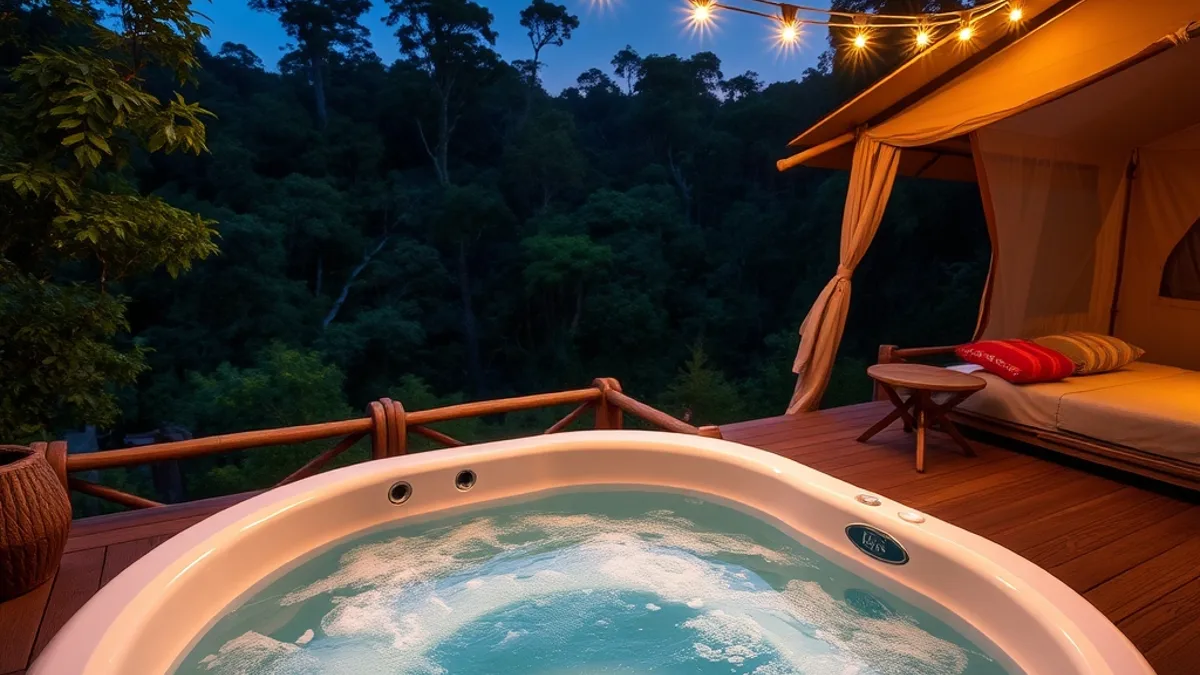
The range of stays is wide. At the top end, safari-style canvas suites come with king beds, private decks and sometimes a plunge pool looking into the trees. In the middle, comfortable bell tents with en-suite bathrooms balance comfort and price. At the simpler end, riverside bell tents keep things basic and affordable, sharing facilities and letting the river do the entertaining. Whatever your budget, the jungle setting is the same.
Best Months to Visit: Cool Season vs Green Season
Timing makes or breaks a jungle stay, because northern Thailand has three very different moods across the year. The cool, dry season from November to February is the sweet spot: trails stay firm, daytime highs sit around 28-30°C, and nights drop near 15°C, which is genuinely chilly under canvas. Mountain views are clearest in these months, so you can actually see the ridgelines your tent faces.
From March to April, burning season arrives. Farmers burn fields across the north, and haze can sit over the valleys for weeks, dulling the views and irritating throats and lungs. If air quality matters to you, skip these months entirely.
The green season from May to October is the trade-off window. The jungle turns intensely lush, rates drop, and camps are quieter, but heavy afternoon showers are part of the deal, especially in August and September. Pack a dry bag and a light rain jacket. If you enjoy slow, green travel in shoulder seasons, the same logic applies elsewhere, as this piece on quiet countryside mornings in Provence’s lavender season shows.
- Cool season bonus: cool evenings make fire pits and hot drinks at camp genuinely enjoyable rather than decorative.
- Burning season tip: check air quality apps for Chiang Mai before booking March or April dates, since haze levels vary year to year.
- Green season perk: rivers run fuller and waterfalls near camp are at their most impressive after rain.
- Green season practicality: book tents with solid covered decks, since you may spend an hour or two watching rain rather than hiking.
Where to Base Your Jungle Stay
Where you base your tent shapes the whole trip, and the three glamping zones around Chiang Mai suit very different travelers. The good news is that none of them require a major expedition from town, so even a short trip can include a proper jungle night.
Mae Rim is the closest zone to town, which makes it the easiest choice for short stays. It’s known for waterfalls and orchid farms along its valley roads, and you can typically be checked into a tent within about an hour of leaving the airport. If you only have one or two nights, this is the low-effort option.
Mae Wang sits further out, where bamboo forest meets the river. Camps here pair naturally with elephant-sanctuary visits, since several ethical sanctuaries operate in the same district, letting you combine a riverside tent with a day among the elephants.
The Doi Inthanon foothills appeal to hikers. This is the highest, coolest terrain of the three, with trails leading toward Thailand’s peak at 2,565 m. Expect mist, moss and noticeably cooler nights than in the city, so pack accordingly.
- Mae Rim extras: its waterfalls and orchid farms make easy half-day add-ons, ideal if you want structure around a short stay.
- Mae Wang extras: the river itself offers bamboo rafting and tubing with local operators, often arranged through your camp.
- Inthanon extras: the national park around the peak has marked walking trails and birdlife, so bring layers and binoculars; check current park entrance fees before you go.
Whichever zone you pick, ask your camp about road conditions before setting out, especially if you’re visiting during the wetter months. Mountain roads can slow down after heavy rain, and a little planning keeps transfer day stress-free.
What a Jungle Glamping Stay Includes
Most Chiang Mai tented camps take glamping seriously, so expect far more than a sleeping bag on an air mattress. The standard setup at mid-range and upscale camps includes a proper king bed with quality linens, an en-suite bathroom with a hot shower and flush toilet, and a private deck facing the jungle or a river. Breakfast is nearly always included, and many camps cook dinner on site, often Thai dishes served family-style under lanterns or beside a fire.
The differences between tent categories mostly come down to space and extras. Premium canvas suites may add a private plunge pool, an outdoor soaking tub under the trees, or a fire pit for cool-season evenings. Budget tents, sometimes simple bell tents near a riverbank, usually share bathroom blocks instead of having en-suite facilities. That trade-off can be perfectly fine if you spend your days hiking and only return to sleep.
What you can expect to pay
Jungle glamping near Chiang Mai typically costs 2,500-9,000 THB per night, with the price driven by tent category and season. A shared-facility bell tent in the rainy months sits at the low end, while a safari-style suite with a plunge pool during the cool season reaches the top of the range. Check whether meals and transfers are bundled into the rate before you compare prices, since a cheaper nightly rate can grow quickly once dinners and pickups are added.
How to Spot the Best Tented Camps
Photos on a booking page rarely tell you how a camp actually performs at night, in the rain, or when the jungle is at its most active. Before committing, read reviews from the last few months and pay attention to the practical details rather than the scenery shots.
Three issues come up again and again in guest feedback for jungle camps, and they matter more than thread count or deck furniture:
- Mosquito control: Look for comments on whether tents are sealed at dusk, whether staff provide repellent or coils, and whether standing water is managed around decks. A camp that answers these complaints publicly is usually one that takes them seriously.
- Rain protection: In green season, check whether guests report leaks, wet bedding or soaked walkways. Canvas needs proper maintenance, and reviews will reveal which camps re-proof their tents regularly and which let them deteriorate.
- Generator noise: Some remote camps run generators for power, and a humming unit near the tent row can undo the jungle-quiet you paid for. Search reviews for mentions of noise at night and where the generator sits relative to the tents.
Beyond these, confirm exactly what your rate covers. Some camps quote an attractive nightly price, then add on dinners, airport transfers, guided walks and elephant-sanctuary visits individually. Ask for a full cost breakdown before booking so you can compare camps on equal terms.
Size matters too. Camps with fewer than 15 tents tend to feel quieter after dark, with less foot traffic, less dining-hall chatter and a better chance of hearing the jungle rather than other guests. If a peaceful night is a priority, ask the camp how many tents it operates before you book.
Booking Timing and Getting There
Getting to a Chiang Mai jungle camp is straightforward once you know the sequence: fly in, arrange a transfer, and time your booking around the season. Most camps sit 30-90 minutes’ drive from the Old City, so the transfer is a real part of the trip rather than an afterthought. Plan it before you land and arrival day stays relaxed, even if your flight gets in late afternoon. The steps below cover booking timing, the airport, transfers and rainy-season road checks.
- Book your tent at the right time. For November-December weekends, reserve 2-3 months ahead, since cool-season weekends sell out fast. In green season, 2-4 weeks ahead is usually enough, and you may find better rates too.
- Fly into Chiang Mai International Airport. It is the main gateway to northern Thailand and sits about 1 hour from most Mae Rim and Mae Wang camps, making arrival day simple even if you land in the afternoon.
- Arrange your camp transfer in advance. Ask the camp to organize pickup when you book, or plan a private car or taxi from the airport. Confirm the cost and meeting point beforehand rather than negotiating on arrival.
- Check road conditions if you travel in the rainy months. Some camps sit down dirt tracks that turn muddy after heavy afternoon showers. Message the camp a day or two before arrival to confirm the road is passable and whether a regular car can make it.
Many camps offer pickup directly from the Old City, which saves you the trouble of getting to the airport first. If your camp is deep in the Mae Wang valley or up toward the Inthanon foothills, ask whether the vehicle making the transfer is a standard sedan or something with more clearance. A quick question at booking stage prevents the most common arrival-day surprise. It also helps to share your flight number so the driver can track delays, and to keep a little cash aside for tolls or a tip if the camp’s rate does not cover them.
Planning Your Chiang Mai Jungle Escape
A jungle escape near Chiang Mai doesn’t require weeks of planning or a leap into the unknown. If you’d rather avoid the haze of the burning months, aim for the cool, dry stretch of the year, when trails stay firm and mountain views are at their clearest. If you don’t mind afternoon showers, the wetter months bring lush jungle and softer rates, so pack a rain shell and quick-dry clothes and you’ll be fine.
Then pick your setting: Mae Rim for convenience and short trips, Mae Wang for rivers and bamboo forest, or the Doi Inthanon foothills for the coolest hiking. Match the tent category to your budget, confirm what’s included before you pay, and lock in your dates early for the most popular weekends. Have you slept in a Chiang Mai tented camp, or are you planning your first trip? Leave a comment or share this article with a fellow traveler.