Glamping in Patagonia has moved from niche to bucket-list staple, but planning it raises an awkward question: which side of the border should you book? Argentina and Chile each promise sleeping under those famous big skies, yet the experiences differ more than most travelers expect, and picking the wrong side for your style can shape the whole trip.
This guide compares both sides head to head. We break down the landscapes and where camps actually sit, the types of stays on offer from domes to estancia tents, the best months and how to deal with the wind, plus the logistics of getting there and even crossing between the two countries. We finish with a simple decision framework for matching your trip style to the right side, so your Patagonian camp nights deliver exactly what you pictured.
Glamping in Patagonia: Two Countries, One Wild Backyard
Patagonia’s glamping scene splits neatly along a border that runs through the middle of the region, and understanding that split is the first step to planning well. On the Argentine side, everything revolves around two towns: El Calafate, the launch point for visits to Perito Moreno Glacier, and El Chaltén, the small hiking capital sitting below the jagged Fitz Roy massif. Camps and lodges around these towns use the glaciers and granite spires as their headline attraction.
The Chilean side of the border
On the Chilean side, the hub is Puerto Natales, a port town on the Última Esperanza sound that serves as the gateway to Torres del Paine. What sets Chile apart is camp placement: most dome camps sit inside the national park itself or right beside its boundaries, meaning you can watch guanacos from your tent deck and start famous trails without a long transfer.
Same season, different character
Here’s the part that simplifies your decision: both sides share the same austral summer window, roughly October to April, with the same long daylight and the same reputation for wind. Weather is not the differentiator. The real differences are landscape style, how close your camp sits to the action, and the logistics of flights and transfers. Once you accept that, choosing a side becomes a matter of taste and itinerary rather than guessing which country has better conditions.
Landscape and Setting: Steppe, Glaciers vs Granite Towers and Lakes
Stand at a glamping camp on the Argentine steppe and the first thing you notice is space. The land around El Calafate and El Chaltén opens into wide, golden horizons where the eye travels for kilometers, interrupted only by distant peaks. Argentina’s signature sights fit this character: the glacier viewpoints around Perito Moreno, where ice walls calve into milky water, and the jagged Fitz Roy spires near El Chaltén, which glow pink at sunrise and dominate every photo from the trails.
Chile’s compact drama
Chilean Patagonia compresses the same grandeur into a smaller package. Torres del Paine packs granite towers, turquoise lakes, rolling pampas filled with guanacos, and hanging glaciers into a circuit you can see large parts of in a few days. From many camps inside or beside the park, the towers are simply there, framed by your tent’s window, and the scenery changes every few kilometers as you drive between trailheads and viewpoints.
Proximity versus horizons
This contrast shapes where you sleep. Chilean camps are often closer to trailheads, so you can finish the Base Torres hike and be back at your dome in well under an hour. Argentine camps trade that proximity for bigger skies and easier glacier access, with steppe settings that feel properly remote even when town is a drive away. If waking up steps from a trail matters most, Chile has the edge; if you want space, silence and glacier day trips, Argentina delivers.
Stay Types: Domes, Safari Tents and Remote Eco-Lodges
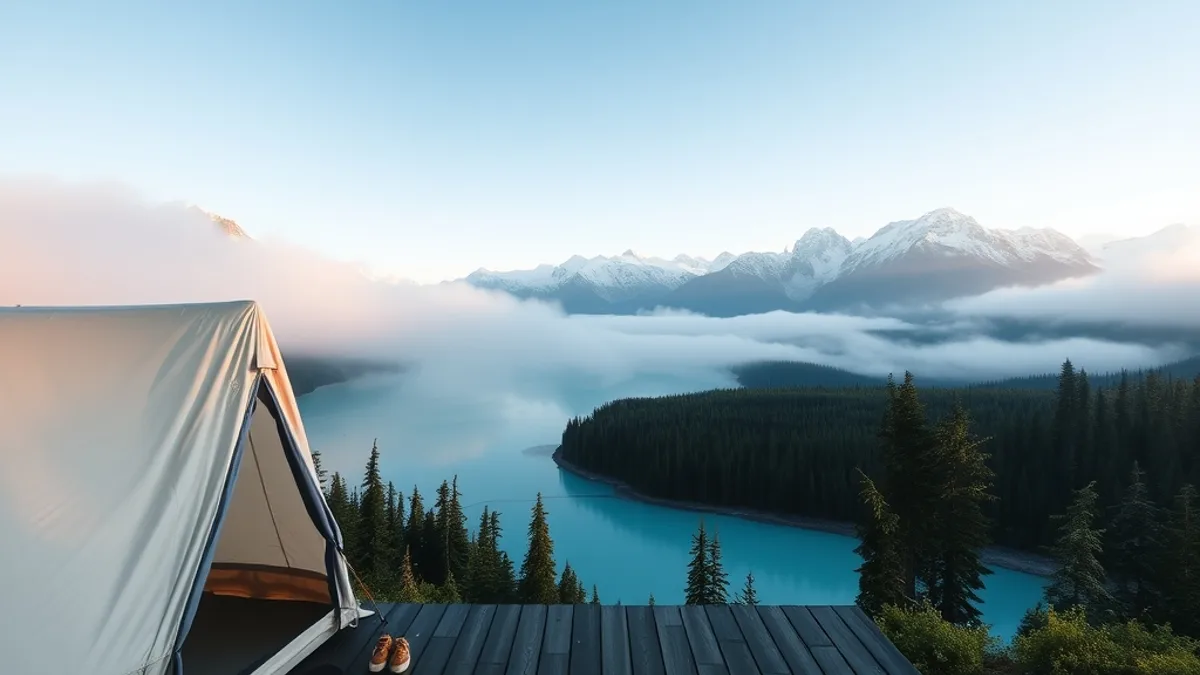
The stay types differ as much as the landscapes. On the Chilean side, geodesic domes dominate the Torres del Paine area, and the better ones come equipped with wood stoves for cold nights, private bathrooms, and decks positioned toward the towers. These camps often include meals and guided excursions, which makes sense given how far the nearest restaurant can be.
Argentina leans in a different direction. Around El Calafate and the steppe, many stays are safari-style tents set on working estancias, where sheep country, horseback rides and home-cooked asado become part of the experience. Near El Chaltén, a smaller cluster of eco-domes and low-impact lodges sits outside town, oriented toward the Fitz Roy views rather than trailhead proximity.
On price, expect dome and luxury camp stays to typically range from about USD 250 per night for simple domes to 1,200+ for all-inclusive suites, with full-service lodges running higher. Whatever your budget, book early: peak-season domes should be reserved 6-12 months ahead, and even shoulder-season spots fill faster than most travelers expect.
- Wood stove etiquette: many dome stoves are lit by staff at set times in the evening and morning, so ask how the schedule works before counting on heat at midnight.
- Estancia extras: Argentine safari-tent stays often bundle horseback riding, sheep-shearing demonstrations or asado dinners into the rate, which can offset a higher nightly price compared with a bare-bones dome.
- All-inclusive math: at the top end of the range, meals, open bar and guided excursions are usually included, so compare the total cost against a mid-range camp plus paid tours.
- Shoulder-season flexibility: if your dates are loose, booking 3-6 months ahead for October-November or March-April stays often secures better domes at lower rates than the same camp in January.
Best Time to Go and How to Handle the Wind
Patagonia’s glamping season runs roughly from October to April, but not all months are equal. If you want fewer crowds, greener landscapes and rates below peak pricing, aim for the shoulder months of October-November or March-April. Camps that sell out half a year in advance for January often have space in November, and the light is softer for photography.
December to February is peak season for a reason: daylight stretches late into the evening and the weather is at its most stable overall. But this is also when the wind hits hardest. On exposed steppe around Torres del Paine and the El Calafate area, gusts can top 100 km/h, strong enough to rattle tent poles, whip dust across decks and make outdoor dining a challenge on the worst days.
How to pick a wind-ready camp
If you travel in peak summer, prioritize camps built for the conditions. Look for geodesic domes anchored to platforms, decks that sit in the lee of the structure, and wood stoves inside the tent. Ask operators how they handle stormy days and whether meals move indoors when the gusts pick up. A well-designed dome can feel cozy in weather that would flatten a regular tent, so a few extra questions before booking make a real difference to how comfortable your nights are.
Getting There and Crossing Between the Sides
The good news about planning a Patagonian glamping trip is that logistics are simpler than the map suggests. Most travelers arrive through one of two small airports: El Calafate in Argentina or Puerto Natales in Chile. Both hubs sit within a few hours’ drive of the main glamping areas, and the two countries are close enough that combining them is entirely realistic. The driving distances look intimidating on paper, but the roads are straightforward, transfers are well established, and the scenery between the hubs is part of the experience rather than dead time. With a little planning, you can move between glacier country and the Paine region without treating travel days as lost days.
- Pick your arrival airport based on your first stop. If you start with glacier country and El Chaltén, fly into El Calafate. If dome nights near Torres del Paine come first, Puerto Natales is the natural gateway. Flights from Buenos Aires and Santiago connect to both, though schedules vary by season.
- Plan the road transfer between hubs. Torres del Paine and the El Chaltén/El Calafate area sit roughly 300-350 km apart by road. Regular bus and shared transfer services link the hubs in high season, and private transfers can be arranged year-round.
- Build in enough days for both sides. Because the drive between the two regions is manageable, a two-country combo trip works well in 7-10 days, giving you time for a few glacier or Fitz Roy days plus several nights in the Paine area without rushing.
- Verify border crossing details before you go. Crossing hours and transport timetables can be limited outside summer. In shoulder months, check the current border post opening hours and bus or transfer schedules, since services thin out and missing a connection can cost you a full day.
Whichever order you travel in, leave a little slack in your itinerary. Weather delays and reduced off-season schedules are common in this corner of the world, and a buffer day turns a stressful connection into a relaxed one. It also gives you room to linger somewhere unexpected, whether that is a stepside viewpoint or an extra night in camp. Talk to your camp or transfer operator before finalizing dates, since they know the current timetables better than any booking site does. A flexible plan is the single best piece of packing you can bring to Patagonia.
How to Choose Your Side: Trip Styles Compared
Both sides of Patagonia deliver spectacular scenery, so the choice comes down to what you actually want to do with your days. If your dream is waking up in a dome and walking straight onto a trail toward granite towers, one side has a clear edge. If you picture wide horizons, glacier viewpoints and evenings on a working ranch, the other does. Here is how the two trip styles break down, plus a few practical pointers for deciding how to split your nights.
- Choose Chile if trekking is the main event. The Torres del Paine area puts many dome camps inside or right beside the national park, so you can sleep steps from trailheads for the famous circuits and day hikes to the towers themselves, with no daily driving required. That proximity also means you can squeeze in a sunrise or sunset hike without a long transfer at each end of the day.
- Choose Argentina for glaciers, Fitz Roy and estancia variety. From El Calafate you get easy day trips to the Perito Moreno Glacier, while El Chaltén is the base for hikes beneath the jagged Fitz Roy spires. The Argentine side also offers a wider choice of safari-style tent stays on estancias, which adds a ranch-culture flavor you won’t find in the Paine dome camps. Expect hearty asado dinners, horses and sheep country as part of the experience.
- Combine both if you have 10 or more days. A classic route runs glacier country first, based in the Argentine gateway towns, then crosses the border into Chile for dome nights in Torres del Paine. The crossover fits neatly into a longer trip without feeling like a detour, and you can often arrange transfers or rental car drop-offs that work in either direction. Just build in a buffer day for the border crossing, as queues and opening hours can vary.
If you’re torn, think about your travel pace. A shorter trip works best on one side, done well, while a longer itinerary rewards the two-country combination with a fuller picture of Patagonia’s very different landscapes. Whichever you pick, match the camp to your plans: trekkers should prioritize trail access, while photographers and slow travelers may prefer the open-steppe lodges with big-sky views.
The Bottom Line for Your Patagonian Camp Nights
So which side should you choose? Honestly, both deliver world-class glamping, and neither is a wrong answer. Chile wins on trailside domes, where you can sleep steps from the Torres del Paine trails and wake up to granite towers. Argentina wins on horizons and variety, with wide-open steppe, glacier day trips and estancia-style stays around El Chaltén and El Calafate.
Timing matters as much as geography. Shoulder-season trips in October-November or March-April offer the best balance of price, calm and availability, while peak summer brings bigger crowds and stronger winds. Whichever side you pick, booking early and planning around the wind decides how good your nights under the southern sky will be. If this helped you plan your trip, leave a comment or share the article with a fellow traveler.