Book glamping too late, and you will likely face the same frustration: sold-out calendars, or prices that have crept well beyond what you planned to spend. Unlike ordinary hotels, glamping sites often have just a handful of units, so even a short delay can cost you the treehouse or dome you had your heart set on. Timing is not a detail here — it is the whole game.
The good news is that glamping follows predictable seasonal booking windows, and once you know them, planning gets much easier. In this guide, we break down why small site sizes change everything, how far ahead to reserve for peak summer months, and why the shoulder seasons reward flexible travelers. We also cover cold-season domes and cabins, midweek and rate-calendar tricks, how to match the right season to the right region, and a simple summary plan you can follow for your next trip.
Why Booking Windows Matter More for Glamping Than Hotels
Glamping runs on a completely different supply model than a hotel. Most sites are small operations with roughly 5 to 20 units in total, which means a handful of bookings can close out an entire weekend. A 12-unit site that fills eight domes for a Saturday night is effectively full — there is no second wing, no fourth floor, no overflow block down the hall.
Sold out really means sold out
Hotels routinely release held room blocks back into inventory or push bulk cancellations to booking channels, so a “no vacancy” sign can flip within days. Most glamping sites do not work this way. Cancellations, when they happen, are handled one unit at a time, and many small operators never push them back out to aggregators. If the calendar shows full, waiting rarely pays off.
There is no substitute for the unit you wanted
The other wrinkle is uniqueness. A treehouse, a cliff-side dome, or a stargazing cabin is one physical structure in one location. If your hotel room type sells out, you can usually downgrade or switch and still sleep comfortably. If the cliff dome is gone, the safari tent left on site is a genuinely different experience — and often a different price point. That is why booking windows matter more for glamping than for almost any other kind of accommodation: the inventory is small, irreplaceable, and gone for good once claimed.
How Early to Book Glamping in Peak Season
For the busiest stretch of the year — June through August in popular regions — the rule of thumb is simple: reserve 6 to 9 months ahead. That sounds early, but it is what it takes to secure the best units at sought-after sites. Book in that window and you can usually pick your structure, your orientation, and sometimes even your exact dome rather than settling for whatever remains.
How fast do peak weekends actually go?
Faster than most first-time glampers expect. At top sites, weekend summer slots often sell out within 2 to 4 weeks of the calendar opening. Repeat guests and mailing-list subscribers grab prime Friday and Saturday nights almost immediately, so the general public is often choosing from the leftovers by the time they even see availability.
The price advantage of booking early
Early birds are not just buying choice — they are usually buying a better rate too. Booking 6 or more months ahead can save you 10 to 20% versus what late peak-season bookers pay. Small operators tend to raise prices as availability tightens, so the last units of August routinely cost the most. If your dates are fixed and your trip falls in high summer, put a reminder in your calendar the moment the site announces when next year’s bookings open, and reserve as close to that date as you can.
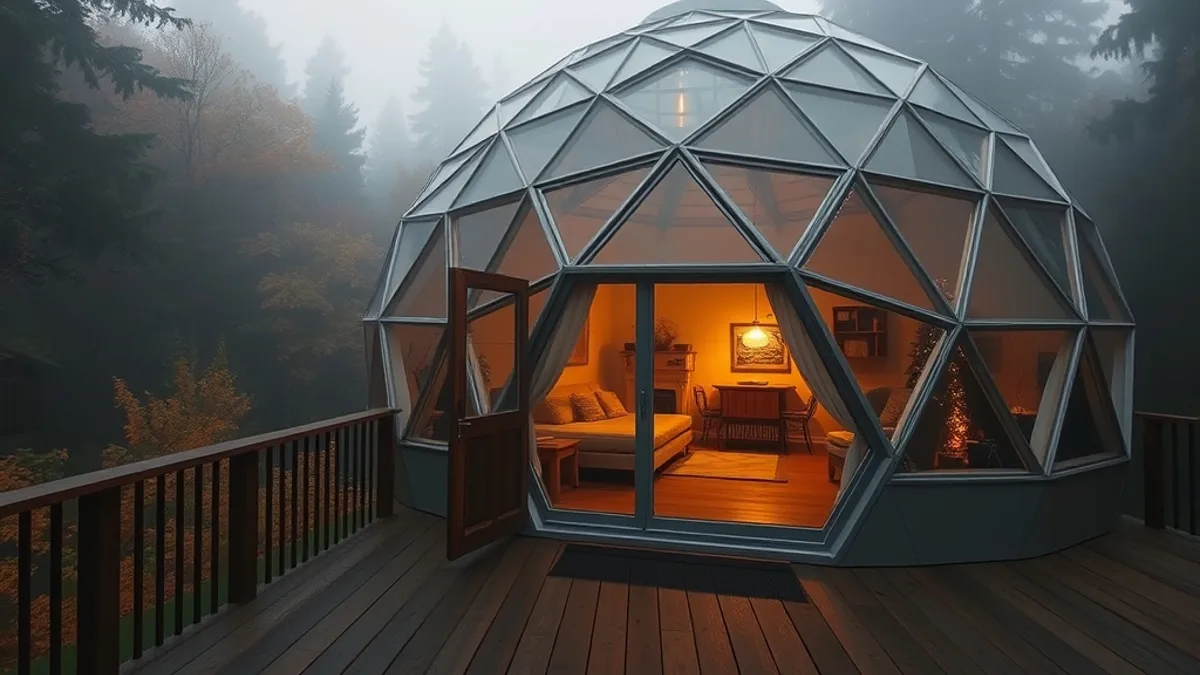
Shoulder Season: The Sweet Spot for Flexible Bookers
If your schedule has any flexibility, the shoulder seasons are where glamping gets good. April through May and September through October typically need only 2 to 4 months of lead time at most sites, which makes planning far less stressful than the peak-season scramble. You can decide on a trip in early winter and still have your pick of units for spring, including the treehouses and domes that vanish first in summer. That extra breathing room also gives you time to compare layouts, read recent guest reviews and ask hosts specific questions before you commit.
The appeal goes beyond availability. Shoulder dates combine noticeably lower prices with milder weather and thinner crowds, so you get the same views and the same quiet without peak-season competition. Fire pits feel cozier, trails are emptier, and hosts often have more time to share local tips. For coastal spots, early autumn can be especially rewarding — a stay like the ones described in a quiet Irish Atlantic hideaway shows how shoulder-season weather and deep calm often go hand in hand.
Last-minute deals do exist in these windows, most commonly 1 to 3 weeks before arrival. Just know their limits:
- Last-minute discounts show up almost exclusively midweek — Friday and Saturday nights at popular sites rarely get discounted even in the shoulder months.
- The deepest deals tend to appear at lesser-known sites rather than famous ones, so it pays to look one region over from the headline destinations.
- Shoulder weather can shift quickly, so favor sites with solid-structure units if you are booking close to arrival and cannot rebook if a storm rolls through.
Cold-Season Glamping: Winter Domes and Cozy Cabins
Glamping does not shut down when the temperature drops. Winterized geodesic domes and cozy cabins have become some of the most sought-after units in the industry, and the ones near ski areas behave a lot like alpine hotels: they fill early. Plan on reserving these stays 4–6 months ahead if you want a specific site or a specific unit, because operators in snow country know their winter calendar is precious and book it deliberately.
Holiday weeks follow peak-season rules
Christmas and New Year weeks are the exception to every relaxed winter timeline. These dates sell the way mid-July does, and at small sites a single family gathering can take out half the inventory. If you want a dome with a wood stove for the holidays, reserve as soon as the operator opens the calendar — waiting even a few weeks often means settling for whatever unit is left, or none at all.
The good news is that most of winter is far more forgiving. In regions without a ski draw, January and February midweeks can be the easiest dates of the entire year to book. It is common to find availability 1–2 weeks out, and some sites will happily take a booking just a few days ahead if the weather looks reasonable. That flexibility is a real advantage if you like spontaneous trips — just confirm the unit is genuinely winterized, with proper insulation and heating, rather than a fair-weather tent with a space heater.
Timing Tricks: Midweek Stays and Rate Calendars
A little timing strategy can shave real money off a glamping trip, and it starts with the day of the week. In high season, midweek nights typically run 15–30% cheaper than weekend nights at the same site. You also get far more choice: a site that is fully committed every Saturday in July may have open domes every Tuesday and Wednesday of the same month.
The second habit to build is checking rate calendars instead of assuming one flat seasonal price. Many glamping operators price night by night, so a Thursday in early July might cost noticeably less than a Saturday two weeks later. Scanning the calendar date by date often reveals a cheap pocket of days you would never spot by looking at “summer rates.”
- Set a cancellation alert on your target dates: many booking platforms and some operators will notify you when a peak-date unit reopens, and rebookings tend to surface 2–6 weeks before arrival as plans change.
- When you get a cancellation alert, call or book immediately — a freed-up treehouse for a July Saturday may be gone within hours.
- If a site shows a fixed seasonal rate, ask whether shorter midweek stays are priced differently; some operators quietly discount two- and three-night weekday blocks.
- Use the rate calendar to shift your trip by even one night — moving from Friday–Sunday to Thursday–Saturday can change both the price and the unit options.
None of this requires insider knowledge, just patience with the calendar. The travelers who consistently score the best units at the best prices are the ones who treat pricing as a moving target rather than a fixed number.
Choosing the Right Season and Region Before You Book
Before you worry about booking windows, make sure you are booking the right months. Glamping puts you much closer to the weather than a hotel does, so the season you choose shapes the whole experience. Coastal sites are at their best in May–June and September, when the sea is pleasant, the light is soft and the summer crowds have not arrived or have already gone. If a coastal escape is on your list, the Algarve’s Atlantic coastline is a good example of how rewarding the shoulder months can be.
Match the season to the landscape
Desert and forest sites follow a different rhythm. Both favor spring and autumn, when daytime temperatures are comfortable and nights are cool rather than cold. A desert dome in the height of summer can be an endurance test, while a forest tent in a wet month can mean mud, damp bedding and a shorter trip than you planned.
That leads to the most practical tip in this whole process: check a region’s rainy season and extreme-heat months before you commit to any tent-based stay. Canvas, even high-quality canvas, is less forgiving than a hotel wall. A downpour-heavy month or a heat wave can turn a dreamy safari-style tent into something you merely endure.
Finally, match your unit type to your season. If you are traveling in shoulder months or winter, prioritize sites with solid-structure units — domes, cabins and similar builds with real insulation and heating. Tent-based units are wonderful in warm, dry weather, but a solid roof and walls are what make a cool-season glamping trip genuinely cozy instead of merely survivable. Choosing the right structure for the season matters as much as choosing the right dates.
Your Glamping Booking Plan at a Glance
So, how early should you book glamping? The short answer: earlier than you probably think. For peak summer trips in popular regions, aim for 6–9 months of lead time, since weekend slots at sought-after sites can disappear within weeks of release. Shoulder season stays in April–May or September–October typically need 2–4 months, while winterized domes and cabins near ski areas call for 4–6 months ahead.
The good news is that timing pays off twice. Booking early not only secures the treehouse or dome you actually want, it can also lock rates 10–20% below what late bookers pay. If your dates are flexible, midweek stays and shoulder-season windows offer the best mix of price, availability and weather — and genuine last-minute deals do exist, though mostly off-peak and midweek. Book at the right moment, and glamping stops being a gamble. Have a booking story or question of your own? Share it in the comments or pass this article along to a fellow traveler.