Glamping vs camping is one of those searches that turns up a confusing mess of advice, partly because the two words get used interchangeably online. The price gap does not help: a basic campsite pitch and a furnished safari tent can differ by ten times per night. If you have ever stared at a $400 tented suite and wondered whether anyone is really paying that much to sleep outdoors, you are asking the right question.
The honest answer is that the extra money buys real things, but not always the things you need. This article compares what each night actually costs, the gear you have to buy upfront, the comfort and bathroom situation, how much work each option takes, where each one puts you, and when to book. By the end, you should know whether your next trip justifies the splurge or whether a $30 pitch and a borrowed tent will do the job just fine.
The Nightly Price Gap: What Each Night Actually Costs
The headline numbers make the gap obvious. A standard campsite pitch in Europe or North America typically runs about $20–$60 per night, while glamping stays typically cost $150–$500. At the top end, luxury safari-style tents can exceed $800 per night, which puts them firmly in five-star hotel territory rather than in any conversation about budget travel.
Glamping prices behave like hotel prices
That comparison is not accidental. Glamping rates move the way boutique hotel pricing does: they climb sharply on summer weekends, holiday periods and any stretch of good weather. A unit that costs $180 midweek in May might list for far more on a Saturday in July. Campsite pitches rise in peak season too, but the base is so low that the jump rarely changes your trip budget much.
Camping has its own pricing quirk, though. Many campsites charge per person or per tent rather than a flat pitch fee, so the number on the website is not always what you pay. A family of four can easily double the headline pitch fee once per-person charges are added. Before you book either option, check whether the rate covers your whole group or just the first two adults, because that detail swings the real comparison more than anything on the brochure.
Upfront Costs: Gear Budget vs Zero Equipment
Camping’s sticker price hides a second bill: the equipment. A workable starter kit costs roughly $500–$2,000 upfront, and that range is realistic rather than padded. The big-ticket items are a tent, sleeping bags for everyone, sleeping mats, a camp stove, a cooler and headlamps. Add small things like a lantern, pots, a first-aid kit and spare batteries, and the total creeps upward. Quality matters here too, because cheap gear that fails in the rain tends to get replaced rather than repaired.
Glamping moves the cost into the nightly rate
Glamping handles this differently. Bedding, furniture and kitchen kit are provided, so there is no gear purchase at all. Your first trip costs nothing but the nightly rate and whatever you pack in a duffel bag. Over a decade of trips, a camper’s gear amortizes to very little per night, but that only works if you actually camp often enough to use it.
There is also a middle path that most first-timers miss. Many outdoor stores and rental shops rent tents, sleeping bags and stoves for a fraction of the purchase price, and friends or family who camp are usually happy to lend a kit for a weekend. Renting or borrowing for your first camping trip tells you whether your family enjoys it before you sink $1,000 into equipment that ends up in the garage.
Comfort and Facilities: Bed, Bathroom and Climate
This is where the price gap buys something you can feel. The glamping standard usually includes a real bed on a frame with proper linens, heating or cooling inside the unit, and often a private bathroom, either en-suite or a short walk away. You arrive, the bed is made, and the temperature inside is whatever the thermostat says. There is no air mattress to inflate, no pillow to improvise from a rolled-up jacket, and nothing to unzip or stake down before you can collapse for the night.
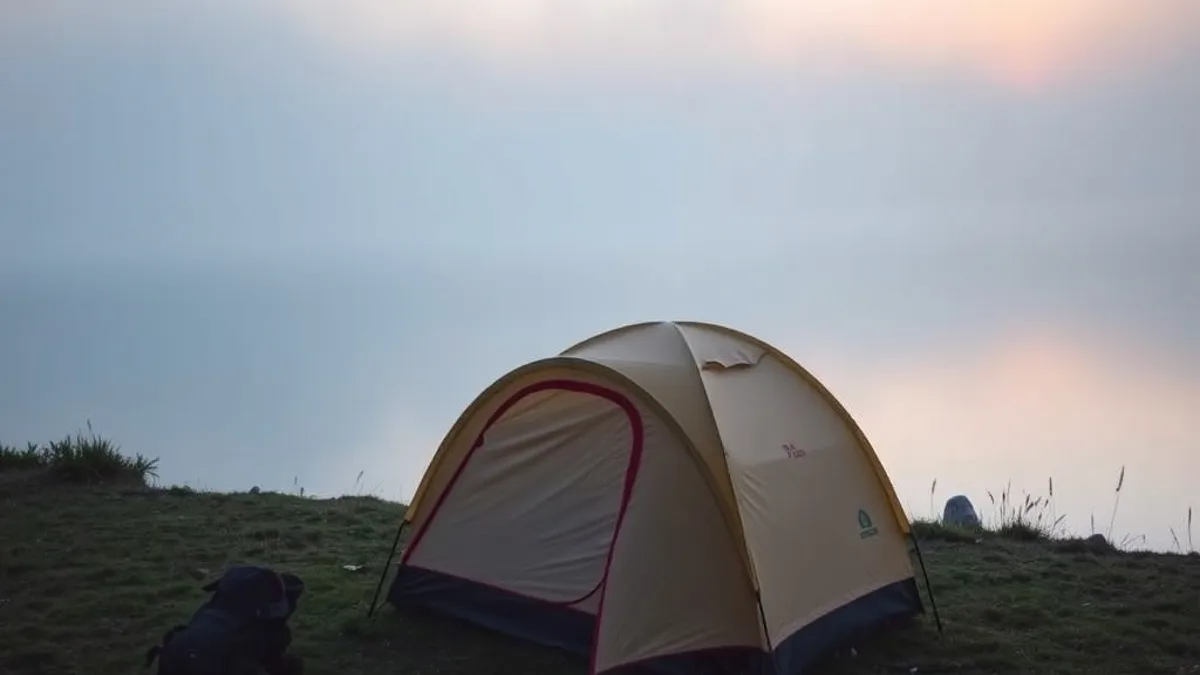
Camping basics are humbler by design. You sleep on a pad on the ground inside your own tent, you share a washblock with the rest of the campground, and the temperature at night is controlled only by your sleeping bag rating. None of this is a hardship on a mild summer night, but it changes fast when the weather turns. A thin pad over hard ground, a tent that heats up in the afternoon sun and a communal shower with lukewarm water are all part of the deal.
In practice, three comfort items matter more than the rest:
- A dry bed after rain. A pitched tent can leak or collect condensation, and a damp sleeping bag is miserable to sleep in and slow to dry. A glamping unit with a solid floor and real bedding removes that risk entirely.
- Warmth at night. Temperatures can drop sharply after sunset, and if your sleeping bag rating is too light there is no fix at 2 a.m. beyond wearing every layer you packed. Heating inside the unit makes cold nights a non-issue.
- A proper bathroom with kids. A shared washblock means dressing a toddler, walking them across a campground in the dark and queuing in the morning. A private bathroom nearby turns the worst part of family camping into a non-event.
None of this means camping is uncomfortable by default. Plenty of campers sleep perfectly well and treat the washblock queue as part of the experience. The honest difference is control: glamping removes the variables, while camping asks you to manage them yourself with the gear you brought.
Effort and Time: Setup, Cooking and Daily Logistics
Here’s where the real difference shows up: not in the view, but in how much of your day the trip itself consumes. Camping is a hobby with homework attached, and that homework starts the moment you pull into the pitch and ends only when the car is loaded again. Some people love this rhythm — it makes the trip feel hands-on and earned. Others just want the evening, not the setup. Glamping is a stay, closer to checking into a small hotel that happens to have canvas walls. You arrive, someone else has already done the hard part, and your holiday starts before you’ve touched a single tent pole.
- Pitch the tent. A first-timer should expect roughly 45–90 minutes to get everything standing, staked and sorted, especially if the tent is new and the instructions are vague. Wind, rain or fading light all stretch that clock.
- Set up the camp kitchen. Unpack the stove, cooler, water containers and food bins, then find a flat, safe spot for cooking. Done well, this takes another 20–30 minutes of your arrival afternoon.
- Organize sleeping arrangements. Inflate or unroll sleeping pads, shake out sleeping bags and arrange the inside of the tent. It sounds small, but with kids it becomes a full project.
- Cook every meal outdoors. Campers bring a stove and cooler and do all their cooking at the pitch: prep, flame, washing up in a basin. Budget real time for each meal, not just the eating.
- Pack it all down on departure day. Everything you pitched must come down: dry the tent if you can, deflate pads, repack the cooler and reload the car. Most first-timers find this takes nearly as long as setting up.
Glamping compresses all of that into a check-in that takes minutes, because the structure, furniture and kitchen kit are already in place when you arrive. The bed is made, the lights work and the stove is either there or not needed at all. Many sites include a kitchenette or on-site dining, so cooking becomes optional rather than a daily task — breakfast can be as simple as walking to the terrace. That shift changes the character of the trip: your energy goes into hikes, swims and long dinners instead of chores. The trade is simple: you spend money instead of hours, and your arrival day stays an arrival day. For a first outdoor trip with children, that difference alone can decide which option you book.
Location and Setting: Where Each Option Takes You
Ask two people to describe the same region and you’ll often get two different maps. Campgrounds and glamping sites rarely sit side by side, because they’re built around different priorities: access versus atmosphere.
Where campsites cluster
Campsites tend to gather near national parks, lakes and coastlines, wherever vehicle access and shared facilities can be built affordably. That placement is deliberate: campers want to park, pitch and walk to the trailhead or the water. You’re usually a short drive or even a short walk from the main attraction, sharing washblocks and picnic areas with the neighbors in the next pitch.
Where glamping takes you
Glamping operators pick their land differently. They favor scenic private property: forest clearings, clifftops and remote valleys chosen first for the view and the quiet, with the structures placed to frame it. The setting is curated, sometimes dramatically so — a good example is the kind of remote hideaway on Khuvsgul’s open shores, where the landscape itself is the main facility.
The trade-off is worth naming before you book. Camping puts you closer to trailheads and water, so your days start at the activity. Glamping puts you deeper into curated landscapes, so the view is the activity, and trailheads may sit a drive away. Neither is better; they simply answer different questions about why you wanted to sleep outdoors in the first place.
Season and Booking: When to Go and How Far Ahead
Both options share the same calendar. Across the Northern Hemisphere, peak season for camping and glamping runs roughly May to September, when the weather cooperates and every pitch and tented suite is in demand. That shared window matters, because it means you are not choosing between two different travel seasons — you are choosing how to compete for the same popular weeks. But the two behave very differently when it comes to booking, and to showing up without one.
- Glamping unit counts are small. A single site might offer a handful of tents or cabins, so a full weekend sells out fast. In popular regions, plan on booking 2–3 months ahead for summer weekends.
- Campsites are more forgiving on short notice. With many pitches per campground, walk-ins and last-minute online bookings often work, especially midweek or outside national park hotspots.
- Shoulder-season camping cuts both crowds and pitch fees. Late spring and early fall trips mean quieter washblocks, easier reservations and cheaper nights than high summer.
- Shoulder-season glamping also eases up. The same small-unit logic that makes summer weekends tight works in your favor off-peak: operators with empty units at the edges of the season are often open to shorter-notice stays.
The practical rule: if your dates are fixed and they fall in July or August, glamping demands a plan made months out, while camping gives you room to improvise. Book the moment reservations open, set a reminder, and treat a summer glamping weekend like a popular hotel stay rather than a casual outdoor trip. If your dates are flexible, shift toward the shoulders of the season and both options get cheaper, calmer and easier to arrange — often with better weather for hiking than the hottest weeks anyway.
The Verdict: Matching the Spend to the Trip You Want
So does a tenfold price gap buy anything real? Yes — but not more nature. Camping runs about $20–$60 per night, plus a $500–$2,000 gear kit and your own labour pitching, cooking and packing. Glamping runs $150–$500 with the bed made, the kitchen stocked and the weather handled for you. The extra money buys comfort and time, not a better outdoors.
Choose camping if you enjoy the mechanics of it: gear-happy travelers who want trailheads, campfires and self-sufficiency on a budget. Choose glamping if you care more about the view than the process, and want the same starry night with a real mattress at the end of it. Either way, you sleep outdoors — only the price of comfort differs. If this helped you decide, leave a comment or share the article.