Glamping in Finland’s Lakeland sounds dreamy in every photo: a glass roof over your bed, a wood-fired sauna steaming by the shore, a lake stretching to the horizon. But here’s the catch many travelers discover too late. A July night and a January night at the same site are two completely different trips, with different light, temperatures, activities and comfort levels.
The season you pick shapes nearly everything: whether you swim at midnight under the midnight sun, forage berries under golden ruska foliage, or watch for northern lights across a frozen lake. It also affects prices, how far ahead you need to book, and what you pack. This guide walks through what makes the region special, how to choose between summer, autumn and winter, what to expect from Finnish sauna culture, where to base yourself around Saimaa and Päijänne, and the practical details of booking, budgets and on-site realities.
Why Glamping in Finland’s Lakeland Feels Different
Finland’s Lakeland is not a single lake with a few cabins around it. The region holds tens of thousands of lakes, and the largest of them, Saimaa, is so vast it feels like a scattered inland sea of islands, channels and forested shores. Because water is everywhere, nearly every glamping site in the region has a lake at its doorstep. You step out of your tent or cabin and the water is often just meters away, which changes the whole rhythm of your stay: morning swims, evening saunas, and the sound of water instead of traffic.
Real beds, real heating, real wilderness
Forget the image of roughing it on a thin mat. Glamping stays here range from glass-roofed aurora cabins built for stargazing from bed, to safari tents on wooden platforms, to compact lakeside pods with panoramic windows. What they share is genuine comfort: real beds, proper heating and insulation designed for a country where seasons swing dramatically. You get the closeness of camping with the sleep quality of a small hotel.
There’s also a freedom layer that hotels simply can’t offer. Under Finland’s everyman’s rights, you can typically roam, hike and forage around most sites, picking wild berries and mushrooms and exploring the shoreline on foot. Your accommodation becomes a base for the landscape itself, not just a room with a view.
Choosing Your Season: Midnight Sun, Ruska or Polar Night
The single biggest decision for a Lakeland glamping trip is when to go, because the region transforms completely between seasons. Light, water temperature, activities and prices all swing hard, and the “best” time depends entirely on what you want from the trip.
Summer: the midnight sun months
From mid-June to mid-August, Lakeland runs on near-endless daylight. Around the summer solstice in late June, the sun barely sets, and you can read a book outside at eleven in the evening. Lakes are at their warmest for swimming in July and early August, generally around 17 to 22°C, which is genuinely pleasant after a sauna. This is also high season, so expect the highest prices and the biggest crowds, especially on weekends.
September ruska and the polar night winter
September is the locals’ favorite. The autumn foliage, known as ruska, sets the forests ablaze in reds and golds, berry picking is at its peak, and nights turn crisp. The lakes go quiet, and rates drop below summer levels. It’s a short season, so check availability early.
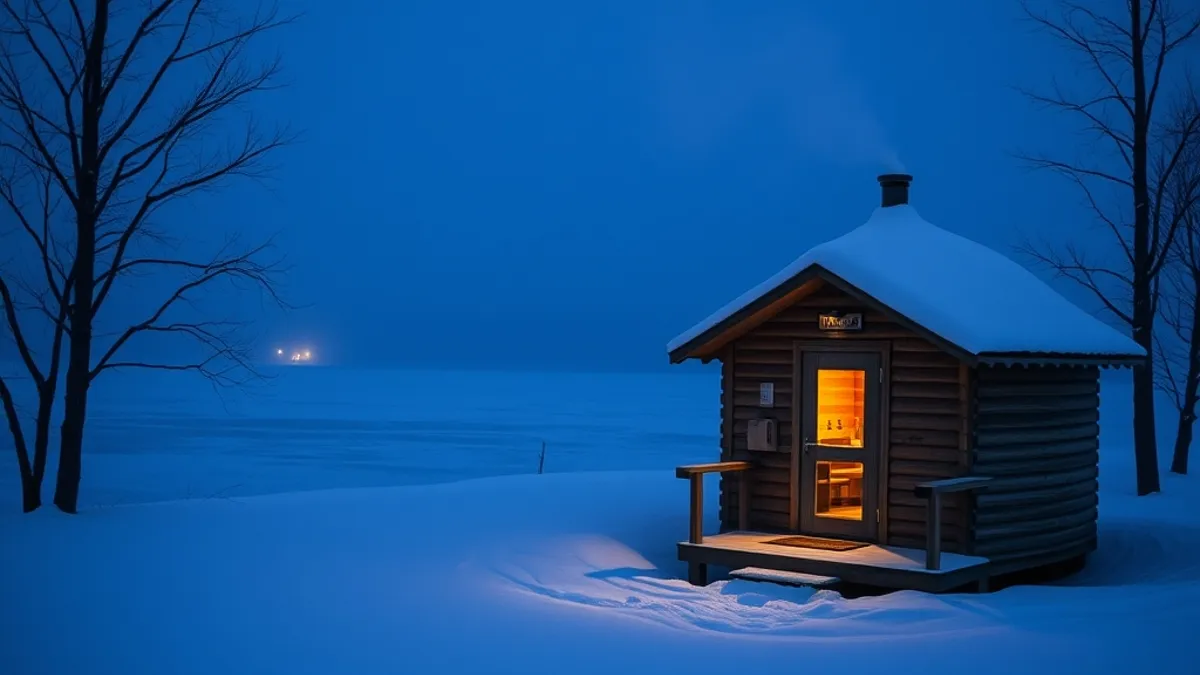
From December to March, the lakes freeze and the region enters its most dramatic phase. You get snow activities, frozen-lake scenery, and the best odds of seeing the northern lights through a glass roof. The trade-off is light: days offer roughly 4 to 6 hours of it. If auroras are the goal, that darkness is exactly what you want.
Sauna Culture: What to Expect and How to Join In
If there’s one thing that separates a Finnish glamping stay from almost anywhere else, it’s the sauna. Almost every Finnish glamping site includes sauna access, often a wood-fired lakeside sauna, and it’s usually part of the nightly rate rather than an add-on. It’s not a spa accessory here; it’s the centerpiece of the evening.
The Finnish rhythm
The classic cycle is simple and addictive: heat up in the sauna until you’re thoroughly sweating, then cool off with a swim in the lake, or in winter, a roll in the snow. Then repeat. Most people do two or three rounds in an evening, and the post-sauna calm at the end is the reason Finns are so devoted to it. Don’t feel pressured to stay long on your first round; step out whenever you need to and build up gradually.
If you’re visiting in July or early August, the lake water is at its warmest for swimming, around 17 to 22°C, which makes the cooling-off dip far less intimidating. In winter, the cold plunge is bracing in a completely different way, but the contrast is exactly what makes the sauna feel so rewarding. Trust the locals on this one: the more dramatic the temperature swing, the better you’ll sleep afterward.
On nudity, Finnish practice is typically to sauna nude or with a towel. Practices vary between sites, especially around mixed and shared sauna sessions, so ask your host what’s customary there. If you’d rather keep things private, most sites offer private sauna slots that can usually be booked by the hour, which is a great option for couples or first-timers who want a low-pressure introduction. Bring two towels, one to sit on and one to dry off with, and plan your first session for your first evening, not your last.
Where to Base Yourself Around Saimaa and Päijänne
The Saimaa region is the headline act of Finnish Lakeland glamping, and for good reason. This is where you’ll find the widest selection of glass-roofed cabins, safari tents and lakeside pods, spread around a maze of islands and channels. It’s also the home waters of the Saimaa ringed seal, one of Europe’s rarest seals, and boat and kayak tours from the Savonlinna area give you a real chance of spotting one. Add the medieval Olavinlinna castle in Savonlinna and the easy access from Lappeenranta, and you have the most complete package in the region.
If your priority is silence rather than sightseeing, look north of Lahti to Lake Päijänne. Finland’s second-largest lake is ringed by deep pine forest, and many sites here feel genuinely remote while still sitting a manageable 1.5 to 2 hours from Helsinki by car. It’s the sweet spot for a first Lakeland trip when you want wilderness without a long transfer.
Don’t overlook the smaller lake towns, either. Kuopio and Jyväskylä both sit amid chains of mid-sized lakes and pair beautifully with a night under glass: spend the day on a lake cruise or exploring town, then retreat to a quiet pod for the evening. If you’d like a taste of forest cabin living before committing to Finland, a stay in secluded forest houses in Latvia’s Gauja region makes a lovely warm-up.
- Savonlinna surroundings: ideal for combining a glamping base with the annual opera festival at the castle, though expect higher demand in summer weeks.
- Lappeenranta side of Saimaa: the easiest rail connection from Helsinki, handy if you’d rather skip the rental car for part of the journey.
- Päijänne National Park area: some sites sit near marked paddling routes, so you can rent a canoe and explore forested islands right from your doorstep.
- Kuopio: home to one of Finland’s most famous smoke saunas, worth planning an extra night around if sauna culture is high on your list.
- Jyväskylä lakes: a good winter pick, since frozen smaller lakes are easier to walk across and explore than the vast open waters of Saimaa.
Booking, Budgeting and Getting There
Glamping around Saimaa and Päijänne has grown fast in recent years, and the most desirable accommodations now sell out far earlier than most travelers expect. That is especially true for the glass-roofed aurora cabins, of which a single site may only have two or three, so a late search in peak season often leaves you choosing between unpopular dates or a long drive from wherever is still available. A little planning goes a long way here, and the steps below will save you both money and disappointment.
- Choose your season before you choose a site. Summer dates under the midnight sun and winter aurora nights sell on completely different timetables, so lock in your travel window first and search only within it.
- Reserve early, especially for glass cabins. Aim to book summer stays 3 to 6 months ahead, and give winter aurora cabins the same courtesy, often 4 to 6 months of lead time, since a single site may only have two or three such cabins.
- Budget realistically per night. Summer rates typically run about €120 to €300 for a two-person cabin or tent, while winter glass cabins often range from €150 to €400. Rates usually reflect two-person occupancy, so check what an extra guest adds.
- Plan your transfer from Helsinki. Most sites sit 1 to 3 hours away by rental car, which gives you the freedom to stop at lakeside farm shops and viewpoints along the way.
- Ask about train station pick-ups. Some sites around Lahti or Mikkeli offer a transfer from the station, which can turn a car-free trip into a realistic option if you confirm it in advance.
One last tip: cancellation policies vary a lot between small family-run sites and larger resorts. Read them carefully before paying, and if a site offers a flexible rate for a small difference, it’s often worth it in a country where a storm can close a forest road. It also pays to email the host directly with any specific questions, such as whether the sauna is shared or privately bookable, whether bedding and towels are included, and how reliable the road access is in winter. Small Finnish sites are usually run by hands-on owners who answer quickly, and their replies tell you a lot about what your stay will actually be like. A short message before booking can prevent most of the surprises that reviews complain about later.
Packing and On-Site Realities
Lakeland glamping is comfortable, but it’s still the Finnish outdoors, and the weather has teeth even in high summer. July nights can drop to around 10°C, so a warm mid-layer belongs in your bag no matter the forecast. Days can be genuinely warm, but think in layers rather than a single jacket.
Then there are the mosquitoes. In June and July, insects are most active near water, which is exactly where your lakeside pod sits. Good repellent and a lightweight head net turn evenings outdoors from a battle into a pleasure, and most travelers find the problem fades once they’re inside a sealed cabin.
On-site facilities vary more than photos suggest. Many sites offer shared kitchens or fire huts where you can cook over an open flame, which is half the charm. Winter stays usually include heated floors or a wood stove, but power supply and running water can be limited in remote glass cabins, so check the setup details before you book rather than after you arrive.
- Footwear: waterproof shoes or light hiking boots are more useful than sandals, since grass around lakes stays dewy well into the day.
- Swimwear and a quick-dry towel: essential for the sauna-to-lake cycle, and handy in winter too if you brave an ice hole.
- An eye mask: under the midnight sun it stays light all night, and thin glass-roof blinds don’t always block it fully.
- A headlamp: paths between cabins and fire huts are often unlit, and in winter darkness falls mid-afternoon.
- Groceries: many rural sites are far from shops, so stock up in the last larger town before arriving.
Your Lakeland Glamping Trip at a Glance
Glamping in Finland’s Lakeland works very differently depending on when you go, and that is exactly what makes it special. A mid-summer stay means midnight sun, swimming in lakes around 17 to 22°C at their warmest, and lively sites that need booking 3 to 6 months ahead. A winter stay means frozen lakes, short days and the chance of northern lights through a glass roof, with aurora cabins often reserved 4 to 6 months in advance. September sits in between, trading crowds for ruska color and berry-filled forests.
Base yourself around Saimaa or Päijänne, budget roughly €120 to €400 per night depending on the season, and plan around the Finnish rhythm of sauna, lake, repeat. Pack for cool nights even in July and bring mosquito protection for early summer. If this guide helped you plan your own lake-country escape, leave a comment or share it with a fellow traveler.