Glamping in Kentucky and Tennessee promises something travelers keep searching for: a countryside escape where bourbon trails and rolling hills come with a real bed, a private bathroom and a fire pit at the end of the day. The problem is knowing where it actually delivers. Some listings are little more than a tent in a field, while others sit hours from the distilleries or trailheads you came for.
This guide breaks down exactly where to base yourself, from bluegrass pasture tents near Bardstown to ridgeline cabins in the Smokies. You’ll find the best seasons for weather and rates, what to look for in a quality stay, and how far ahead to book. Whether your trip leans toward tasting rooms or mountain air, the sections below cover both, so you can plan one trip that handles bourbon country and the high hills without sacrificing comfort.
Why Glamping in Kentucky and Tennessee Works for Bourbon and Mountain Trips
Kentucky’s bluegrass region is unusually well suited to this kind of trip. Distilleries, horse farms and open pastureland cluster within short drives of Louisville and Lexington, which means you can wake up in a tent on a working farm and be at a tasting room before lunch. Instead of shuttling between chain motels, you stay in the landscape the bourbon comes from.
Two regions, one itinerary
East Tennessee adds the other half of the equation. The Smoky Mountain ridgelines sit within reach of the same road trip, so one vacation can cover bourbon country and high hills without changing travel style. Drive a few hours south and the pasture views swap for forested ridges and park trailheads.
Glamping fills a real gap in both regions. Near the distilleries, lodging skews toward chain motels built for quick overnight stops, with little atmosphere. In the mountains, resort lodges offer comfort but at prices that climb fast in peak season. A well-chosen tent, yurt or cabin gives you the comfort of the lodge at closer to motel money, and usually with better views than either. The sections below show you where to base yourself in each region, when to go, and how to pick a stay that’s worth the drive.
Where to Base Yourself: Kentucky Bourbon Country
Louisville’s outskirts work well if your trip mixes city food with Bourbon Trail stops. You get restaurant evenings and urban breweries, then short morning drives out to the countryside. It’s the practical pick for travelers who want the trail without giving up a proper dinner scene.
Bardstown and the surrounding Nelson County countryside are the classic bourbon-country base. Several distilleries sit within a 20-30 minute drive, so you can comfortably fit two visits in a day with a long lunch between them. The pastures around town are also where many of the region’s best glamping sites operate, often on working farms with horses in view.
The Lexington area trades distillery density for scenery. Horse farm country here means pasture tents, long quiet nights and rolling fences that photograph beautifully in morning light. It suits travelers pacing their tastings rather than racing through them. If slow mornings and countryside atmosphere appeal to you, the vibe rhymes with what you’d find in Provence hideaways for lavender air and slow French countryside mornings.
- Ask whether the site sits on a working farm. Many pasture tents in the bluegrass region operate alongside active horse operations, and hosts often let guests watch morning feedings or walk the fence lines.
- Check drive times to specific distilleries, not just “near the trail.” The Bourbon Trail spans roughly 50+ distilleries, mostly within 35 miles of Louisville, so a Bardstown base and a Louisville base put you near very different clusters.
- Look for hosts who offer breakfast or local provisions. Farm-stay sites around Bardstown and Lexington frequently stock eggs, bread or local products, which matters when the nearest restaurant is a 20-minute drive away.
Where to Base Yourself: Tennessee Hills and the Smokies
Gatlinburg and Pigeon Forge give you full-service access to the Smokies: restaurants, grocery stores, dinner shows and every practical errand within minutes. The trade-off is crowds. Great Smoky Mountains National Park draws 12-14 million visitors yearly, and these two towns are at their busiest in June and October, when traffic and parking get genuinely frustrating.
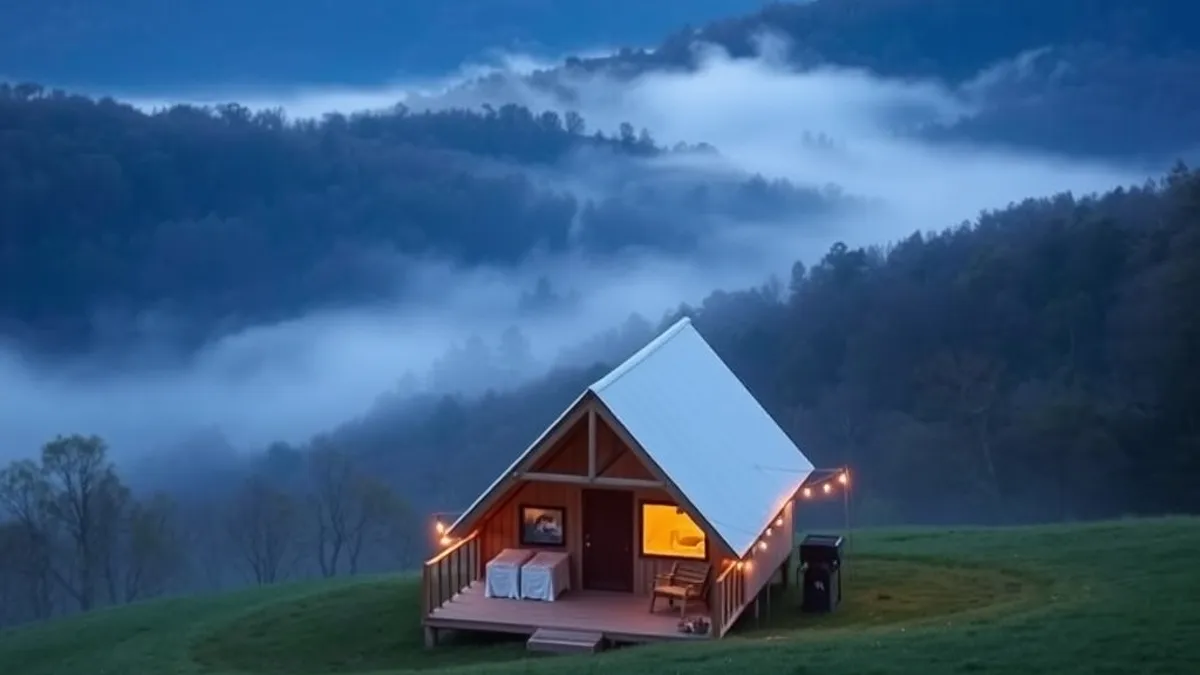
Townsend and Wears Valley sit on the quieter side of the same park. You still get reasonable access to trailheads and scenic drives, but ridgeline stays here come with dark evenings and mountain silence instead of Parkway traffic. For most glamping travelers, this is the better trade.
If you want even fewer people, look to the Cumberland Plateau and the Mammoth Cave-adjacent area of Kentucky. Mammoth Cave National Park sits about 90 minutes south of Louisville, and the surrounding plateau country offers dark skies, sandstone terrain and a fraction of the Smokies’ foot traffic. These spots suit travelers who care more about stargazing and quiet than attractions.
- Townsend calls itself “the peaceful side of the Smokies,” and the nickname holds: it’s the access point for the Little River area and a calmer route into the park than the Gatlinburg entrance.
- Wears Valley sits between Pigeon Forge and the park boundary, giving you a middle path: you can restock supplies in town, then retreat to a ridgeline cabin with valley views in under 20 minutes.
- Cumberland Plateau stays pair well with caving and hiking rather than attractions, since the area’s draw is scenery, waterfalls and dark-sky nights instead of shows and shops.
- Mammoth Cave-area glamping works as a Louisville add-on, letting you combine a bourbon-country stretch with underground tours without a long relocation day.
Best Seasons for Glamping in Kentucky and Tennessee
Timing makes a bigger difference here than in most glamping regions, because bourbon country and the Smokies both have strong seasonal rhythms. The sweet spot runs from April to June, when days sit comfortably in the 60-75°F range, the bluegrass pastures turn deep green, and rates stay below peak summer levels. You get long driving days without heat exhaustion and evenings warm enough to sit by the fire pit.
September and October are arguably even better. Temperatures stay comfortable, bourbon festival season kicks into gear around Kentucky’s distillery towns, and the Smokies begin their slow color change. If you want both a tasting room afternoon and a ridgeline hike in the same trip, this is the window that delivers it.
Peak foliage and its price tag
Mid-October to early November is peak leaf season in the Smokies, and the region knows it. Expect premium rates and the tightest availability of the year, especially on weekends near Gatlinburg and Pigeon Forge. If your dates are fixed to this window, book as far ahead as you possibly can.
July and August bring humidity, afternoon thunderstorms and the heaviest crowds, since the park draws its biggest numbers then. Winter is a different story: many tent-based sites close for the season, so availability is limited, but the stays that do operate are the cheapest of the year. Check whether a winter listing has real heating before you commit.
Stay Types and How to Spot the Best Options
The glamping market in Kentucky and Tennessee ranges from bare-bones canvas tents to cabins with full kitchens, and the right choice depends on how you spend your days. Bourbon country trips involve short drives between distilleries, so you spend little time at the site and can live happily in a simpler setup. Smokies trips are the opposite: you’ll linger at the property between hikes, and comfort matters more.
Safari tents and yurts typically run $120-$250 per night and suit pasture settings around Bardstown or Lexington, where a canvas roof over horse country feels like part of the experience. Luxury cabins and A-frames usually cost $250-$450 and fit Smokies trips where the deck, hot tub and view are half the reason you booked.
What to check before you book
- Real beds: Confirm the listing specifies an actual mattress and frame, not a futon or air mattress, since a week of distillery driving plus poor sleep is a rough combination.
- Private bathrooms: Some tent sites share a bathhouse; if that matters to you, filter for en-suite or private bath in the listing details rather than assuming.
- Heating or AC: Spring and fall nights in the hills can drop near freezing, so ask whether the unit has a heater, mini-split or wood stove.
- Fire pit: A dedicated fire ring with provided firewood turns an ordinary evening into the highlight of the stay.
- Recent cleanliness reviews: Skip any listing without reviews from the past season that specifically mention cleanliness; older or vague feedback is a warning sign.
One more thing: prefer sites with a covered porch or indoor lounge. Appalachian weather turns quickly, and a sudden afternoon downpour is far more pleasant under a roofed porch with a coffee in hand than inside a hot canvas tent.
Booking Timelines and Trip Logistics
Glamping in this region works best when you treat it as a hub-and-spoke trip: one base, several day drives. That makes booking timelines and transportation the two logistics that shape everything else. Get those right and the rest of the itinerary tends to fall into place, whether you are splitting your week between Kentucky pastures and Tennessee ridgelines or sticking to one corner of the region.
- Lock in your dates early. Reserve 2-3 months ahead for spring and fall weekends, and 4-6 months for October in the Smokies, when peak foliage draws the year’s heaviest demand and the best sites sell out first. If you have flexible dates, ask hosts about midweek gaps before committing to a weekend.
- Rent a car. Distillery hopping and park trailheads are typically 30-90 minute drives from most glamping sites, and rideshare coverage thins out fast in rural Nelson County and around the park edges. Book the rental with your flights and confirm it has enough seats for your group plus any cases you plan to bring home.
- Plan your tastings responsibly. Arrange a designated driver or a bourbon tour service for distillery days; tastings make driving unsafe, and several distilleries pour generously even at standard flights. Many tour operators cover multiple distilleries in a single day, which also removes the parking hassle at popular stops.
- Shift to weekdays where you can. Weekday stays cut rates noticeably and ease parking pressure at popular trailheads, which can otherwise fill by mid-morning in peak seasons. A Monday-to-Thursday pattern often gets you the same weather with quieter sites and more attentive hosts.
Build slack into each day as well. A distillery tour can run longer than expected, and mountain traffic around the Smokies thickens fast in October. A realistic two-stop itinerary per day beats an ambitious four-stop plan that collapses by mid-afternoon, and it leaves room for the unplanned overlook or farm stand that often ends up being the trip’s best memory. Check opening days for smaller distilleries before you set the route, since some close midweek, and keep a backup stop in mind in case a tour is fully booked.
Wrapping Up Your Bourbon Country and Hills Trip
If you’ve been searching for a countryside escape that pairs bourbon trails with real comfort, glamping in Kentucky and Tennessee delivers exactly that. Kentucky’s pastures put you close to distillery country, while Tennessee’s ridgelines add mountain air to the same trip. Aim for April through June or September through October, when the weather stays mild and the scenery does the heavy lifting.
Match your stay to your itinerary: pasture tents and yurts work best for distillery-hopping days, while luxury cabins suit weeks centered on the Smokies. Fall is the tightest window, especially October, so book early if leaf season is the goal. If this helped you plan your trip, leave a comment or share the article with a fellow traveler.