Choosing between a lodge dry season vs green season stay is the biggest decision most safari planners face. Dry months promise reliable wildlife viewing but come with peak prices and crowded sightings, while the green season offers lower rates and quieter camps at the cost of thicker bush and some rain. It is a genuine trade-off, and the right answer depends on your budget, your priorities and how flexible your dates are.
This guide breaks the decision down into clear parts: what the dry season really delivers at a lodge, why the green season rewards flexible travelers, how big the price gaps actually are, and what crowds and camp atmosphere look like in each. We will also cover how far ahead to book for each season and how to match the timing to your travel style, so you can commit to dates with confidence.
What the Dry Season Really Offers at a Lodge
From June to October, the bush thins out dramatically. Grasses die back, leaves drop, and water becomes scarce away from the main rivers and waterholes. Animals respond by concentrating around these permanent water sources, which means your guide knows roughly where to look before the day even starts. Game drives become noticeably more productive, with longer, clearer views of elephants, big cats and general game than you would get in thick green cover.
What the weather feels like
Expect dry, dusty conditions and clear skies for most of your stay. Mornings are genuinely cold on an open vehicle, typically around 10-15°C at dawn, so pack a fleece and beanie even in the middle of the day’s heat. Dust is the main trade-off: it hangs in the air on game drives and settles on camera gear, but it also produces those hazy golden backdrops photographers love. With little cloud and low humidity, light stays predictable and sharp through the day.
The migration factor
This window also lines up with the Great Migration river crossings, when enormous herds push across the Mara River in the Masai Mara and the northern Serengeti, braving crocodile-infested water. Crossings are never guaranteed on any given day, but July to October is the period when they typically occur, and lodges in these areas fill up fastest as a result. If river crossings are on your bucket list, this is the season that puts you there.
Why the Green Season Rewards Flexible Travelers
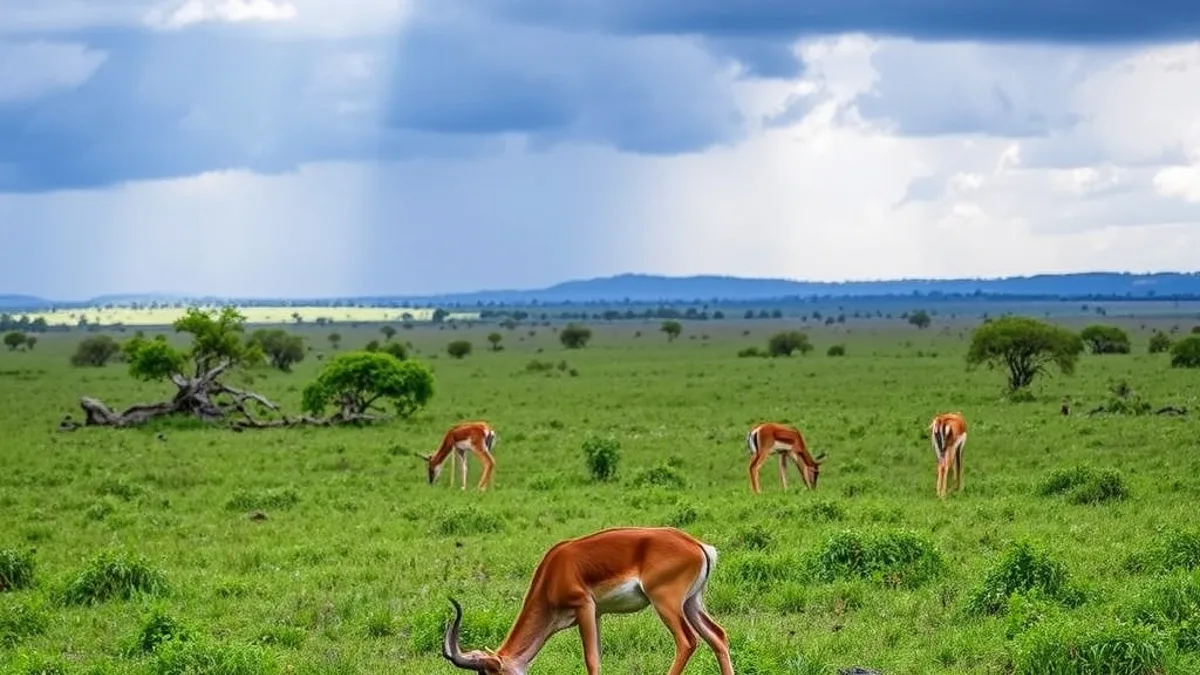
When the rains arrive from November to May, the bush transforms. Everything greens up, wildflowers appear, and the air clears of dry-season dust. Skies become part of the show, with towering afternoon thunderheads that make for spectacular photography. Because fewer vehicles are out at sightings, you will often have a leopard or a cheetah to yourself rather than sharing the moment with a line of safari trucks.
Calving season drama
In January and February, the southern Serengeti enters calving season, when hundreds of thousands of wildebeest drop their young on the short-grass plains. Predators follow in force, and the result is some of the most dramatic predator-prey action of the year. Cheetah hunts, lion interactions and hyena clashes play out in open plains with excellent visibility, and newborn antelope and zebra foals add constant activity to every drive.
A birdwatcher’s peak
Green season is also when migratory bird species arrive from Europe and other parts of Africa, adding hundreds of species that are simply absent during the dry months. Resplendent kingfishers, storks, cuckoos and raptors move through in numbers, and many resident species are in breeding plumage. If birds matter to you at all, the wet months are easily the richer time to visit. The trade-off is thicker vegetation, which can make larger mammals harder to spot, so manage expectations accordingly.
Price Gaps Between Dry Season and Green Season Lodges
The price difference between seasons is substantial and often the deciding factor for travelers weighing a safari. At the same lodges, green season rates typically run 30-50% below peak dry-season pricing, which can easily mean the difference between booking a mid-range camp and a top-end one on the same budget. Some travelers use the savings in other ways too: adding extra nights at a favorite camp, upgrading to a better room or tent category, or extending the trip entirely to include a second park or a beach finish. If your dates are flexible, asking an operator to compare the same itinerary in both seasons is one of the fastest ways to see what the discount is really worth.
There are practical catches to understand before you chase the discount. Green season pricing usually reflects real trade-offs, not just a marketing gimmick, so it pays to verify a few things with any lodge or operator before committing to a stay:
- Opening months: some lodges close entirely during the wettest weeks or switch to reduced maintenance schedules, so confirm your specific camp is open and fully operational for your dates. A heavily discounted rate can sometimes be a sign of a camp in shutdown mode.
- Access and road conditions: heavy rains can make some dirt airstrips and tracks difficult, which may affect flight schedules and drive times, so ask your operator how conditions typically are at that time of year. Delays and longer transfers are common in some parks.
- Facility changes: a lodge on a maintenance schedule may rotate facilities, close a pool or run a reduced menu, so check what will actually be available during your stay rather than assuming the brochure matches reality.
Shoulder months offer a smart middle path for travelers who want value without the full green-season gamble. June and November can deliver near-dry-season viewing conditions at mid-range prices, sitting just outside the peak window. June often catches the tail end of good game viewing before the busiest weeks arrive, while November can offer early rains, fresh green scenery and far thinner crowds at many parks. Availability is also easier to secure in these months than in the peak season rush.
Crowds and Camp Atmosphere by Season
What peak season actually feels like
From July to October, the major parks run at full throttle. Camps fill their tents, safari vehicles get booked out weeks in advance, and a single leopard in a tree can attract half a dozen land cruisers within minutes. This is especially true around the Great Migration, when visitor numbers in the Masai Mara and northern Serengeti reach their highest. You will still see incredible wildlife, but patience and a good guide matter more than ever.
Shared sightings are the trade-off for reliable game viewing. Most camps manage this well, with drivers taking turns at a sighting and radio etiquette keeping things orderly. Still, expect company at the best sightings and plan quieter activities, like bush walks or sundowners, to balance your days.
The green season alternative
During the green season, many camps operate at roughly half capacity. Game drives often feel like private safaris, with fewer vehicles at sightings and guides who have more time to answer questions and follow animals at a relaxed pace. Staff attention improves too, since there are fewer guests per team member. For travelers who value atmosphere as much as wildlife, this is a real advantage.
If you want the best of both worlds, private concessions and community conservancies limit vehicle numbers even during peak months. The trade-off is cost, as these areas carry higher rates than park-based camps, but the exclusivity can be worth it for a special trip.
How to Book the Right Season for Your Budget
Booking the right season is as much about timing your reservation as choosing your dates. Peak and green season work very differently, and lodges price and fill their rooms accordingly. A camp that looks available in March can be fully committed for August by early in the year, while the same tent might sit empty in April. Planning around these patterns saves money and secures the camps you actually want.
- Book dry-season migration camps 9-12 months ahead. Camps along the Masai Mara and Serengeti migration routes fill up fastest for July to October, when river crossings draw travelers from around the world. Reserve early to secure specific camps and good-value tent categories, since the cheapest rooms go first.
- Lock in green-season stays 2-4 months out. With camps running below capacity, there is usually room to book closer to your travel dates. Flexibility on dates or camp choices gives you extra leverage, and last-minute deals do appear.
- Negotiate longer-stay rates in the green season. Lodges eager for occupancy often reward guests who stay four nights or more, so ask about extended-stay pricing rather than booking night by night.
- Match the season to your priorities. First-timers and photographers usually benefit from dry-month conditions, while repeat visitors and birders get the most out of the green season.
Whichever route you take, confirm exactly what your rate includes before paying a deposit. Park fees and conservation levies change regularly, and some quotes exclude them entirely, so ask your operator for a full breakdown in writing. It is also worth asking about single supplements, child rates and any seasonal closures, since a few lodges reduce operations during the wettest weeks. A short email now can prevent an unpleasant surprise at check-in.
Choosing Between Lodge Dry Season vs Green Season
There is no universally right answer to the dry season versus green season question. The dry season wins on wildlife density and reliability, with animals easier to spot near permanent water and in sparse bush. The green season wins on price and atmosphere, offering solitude, lush landscapes and dramatic skies at rates well below peak-season levels.
Think about your travel style
Honeymooners often prefer exclusive green-season camps, where empty vehicles and attentive staff create a private, romantic atmosphere at a fraction of peak pricing. Bucket-list travelers, especially those chasing the Great Migration river crossings, should target July to October and accept the crowds and higher costs as part of the experience. Repeat visitors who have already seen the highlights often find the green season’s newborn animals and predator activity more rewarding than another peak-season drive.
Check the local pattern before you commit
Regional wet seasons vary by several weeks, so a park that is soggy in November may be firm and green by December. Look up the rainfall pattern for your specific park rather than relying on country-wide averages, and ask your operator how conditions typically affect road access and game viewing there.
It also pays to ask about lodge opening schedules, since some camps reduce operations or close for maintenance during the wettest weeks. A little research here can turn a good safari into a great one, and it protects you from booking a lodge that is not running at full capacity when you arrive.
Final Word on Timing Your Lodge Stay
So, is paying peak rates for the dry months worth it? If spotting wildlife easily is your main goal, yes. The dry season, from June to October, delivers peak wildlife viewing near permanent water and clear skies, but it comes with peak prices and fuller camps. If you would rather pay less for a quieter stay, the green season from November to May offers 30-50% savings, lush landscapes and newborn animals, with thicker bush making sightings a little harder.
Ultimately, the right call comes down to what you value most in a safari and how flexible your dates are. First-timers and photographers tend to get the most from dry-season lodges, while repeat visitors and birders often prefer the green season. Whichever way you lean, we would love to hear how you decided, so leave a comment or share this article with a fellow traveler.