Booking a villa for a trip with a baby or toddler comes with a nagging question: does “family-friendly” mean a fully equipped, genuinely safe space, or just a dusty crib pushed into a corner? That uncertainty is exactly what this article resolves, before you pack a single bag. Baby-proofing a villa is a shared job between the host and you, and knowing where each side’s responsibilities lie makes the difference between relaxing and constantly scanning the room.
We’ll walk through what villa hosts usually provide for babies, the questions worth asking before you pay a deposit, and the compact kit you should bring yourself. Then we’ll cover pool and outdoor safety, a quick room-by-room check for arrival day, extra precautions for tropical and remote locations, and a short takeaway that ties it all together. By the end, you’ll know exactly what to request, what to pack and what to inspect.
What Villa Hosts Usually Provide for Babies
The good news is that most upscale villas already own the basics. A crib and high chair are typically supplied free of charge — but only if you request them 2–4 weeks before arrival. Some hosts also keep a stroller on hand, and the better family-focused properties go further: baby baths, bottle warmers, bed rails, and even a supply of outlet covers already installed around the villa.
The catch is timing. Hosts often store this gear off-site or borrow it from neighbors, so a last-minute message two days before check-in frequently ends with “sorry, we don’t have one.” Ask early, and get the answer in writing.
If the villa has no cot at all
Where the villa genuinely lacks a crib, third-party baby equipment rental services fill the gap. Portable travel cots rent for roughly $10–25 per day, and in resort areas these companies often offer same-day delivery straight to the villa. If you’re staying a week or more, compare that total against simply packing your own lightweight travel cot.
One final rule: treat “family-friendly” in the listing as a starting point, not a guarantee. The amenities list in your booking confirmation is what actually counts — that’s the document that tells you whether the crib is confirmed or just a hopeful suggestion.
Questions to Ask the Host Before You Book
The most important conversations with a host happen before you pay, not after. A pool fence or pool alarm is the single most requested baby-safety feature in family villa listings, so ask about it directly and request photos of the pool area before paying a deposit. Photos tell you far more than a listing description ever will — you’ll see the fence height, the gate, and whether the terrace edges up to the water. If the host hesitates to send pictures or gives vague answers, treat that as useful information about how seriously they take family bookings.
Timing matters as well. Raise these questions when booking 3–6 months ahead for peak season windows (December–March or June–August), so the host has a realistic chance to borrow, rent or buy whatever your family needs before you arrive. Early questions also give you room to walk away and pick a better-equipped villa if the answers disappoint.
- Crib type: Ask exactly what model awaits you. A proper cot with slats under 6 cm apart is safer than a fold-out travel cot for babies under 12 months, who can get limbs caught in wider gaps or zippers. Ask for the brand or a photo of the actual cot, not just a promise of “a crib”.
- Stairs: Confirm whether staircases can be gated at both the top and the bottom, and ask whether the villa is single-level if your toddler is a confident climber — a split-level layout changes everything.
- Written confirmation: Once the host answers, ask for the agreed baby items to appear in the booking confirmation, so there’s no “we thought you were bringing one” moment at check-in.
What to Bring in Your Own Baby-Proofing Kit
Even the most accommodating host can’t childproof everything, so pack a compact kit of 10–15 items that fits in a single carry-on pouch. The core pieces are outlet covers, corner guards, cabinet locks, a door pinch guard and short cable ties for tidying blind cords and dangling wires. These weigh almost nothing, take up hardly any luggage space and solve the most common indoor hazards within minutes of arrival — long before your toddler has finished exploring the living room.
The two heavier items deserve their own thought. A portable stair gate that fits openings of about 75–110 cm covers most villa staircases — measure against this range before you travel, since villa stair openings vary widely and a gate that’s even slightly too small is useless. And because many villas forbid screwing into walls or banisters, bring self-adhesive mounts so you can install the gate without leaving marks or losing your deposit. Test the adhesive at home first; some grips fail on varnished wood.
- A small baby monitor: Choose one with a 100–200 m range, which covers most villa layouts and lets you relax on the terrace while your baby naps indoors.
- Mosquito protection: Villas rarely stock plug-in mosquito repellent alternatives, so bring your own for the nursery and sleeping areas.
- A travel blackout blind: Lightweight suction or clip-on blinds turn bright villa bedrooms into a sleep-friendly space, and they’re almost never provided.
- Spare adhesive pads: Corner guards and cabinet locks lose grip on dusty or textured surfaces, so a few extra pads rescue mounts that fall off on day two.
Pool and Outdoor Safety in a Private Villa
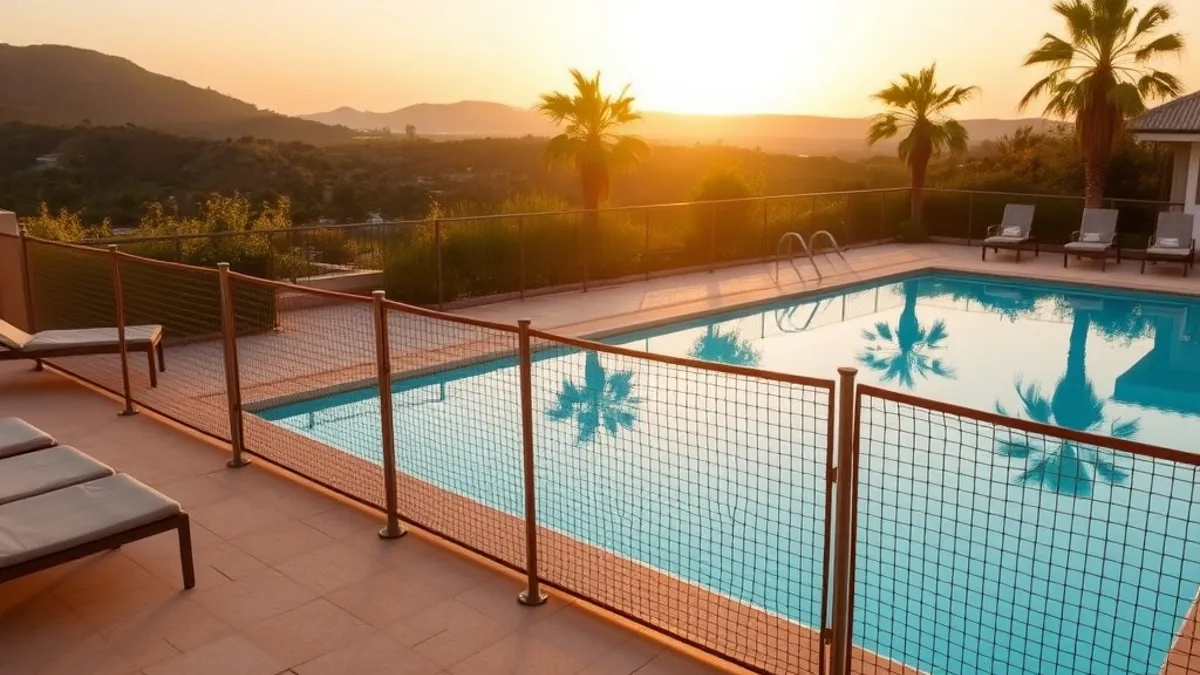
The pool is the reason many families choose a villa in the first place — and it is also the single biggest safety question. A pool fence or pool alarm tops the wish list of traveling parents for good reason, but a listing photo is not proof. Confirm on arrival that the fence latch works or the alarm actually sounds, and never rely on an unlocked gate staying shut with a determined toddler around. A child only needs a few unsupervised seconds.
Not every pool can be fenced. Infinity pools, garden ponds and unfenced terraces are common in villa design precisely because they look open and dramatic. These setups demand constant line-of-sight supervision: assign one adult per swimming session, with no phone scrolling and no “just popping inside.” Rotating the duty in one-hour shifts works well for groups, because vigilance drops fast when a single parent is also managing sunscreen, snacks and naps.
Walk the garden before your toddler does
Hosts rarely think like parents, so do your own sweep of the outdoor space. Look for open drains, steep drops, unfenced balconies and garden tools left within reach. Check whether outdoor furniture can be dragged to a low wall or rail and used as a climbing aid.
If the pool has no barrier at all, ask the host well before your arrival date whether a temporary mesh fence can be installed. Many villa owners will arrange one for a small fee, and it is far easier for them to organize before you land than after. Raise it in the same conversation as your other gear requests, so the answer is in writing before you pay anything.
A Room-by-Room Check Inside the Villa
Once the outdoor check is done, give the interior a structured walk-through. Twenty minutes on day one is all it takes, and doing it before the holiday rhythm takes over means your vigilance is still at its sharpest. Work through the villa room by room in the same order every time, so nothing gets missed even with jet lag and excited kids in the mix:
- Kitchen first. This is one of the two rooms where toddler incidents most often happen, so treat it as your priority. Move detergents, cleaning sprays, dishwashing tablets and knives to high shelves, and use your own cabinet locks on the low drawers within toddler reach. Unplug small appliances and wind the cords up, since a dangling cord from a kettle or toaster can be pulled down in seconds.
- Living areas next. Scan for freestanding lamps, glass coffee tables, unanchored bookshelves and TV units that a cruising toddler can pull over. Push what you can against walls, tuck loose cables behind furniture, and temporarily retire anything wobbly to a back room the family will not use.
- Bedrooms and bathrooms last. Check window locks and blind cords, then set up the crib away from curtains, heaters and sockets. Loop blind cords high or tuck them behind a cleat. In bathrooms, move medications and toiletries out of reach and check that toilet lids can be closed.
Resist the urge to skip the sweep because the villa looks polished or the host seems attentive. Polished and attentive do not equal childproof — most rental villas are furnished with adult guests in mind, and hazards like a low glass table or an unsecured lamp are easy to overlook at check-in. The twenty minutes you invest on arrival morning, while your energy and attention are still fresh, is what lets everyone relax for the rest of the week. If you spot something serious you cannot fix yourself, report it to the host or property manager right away so they can address it while you are still there.
Baby-Proofing for Tropical and Remote Villa Locations
Tropical villas play by different rules than a suburban rental, and the biggest difference is air. Villas in Bali, Zanzibar or the Maldives often live with open-air layouts — living rooms without full walls, bedrooms that breathe through louvred shutters, bathrooms that are partly outdoors. That design is wonderful for you and complicated for a baby. Add a mosquito net over the crib, and check on arrival that window screens close fully and without gaps. If you are browsing options in Bali, areas like the quiet enclaves around Ubud surrounded by rice fields and tropical serenity tend to offer that open-air style, so build the net and screen check into your arrival routine.
Walk the whole property, not just the villa
Remote villas come with their own geography. Unpaved paths, steps without rails and staff quarters with separate hazards are all common, so walk the entire property with your child’s reach in mind — including areas your toddler will only occasionally pass through.
Also ask whether the villa has filtered drinking water or a supply of bottled water suitable for preparing formula. In remote locations this is not a given, and it is far better to know before you arrive than to improvise on day one.
One last tropical habit to build: quiet, green surroundings usually mean wildlife at dusk. Keep doors closed from late afternoon and store snacks out of reach, because monkeys and other curious visitors have a better nose for your baby’s biscuit stash than you might expect.
The Takeaway for a Safe Villa Stay
If you have ever wondered whether a “family-friendly” villa means a fully equipped space or just a crib in a corner, the answer is now in your hands. Baby-proofing a villa comes down to three moves: confirm what the host provides well before you travel, pack a compact kit of your own, and do a room-by-room sweep on arrival. The pool and the kitchen deserve your first attention, since they are where toddler incidents most often happen.
Timing matters too. If your trip falls in the December–March or June–August window, reserve your villa early enough that hosts have time to source a proper cot, a high chair and a pool barrier. With those steps done, a private villa can be the easiest and safest base a traveling family can choose. If this helped you plan, leave a comment or share the article with another traveling family.