Most first-time safari guests are surprised by how much a lodge check-in actually involves. Between the welcome drink, the paperwork, the safety briefing and the walk to your tent, you’ll absorb a lot of information in a short time — and it’s natural to worry you’ll forget something important about camp rules or wildlife safety.
This guide walks you through the whole arrival process, step by step. We’ll cover what happens at a bush lodge check-in, what managers tell you before dark, how camp orientation works, and the daily rhythm of drives and meals you’ll be asked to follow. You’ll also find the questions worth asking before you unpack, plus timing tips for booking and arriving so your first evening runs smoothly. By the end, you’ll know exactly what to expect — and can focus on the reason you came.
What Happens at a Bush Lodge Check-In, Step by Step
Arriving at a bush lodge feels very different from checking into a city hotel, but the process follows a familiar pattern. Most camps can’t process guests in seconds the way a front desk in town can, partly because everything runs on the rhythm of game drives and partly because the briefing you receive genuinely matters. Here’s what typically happens from the moment you step out of the vehicle.
- Welcome drink and cold towel. Staff usually greet you with something refreshing while you stretch your legs after the journey. It’s a small ritual, but it gives the manager a moment to introduce themselves and the camp, and for you to ask early questions.
- Registration. You’ll fill in passports and payment details at the main lodge. Have these handy rather than buried in checked luggage, since your bags may already be on their way to your tent.
- Safety briefing and orientation. Before you’re shown to your room, staff explain camp rules and walk you through the property. This is the heart of check-in, so listen closely rather than scrolling through photos.
- Escorted to your tent. A staff member takes you and your luggage to your room and points out how everything works, from solar power to the bucket shower if there is one.
Expect the whole process to run 30-60 minutes, longer if lunch or a late-afternoon drive follows right away. Standard check-in windows are 12:00-14:00, timed after the morning game drive returns to camp. That timing works in your favor: you arrive, settle in over lunch, and head out again on the afternoon drive without wasting daylight on paperwork.
Because staff often transport luggage separately, keep medications, cameras and travel documents in a daypack with you. Wear comfortable clothes you can sit down in, since you may go straight from the vehicle to lunch. If you’re arriving by light aircraft or a long road transfer, a cold drink and a shaded seat at the main lodge will feel well earned, so give yourself a moment to enjoy it before the briefing begins.
The Safety Briefing: What Managers Will Tell You Before Dark
This is the part of check-in that deserves your full attention, even if the briefing itself lasts only a few minutes. Most bush camps are unfenced, which means animals can and do move through camp at any hour — day or night. Elephants, hippos, baboons and hyenas are regular visitors to lodge pathways, and staff take this seriously. So should you. The rules you learn here are not formalities; they are the reason guests stay safe year after year.
The manager will walk you through the essentials before you’re left alone in your room. While the specifics vary slightly between camps, most briefings cover the following:
- Escorts after dark. You’ll be told never to walk alone at night. Wait for a staff escort or radio for someone to collect you from your tent, even for a short trip to the dining area. This applies every night of your stay, not just the first one.
- Keeping wildlife out of your tent. Zips should stay fully closed at all times, and food and toiletries need storing out of reach — animals are drawn to scents you might not even notice.
- Deck discipline. Shoes, bags and clothing left outside overnight can disappear or attract curious visitors, so bring everything in before dusk.
- Wildlife encounters on paths. If you come across an animal during daylight, stand still, stay quiet and follow any staff instructions until it moves off.
None of this is meant to alarm you. Unfenced camps have well-established routines, and guests who follow the briefing quickly settle into them. Listen carefully, ask questions if anything is unclear, and you’ll find the safety rules become second nature by your second evening in camp.
Camp Orientation: Finding Your Way Around the Property
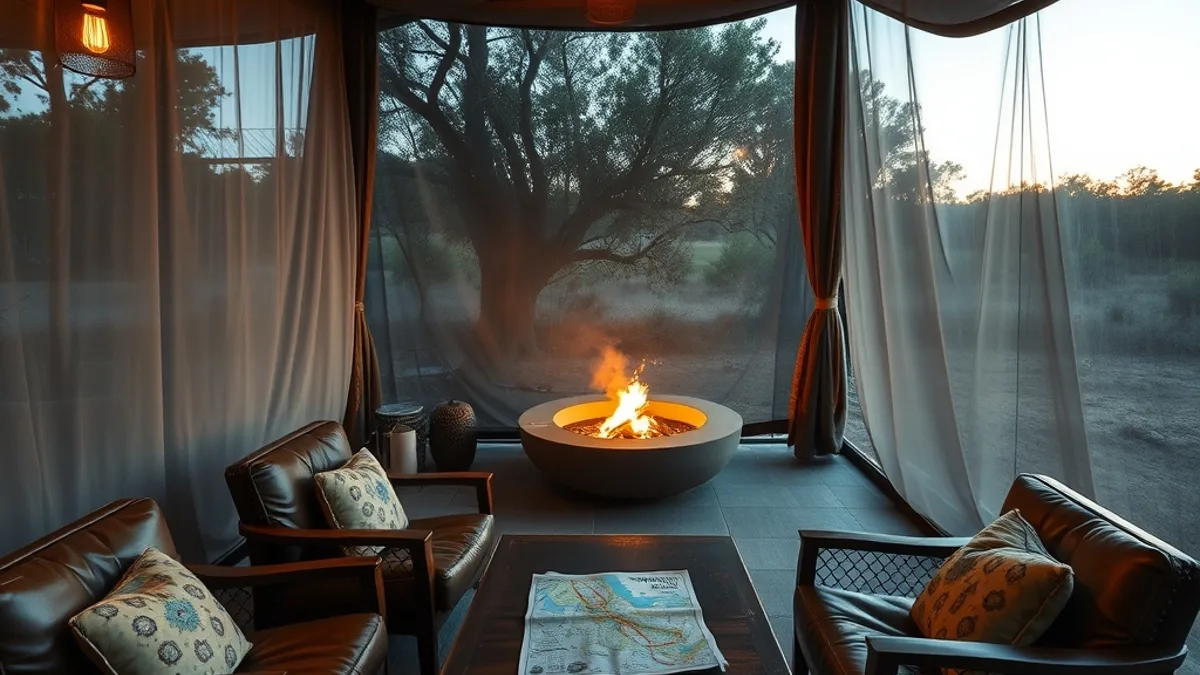
After the safety talk, a staff member walks you to your tent or chalet, pointing out the main lodge, dining area, pool and fire pit along the way. This walk doubles as your map of the property, so it’s worth paying attention to the layout of pathways — especially which routes are safe to use in daylight only. Many camps have paths that guests simply don’t use after dark without an escort.
How to summon help
Orientation also covers emergency signals. Most rooms are equipped with a whistle, radio or emergency horn, and staff will show you exactly where it’s kept and when to use it. If you hear a camp-wide signal during your stay, stay in your room and wait for staff rather than stepping outside.
Practical questions to raise on the walk
The walk to your room is the ideal moment to ask about logistics. Wi-Fi coverage is often limited to the main area rather than the tents, so find out where you can get online and where the charging points are. Laundry is usually offered, but turnaround times vary — in remote camps it can take a day or more, which matters if you’re packing light. Asking now means you can plan your laundry cycle around game drives rather than discovering the schedule halfway through your stay. By the time you reach your tent, you should know the lay of the land well enough to feel at home.
The Daily Rhythm: Meal Times, Game Drives and Quiet Hours
Life at a bush camp runs on a rhythm set by the animals, not by you. Most properties wake guests with a gentle knock or soft call around 05:00-05:30, and the morning game drive typically rolls out between 05:30 and 06:00, when predators are still active and the light is at its best. You’ll return mid-morning to a full brunch, then have the heat of the day to yourself.
The afternoon follows a gentler pace. Tea, coffee and cakes are served in the main area before the second drive, which usually departs around 15:30-16:00 and stays out until sundown. Many camps add a short night drive on the way back, which is often when you’ll spot nocturnal species. Dinner follows at 19:00-19:30, frequently a communal affair around a long table, and lights-out is expected by 22:00-22:30 so guests aren’t wandering after dark.
Use the midday gap wisely. This is the time for naps, editing photos, journaling or simply watching the waterhole from your deck. If you have special requests, such as a private dinner or a celebratory cake, mention them at check-in so the kitchen can plan ahead.
- Wake-up call style varies: some camps knock on your door, others use a radio call or a staff member waiting outside with coffee and rusks before you even dress.
- Drive durations differ by property: expect roughly three to four hours per drive, though some reserves with strict gate rules keep drives shorter.
- Quiet hours matter for wildlife: generators, music and loud conversation are usually switched off in the evening so animals near camp aren’t disturbed.
- Siesta logistics: ask at check-in whether your tent has a fan or plunge pool for the midday heat, as rooms cool differently across a property.
Questions Worth Asking Before You Unpack
A few well-chosen questions at check-in can save you confusion later, and camp managers genuinely expect them. The most important one concerns fencing: many camps are unfenced, meaning animals can and do walk through at any hour, while some family-oriented properties have partial fencing. Ask directly what the escort policy is at night, since this varies between properties and affects how freely you can move after dinner.
Money and logistics come next. Clarify exactly what your rate covers, because drink inclusions differ widely, from all local beverages to strictly limited house brands. Tipping also works differently in the bush than at city hotels, so ask how it’s typically handled, whether there’s a communal tip box, and what currency or method is easiest. Then cover the practicalities: how laundry is arranged and how long it takes, and whether bush walks can be booked and what they involve.
Health questions deserve a spot too. Malaria precautions depend on the region and the season, so check current advice with a travel clinic before you leave home, then ask the camp whether your room has a mosquito net and whether repellent is provided in the tent.
- Green season specifics: if you’re traveling between November and April, ask how the camp handles rain, since rates often run 20-40% lower but showers can shorten or reshape drives.
- Vehicle seating: ask how many guests share a vehicle and whether seating rotates, as this affects photography angles over several days.
- Dietary needs: flag allergies or dietary restrictions now, not at dinner, since remote kitchens plan menus around supplies flown or driven in on set days.
- Children’s policies: some camps set minimum ages for drives or bush walks, so confirm the rules if you’re traveling with kids.
Booking and Arrival Timing for a Smooth First Evening
A great first evening in the bush starts weeks before you arrive. Bush camps are small, often holding just a handful of tents, so availability is genuinely limited. For dry-season travel between May and October, book six to twelve months ahead, and if you’re set on the June to September window, treat early booking as non-negotiable rather than optional. Small properties simply can’t squeeze in extra guests once the tents are spoken for.
Getting there on time
Timing your arrival matters as much as booking early. Standard check-in runs from 12:00 to 14:00, which falls conveniently once the morning game drive has brought guests back to camp, and the afternoon drive leaves around 15:30-16:00. If you’re coming by road, plan your transfer to reach camp before 14:00 so you have time for lunch, the safety briefing and orientation before the vehicles head out. Arriving late doesn’t just stress you out; it can compress the whole welcome process into a rush.
If you’re flying in
Fly-in guests face a different challenge. Light aircraft operate on fixed schedules with multiple stops per route, so match your flight’s arrival at the nearest airstrip to your camp’s check-in window, and build in buffer time for delays. A missed connection in the bush can mean sitting at a lodge or airstrip for hours, and the practical cost is a full afternoon game drive lost on your first day. When booking, ask your operator how the airstrip transfer works and how long it typically takes, so your first evening starts on the drive, not on paperwork.
Settled In and Ready for the Bush
If you arrived at this article worried that a bush lodge check-in sounds like an overwhelming flood of information, you can breathe easy. In practice, it all fits into one well-paced stretch of under an hour: a welcome drink, some paperwork, a safety briefing and a walk around camp. Nothing about it is rushed, and staff expect questions, especially from first-time safari guests.
Once you know the escort rules for after dark, how the schedule of drives and meals fits together, and where your whistle or radio is kept, you can relax from your very first evening onward. Arriving on time and asking a few smart questions turns the briefing from information overload into a confident, comfortable start to your safari. If this guide helped you prepare for your first lodge check-in, leave a comment or share it with a fellow traveler.