Most travelers booking their first safari lodge quietly dread the same thing: a printed schedule taped to the door, wake-up calls at dawn, and meals that start whether you are ready or not. It sounds a bit like summer camp with better views. The reality is far gentler. A lodge day is built around wildlife, not around rules, and that structure is exactly what makes these stays feel so deeply restorative.
This article walks you through a typical lodge day from start to finish. We cover what the schedule really follows, the wake-up call and morning game drive, the long midday pause with brunch and siesta, afternoon tea and the second drive with sundowners, and the evening rituals of dinner, boma fires and early nights. We also look at how the rhythm shifts by lodge type and season, and why embracing the loop might be the most relaxing thing you do all year.
What a Lodge Day Schedule Really Follows
The first thing to understand is that a lodge schedule is not designed around hotel convenience. It is designed around animal behavior. Predators hunt in the cool hours, herds move at dawn and dusk, and midday heat sends nearly everything into the shade. So the activities, the game drives and walks, are slotted into those productive windows, and meals and rest are arranged around them rather than the other way around.
That produces a loop you will recognize by day two: a guided activity in the early morning, a generous meal, a long break through the hottest hours, afternoon tea, a second guided activity as the light softens, and dinner afterward. Most lodges include two daily activities plus all meals in the nightly rate, so the framework is set before you even arrive.
Almost everything is optional
Here is the part that surprises first-timers: nearly nothing is compulsory. Skip the morning drive and sleep in, and brunch will still be waiting. Linger at the pool instead of joining the afternoon outing, and staff will simply note that you are staying in camp. The schedule exists to offer structure, not to enforce it, and no one will make you feel guilty for choosing a hammock over a game vehicle.
Knowing this rhythm before arrival removes most first-day confusion. You will already understand why the wake-up knock comes so early, when meals appear, and how to sign up for activities, usually at dinner the night before or over your first coffee. Ask your lodge for a sample schedule when booking; most are happy to share one, and it makes the first morning feel familiar rather than frantic.
Dawn: Wake-Up Calls and the Morning Game Drive
Your first morning at a safari lodge usually begins with a gentle knock on the door. Wake-up calls typically come between 5:00 and 5:30 am, and if you pre-arranged a specific time the night before, the staff will honor it. The knock comes with a tray or a thermos: coffee, tea, and something light like rusks or fruit so you have fuel without eating a full meal in the dark.
Morning game drives generally depart between 5:30 and 6:30 am, timed to catch predators while they are still active from the night’s hunt. A single drive usually lasts 3 to 4 hours, and guides follow tracks, radio calls and fresh signs to find big cats and other animals while temperatures stay cool. This is when the bush feels most alive, and when photographers get the soft, low light they hope for.
Dress for a cold start
Layers matter more than most new guests expect. Even in warm months, dawn can start near 10°C, and open vehicles move fast enough to make it feel colder. Good lodges anticipate this: expect fleece blankets on every seat and, at many camps, hot water bottles tucked into the blankets before you climb aboard. Wear a beanie and a windproof layer you can peel off as the sun climbs.
Drives wind down as the heat builds, and you are usually back in camp by mid to late morning. There is no formal breakfast hour waiting for you. Instead, the return flows straight into a full brunch, a proper sit-down meal that doubles as breakfast and lunch. Wash off the dust, and the kitchen will be ready.
Midday: Brunch, Siesta and the Long Pause
Brunch is the meal that replaces two. Served from roughly 10:00 am to 11:30 am, it is typically one generous spread rather than a separate breakfast and lunch, with eggs cooked to order, salads, breads, fruit and whatever the kitchen has planned for the day. You eat when you return from the drive, not on someone else’s clock, and portions range from light to heroic depending on how the morning went.
Then comes the part of the lodge day that first-timers underestimate: the long pause. The hottest hours, roughly 11:30 am to 3:30 pm, are deliberately kept free. The animals are resting, the guides are resting, and you are invited to do the same. Nap, read on your private deck, or settle into a lounge chair facing the waterhole and watch whatever wanders down to drink.
Optional ways to spend the pause
- Guided bush walks: some camps offer a short interpretive walk in the cooler late-morning hours, focusing on tracks, plants and smaller creatures you miss from a vehicle.
- Spa treatments: many lodges have treatment rooms or therapists on hand, and midday is the natural slot for a massage, so book early in your stay.
- Plunge pool time: a quick dip is the classic way to beat the heat, and private pools at some camps mean you never leave your deck to do it.
All of these extras are usually bookable at brunch, which doubles as the day’s planning desk. Mention what you would like, and staff will slot it into the quiet hours. This built-in siesta is the hidden luxury of a lodge day. It lets you rest deeply before the second outing, which is why guests often leave feeling more refreshed than they did on a beach holiday.
Afternoon: High Tea, Second Drive and Sundowners
By mid-afternoon, the camp stirs again. Around 3:30 to 4:00 pm, a small table appears in the lounge or on the deck with cakes, savouries and fresh coffee. This is high tea, a tradition carried straight over from colonial-era safaris, and it serves a practical purpose: it tides you over until a late dinner without anyone needing a heavy meal in the heat of the day.
Just after tea, usually near 4:00 pm, the second activity of the day departs. It is most often another game drive, and the light at this hour is superb for photography. As the sun drops, your guide will aim for a scenic spot, a riverbank, an open plain or a rocky outcrop, and pause around 6:00 pm for sundowners. Drinks come out of the cooler, snacks are passed around, and everyone watches the sky change color before climbing back into the vehicle.
What happens after dark
Where night drives are permitted, the real drama often starts after sunset. Guides use a handheld spotlight to sweep the bush, picking out eyeshine in the grass. Nocturnal species such as leopard, bushbaby and hyena are far more active at night than during the day, so this stretch of the drive can deliver sightings you would never get in daylight.
Guests usually roll back into camp between 6:30 and 7:30 pm. It is a tight window, but just enough time to shower, change into something dry and walk to dinner while the evening chorus starts up. If you want to compare this rhythm with a coastal stay, our article on bluewater resorts in South Africa for safari elegance and coastal release shows how differently a beach day unfolds.
Evening: Dinner, Boma Fires and Early Nights
Dinner is served between 7:00 and 8:30 pm, and the style varies more than any other meal of the day. Some lodges plate each course in the dining room; others lay out a buffet. Many camps favor a shared boma dinner, cooked over an open fire in a circular enclosure, which turns the meal into an event rather than just another course.
Table talk with your guide
At smaller camps, communal dining is the norm. Guides sit with guests, and dinner becomes a recap session: who saw the leopard cubs, where the elephant herd was heading, and what tomorrow’s drive should chase. This is also the moment to put in requests. If you want to focus on birds, or you would rather skip one activity and sleep in, tell your guide now and the next day’s plan bends around you.
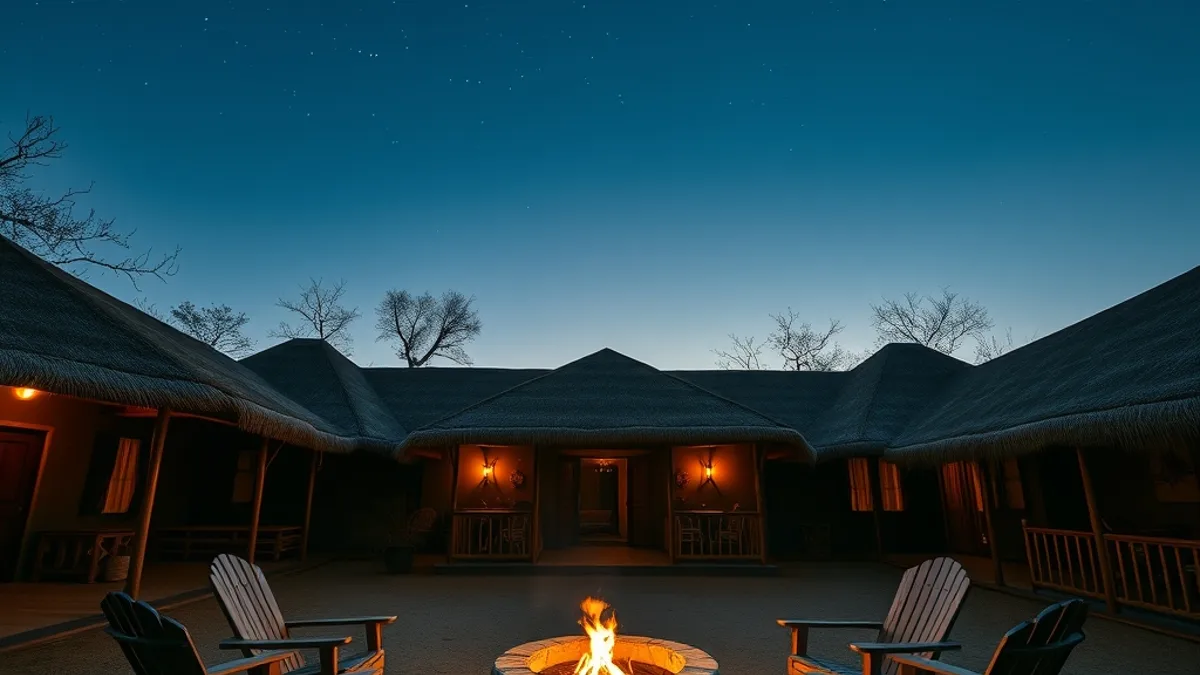
After dinner, the camp changes character. Most safari camps are deliberately unlit, using fires and lanterns instead of floodlights, both to preserve the night sky and to keep the bush feeling wild. Star-gazing decks fill up, and on clear nights the Milky Way is bright enough to read by. Many lodges keep the bar open later for nightcaps, but most guests turn in by 9:30 to 10:00 pm, because the next wake-up call comes early and a short night catches up with you fast.
That early bedtime is part of the appeal. Without screens, city noise or late dinners, most people sleep more deeply in camp than they do at home, and the dawn game drive feels far less brutal on a full night’s rest.
How the Schedule Shifts by Lodge Type and Season
Not every lodge runs the same clock. The classic dawn-and-dusk pattern is most consistent during the dry season from June to October, when wildlife viewing is at its most reliable and animals cluster around permanent water. In green-season months, start times tend to shift later, and one drive is often swapped for a guided walk or a boat trip, since dense vegetation makes long drives less productive and the landscape rewards exploring on foot or by water.
Water-based lodges, particularly in delta regions, keep the tea-then-activity rhythm but replace the second drive entirely. Late afternoons are spent on mokoro or boat excursions, gliding past reed beds and watching the light fade over the water instead of from a vehicle. The structure feels familiar even when the setting is completely different.
Private conservancies and homestead-style stays are the most flexible of all. Because guests have access to areas without crowds from public parks, drives can start an hour later on request, which suits travelers who genuinely cannot face a 5:00 am alarm.
- Family lodges compress the day for younger guests: drives run about 2 hours instead of 3 to 4, dinners are served earlier, and many offer dedicated child-focused activities such as tracking lessons or bush crafts between meals.
- Honeymoon camps bend the schedule around the couple rather than the group, adding private dining on a deck or under the stars, later dinner seatings and the option to book a private vehicle so sightings never depend on other guests’ interests.
- Photography-focused camps may adjust departure times around light quality rather than the standard clock, and often run specially adapted vehicles with camera mounts.
Whichever type you book, ask about the daily rhythm before you arrive. Knowing whether your camp runs on strict shared timings or bends to individual requests makes planning flights, naps and expectations far easier.
The Rhythm Is the Reward
If you booked your first lodge stay worried that a fixed schedule would feel like summer camp, here is the reassurance: the routine is exactly what makes the trip feel restorative. A lodge day follows a simple loop — a dawn activity, a long midday rest, afternoon tea, a dusk activity and an early dinner. Nothing about it is demanding, and nearly everything is optional.
That fixed framework is what makes the stay feel effortless. Every meal, activity and rest period is already arranged, so you never have to plan, decide or rush. Guests who embrace the early starts and quiet evenings consistently rate lodge stays among their most restful trips — the schedule works with your energy, not against it. If a lodge day has featured in your travels, share how it went in the comments, or pass this article along to someone planning their first safari.