A single night in a safari-style tent is easy to picture: the fire, the stars, the novelty of waking up under canvas. But booking a full week is a different calculation, and it’s the one that makes travelers hesitate. Will the magic last past day three, or will you find yourself staring at the same view, wishing for a proper sofa and a dishwasher?
The honest answer is that long-stay glamping works beautifully when you plan for it, and falls flat when you don’t. The difference comes down to four things: how the days actually unfold, what the site offers beyond a pretty tent, when you book, and how you pack and budget for seven nights instead of one. This guide walks through each of those, from the day-by-day rhythm of a week under canvas to choosing a site that can genuinely hold your interest, timing your reservation, setting a realistic budget, and picking a setting that matches your pace. By the end, you’ll know whether a week of glamping suits you, and exactly how to make it work.
What Long-Stay Glamping Actually Feels Like Day to Day
The first two days of any glamping week are pure novelty. Everything feels like an event: grilling dinner over an open flame, lying in bed watching the stars through a mesh ceiling, figuring out the quirks of a canvas zipper at midnight. You take photos of your coffee. You comment on how quiet it is. This phase is genuinely wonderful, and it’s what most one-night stays capture.
Around days three and four, something shifts. The novelty fades and a routine takes its place, which turns out to be the real appeal. Morning coffee happens on the deck without ceremony. Afternoons slow down; you read, nap, or wander the site. Most long-stay guests settle into one outing per day, a hike in the morning or a town visit after lunch, and treat the rest of the day as downtime.
The site is a base, not the whole trip
This is the single biggest mindset shift for a week-long stay. Sites that work for seven nights sit within easy reach of trails, water, or a small town, so you can vary your days without driving far. If the tent itself is the only attraction, you’ll exhaust it by midweek.
Weather-proofing also matters far more over a week than a night. One rainy evening is atmospheric; two full rainy days can break a trip. Covered decks, proper heating, and indoor lounge space turn a wet day into a cozy one rather than a write-off. Ask about these before booking, not after the forecast turns.
Choosing a Site That Can Hold a Full Week
A weekend tent can get away with a fire pit and a shared bathroom block. A site hosting you for seven nights cannot. The features that seem like luxuries on night one become necessities by night four, so it pays to interrogate the listing carefully before you commit. A tent that sleeps 2-4 guests feels spacious for a two-night stay, but by the second half of the week, cramped storage and limited seating start to wear on everyone.
Start with the practical rhythm of the week: who cleans, when, and how you’ll handle laundry. Then think about the hours you’ll actually spend at the tent, including the ones when the weather refuses to cooperate. The checklist below covers the details that separate a site built for long stays from one built for Instagram.
- Real cooking facilities: a proper kitchen or a fully covered outdoor cooking area with counter space, a stove, and a fridge, so a rainy evening doesn’t mean cold sandwiches.
- Housekeeping schedule: well-run sites offer weekly housekeeping or linen changes every 3-4 days; ask exactly what’s included and whether fresh towels arrive midweek.
- Laundry access: even a single on-site washer matters enormously by day five, especially if you’ve been hiking or swimming daily.
- Shade and sun balance: a tent in full afternoon sun turns into an oven in summer, while a spot with morning sun and afternoon shade stays comfortable through the day.
- Indoor lounge space: a sofa or covered common area gives you somewhere to spend a rainy afternoon that isn’t the bed.
- Wi-Fi you can verify: if you need to check in with work midweek, ask for recent guest feedback on the connection rather than trusting the listing’s claim.
One more question worth asking directly: how far is the nearest supermarket or town? For a week of self-catering, a 30-minute drive for groceries is manageable; an hour each way is not. The same logic applies to your arrival: an ideal week-long base sits under 2 hours from a major airport or town, because a long transfer at the start and end of the week eats into the slow, restful rhythm you booked this trip for in the first place.
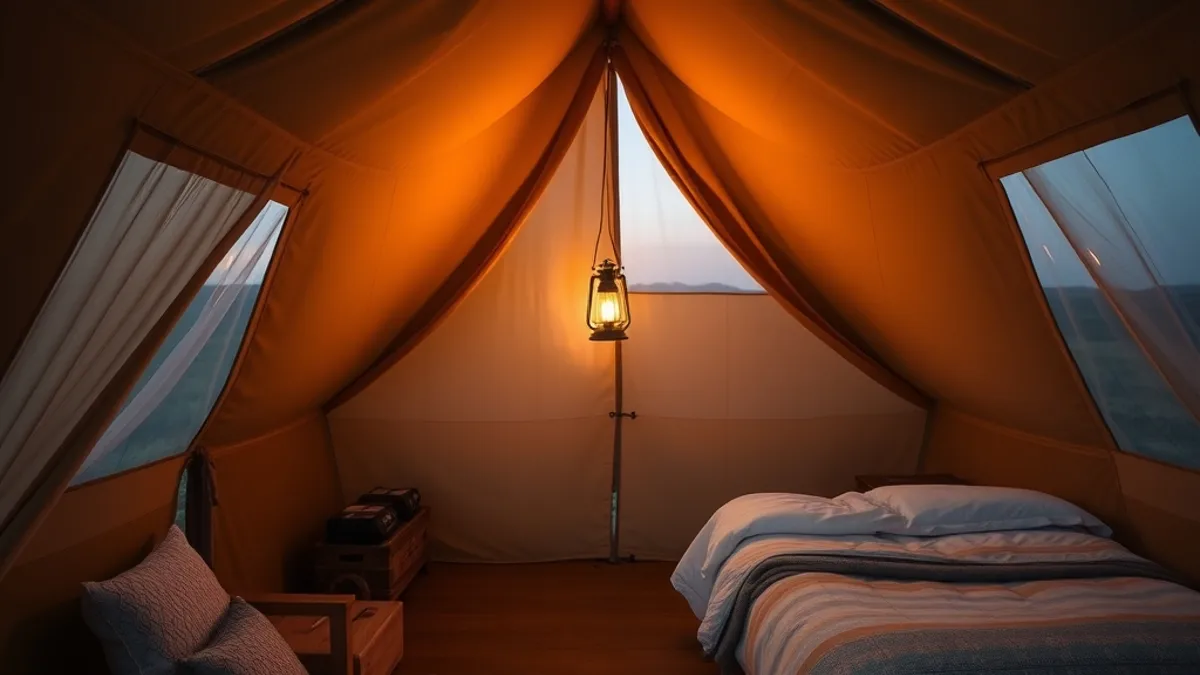
When to Book: Seasons and Lead Times
Timing a week-long glamping booking is less forgiving than booking a weekend. Popular sites usually have only a handful of units, and a seven-night block ties up a big slice of their calendar, so the good weeks tend to go first. Plan further ahead than you would for a hotel stay, and be ready to move quickly once dates open up.
Peak season weeks in June through August often require booking 3-6 months ahead at well-known sites, especially family lodges and coastal locations that fill fast with school-holiday travelers. If your schedule allows any flexibility, the shoulder months change the math entirely.
- Shoulder-season savings: weeks in May, September, and early October can cost 20-40% less than peak summer, and the grounds are noticeably quieter, with fewer neighbors and easier access to shared facilities like showers and lounge spaces.
- Long-stay discounts: many sites offer 10% to 25% off nightly rates for 5-7 night bookings, but these rarely appear on booking platforms; email or call the site directly and ask.
- Midweek arrivals: starting your week on a Monday or Tuesday often avoids weekend surcharges and means your checkout falls on a quieter day too.
- Weather-first planning: in shoulder months, check historical rainfall and temperature patterns for the region rather than relying on seasonal averages alone, since early October can swing widely year to year.
A practical sequence: pick two or three candidate sites, email them with your dates and length of stay, and ask about long-stay pricing in the same message. The discount question costs you nothing and frequently shaves a meaningful amount off the total. If a site is full for your first-choice week, ask to be waitlisted or to hear about cancellations; a week-long gap opens more often than you might expect once summer plans shift.
Budgeting a Week Under Canvas
A week under canvas is cheaper than a week of hotels in most regions, but the range is wide. For two people, plan on roughly $900 to $2,500, with the biggest swings coming from region and season. A tent in a quiet inland area in May sits at the low end; a coastal lodge in August can push the top of that range. Ask the site directly about long-stay discounts, which typically run 10-25% off nightly rates and rarely appear on booking platforms.
Food: the easiest place to save
Meals make or break a glamping budget. Self-catering keeps weekly food costs near $150-$300 for two, especially if you shop once at a supermarket on arrival day and plan simple dinners. Sites with a real kitchen or covered outdoor cooking area make this realistic; a lone fire pit does not. Mix in one or two dinners out at a nearby village restaurant so the week still feels like a holiday.
Excursions are the other line item to manage. Budget for one or two paid activities during the week, such as a guided kayak trip or a horseback ride, rather than booking something every day. The best long-stay weeks lean on free pleasures: trails from the tent, swimming, and slow mornings on the deck.
Finally, ask about cleaning fees and whether they are waived on weekly bookings. Many sites drop or reduce them for week-long stays, which can shave a meaningful amount off the total. Confirm the full price in writing before you pay the deposit, and check what the fee covers if it does apply.
Packing for Seven Nights, Not One
Packing for seven nights is a different exercise than packing for a single overnight. The biggest mistake first-timers make is bringing a weekend bag and doing laundry in the sink by day four. Think in layers instead of outfits, and remember that rural sites often see a 10-15°C swing between afternoon and bedtime. A t-shirt and light fleece that felt perfect at noon will not be enough on the deck after dark.
Footwear deserves more thought than most people give it. One week means far more walking than a single night, from the parking area to the tent across gravel and wet grass, plus whatever trails you tackle. Bring one sturdy pair for walking and something quick to slip on for middle-of-the-night trips. Break them in before you go, because blisters on day two of seven are miserable.
A few small items solve the complaints glampers mention most often:
- A headlamp with fresh batteries: canvas sites are genuinely dark at night, and phone flashlights are awkward when your hands are full with a dish rack or a gate latch.
- A power bank of at least 10,000 mAh: outlets at tent sites are often limited to one socket or a shared washroom, so you can charge overnight without hogging the only plug.
- A quick-dry towel: standard bath towels stay damp for a day in humid tent air, and microfiber versions dry in hours and pack small.
- Sealable bags or a small dry sack: they keep electronics and spare clothes safe during a sudden downpour on a hike.
Finally, bring one comfort item per person. A favorite mug, a pair of slippers, or a paperback you have been saving sounds like a luxury, but by the middle of the week it is exactly what keeps the tent feeling like home instead of accommodation. Small rituals matter more the longer you stay.
Where Long-Stay Glamping Shines: Setting Ideas
The setting matters more on a week-long stay than on a single night, because you will actually live with it. A view that charms you for one evening needs to still feel good over morning coffee on day five. Match the landscape to the pace you want, and the whole week falls into place.
Coast, forest and desert
Coastal sites suit warm-season weeks with daily beach time built in. The rhythm is simple: swim in the morning, walk the shore in the evening, and let the tide structure your days. Book early for summer, since seafront tents and lodges fill months ahead in peak season.
Forest and lake settings reward slow weeks with hiking and swimming on repeat. You get shade in the afternoon, calm water in the morning, and trails that start at your door. For a sense of how atmospheric a woodland week can be, see a forest hideaway tucked into Latvian green stillness.
Desert and canyon regions are best in spring and autumn, when daytime heat stays manageable and you can actually hike at midday. In high summer, desert weeks turn into dawn-and-dusk trips with long, hot hours in the tent, which some travelers love and others regret.
Whichever setting you choose, be honest about your pace. Active travelers want direct trail access and water nearby so every day has a built-in outing. Rest-seekers should prioritize the view from the deck, comfortable lounge space, and a short drive to a town for supplies. The right match turns seven nights into a genuine reset rather than a longer version of a weekend.
The Week, Summed Up
So, does the novelty wear off by day three? It can, if you book a bare-bones tent with nothing to do when the weather turns. But a week under canvas holds up surprisingly well when the site has a real kitchen, covered outdoor space, and heating for chilly evenings. The rhythm shifts from novelty to routine around midweek, and that routine is exactly the point.
The practical formula is simple: travel in the shoulder season when rates drop, ask directly about long-stay discounts of 10-25% for week-long bookings, pack layers for big temperature swings, and plan one outing per day rather than cramming in more. Do that, and a week of glamping stops being a stretched-out weekend and becomes something closer to a slow, comfortable holiday with better views. If you have done a week-long glamping stay, tell us how it went in the comments, or share this article with someone who needs a nudge to book the full week.