You’ve probably seen them lined up neatly by the resort entrance: a row of bikes, a few e-bikes and a handful of e-scooters, all ready to go. The problem is that most guests walk past them because nobody has explained the basics. What does an hour cost, what deposit do you need, how old do you have to be, and where are you actually allowed to ride?
This guide to resort bike and e-scooter rentals answers those questions before you hand over your credit card. We’ll walk through how rentals are set up at the activity desk or through app-based fleets, what hourly, daily and deposit costs typically look like, and when to book so you don’t miss out in high season. We’ll also cover the rules that matter most: age limits, helmets, where you can ride, battery expectations and return etiquette. Finally, we’ll look at the types of resorts where riding really pays off, so you can decide whether a bike or scooter is worth adding to your stay.
How Resort Bike and E-Scooter Rentals Are Set Up
Most resorts handle bike and e-scooter rentals through the activity desk or concierge, which means the whole transaction happens without leaving the property. You’ll typically choose from a few rate tiers: an hourly rate for quick trips, a half-day rate for a morning or afternoon of exploring, and a daily rate if you want the vehicle at your disposal from morning until the return cutoff. The desk staff usually handle sizing, hand over helmets and explain the local riding rules on the spot.
Keys, apps and sign-out sheets
How you actually get the vehicle varies from resort to resort. Larger properties increasingly use app-based fleets: you scan a QR code on the bike or scooter, the lock releases through your phone and billing is tracked automatically. Smaller resorts often stick with the classic approach, a paper sign-out sheet and physical keys or combination locks. Neither system is better, but app-based fleets are handy if you want to grab a scooter spontaneously without waiting for the desk to open.
Which vehicle fits your stay
Bikes and e-bikes make the most sense for guests staying three nights or longer who expect to make repeated short trips, like cycling to breakfast, the beach and back again. An e-scooter suits a different pattern: one-off, longer rides along flat coastal paths, where the fun factor is high and storage is easier. If your stay mixes both, ask the desk about switching vehicles between days rather than committing to one for the whole visit.
What Rentals Cost: Hourly, Daily and Deposit Ranges
Rental pricing at resorts follows a fairly predictable pattern, though exact rates vary by property and destination. For standard bikes and e-bikes, expect roughly $5-15 per hour or $20-40 per day. E-scooters sit a tier higher, at around $10-20 per hour or $40-70 per day, reflecting their higher purchase and maintenance costs. Premium e-bike models at upscale resorts can push above these ranges, so it pays to ask for the full price list before committing. Some properties also bundle rental costs into an activities package, which can be cheaper than paying per ride if you plan to cycle several times during your stay.
The deposit is the part that surprises guests most. Resorts commonly pre-authorise a security deposit of $50-200 on your credit card at pickup. The hold isn’t an actual charge, but it does reduce your available credit until the vehicle is returned and inspected, so keep that in mind if you’re traveling with a card close to its limit. Check the tires, brakes and body for existing damage before you ride off, and point out anything you find to staff, ideally with a quick photo on your phone. Return inspections are where most deposit disputes start, and a timestamped photo is hard to argue with. Finally, ask how long the hold stays on your card after return, since some banks take several business days to release pre-authorisations.
- Multi-day packages reward longer stays. Many resorts discount the daily rate by roughly 20-30% if you book a bike or scooter for several consecutive days instead of paying single-day prices, which adds up quickly over a week-long visit.
- Hourly rates favor short, spontaneous trips. If you only want a scooter for a one-hour ride along the coastal path, paying by the hour costs far less than committing to a full day you won’t use.
- Ask what the deposit covers. Some resorts use the pre-authorisation to cover damage or late returns, while others treat it purely as a formality, so clarify the policy at pickup rather than at return.
Booking Timing and Availability
Availability is the biggest variable in resort rentals. In high season, when the property is full and everyone wants a bike at the same golden-hour slot, the fleet can be booked out by mid-morning. The simple fix is to reserve one to two days ahead through the concierge. A quick request at the activity desk, or a note through the resort app if they use one, guarantees you a unit in the right size and lets you pick a better vehicle instead of taking whatever is left.
Walk-up rentals in low season
In low season the picture flips. With fewer guests on property, walk-up rentals are usually available the same hour you ask, and you can often negotiate on the spot. This flexibility is one of the quiet perks of shoulder-season travel: you can decide after breakfast whether the weather and your energy level justify a ride, without any planning pressure.
Watch the fine print on hours
Before you book, ask two questions. First, does the resort cap rental hours per day, meaning your “daily” rate covers a fixed window rather than the full 24 hours? Second, what happens if you return late? Many properties charge overtime beyond the booked slot, sometimes converting a late return into an extra hour or even a half-day charge. Knowing the cutoff time in advance saves you from an awkward bill at checkout, especially on days when a short ride turns into a long, scenic detour.
Rules: Age Limits, Helmets and Where You Can Ride
Before you hop on anything with wheels at a resort, it pays to know the ground rules. Most properties set a minimum age of 16 for e-scooters, and younger guests are usually limited to regular bikes or e-bikes instead. Some resorts ask younger riders to be accompanied by an adult, so check with the activity desk if you’re traveling with teens.
Helmets are typically included free with bike rentals, and for e-scooters they are often mandatory rather than optional. If a helmet isn’t offered automatically, ask for one at sign-out. A few resorts will refuse the rental entirely if you decline a helmet for a scooter, so it’s easier to just wear one.
Where you can ride matters just as much as who can ride. Many resorts restrict scooters to resort paths and nearby flat roads, and most ban riding on beach sand or steep trails. Scooters have small wheels that sink into soft sand and struggle on grades, which is exactly why these restrictions exist.
- Guests under 16 can often still join family rides on standard bikes or e-bikes, which are treated as lower-risk vehicles at most properties.
- Some resorts ask you to stay off main public roads and stick to marked resort paths, so ask for a route map at sign-out.
- Night riding is often discouraged or prohibited unless the bike or scooter is fitted with working lights, so plan longer trips for daylight hours.
- Riding on pool decks, walkways crowded with guests, or landscaping areas is commonly off-limits and can lead to losing your deposit.
Battery, Charging and Return Etiquette
E-scooter batteries typically deliver 25-40 km per full charge, which is plenty for a full day of easy riding around the resort and its immediate surroundings. If your plans include looping the property, a couple of trips down to the beach, and a cruise to a nearby café, you’ll rarely come close to emptying the battery before the day is over.
That said, battery management is part of the deal. Most resorts ask you to return the vehicle with at least 20-50% charge remaining. Come back with a nearly dead battery and a small recharge fee may apply. It’s an easy problem to avoid: glance at the battery indicator before your last ride of the day and head back with room to spare.
Where charging happens
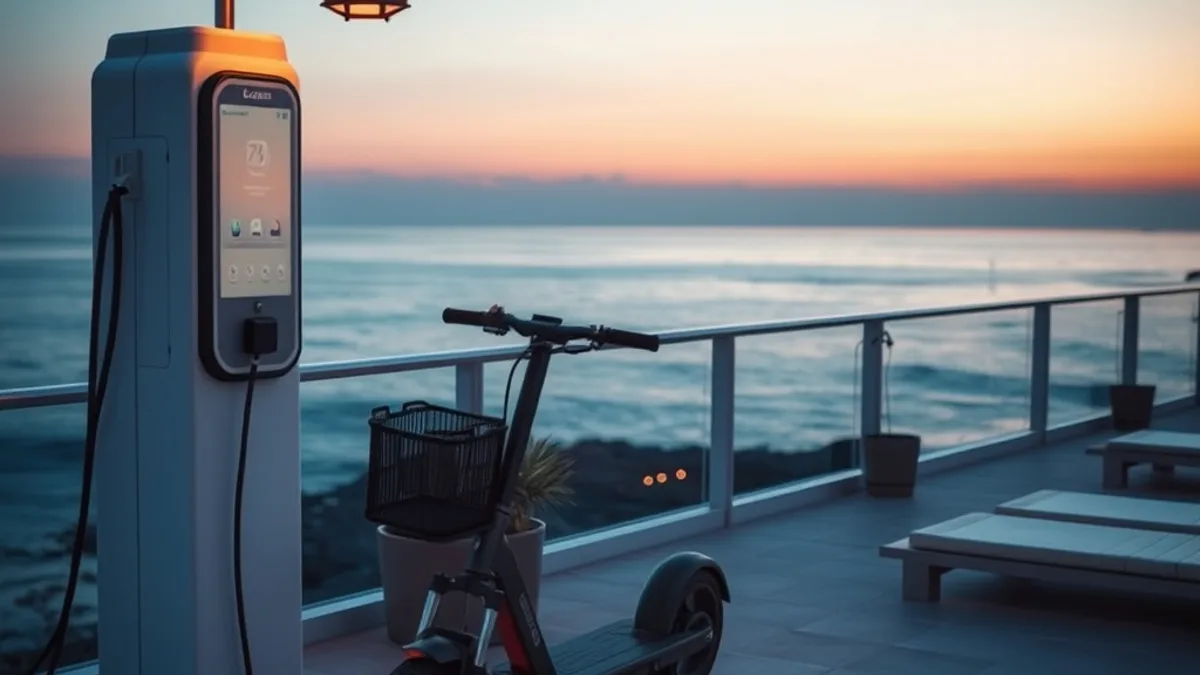
Charging usually takes place at the resort’s dock station rather than in your guest room. Scooters and e-bikes are often too bulky or awkward to bring indoors, and many properties simply don’t allow it. If you’re worried about running low mid-ride, ask the activity desk where the dock station is located so you know your fallback option.
Returning on time
Late returns are often billed at a higher rate tier, so treat your return time like a dinner reservation. If you booked a two-hour slot, build in a few extra minutes to park the vehicle, wipe off any sand, and complete the sign-in. A prompt return also speeds up the inspection that releases your deposit, letting you get on with the rest of your day without waiting around.
Where Riding a Resort Bike or Scooter Shines
Not every resort is a great match for wheels, and knowing where rentals shine helps you decide whether to bother booking one at all. Flat coastal and island resorts with dedicated paths are the sweet spot for e-scooters and casual cycling. Smooth, level routes mean you can relax and enjoy the view instead of fighting the terrain, and a scooter’s modest battery range goes a long way on flat ground.
Mountain and wellness resorts
In hillier settings, the calculus changes. Mountain and wellness resorts favor e-bikes, which take the sting out of climbing so you can enjoy the descent and the scenery. Scooters are far less practical on slopes, where small wheels and limited power make grades a real struggle. If you’re considering a stay at a Swiss mountain wellness resort built around fresh-air restoration, an e-bike is almost always the smarter rental choice over a scooter.
Making the rental worthwhile
The real value of a rental shows up over several days, not one. Pairing a morning ride with beach time or a spa session is the classic pattern: cycle or scoot before the midday heat, then hand the vehicle back and relax. That rhythm makes rentals genuinely worthwhile for stays of 3+ nights, where repeated short trips beat a single long outing every time.
Wrapping Up Resort Bike and E-Scooter Rentals
By now you can probably guess what that row of bikes and e-scooters near the resort entrance means in practice. Daily rentals typically fall somewhere between $20-70 depending on whether you pick a standard bike, an e-bike or an e-scooter, and most desks also offer hourly rates if you just want a quick loop around the property. Plan on leaving a credit card at sign-out, since deposits commonly run $50-200 and are released once staff check the vehicle back in.
Before you roll off, ask the activity desk a few quick questions. Riders generally need to be 16 or older to take out an e-scooter, so confirm how your resort handles younger guests. Check that a helmet comes with your rental, and find out how much battery should be left when you return. In busy periods, booking through the concierge 1-2 days ahead gets you the best units, while low-season walk-ups rarely involve much waiting. If this helped you plan your stay, share it with a fellow traveler.