You found the perfect remote lodge, put down the deposit, and then came the fine print: a small-plane leg you cannot quite picture, seat prices that vary wildly, and baggage rules stricter than any commercial airline you have ever flown. If that charter flight section of your booking email feels like a puzzle, you are not alone. Getting the details wrong can mean missed flights, refused luggage, or a nasty surprise on the final bill.
This guide walks through lodge flight packages step by step: what they actually include, how shared and private charters are priced, when to book for the best rates, and how the strict weight and soft-bag rules work in practice. We also cover packing and check-in tips, what happens on the ground at bush airstrips, and how to plan around weather delays. By the end, you will know exactly what to ask before you pay.
What a Lodge Flight Package Actually Includes
A typical lodge flight package bundles two things: return seats on a light aircraft between a main airport or charter terminal and the lodge’s own bush airstrip, and the 4×4 transfer from that airstrip to camp. The flight itself is usually in a small Cessna-style aircraft carrying anywhere from three to a dozen passengers, and the airstrip is often nothing more than a graded dirt strip a few minutes from the lodge.
Some packages also add a meet-and-greet service at the departure terminal, where a representative walks you through check-in and bag weighing. What is usually billed separately: drinks, park fees, conservation fees, and the lodge rate itself. Always ask for a full breakdown so you know which costs sit inside the package and which will arrive as extras on your final invoice.
Per person or per aircraft?
This is the single most important question to ask. A per-seat package prices each traveler individually, which is usually the better deal for couples or solo travelers. A per-aircraft package prices the whole plane, which can be excellent value for a group of six but punishing for two people traveling alone. The difference changes the maths dramatically, so confirm the pricing basis in writing before you commit.
Shared Charters vs Private Charters: How You Pay for Seats
Most travelers fly on shared charters, also called seat-rate flights. The operator runs a fixed schedule and sells individual seats, commonly $150-$500 per leg depending on the route and demand. This is the budget-friendly default and how most guests reach lodges in remote areas. You buy a seat the way you would on a small scheduled airline, just with far fewer passengers and a gravel runway at the end.
Private charters work differently: you rent the whole aircraft and set your own departure time and routing. That flexibility matters if you want to fly direct, arrive early for a full day of activities, or connect tightly with an international flight. The trade-off is cost, since a private charter typically runs roughly 3-6 times the shared seat rate for the entire aircraft. For a family of four or more, the per-person gap narrows enough to make it worth comparing.
Watch the stops
Shared flights are rarely direct. Because one aircraft may serve several lodges on the same run, expect 2-4 intermediate stops at other lodges’ airstrips, adding 30-90 minutes to the journey. Those stops are part of why shared seats cost a fraction of a private charter. Factor the extra time into your arrival plans, and treat a two-hour schedule as a half-morning of travel rather than a quick hop.
When to Book Lodge Flight Packages and What They Cost
Charter seats reward early booking more than almost any other part of a safari. Aim to book 60-90 days ahead for the best rates. Seat rates are usually lower in that window, while last-minute seats on shared charters can rise sharply. Peak season, which runs June through October in East and Southern Africa, has the fullest schedules but also the highest prices, and the most popular routes sell out first. If you are traveling in those months, treat the charter as a booking priority, not an afterthought.
Shoulder months such as May and November work in your favor twice over: seat prices tend to be lower, and operators have more flexibility to adjust departure times or add a flight when schedules are quieter. If your dates are movable, shifting by even a week out of peak season can save money on both seats and lodge rates.
Reading the quote
Expect the lodge or a local air broker to quote the full return journey rather than two separate one-way fares. That is normal and usually convenient, but read the details. Ask specifically whether fuel surcharges are included in the quoted seat price, because surcharges can be added on top and change the final figure. Also confirm which taxes and fees are covered so there are no surprises at the charter terminal.
Baggage Rules on Light Aircraft: Weight, Size and Soft Bags
Light aircraft are unforgiving about weight, and baggage rules are where most travelers get caught out. On most safari charters, the total allowance is 15-20 kg (33-44 lb) per person, and that figure includes your hand luggage, not just the bag that goes in the hold. You and your bags will be weighed together at check-in, so there is no hiding an overstuffed daypack or a spare lens in your jacket pocket. If you are over the limit, the pilot may leave bags behind or charge you on the spot.
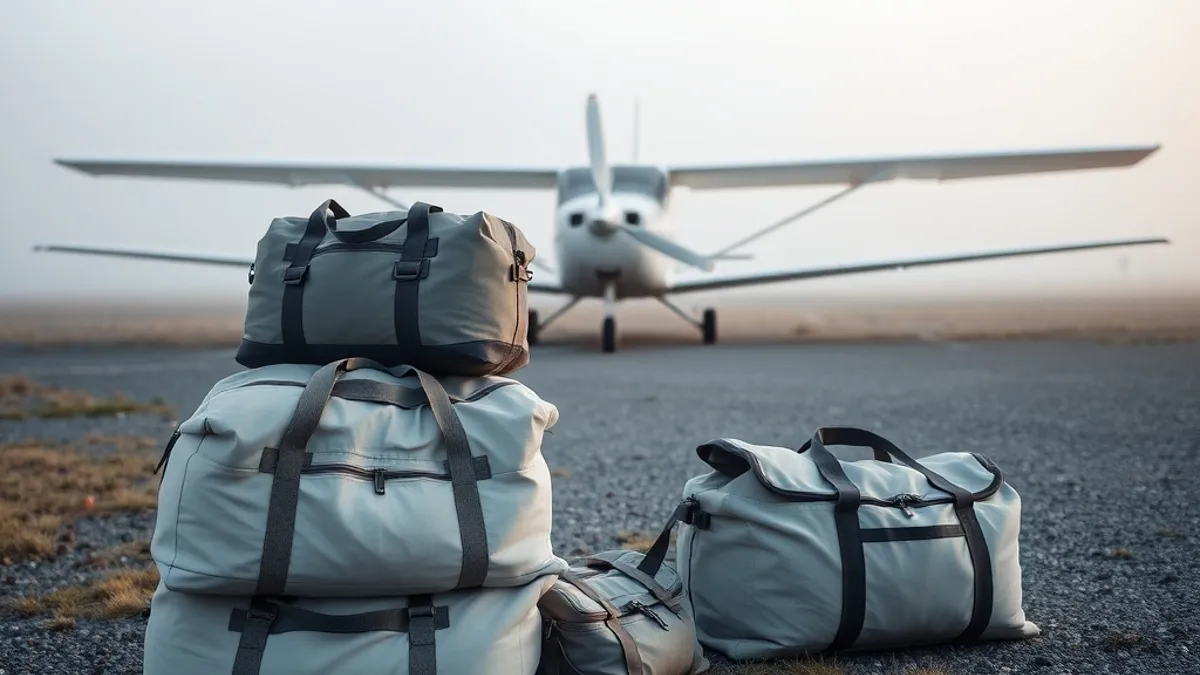
The type of bag matters as much as the weight. Baggage travels in a small pod under the fuselage or in a narrow compartment behind the seats, and hard-sided suitcases often simply will not fit and may be refused at check-in. Bring a soft duffel without wheels, and aim to keep it under 10-15 kg (22-33 lb) so the pilot has room for everyone’s luggage. A duffel with backpack straps makes the walk from vehicle to check-in desk easier too, especially on gravel or grass at the smaller airstrips.
- Camera gear counts. Lenses, bodies and drones are weighed as part of your total allowance, so a long telephoto setup can eat a large share of your 15-20 kg before clothing is even packed.
- Excess weight can be pre-booked. Some operators sell extra kilos in advance if you declare them when booking, which is far cheaper and more reliable than negotiating at the terminal when the aircraft is already full.
- Weigh before you go. Bathroom scales at home will tell you whether you are close to the limit, and cutting two kilos of “just in case” items is easier than paying for them later.
Packing and Check-In Tips for Charter Flights
Packing for a charter flight is a different exercise from packing for an international flight, and a little preparation the night before saves real stress at a small terminal with limited staff. The goal is simple: one soft duffel, correctly weighed, with the essentials on your person. Remember that most safari light aircraft enforce a strict total weight including hand luggage, commonly 15-20 kg (33-44 lb) per person, and every bag goes on the scales at check-in.
- Repack into a single soft duffel. Combine everything you need for the lodge into one bag without wheels or a rigid frame, aiming for the usual 10-15 kg (22-33 lb) soft duffel allowance, and leave your city suitcase in storage at the departure lounge or your hotel. Most terminals and hotels offer this for a small fee, but ask ahead. Hard-sided suitcases often cannot fit in a light aircraft baggage pod and may be refused at check-in, so a wheeled case is a genuine risk rather than a minor inconvenience.
- Arrive 60-90 minutes early. Check-in at a charter terminal involves weighing every passenger and every bag, then loading the aircraft by weight distribution. Late arrivals can genuinely cause the flight to be re-planned, so treat the earlier end of that window as your target.
- Keep essentials in hand luggage. Carry medications, travel documents, valuables and one camera body with you in the cabin. If the pilot needs to offload checked duffels for weight reasons on a full flight, you do not want your passport or insulin in the hold.
Do this repack before you leave home rather than in an airport corridor. Lay everything out, remove anything you can live without for a few days, and weigh the duffel on bathroom scales if you can. Knowing your bag is within limits means check-in becomes a formality, and you can spend the extra time at the coffee stand instead of shuffling gear between bags on the terminal floor.
On the Ground: Airstrips, Transfers and Weather Delays
Flying into a remote lodge ends differently from a commercial flight, and knowing what to expect on the ground removes most of the anxiety. Bush airstrips are gravel or dirt strips, often no more than a graded stretch of ground with a windsock and a sign for each lodge. There is no terminal building, so you step straight from the aircraft onto the soil.
Transfers to camp
Lodge vehicles meet scheduled flights at the airstrip, and the drive to camp usually takes 5-20 minutes by 4×4. This transfer is typically included in your package, but confirm it when you book rather than assuming, especially if you are arriving on a charter the lodge did not arrange itself. Your driver will usually stop for whatever wildlife appears along the way, which is a fitting start to the trip.
Weather and timing
Rain affects these flights more than any commercial schedule. Airstrips can soften after storms, and landings may be rescheduled around the weather, particularly during the wet season from November to April. Delays of a few hours are common in remote areas, so never book a charter arrival on the same day as an international departure or connection. Build in a full buffer day before any international flight, and treat any schedule the lodge sends you as a plan rather than a promise. The upside is that a delayed departure often means an extra game drive or a slower breakfast with a better view than any airport lounge.
The Short Version
If you booked a remote lodge and the small-plane leg felt like a mystery, here is the short answer: a lodge flight package bundles per-seat charter flights with the airstrip-to-camp transfer, and shared charters are far cheaper than private ones. Book 60-90 days ahead, expect roughly $150-$500 per leg, and you have the essentials covered.
Pack everything into a soft duffel within the 15-20 kg total limit, arrive early for passenger and bag weighing, and build buffer time around charter schedules. Do that, and the main stress of flying into a remote lodge simply disappears. If this helped you plan your trip, leave a comment or share the article with a fellow traveler.