Many travelers see “evening turndown” on a lodge itinerary and have no idea what actually happens in their room while they are at dinner. Is it just another clean? A bedtime story card? A mystery service that costs extra? The truth is far more charming: the lodge turndown is a short, quiet ritual that transforms your room from a daytime space into one that is ready for sleep, complete with a folded-back bed, soft lighting and often a small treat waiting on the pillow.
This guide walks through exactly what turndown involves, from the classic 45-degree fold and hot water bottles on cold safari nights to the mosquito nets that appear when the weather warms. We will also cover when staff typically visit, how the atmosphere is set with lanterns and prepared fires, the regional extras that differ between tropical, alpine and honeymoon suites, and a few simple habits that help you get the most from the ritual every evening of your stay.
What Lodge Turndown Actually Means
Turndown is the evening refresh of your room, and it is a different job from the daytime housekeeping clean. In the morning or midday, staff vacuum, replace towels, restock water and tidy the bathroom. The evening visit is shorter and quieter, focused on preparing the room for sleep rather than resetting it for the day.
The core act is simple: staff fold back the top blanket and sheet on one side of the bed, usually at roughly a 45-degree angle. That angled fold is a signal that the bed is open and ready, so you can slide straight in without pulling back heavy duvets in the dark. The pillow is often plumped, and a small gift such as a chocolate, biscuit or bedtime story card may be left on top, a touch that is common at 4- and 5-star lodges.
Why lodges go further than hotels
At a city hotel, turndown usually stops at the bed. At a safari lodge or wilderness retreat, the evening ritual goes much further because the room itself is part of the experience. Staff dim the lighting so you return to a warm glow instead of harsh overhead bulbs, draw the curtains against the early night, and prepare the space for the hours ahead. Canvas doors are checked, gowns and slippers are set out, and any fireplace is readied. The whole point is that when you walk back from dinner or an evening game drive, the room already feels like the end of a good day.
The Bedding Rituals: Folds, Hot Water Bottles and Nets
The bedding is where turndown shows its personality. Staff fold the sheets and duvet back at roughly a 45-degree angle on one side of the bed, plump the pillow and often leave a chocolate or a short handwritten note resting on it. It is a small gesture, but after a long day on game drive, sliding into an already-opened bed feels like a genuine luxury.
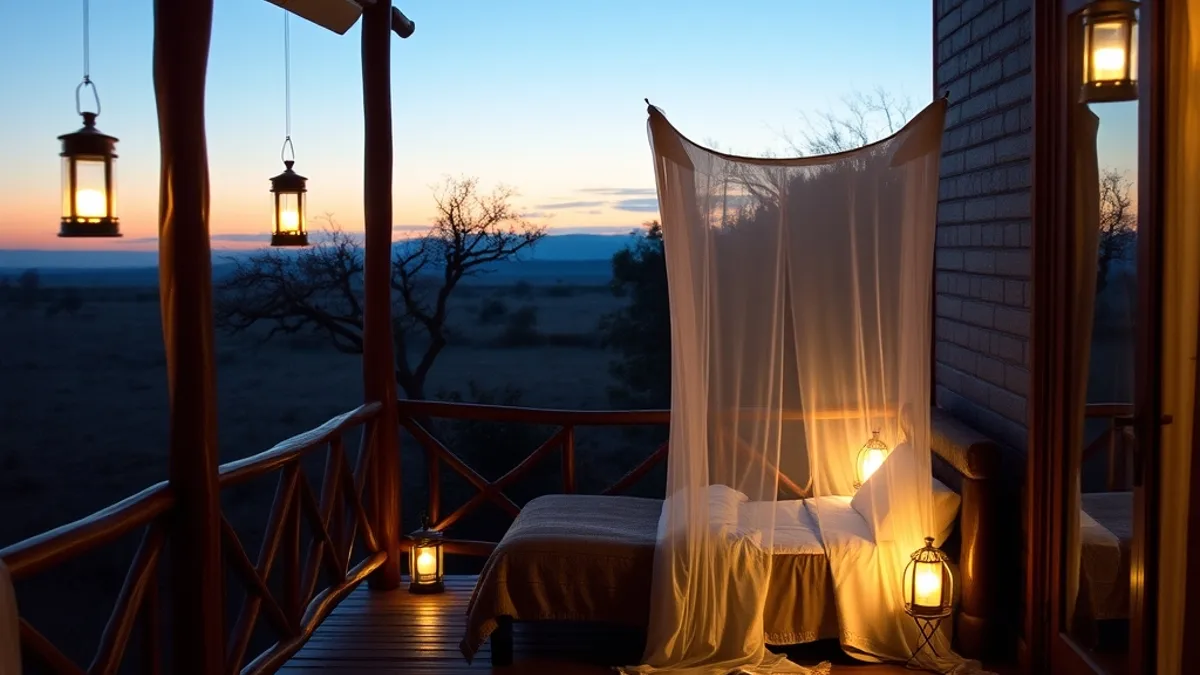
What appears in the bed changes with the season. In the dry winter months from May to August, safari lodges slip a hot water bottle between the sheets an hour or so before you return, so the mattress is warm when nights turn sharp. During the warmer malaria season, roughly November to April, the same staff lower and tuck mosquito nets around the bed instead, making sure the netting is tucked under the mattress with no gaps. Slippers and gowns are laid out in either season, and extra blankets are placed within arm’s reach for cold highland or desert nights. Lodges in the cool foothills around Mount Kenya, such as the spacious homestead stays near Nanyuki, lean heavily on these warming touches after sunset.
- The fold direction matters: the bedding is turned back on the side of the bed closest to your usual entry path, so you can get in without walking around the foot of the bed in the dark.
- Hot water bottles are wrapped: they are slipped inside a fabric cover or towel before going between the sheets, so the rubber never touches your skin and the heat spreads gently rather than in one hot spot.
- Nets are checked twice: staff not only lower the net but also run a hand around the edges to confirm there are no openings where a mosquito could slip through during the night.
- Blankets are layered, not stacked: extra blankets are folded on a chair or luggage rack near the bed rather than buried in a cupboard, so a 2 a.m. cold snap costs you nothing but a reach.
Lighting, Scents and Evening Atmosphere
Lighting is the part of turndown you notice first. Staff switch off the main lights and leave lanterns, bedside lamps or solar candles glowing, so you walk back from dinner into a soft, warm room instead of fumbling for switches in the dark. The effect is deliberate: low, scattered light sources make a canvas tent or timber suite feel calm and settled rather than bright and institutional.
Scent and warmth come next. Some lodges light a subtle scent in the room, place fresh flowers on the desk or bathroom counter, or prepare a fire in the fireplace for colder regions, laying the logs and kindling so it catches easily when you return. In places like Bhutan’s Punakha valley, where timber retreats trade on valley silence and soft warmth, a prepared fire and a few glowing lamps do more for the evening than any amenity list could.
Securing the room for the night
The final step is practical. Canvas doors and zipped windows are closed and secured against insects and curious wildlife, with staff checking that no gaps have been left open from the afternoon. Where it is safe to do so, panels or mesh sections stay open to keep airflow moving through the room, which matters on warm nights. The balance is simple: keep the bush outside, keep the breeze inside, and leave the room ready for you to walk in, put your feet up and let the evening carry on around you.
Timing: When Turndown Happens and Why
Turndown is not a random visit. Staff typically enter rooms between 17:30 and 19:30, a window deliberately chosen because most guests are at dinner or out on an evening game drive. The idea is simple: you come back to a room that already feels ready for night, without ever having seen it happen.
The whole routine is quick. It takes about 10 to 15 minutes per room, so even if you do cross paths with the housekeeping team, it rarely interrupts your stay. A quick fold of the bedding, a lamp switched on, a net lowered, and they are gone.
Plans change on safari, and lodges know it. If you are returning early, dining in your room or skipping the evening drive, ask reception to shift the turndown slot. Requests are usually accommodated if made at least 2 hours before the standard window, which gives the team time to adjust their route.
- If you have an early-morning game drive, an earlier turndown means the bed is already prepared when you get back from dinner, so you can turn in sooner.
- Guests traveling with young children often request turndown before the family’s dinner time, so kids can fall asleep in a made-up bed rather than on top of the covers.
- If you nap in the afternoons or work from the room, a shifted slot avoids the awkward moment of staff knocking while you are mid-snooze or mid-call.
- Couples who prefer privacy can ask that turndown happen only when the room is empty, and most lodges will note this preference for the whole stay.
Small Extras That Vary by Lodge and Region
Once you have stayed at a few lodges, you start to notice that turndown is a reflection of place. Tropical lodges lean into the heat, often leaving iced water, a chilled cooling towel or a light bedtime treat to take the edge off a humid evening. The gesture is small, but after a dusty afternoon drive it feels like a luxury.
Cold-climate properties flip the script entirely. Alpine and highland lodges lean on firewood stacked by the fireplace, tea trays with warming blends and thicker blankets layered on the bed. If you want to see how far that cozy, fireside approach can go, take a look at alpine estates in Switzerland with timber warmth and snow-crisp views for a different take on mountain-evening comfort.
Occasion also shapes the ritual. Honeymoon suites may get rose petals scattered on the folded-back bed, a bath drawn and waiting, or a handwritten card from the team. And at eco-minded lodges, the extras come with a conscience: single-use plastics are skipped in favor of refillable bottles and solar lanterns instead of disposable glow sticks.
- Some tropical lodges swap hot water bottles for a fan pointed at the bed or a pre-cooled room, the warm-weather mirror image of the winter warming ritual.
- Highland properties sometimes leave a small supply of firewood and matches so you can top up the fire yourself without calling reception in the middle of the night.
- Bedtime treats vary by region: expect spiced biscuits in one country, local honey sweets in another, and story cards for children at family-focused camps.
- Eco lodges may pair refillable water bottles with a card explaining the lodge’s conservation projects, turning the turndown tray into a quiet introduction to the property’s values.
How to Get the Most From Your Evening Turndown
Tell the Lodge What You Like, Early
The easiest way to improve turndown is to speak up at check-in. Mention extra pillows, a preference for no scented candles or oils, or an earlier slot if you have an early-morning drive and want the bed ready before dinner. Requests made on day one are easy for the team to accommodate every night of your stay; requests made at 18:00 on night three are not.
It also helps to say what you do not want. Some travelers love the chocolates and notes, others would rather have the bed simply folded back and left alone. A single sentence at reception sets the tone for the whole visit.
Tipping and Room Security
For tips, wait until the end of a multi-night stay rather than handing out cash nightly. This follows the lodge’s suggested guideline, rewards the team for consistent service and lets you recognize the person who actually looked after your room, not just whoever happened to knock that evening. If you are unsure of the amount, ask reception; most lodges have a suggestion and some keep a communal tip box.
Finally, use the room safe. Turndown happens while you are out, and staff need to move around the room freely, drawing curtains and tucking nets. Valuables locked away mean the team can work without concern and you can return to a room where nothing was ever a question. It is the kind of small habit that makes the whole evening ritual feel effortless for everyone involved.
The Evening Ritual, Summed Up
So the mystery of that “evening turndown” line on your itinerary is really no mystery at all. While you are at dinner or on a game drive, typically between 17:30 and 19:30, staff slip into your room for about 10 to 15 minutes. They fold back the bedding on one side of the bed, add warm touches like a hot water bottle or a tucked-in mosquito net, dim the lights and often leave a small treat on your pillow.
Knowing what happens in those quiet minutes changes the experience. You return to a room that is already ready for the night, and you can settle straight into the lodge’s evening rhythm instead of wondering what was done while you were out. If the timing ever clashes with your plans, remember you can usually ask for it to be rescheduled. If this guide cleared things up, feel free to leave a comment or share it with a fellow traveler.