Many travelers book a safari lodge and then quietly dread the forecast: what if it rains all day and the whole trip is wasted? It’s a common worry, especially if you’ve never stayed at a lodge during heavy rain. The good news is that a wet day rarely means a wasted day, and in some cases it can be one of the more memorable parts of your stay.
Heavy rain in southern African safari regions falls mainly from November to March, the green season, and downpours often last just one to three hours in the afternoon rather than the whole day. Game drives usually still depart in light rain, with only severe storms causing delays or cancellations. This article walks you through what a rainy lodge day actually looks like, how drives and wildlife viewing change, the indoor comforts lodges roll out, and how to plan and book around the wet season.
What a Lodge During Heavy Rain Actually Looks Like
Picture the classic safari movie scene of endless gray rain and you have it wrong. In most southern African safari regions, heavy rain typically arrives as a dramatic afternoon thunderstorm that builds through the heat of the day, dumps a spectacular amount of water for around one to three hours, then clears to fresh, washed-clean air by late afternoon. Mornings are usually bright and workable, and evenings often end under stars rather than clouds.
The daily rhythm shifts, not stops
Lodges respond to this pattern by quietly rearranging the day. Wake-up calls tend to come earlier so the morning game drive can get out while the sky is still clear and animals are active before the heat. Lunch stretches longer than usual, often becoming a leisurely two-hour affair while the storm rolls through. By the time the rain eases, tea is served and the afternoon activity sets out into noticeably cooler air, which can bring wildlife out in force.
Guides play a bigger role in this than most guests realize. They watch radar apps, track cloud build-up over the horizon and lean on years of local knowledge about how weather moves through their specific concession. A good guide will time a drive to finish before the storm window, position the vehicle for a dramatic sky photograph, or swap a drive for a shorter walk or hide visit if the clouds look threatening. It is less about canceling things and more about choreographing the day around the weather.
The mood inside camp changes too. Lounges fill with the smell of woodsmoke as staff light fires against the drop in temperature, and there is a pleasant, communal feeling as guests gather around windows to watch lightning flicker over the plain. For many travelers, these storm-watching afternoons end up being a highlight rather than a compromise.
Do Game Drives Still Run in the Rain?
The short answer is yes, most of the time. Open safari vehicles still depart in light rain, and lodges come prepared with ponchos or waterproof ponchos for every guest. A steady drizzle or a passing shower rarely stops a drive, and many guides will tell you that wet-weather sightings can be some of the most memorable of a trip. Only severe storms delay or cancel drives, and even then the wait is often just a matter of hours before the sky clears.
Why rainy drives are worth getting damp for
Rain changes the bush in ways that reward the guests who show up. Impala and other antelope give birth during the green season, so you may spot wobbly newborns taking their first steps. Dramatic storm clouds and shafts of light breaking through give photographers conditions you simply cannot find in the dry months. And because fewer vehicles head out in the rain, a good sighting often means you have it almost to yourself.
That said, rain does affect the roads. After heavy downpours, tracks on black cotton soil can become slippery and impassable, so some routes close temporarily. Experienced guides know this well and simply reroute to gravel tracks and higher ground, adjusting the plan rather than canceling the morning. If a road you were hoping to travel is shut, trust that your guide has a good alternative and ask them to explain the change; it is usually an interesting lesson in how the landscape works.
The practical takeaway: pack the rain jacket you brought, accept the poncho your guide offers, and head out anyway. Some of the best green-season game viewing happens in exactly the weather that keeps other guests at the lodge.
Indoor Comforts Lodges Roll Out on Wet Days
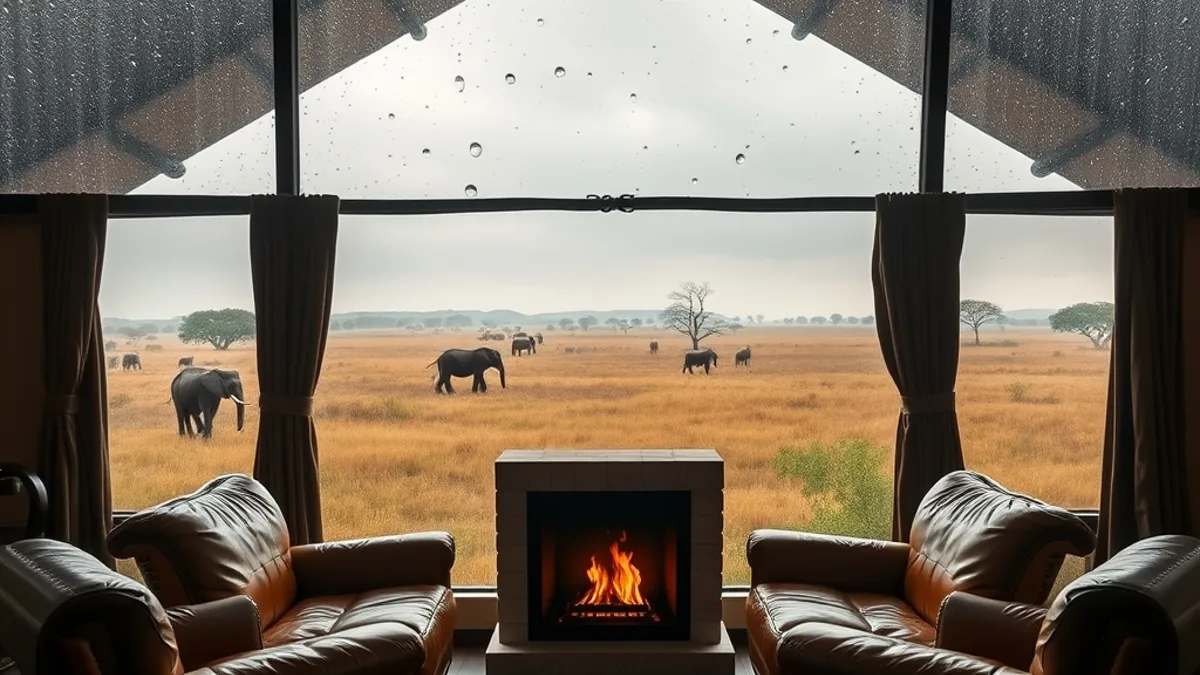
When the afternoon storm rolls in, the heart of the lodge shifts indoors. Fireplaces that sat unlit all morning suddenly become the gathering point, with staff lighting them well before guests drift in from the veranda. Lounges that you barely noticed on sunny days turn out to hold deep sofas, stacks of coffee-table books on African wildlife, and shelves of board games that have entertained families through many green seasons.
The better lodges treat a wet afternoon as a chance rather than a disruption. Managers quietly rearrange the day so that the hours between lunch and the afternoon drive become the most sociable part of your stay. A chef might set up a demonstration table in the dining area, a sommelier or lodge manager may pour tastings from a nearby wine estate, and therapists often extend spa availability because everyone suddenly has time for a massage.
Photography workshops are another common addition, and they make sense given the conditions. Guides and resident photographers use the dramatic light outside to teach composition, long exposures and how to capture lightning over the plain from a sheltered position. If you have been shooting on auto all trip, a rainy afternoon is often where that changes.
Covered viewing decks deserve special mention. Many lodges position their main decks under deep thatch or canvas, facing the open plain, so you can watch the storm front move across the grass with a drink in hand and not a drop on you. The light before and after the rain is some of the best you will see all trip, and you get it without leaving your chair.
- Ask whether the lodge keeps a small reference library with field guides for birds and mammals, so you can identify what you saw on the morning drive.
- Some camps set up hands-on activities like bread baking or beading sessions with staff, which children tend to love on a long wet afternoon.
- If a wine or gin tasting is offered, check whether it is included in your rate or billed as an extra, as practices differ between lodges.
- Spa availability can fill up once everyone abandons the deck, so book your treatment slot at breakfast rather than waiting for the rain to start.
How Rain Changes Wildlife Viewing for the Better
The green season, running from November to March, is when the bush looks its best. Grass grows tall and bright, trees fill out with fresh leaves, and seasonal flowers add splashes of color across the plains. It is also calving time, so you stand a good chance of seeing newborn antelope taking their first wobbly steps within hours of birth.
Birders get the biggest upgrade. Migrant species arrive from Europe and other parts of Africa during these months, and many local birds are in breeding plumage, which makes identification and photography far more rewarding than in the dry season.
Sightings take more skill but feel more private
With rain filling seasonal pans and streams, animals no longer crowd around permanent waterholes the way they do in the dry months. They spread out across a much wider area, which means your guide has to work harder and read tracks and behavior more carefully. The trade-off is worth it: when you do find a leopard or a herd of buffalo, you will often be the only vehicle there, instead of sharing the moment with five others lined up at a waterhole.
A photographer’s favorite light
Dry-season air is full of dust, which washes out colors and softens distant subjects. After rain, the air is scrubbed clean, and storm clouds create dramatic backdrops with shafts of sunlight breaking through. Wildlife against dark skies and saturated green landscapes produces images that look completely different from the classic golden-hour dry-season shots. If photography matters to you, a wet-season safari is genuinely worth considering.
Planning and Booking Around the Wet Season
The wet season is also the value season, and that is the main reason many travelers choose it. If you target the months from November to March, you will typically find lodge rates 30-40% below peak dry-season prices, sometimes at the very same camps that book out a year in advance for the dry months.
Planning ahead is easier too. While peak-season trips often need to be reserved around 12 months out, booking 3-6 months ahead is usually enough for green-season dates. Popular lodges over Christmas and New Year still fill early, so if your dates fall in that window, move faster.
What to pack for humid, rainy days
Expect daytime temperatures of 25-32°C with high humidity, so heavy clothing is pointless. What matters is how fast things dry and how well you protect your gear.
- Quick-dry layers: synthetic or merino shirts and trousers dry overnight in humid conditions, while cotton stays damp for days and gets clammy on morning drives.
- A light rain jacket: lodges usually supply ponchos on open vehicles, but your own packable jacket covers walks around camp and sudden downpours between buildings.
- Waterproof bags for cameras and phones: simple dry bags or rain covers cost little and protect expensive gear on drives, where a sudden shower can soak everything in seconds.
- Footwear with grip: paths around camp get muddy and slippery, so closed shoes with decent tread beat sandals for the wet months.
One health note to take seriously: malaria risk is higher in the wet months, so book an appointment with a travel clinic well before departure to discuss prophylaxis and other precautions suited to your specific destination.
Which Lodge Styles Handle Rain Days Best
Not all camps cope with a day of rain equally well, and the difference comes down to design. Lodges built with large covered verandas, generous indoor lounges and spa facilities absorb a downpour without anyone feeling stuck. You can watch the storm from a dry deck in the morning, read by the fire at lunch, and book a massage in the afternoon, and the day never feels wasted.
Bare-bones camps, by contrast, often have limited covered space beyond a small dining tent. When a storm pins everyone indoors for a few hours, that shortage becomes obvious quickly.
Tented camps: atmospheric, with a caveat
Sleeping in a tent while rain drums on the canvas is one of the most memorable safari experiences there is, and many travelers deliberately choose it. The caveat is quality. Tents on solid concrete or wooden bases, with proper flooring and sealed openings, keep you fully dry even in a serious storm. Canvas on bare ground can let in moisture during extended rain. If full dry comfort matters to you, ask specifically whether tents have solid bases before you book.
Ask the rain-day question directly
The simplest test is to email or call the lodge and ask what they offer guests on rainy days. Good camps answer without hesitation: cooking demonstrations, wine tastings, guided walks between showers, a stocked library, spa treatments. If a reservation team stalls or gives a vague reply, that tells you something too. A lodge that has thought about its wet-weather program is usually a lodge that handles every part of your stay with the same care.
The Takeaway on Rainy Lodge Days
A full day of rain rarely ruins a safari lodge stay. Storms in the green season usually pass within a few hours, and lodges simply reshape the day around them, shifting drives earlier and filling the wet window with fires, good food and relaxed indoor time. Your game drive may be delayed or rerouted, but the day is far from wasted.
If anything, the wet months trade perfect weather for real advantages: lower rates, newborn wildlife and quieter roads. The single best hedge against a wet forecast is choosing a lodge with strong indoor spaces, so ask about its rain-day program before you book. Have you experienced a stormy day on safari, or are you planning a green-season trip? Share your story or questions in the comments below.