If you have ever booked a remote safari lodge or an off-grid eco retreat, you may have been caught off guard by one detail: the electricity only works for a few hours a day. Many travelers assume outlets run around the clock, only to discover that charging a camera battery means waiting for the evening generator window. It is one of the most common surprises in remote lodge travel, and it raises obvious questions about when the power actually comes on and why it is limited at all.
This guide explains lodge generators and solar power in plain terms. You will learn why off-grid lodges limit electricity hours, what typical generator schedules look like at safari camps, and how solar systems keep lights and fans running after the generators shut down. We will also cover practical charging strategies for cameras and drones, how the seasons affect power supply, and the specific questions worth asking before you book.
Why Remote Lodges Limit Electricity Hours
Most remote lodges are built far from any national power grid, sometimes hours of driving from the nearest town. That means the lodge must produce its own electricity on site, using some combination of diesel generators, solar arrays and battery banks. There is no utility company to fall back on, so every watt the lodge uses has to be generated, stored or rationed by staff.
Diesel generators can produce plenty of power, but running one all day is expensive in fuel and maintenance, and the constant hum shatters the wilderness atmosphere guests came for. The practical compromise at many properties is a scheduled system: full power for roughly 4-8 hours per day, usually split between an early morning block and a late afternoon or evening block. Outside those windows, the generator rests and the camp quiets down.
What runs on solar, and what needs the generator
Solar panels paired with battery banks typically handle the low-draw essentials around the clock: room lighting, ceiling fans and USB charging for phones and cameras. High-draw appliances are a different story. Hairdryers, kettles, laundry machines and air conditioning pull far more current than most battery banks can supply, so these usually only work during generator hours, or in some camps not at all. Knowing that split in advance helps you plan your day and your packing.
Typical Generator Schedules at Safari Lodges
Generator schedules at safari lodges are remarkably consistent across camps, even when the properties differ in style and price. Most switch their generators on in the early morning, typically between 06:00 and 08:00, so guests can charge devices, make coffee and dry hair before the morning game drive. A second window usually runs from around 16:00 to 19:00, covering the pre-dinner hours when everyone returns from the afternoon drive hungry, dusty and low on battery.
Between those two windows, midday is usually generator-free. Rather than seeing this as an inconvenience, treat it as one of the best parts of the day. Camps tend to be at their calmest during these hours, and the lack of engine noise means you hear the birds, the wind and whatever is moving through the bush. It is an ideal time for reading, napping or editing photos on battery power, especially if you are staying somewhere with the quiet charm of spacious homesteads near safari country.
Exact times vary by camp and by season, so it pays to ask when booking. A few things worth clarifying:
- Whether the schedule shifts with sunrise and sunset times, since some camps adjust generator hours as the seasons change
- If there is a separate quiet charging area in the main lodge where outlets stay live longer than in guest tents
- Whether the camp offers a supervised charging station for camera batteries during game drive hours, when you are away from your room
How Solar Power Changes the In-Lodge Experience
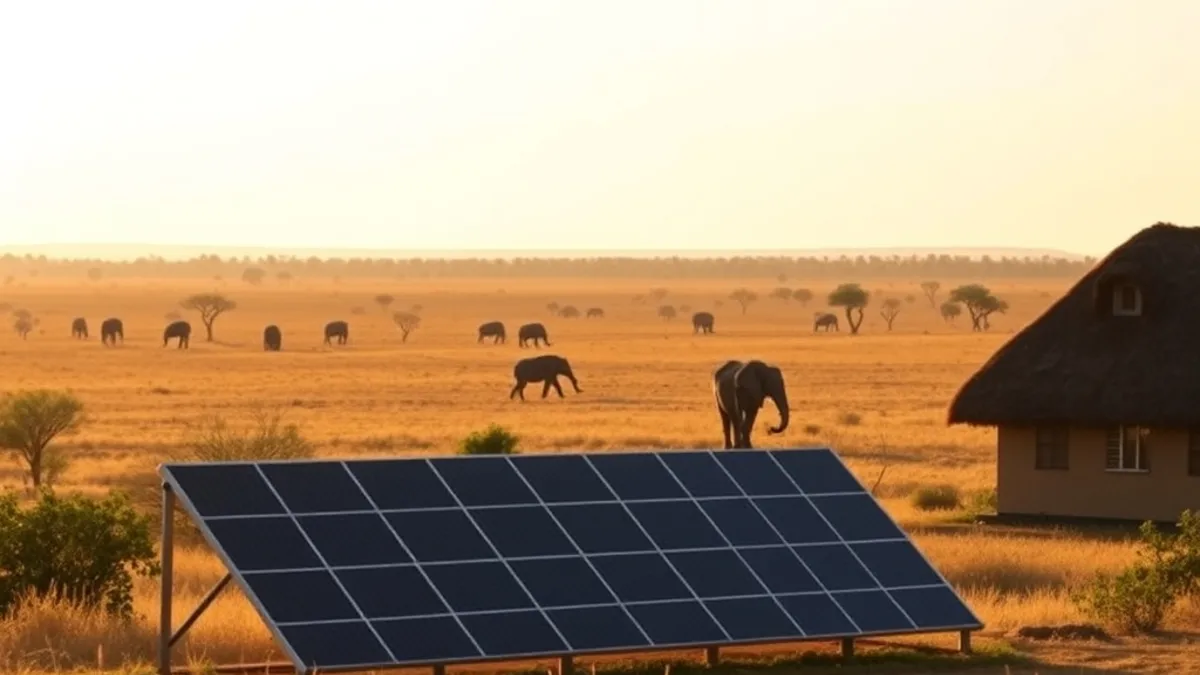
Solar power has quietly transformed what guests can expect inside a remote lodge. A well-designed solar-plus-battery setup keeps the basics running 24 hours a day, even when the generator is off. That means your tent lights work after dinner, the ceiling fan keeps turning through the night, and you can top up a phone or camera battery from a USB port whenever you like. For most guests, the only noticeable difference is the silence.
Where the limits still show up
The limits appear the moment you plug in something power-hungry. Kettles, hairdryers and air conditioning usually only work during generator hours, and at some camps they do not work at all. If you cannot function without a hairdryer or a mid-afternoon cup of tea in your room, check exactly what the property supports before you book rather than discovering it on arrival.
At the far end of the spectrum, a growing number of small eco camps with fewer than 10 rooms now run entirely on solar with no generator at all. The trade-off is convenience: no hairdryers, limited hot water options and stricter charging routines. What you get in return is exceptional silence and a lighter footprint, which for many travelers is exactly the point of staying somewhere that remote.
Charging Cameras, Phones and Drones Between Power Windows
Staying charged at an off-grid lodge takes a bit of planning, especially if you travel with cameras, drones or a laptop full of editing work. Because outlets only deliver full power during limited windows, building a simple daily charging routine is the difference between never missing a shot and watching a dead battery ruin a perfect sighting. The good news is that once you know the rhythm of the lodge, it becomes second nature within a day or two of arrival.
- Charge during the generator windows, not overnight. Outlets usually only deliver full power during the two daily windows, so plug in camera batteries and laptops right after breakfast and again before dinner. Overnight charging on solar alone is often too weak or simply unavailable for high-draw devices.
- Top up everything at once. Bring a multi-port USB charger so you can run your phone, drone batteries and power bank from a single wall socket during the window, instead of waiting for one device to finish before the next starts.
- Carry a power bank for the midday gap. A 10,000-20,000mAh power bank bridges the hours when outlets are off, which is essential for photographers on full-day game drives who are shooting and reviewing images all day.
- Pack the right adapter. Most lodges use 220-240V outlets with UK-style three-pin or universal sockets, so check your gear’s plugs before departure and bring an adapter that fits.
A few extra habits make this routine even smoother. Label your camera batteries so you know which ones are full and which need the next window, and set a phone reminder for the start of each charging period so you never wander off on a sundowner and forget a plugged-in laptop. If you shoot with multiple cards and bodies, rotate gear between windows rather than trying to charge everything at once.
Once this routine becomes second nature, limited electricity stops feeling like a restriction. You will return from each game drive with full batteries, a charged drone and enough stored power to edit the day’s highlights long after the generator goes quiet for the night.
How Seasons Affect Solar Output and Generator Reliance
The amount of sun a lodge receives directly shapes how much it relies on its generator. Solar panels need clear skies to fill battery banks, and the difference between seasons can be significant.
Dry season: peak solar performance
Dry season months from June to October deliver the strongest solar output, so lodges lean less on their generators during this period. Battery banks charge fully each day, and the quiet midday hours stay genuinely quiet. Guests who value silence and a light generator footprint will find the dry season the most comfortable time to visit an off-grid camp.
Wet season: longer generator hours, a silver lining
Cloudy wet-season months from November to March can shorten solar capacity and extend generator hours, since panels produce less under overcast skies and batteries may not reach a full charge. The hidden upside for guests is reliability: longer generator runtime usually means more generous and predictable charging windows. If you travel in the green season with a laptop, multiple camera bodies or a drone, you may actually find it easier to keep everything topped up than during the sunniest months.
Either way, it pays to ask the lodge how its power setup changes across the year, since every camp manages the balance between sun and diesel a little differently.
What to Ask Before Booking an Off-Grid Lodge
A two-minute email before booking can save you a week of frustration with dead batteries and cold kettles. Off-grid lodges vary widely in how they handle power, and the details rarely appear clearly on websites. Some camps are upfront about their setup, while others leave you guessing until you arrive with the wrong adapter and a camera bag full of uncharged batteries. Here is what to ask, and why each answer matters.
- Total electricity hours per day. Ask exactly how many hours of generator power the camp provides daily, so you can plan camera and laptop charging around them rather than discovering the schedule on arrival.
- Where the outlets are located. Some camps only have sockets in the main lodge, while others wire them into the tents or rooms. If outlets are central only, plan your charging around mealtimes in the common area, and bring a short extension lead if you want to charge several devices at once.
- Round-the-clock solar charging. Ask whether solar charging stations for USB devices are available at all hours, even when the generator is off. This determines whether your phone and power bank stay topped up between windows.
- Appliance rules. Confirm whether hairdryers or kettles are permitted at all, since high-draw items can overload solar systems and are often restricted to generator hours or banned entirely.
- Socket types and voltage. Plugs and voltage differ across Africa, so ask what outlets the rooms and common areas actually have. Knowing this in advance lets you pack the correct adapter and a multi-port USB charger before departure, instead of borrowing one from reception and hoping it works.
Send these questions in one message when you book. A well-organized lodge will answer them easily, and the reply tells you a lot about how smoothly the rest of your stay will run. If a camp takes days to respond or gives vague answers about power, expect similar communication about anything else during your trip. Clear answers up front mean you can pack the right gear and start your safari without any charging surprises.
Wrapping Up Your Lodge Power Planning
One of the most common surprises for first-time safari guests is discovering that outlets don’t work around the clock. The good news: once you understand the rhythm, it barely affects your stay. Generator hours are predictable, solar covers the basics, and a little preparation goes a long way.
Timing matters more than quantity. Since generators typically run around breakfast and again before dinner, plan your charging around those two windows rather than leaving devices plugged in overnight. Photographers should also carry a portable backup battery in the 10,000-20,000mAh range to keep camera gear alive through midday game drives when the lodge is running on solar alone.
Socket types catch travelers off guard, too. Most lodges use 220-240V outlets with UK-style three-pin or universal sockets, so pack an adapter before departure. Finally, send the lodge a quick email when booking to confirm their exact power schedule and what appliances are permitted. If this helped you plan your stay, leave a comment or share the article.