It happens to travelers every year: the booking page promised a pool, and the photos looked perfect. Then you arrive, dip a toe in, and discover the water is freezing, the pool is drained for maintenance, or you have ten minutes of swim time before the rules kick in. Hotel pools are not all created equal, and the word “pool” on a listing can hide more than it reveals.
This guide breaks down what you actually need to know before you book. We’ll cover why pool details matter so much, when a heated pool is worth paying for, what to expect from indoor pools in the colder months, and the shared pool etiquette that keeps everyone happy. We’ll also look at kids’ hours, adult swim times and lap lanes, show you how to verify a hotel’s pool setup before you pay, and help you choose the right pool for the trip you’re planning.
Why Hotel Pool Details Matter Before You Book
That single word “pool” on a hotel listing covers an enormous range of possibilities. It might mean a heated outdoor pool, an unheated one, an indoor lap pool, a shared pool open to dozens of rooms, or a small private plunge. Each of these delivers a completely different experience, and the difference can shape your entire stay. A family planning afternoons in the water and a couple hoping for a quiet morning swim are not looking for the same thing, even if the listing says “pool” for both.
Depth, size and hours vary more than you’d think
Shared hotel pools commonly post swim hours of about 8 am to 8 pm, which may or may not line up with your plans. Kids’ pools are usually shallow, around 0.3–0.5 m deep — great for toddlers, useless for anyone who wants to actually swim. Main pool sizes and depths vary just as widely, and some “pools” turn out to be decorative plunges you can barely float in.
Why the listing alone isn’t enough
Booking photos are taken on the hotel’s best day, usually in high season with the water sparkling. They rarely show the pool in winter, covered for the off-season, or fenced off during maintenance. If you’re traveling outside peak summer, the listing tells you a pool exists — but not whether you’ll be able to use it. That’s why it pays to dig into the details before you commit, which is exactly what the rest of this guide will help you do.
Heated Hotel Pools: When Warm Water Actually Matters
Ask any swimmer who has tiptoed into an unheated pool in spring: water temperature is not a minor detail. Heated hotel pools are typically held at 26–28°C (79–82°F), a range that feels comfortable whether you’re doing laps or floating with a drink. Below that, and an otherwise lovely pool becomes something you brace yourself for rather than enjoy.
Shoulder season is when heating decides everything
In the shoulder-season months of April–May and September–October, the air can be warm enough for sunbathing while the water stays stubbornly cold. An unheated outdoor pool during these months can simply be too cold to use, which turns a headline amenity into a piece of scenery. If your trip falls in these windows, heating is the deciding feature — ask about it specifically, not just whether a pool exists.
When you can skip the heating premium
In peak summer, the picture flips. Warm air and long sunny days keep outdoor pools comfortable on their own, so paying extra for a heated pool buys you little. Choosing a hotel that skips heating can be an easy way to save money without sacrificing your swim.
Pool design also shapes the atmosphere of a stay, not just its practicality. Some warm-water destinations build entire hotel experiences around private, calm poolside space rather than big shared decks. Our guide to Marbella hotels with private poolside calm shows how that approach changes the feel of a whole trip.
Indoor Hotel Pools: Year-Round Swimming and What to Expect
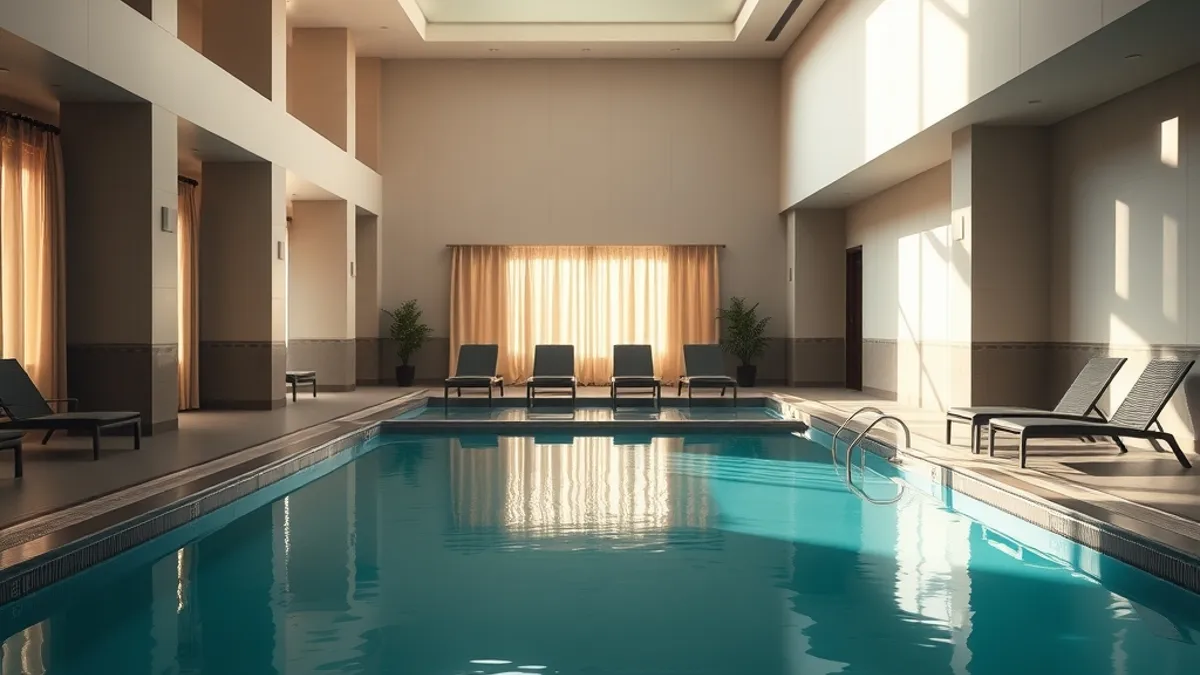
If your trip falls between November and March, an indoor pool is usually the only pool you can count on. Outdoor pools at European resorts often close or go unheated from November to March, sitting empty just when you’d most appreciate a swim after a day of sightseeing. Indoor pools stay open year-round, which makes them the reliable choice for winter trips — city breaks, ski weekends, and anywhere the weather turns.
What an indoor pool is actually like
Set expectations before you pack your goggles. Most indoor hotel pools run around 15–20 m long, which is fine for steady laps and a proper swim, but noticeably shorter than the 25 m pools many lap swimmers are used to. You’ll also be counting turns more often. Expect higher humidity and a stronger chlorine smell than an outdoor pool, too — the enclosed air holds it. If you’re sensitive to that, a room away from the pool floor is worth requesting.
Where indoor pools make the most sense
Indoor pools suit city hotels and cold-weather regions particularly well. In those settings, an outdoor pool would sit empty for months of the year, so hotels invest in a covered, heated space instead. The result is a pool you can use in any season, any weather, at any hour the hotel keeps it open. For a winter traveler, that reliability is worth more than a bigger outdoor pool that will be drained before you arrive. Just confirm the details directly with the hotel, as the next sections explain.
Shared Pool Rules: Etiquette Every Guest Should Know
Shared hotel pools work only when everyone follows a few basic rules, and most friction at the pool deck comes from guests who never learned them. The good news: the etiquette is simple, and a two-minute conversation at check-in prevents almost every common conflict.
The biggest flashpoint is the towel game. Draping a towel over a lounger at dawn and then disappearing for hours is widely discouraged at hotels around the world, yet it still happens every morning in high season. Policies differ from one property to the next — some remove unattended items after a set period, others turn a blind eye — so ask at the front desk how your hotel handles it before you decide how to play it.
Hours matter too. Most shared pools post swim times of roughly 8 am to 8 pm, and many expect quieter behavior early in the morning and later in the evening, outside the busy midday window. Beyond that, a handful of habits keep the deck pleasant for everyone:
- Shower before you swim. Most hotels require it, and it genuinely reduces the chlorine demand in the water — a quick rinse at the deck shower takes ten seconds.
- Keep glass off the pool deck. Use plastic or paper cups near the water; a broken glass often forces a full drain and cleaning, closing the pool for everyone.
- Respect marked lanes. If the pool has lane ropes or signs for lap swimmers, swim laps only there and let faster swimmers pass at the wall.
- Watch where kids play. Even in family-friendly hotels, jumping and splashing near swimmers doing lengths is the fastest way to draw complaints.
Kids’ Hours, Adult Swim Times and Lap Lanes
Not every hour at a hotel pool feels the same. Many hotels set aside the early morning, roughly 7–9 am, for adult-only or lap swimming, and it is the calmest stretch of water you will get all day. If you swim laps for fitness or simply crave quiet, plan your session for that window instead of fighting the afternoon crowd. Ask at check-in exactly when the adult block runs, since the timing varies from one property to the next.
Traveling with children changes the picture entirely. What matters most is not the schedule but the layout: a separate shallow kids’ pool, usually no deeper than half a meter at most, lets toddlers splash safely while adults swim or relax nearby. If the hotel only offers a main pool, you will likely spend the whole visit hovering at the edge, which is nobody’s idea of a vacation.
One schedule or two?
Hotels handle the adult-versus-family balance in different ways. Some run separate hours, with quiet adult swim blocks in the morning and open family time for the rest of the day. Others share a single schedule, which means noise levels depend entirely on who happens to be staying that week. If a peaceful swim is high on your list, email the hotel before booking and ask directly whether adult and family hours are separated. The answer tells you more about the atmosphere than any photo of the pool will.
Families can flip the same question: if your kids want freedom to splash and play, a hotel with strict adult-only blocks may feel restrictive. Matching the pool schedule to your travel style is the simplest way to avoid disappointment on both sides.
How to Verify a Hotel’s Pool Setup Before Booking
Booking sites compress a hotel’s entire pool setup into a single word and a handful of photos, and those photos are almost always taken on the sunniest day of the year, with the deck full of fresh towels and not a single maintenance cover in sight. Before you commit to a reservation, spend fifteen minutes verifying the details that actually determine whether you will use the pool at all — or whether you will spend your trip looking at a closed, empty basin from your room window.
- Email the hotel directly. Ask three specific questions: whether the pool is heated, what the posted swim hours are, and whether the pool closes or sits unheated during the colder months of the year. A direct reply in writing is worth more than any listing description, and it gives you something to fall back on if the reality does not match what you were told.
- Read recent guest reviews with purpose. Search reviews from the last few months for mentions of cold water, unexpected closures, or overcrowded decks. Guests are blunt about these problems, and a pattern of complaints reveals exactly what the listing hides.
- Clarify what “pool” actually means. Some hotels list a small plunge pool as their pool feature, which is fine for cooling off but useless for swimming laps. Ask about the main pool’s size and confirm the depth if you plan to do proper lengths.
- Ask about the deck, not just the water. The number of loungers, the shade situation, and whether the pool is shared with a spa or neighboring property all change the experience.
None of this takes long, and hotels answer these questions daily, so there is no reason to feel awkward about asking. The travelers who end up disappointed are usually the ones who assumed the listing photo told the whole story. One short email and a careful scan of reviews will confirm that the pool you pictured is the pool you will actually find when you check in — and that alone can make the difference between a trip built around swimming and one built around making the best of it.
Choosing the Right Hotel Pool for Your Stay
The frustration this article set out to solve is easy to avoid. A “pool” listing on its own tells you very little, but the details behind it tell you plenty: whether the water is heated, whether it sits indoors or out, and whether it stays open in the months you plan to travel. Match the pool type to your travel dates, and the water will be there when you arrive instead of a drained basin behind a fence.
Comfort is only half the picture. Shared pool rules — posted swim hours, no towel-reserving, and early adult swim slots — shape how relaxing the deck feels day to day. A short email to the hotel and a scan of recent reviews before booking will tell you whether the pool in the photos matches the pool that actually awaits you. If this helped you sort out your next booking, leave a comment or share the article.