A noisy hotel room can ruin an otherwise perfect trip, yet most travelers never think about hotel soundproofing until they’re lying awake at 2 a.m. listening to an ice machine hum, a door slam or traffic rumble past the window. The frustrating part is that a quiet room is usually available in the same building, on the same night, at the same price. The difference comes down to knowing what to look for before you book and what to ask for when you arrive.
This guide walks you through the whole process. You’ll learn how sound actually gets into a hotel room, how to spot noise sources on a map before you pay, which floors and positions tend to be calmest, and how to book and check in with a quiet room in mind. We’ll also cover simple backup fixes for when a room still turns out noisy, plus a short checklist you can use on your next trip.
How Hotel Soundproofing Actually Works
Sound doesn’t sneak into a hotel room through one mysterious hole. It travels along three main paths: the windows, the door and the shared walls. In most buildings, windows are the weakest link by far, because glass is thin and gaps around frames leak sound. Once you understand these three paths, choosing a quiet room becomes much less of a guessing game.
Windows do the heavy lifting
Glazing quality makes the biggest single difference to how much street noise reaches your bed. Double- or triple-glazed windows can cut outside noise by 25-35 decibels, which is the difference between a busy road and a hushed library. Single-pane glass blocks far less, so an older property with original windows will let in considerably more of the street below. If you’re sensitive to noise, it’s reasonable to ask a hotel whether its windows have been upgraded.
Doors and walls matter too
The door is the second path to check. Solid-core doors with drop seals at the bottom block hallway noise far better than hollow doors with visible gaps underneath, and that gap alone can let conversation and luggage wheels straight into your room. Walls are the third path, and here age matters: newer builds and renovated wings often use better insulation between rooms than older properties, where a single wall may be all that separates you from a neighbor’s television. When a hotel advertishes a recently refurbished wing, improved sound insulation is often part of the package.
Map the Noise Sources Before You Book
The best time to fight noise is before you book, and modern booking platforms give you more tools than most travelers use. Switch from the photo gallery to the map view and study the hotel’s layout. Many platforms show floor plans or at least the building’s position relative to streets, which helps you spot where the elevators, ice machines, housekeeping closets and service stairs sit. Rooms stacked near these hubs tend to be the busiest spots in the building.
Then widen the lens to the neighborhood itself. Use street view to check what surrounds the hotel: a nightclub next door, a train line behind it or a construction site across the street can all shape your nights more than anything the hotel does. Don’t forget the hotel’s own amenities either. A pool deck, rooftop bar or breakfast room directly above or below your room is a classic source of late-night music and early-morning chair scraping.
- Street-facing rooms in busy districts carry traffic noise all night, including delivery trucks that often start arriving before dawn in city centers.
- Courtyard-facing rooms are usually quieter for traffic, but check what’s in the courtyard itself, since air conditioning units and ventilation equipment are often parked there.
- Corner buildings and intersections expose rooms on two sides to street noise, so a room facing the calmer of the two streets is the better pick.
- Nearby transport hubs such as bus stations or airport approach paths can create periodic noise spikes that reviews rarely mention but street view makes obvious.
Choosing the Best Floor and Position
Once you know where the noise sources are, the next decision is which floor and position to aim for. Floors between the 4th and 8th typically balance reduced street noise with reasonable elevator access and fire-safety practicality. Lower floors hear more of the street and any late-night lobby or bar activity, while very high floors can mean long waits for lifts and, in some buildings, rooftop equipment or a bar directly overhead. If you are unsure where those facilities sit, a quick look at the property photos or a short question to the front desk usually settles it.
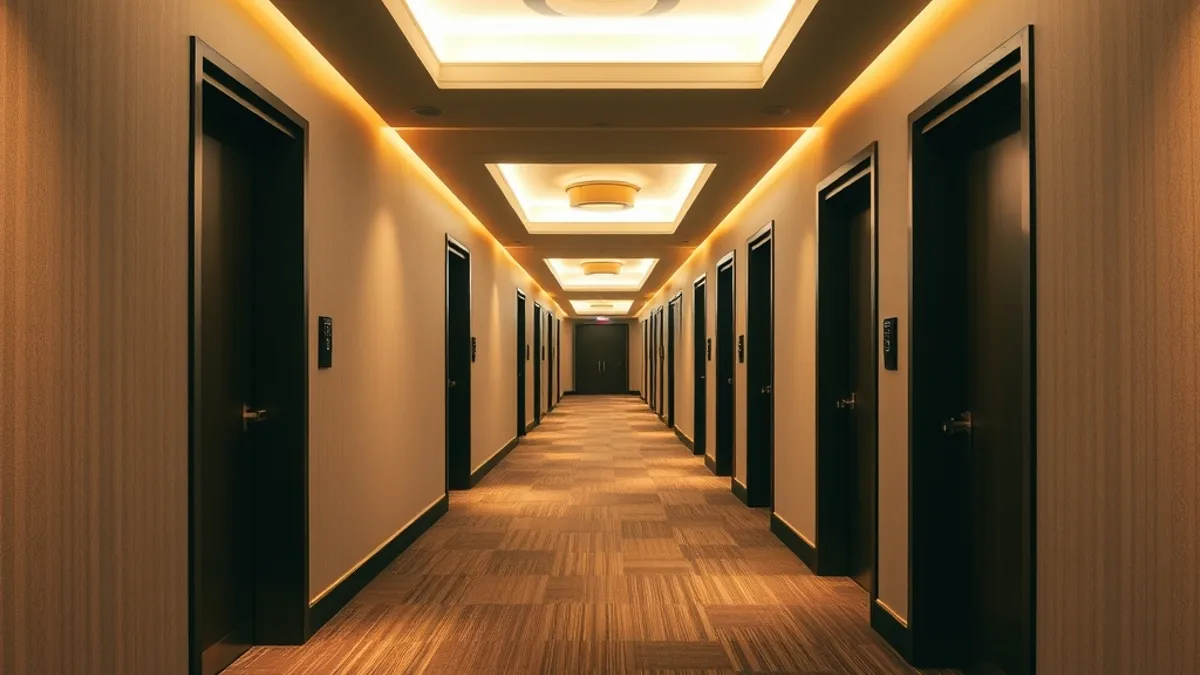
Position within the floor matters just as much. Top-floor rooms eliminate footfall noise from guests walking above, which is one of the most common complaints in hotel reviews. Corner rooms usually share only one neighboring wall, cutting potential noise sources roughly in half compared with a mid-corridor room sandwiched between two neighbors. The trade-off is that corner rooms are popular, so they tend to book up first, which is one more reason to plan ahead. If a corner room is unavailable, a room at the end of the corridor is the next best target, since fewer neighbors means fewer doors slamming and less conversation bleeding through walls.
- Avoid rooms beside, above or below elevators and ice machines. Mechanical noise can carry 30-40 meters down a corridor, so distance is your friend, not just a floor apart.
- Rooms near service stairs often hear the heavy fire door slam every time staff or guests use the stairs, especially on lower floors.
- Rooms over or under kitchens and laundry areas can pick up early-morning equipment noise, so ask where these facilities sit if the floor plan isn’t clear.
- Connecting rooms have a door in the shared wall, which transmits far more sound than a solid wall, so request a room without an adjoining family or group if you sleep lightly.
Booking Strategies for a Quiet Room
A quiet room is rarely luck. It comes from timing your booking well and putting a few specific requests in writing before you ever arrive. The good news is that this takes maybe ten extra minutes, and it dramatically improves your odds of sleeping through the night. The trick is to make your request easy for staff to act on: be specific, be polite, and put it in writing at more than one stage so it doesn’t get lost between booking and check-in.
- Book early, ideally 2-3 months ahead. The best room positions go first, and booking 2-3 months ahead gives you the widest choice before high-demand floors fill up. Last-minute bookers usually get whatever is left, which often means the loudest spots.
- Use the special requests field at booking time. Most booking platforms have a comments box. Write a short, clear note asking for a quiet room away from the elevator. Putting it in writing creates a record the front desk can see when assigning rooms, and it also gives you something to point to politely if the room you’re handed doesn’t match.
- Mine recent guest reviews. Instead of reading reviews one by one, search them for words like “noisy”, “quiet” or “thin walls”. Reviewers often mention exact room numbers or floors, which helps you identify problem areas to avoid and quiet zones to request. A handful of reviews from the last few months tells you far more than a glowing average from years past.
- Confirm directly with the hotel. Send the hotel a short message after booking to make sure your request is on file. A polite follow-up 1-2 days before arrival reinforces it, since that is often when room assignments are actually being made. Keep both messages brief and friendly.
None of these steps guarantees a silent night, but together they stack the odds firmly in your favor. Front desk teams handle hundreds of arrivals, and guests who ask early and politely tend to be the ones who get remembered when quiet rooms are being handed out. Think of it as a small investment of time before your trip that pays off every single night you sleep well.
Asking at Check-In Without Sounding Difficult
Even with a perfect booking, the final room assignment usually happens at the front desk, five minutes before you get your key. This is your last and often best chance to influence where you sleep, and it costs nothing but a friendly conversation. A few minutes of polite negotiation at check-in can do more for a quiet night than any gadget in your luggage.
- Ask which rooms are “on the quiet side”. Rather than demanding a specific room number, use this simple phrase. Staff know their building best, including which corridors stay peaceful and which ones echo all night with foot traffic and doors slamming, so let them use that knowledge. Framing it as a question rather than a demand also makes it easier for them to say yes.
- Request a room 2-3 doors from the elevator end of the corridor. This position reduces mechanical noise from the elevator shaft and machinery while keeping your walk from the lobby short. It is a sweet spot many travelers overlook, and it works just as well in large resort properties as in city hotels.
- Ask about recently renovated wings. A polite question about newer rooms often pays off, since renovated wings typically have better sound insulation between walls than older sections of the property. Staff are usually happy to place you there if it is available, so it never hurts to ask.
- Check the view before accepting the key. If the assigned room faces a busy street, ask about courtyard-facing alternatives before you walk away from the desk. Swapping takes seconds at check-in and is far easier than repacking your bags and moving later that night.
The key is tone. You are not making a complaint, you are having a practical conversation with someone who wants you to enjoy your stay. Front desk staff deal with noise complaints constantly, so a calm, specific request at check-in usually gets a helpful answer. If the hotel is fully booked and nothing quieter is available, ask them to note your preference for a move the next day, then follow up at the desk in the morning when rooms have freed up.
Backup Fixes for a Room That’s Still Noisy
Sometimes, despite your best planning, the room turns out to be louder than expected. Maybe a wedding party checks in late, or the street outside turns livelier than the reviews suggested. Before you lose a night of sleep, try a few simple fixes that cost almost nothing and work surprisingly well. The goal is not to silence the room completely, but to take the edge off the noises that actually wake you up.
The most important thing to pack is a pair of soft foam earplugs. They weigh a few grams, cost very little, and remain the most reliable fallback for sleep in any hotel, anywhere. Pack two pairs, in fact, since one always seems to vanish under the bed at two in the morning. Beyond that, a couple of everyday items can mask or soften the most common noise problems:
- White noise masking: Run the bathroom exhaust fan with the door open, or use a white noise app on your phone. A steady background sound smooths out intermittent noises like hallway voices, slamming doors and passing traffic, and it is the sudden changes in sound, not the constant hum, that tend to break your sleep. If neither option is available, a fan or an air conditioner on a low setting can serve the same purpose.
- The towel trick: If the door has a visible gap at the bottom, roll a bath towel and press it firmly along that gap. It dampens corridor noise noticeably and takes ten seconds to set up. The same trick works on the gap where a sliding balcony door meets its frame.
- A same-evening room change: If the noise is severe, call or visit the front desk that night rather than waiting until morning. Front desks can often move you before the hotel fills up, and a room two floors away, or one facing the opposite direction, can be a completely different experience.
Think of these as insurance rather than plan A. Most stays will not need them, but having earplugs in your bag and knowing the towel trick means a noisy surprise becomes a minor inconvenience instead of a ruined night.
The Quiet-Room Checklist at a Glance
Lying awake at 2 a.m. because of hallway chatter or street traffic is a frustrating way to spend a trip, and most travelers only start thinking about soundproofing once it’s too late. The good news is that a quiet stay rarely comes down to luck. It starts with understanding that windows, doors and walls are the three paths sound takes into your room, with the quality of the glazing making the biggest difference of all.
From there, it’s about small, deliberate choices. Check where the hotel sits relative to elevators, bars and traffic before you book, and favor mid-floor, top-floor or corner rooms. Book 2-3 months ahead, note a quiet-room request when you reserve, then confirm it with the hotel and again at check-in. Carry earplugs and a few simple masking tricks as insurance, and if the room still disappoints, ask for a change early rather than enduring a sleepless night. If these tips helped you plan a quieter stay, leave a comment or share this article with a fellow traveler.