Most travelers fall into one of two camps: they either treat the room safe as a bank vault and lock away everything they own, or they skip it entirely and walk around with every card, document and piece of jewelry they brought. Both approaches create risk. Overstuffing the safe means you lose access to things you actually need during the day, while ignoring it means you carry valuables that never needed to leave home in the first place.
This guide walks through the hotel safe basics that strike the right balance. We’ll look at why these safes matter more than you might think, what genuinely belongs inside one, and what you should carry on your person instead. We’ll also cover the items best left at home entirely, how to use a safe correctly, and backup plans for rooms where the safe is missing or broken. A final quick recap pulls it all together so you can protect your valuables without overthinking it.
Why Hotel Safe Basics Matter More Than You Think
Here’s the uncomfortable truth about in-room safes: they are deterrents, not fortresses. Most are rated for about 30 minutes of burglary resistance at best, and a determined thief with basic knowledge can often defeat one in far less time. That’s not a reason to avoid them, but it is a reason to understand what you’re actually buying when you lock something away.
The good news is that context matters. The typical hotel theft is not a professional heist. Most room thefts are crimes of opportunity, happening during housekeeping visits or in the minutes when a door is left unlocked or ajar. An opportunistic thief wants speed and simplicity, and a locked safe adds enough friction to send them looking elsewhere. In that scenario, your safe does exactly the job it was designed for.
One layer, not the whole plan
Think of the safe as a single layer in a system. It works best when paired with smart carrying habits, like keeping the day’s cash and active card on your person, and with what you choose to bring on the trip in the first place. A traveler who packs light on valuables and splits what remains between the safe and their pockets is far harder to victimize than one who relies on any single measure. The safe is part of the plan, not the plan itself.
What Belongs in the Hotel Safe
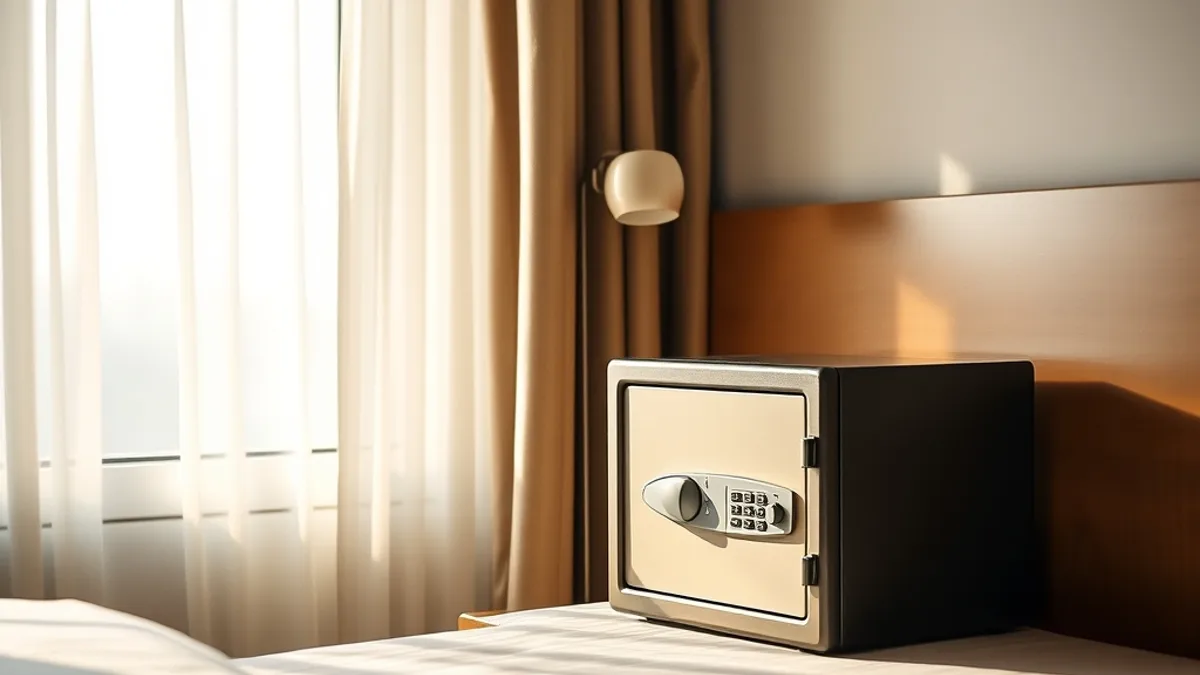
The safe earns its keep by holding the things you need for the trip but not for today. The guiding question is simple: will I need this in the next few hours? If the answer is no, the safe is the right home for it. Spare cash is the clearest example. Carry no more than 10-20% of your trip cash on your person at any time, and lock the rest away, ideally split into two envelopes so you’re never pulling out the whole reserve at once. One envelope covers genuine emergencies, the other holds money you’ve earmarked for the final days of the trip, such as the hotel bill or airport purchases. Keeping them separate means a single moment of carelessness can’t expose everything you brought.
Documents are the other big category. When you head out for the day, your passport can stay behind if you carry a photocopy instead, and a second ID can stay with it. Preparing those copies or phone photos takes under 10 minutes before departure, which is a small price for not carrying your original passport through markets, beaches and bars. Print two or three copies rather than one, and tuck them in different bags, so a lost daypack doesn’t leave you without any proof of identity either.
- Spare cash in two envelopes: Label them by purpose, such as “emergency” and “end of trip,” so you only open the one you need and never reveal the full amount.
- Passport and second ID: Store them together in a small pouch so checkout-day retrieval takes seconds and nothing gets left behind in the safe.
- A backup credit card: Keep it separate from your everyday card so a lost wallet or a declined card doesn’t end your trip; it’s your fallback when the primary fails.
- Occasional-use electronics and jewelry: Items like a spare charger, an extra watch or dress-up earrings you need only for certain evenings belong here, not in a drawer where housekeeping or a passerby can spot them.
What to Carry Instead of Storing
Whatever goes in the safe, a short list of essentials stays with you. The rule of thumb: if losing it would ruin your day but not your trip, carry it; if losing it would ruin the trip, it probably belongs in the safe or at home. Your actively used payment card and the day’s cash budget top this list, since restaurants, taxis and small shops won’t wait for you to run back to your room.
Your phone and any medication you need during the day come everywhere with you as well. Medication especially is not something to gamble on, since replacing a prescription abroad can range from inconvenient to impossible depending on where you’re traveling. Keep it in your carry-on or day bag rather than checked luggage, where delays and lost bags can leave you stranded without it.
A practical habit is to treat your pockets and day bag as a small, replaceable kit. Everything on you should pass a simple test: could you replace it within a day, and would losing it cost you more than an afternoon of hassle? If the answer is no, that item stays behind the safe door. This mindset also keeps you from overstuffing your bag, which makes you a more obvious target on crowded transit or at busy attractions.
- The card you actively pay with: Just one or two cards cover most trips, so carry the one that works and leave backups secured; check your card’s daily withdrawal limit before you leave home so the day’s budget is realistic.
- The day’s cash budget: Withdraw or set aside a specific amount each morning rather than carrying your whole stash, which keeps a pickpocket’s worst-case score small.
- Phone and daily medication: Keep medication in your day bag, not checked luggage, since delays and lost bags happen on the best-planned trips too.
- A document photo on your phone: A clear photo of your passport serves as the everyday stand-in for the original, enough for most casual ID checks; it takes under 10 minutes to prepare before departure and keeps your real passport safely in the room.
What to Leave at Home Entirely
The easiest way to protect your valuables on a trip is to leave the riskiest items in your closet before you ever pack. Every extra card, document or heirloom you bring is one more thing that can be lost, stolen or replaced at great cost. Most trips simply do not need them.
Think about what you actually use on a typical travel day: one payment card, some cash, your phone and a piece of ID. Everything beyond that is dead weight that adds anxiety, not value. A slim wallet is easier to monitor, easier to replace and far less painful if something goes wrong.
There is also a practical benefit to packing light on valuables. The fewer important items you carry, the fewer decisions you have to make each morning about what goes in the safe and what stays on you. That routine becomes second nature fast, and it means less to double-check before you leave the room.
- Extra credit and debit cards: a single backup card plus your everyday card is enough for nearly any itinerary, and each additional card is another account number exposed if your wallet disappears. A lost card on vacation also means a stressful call to the bank from a different time zone.
- Expensive heirloom jewelry and watches: an engagement ring or inherited watch adds real emotional and financial risk without improving the trip. If an occasion truly calls for fine jewelry, wear it on your person rather than packing it.
- Social security cards and birth certificates: no hotel check-in requires them, and identity thieves can do lasting damage with them. A passport plus a photocopy or phone photo of key documents, prepared in under 10 minutes before departure, covers nearly every situation.
Using the Hotel Safe Correctly
A hotel safe only protects you if you use it deliberately. Many travelers lock valuables behind a default code that anyone can look up, or leave the door closed but never actually locked. A few minutes of setup on arrival day fixes most of that, and the same routine repeats in seconds every morning of your stay.
- Set your own code first. Digital safe codes are usually 4-6 digits and reset between guests, so choose something memorable to you but not obvious. Avoid birthdays and repeating patterns like 1234, and test the code twice before you load anything valuable: enter it, lock the door, then reopen it to confirm your code works.
- Check how the safe is secured. Most hotel safes are bolted to a shelf or wall, which prevents someone from simply carrying the whole box out of the room. Give it a firm tug and confirm the door actually latches and locks when closed. It also helps to know the interior size before you pack: typical in-room safes are roughly 15-25 cm deep, which fits passports, envelopes of cash and a small pouch but not a full camera bag or laptop.
- Do a final sweep at checkout. The in-room safe is the most common place travelers lose items, because passports and chargers tucked inside are out of sight. Open it, remove everything, and run your hand along the bottom before you hand back the key.
Make this routine automatic: code on arrival, lock check each time you leave, sweep on the last morning. Once it becomes a habit, it takes less than a minute per day and removes the most common ways travelers lose valuables in hotels.
Backup Plans When a Room Safe Is Missing or Broken
Not every room has a working safe, and not every safe works reliably. Older properties may have no in-room box at all, and digital locks occasionally fail mid-stay or reset between guests in ways that lock you out. Having a fallback plan means a missing or broken safe becomes a minor inconvenience instead of a crisis that derails your trip.
Your first move should be a quick question at reception when you check in. Many hotels keep a front-desk safe or individual deposit boxes for guests, and front-desk staff are used to the request, so do not feel awkward asking. If your room safe is broken, report it the same day rather than leaving valuables loose in a drawer or suitcase, where they are far more exposed.
It also helps to decide before you leave home which items you would fall back on if no safe option existed at all. Travelers who plan this in advance tend to pack lighter on valuables in the first place, which solves half the problem before arrival. A few minutes of preparation, such as making document copies, takes under 10 minutes and pays off in many situations beyond this one.
- Ask about front-desk options early: request details on access hours and whether you get a signed receipt for deposited items, so there is a clear record of what you handed over.
- Split your valuables across hiding spots: keep some items in locked luggage, ideally with a small travel lock, and others in a hidden pouch worn under clothing, so no single discovery wipes you out.
- Act immediately on a broken safe: ask for a room change to a room with a working safe, or use the front-desk box the same day; do not wait until you have accumulated a full day’s worth of cash and cards.
Hotel Safe Basics in One Pass
Most travelers swing between two mistakes: trusting the room safe with everything, or skipping it and hauling valuables around that never needed to come along. The balanced approach sits in the middle. Use the safe for the things you only need occasionally, and keep on your person just the essentials for the day ahead.
A little preparation before departure makes this split effortless. Decide what the trip actually requires, and remember that a photocopy or phone photo of your passport takes under 10 minutes to prepare and covers most everyday situations. Once you arrive, a few minutes spent setting up the safe properly pays off for the whole stay, and a quick final check before you leave the room keeps forgotten items from ruining the trip.
If this helped you pack smarter, leave a comment or share the article with a fellow traveler.