Your flight leaves at 8 p.m., but the front desk wants your room back by 11 a.m. That leaves eight awkward hours with a suitcase, a half-packed bag and no plan. Many travelers hesitate to even ask for extra time, worried they’ll either get hit with a fee or leave a bad impression.
The good news is that late checkout requests succeed more often than most people expect, especially when you know how and when to ask. This guide explains what late checkout actually means at different properties, when hotels are most likely to say yes, and how loyalty status and booking method change your odds. You’ll also learn the exact timing and wording that work, when it makes sense to pay for an extension, and how the rules shift at resorts and vacation rentals. By the end, you’ll have a simple strategy for squeezing extra hours out of almost any stay.
What Late Checkout Actually Means at Hotels
Before you ask for extra hours, it helps to know what you’re actually requesting. Standard checkout at most hotels falls between 11 a.m. and 12 p.m., and that timing isn’t arbitrary. Housekeeping needs the afternoon to turn rooms over for incoming guests, so the checkout hour is built around that cleaning schedule.
Late checkout typically means staying in your room until somewhere between 1 p.m. and 3 p.m. But not all late checkout is the same thing, and the difference matters for your wallet.
Courtesy extension vs. guaranteed late departure
A courtesy extension is free and usually adds just one or two extra hours past the standard time. The front desk grants it when the room has no incoming guest, and they can revoke it if occupancy changes overnight. It’s a favor, not a right.
A guaranteed late departure is a different product. It often functions as a half-day booking: you pay a fee, and the hotel commits to holding your room until a specific hour regardless of arrivals. This is what you want when your departure time is fixed, like a late-evening flight.
When it becomes an extra night
Past mid-afternoon, many properties stop treating your request as an extension at all. At that point, the room can’t reasonably be resold, so hotels often charge for an additional night or apply a fee of roughly 30-50% of the nightly rate. If your plans push into that territory, it’s worth doing the math before you ask, because the pricing may change what “late checkout” even means for your stay.
When Hotels Are Most Likely to Grant Late Checkout Requests
The single biggest factor in whether your late checkout request gets approved is simple: how full the hotel is that night. Midweek stays outside holiday periods, when occupancy is low, get approved far more often than weekend or event dates. On a quiet Tuesday in November, a hotel might have dozens of empty rooms, so letting you keep yours until 2 p.m. costs them nothing. During a conference or a holiday weekend, that same room may already be promised to someone arriving at 3 p.m.
Timing within the day matters just as much. Housekeeping schedules usually require final room access by early afternoon, around 2-3 p.m., so requests beyond that window face resistance no matter how empty the hotel is. A 1 p.m. checkout is an easy yes; a 4 p.m. checkout asks the hotel to rebuild its entire cleaning sequence around you.
Business hotels vs. resorts
Different property types have different rhythms. Business hotels fill up Monday through Thursday with corporate travelers, so they free up rooms on Friday afternoons as the workweek crowd checks out. That makes Friday one of the best days to request a late checkout at a downtown or airport property.
Resorts run on the opposite schedule. Leisure guests arrive on weekends and depart midweek, which means resorts can often accommodate late checkout on Sunday mornings, when the weekend wave has already left. Knowing which pattern applies to your hotel lets you pick the day — or at least set realistic expectations — before you ask.
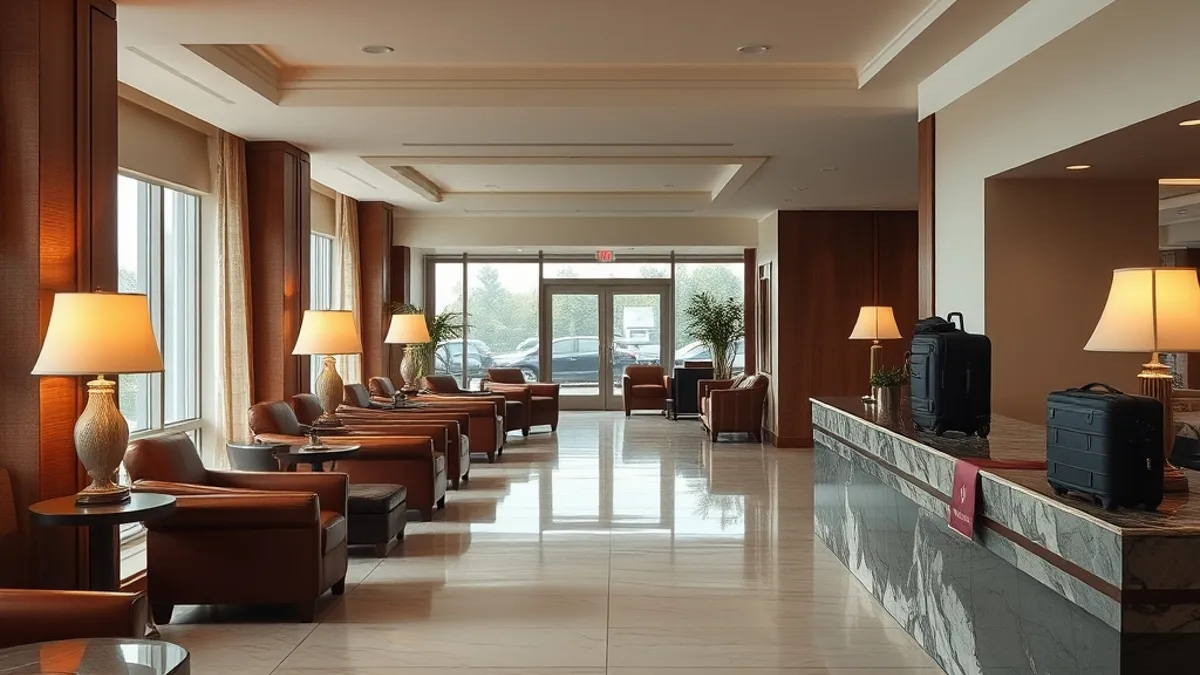
How Loyalty Status and Booking Method Affect Your Odds
Loyalty programs are the most reliable lever you have. Elite loyalty tiers commonly include guaranteed late checkout until 2 p.m. or even 4 p.m. as a published benefit, which means the front desk can’t simply refuse you the way they can refuse a regular guest. If you travel even a few times a year with one hotel chain, it’s worth checking whether your tier already covers this — many travelers pay for extensions they’re entitled to for free.
Booking direct gives the front desk more room to help
How you booked matters almost as much as who you are. Booking direct rather than through an online travel agency gives front-desk staff more flexibility, for two reasons. First, reservations made through OTAs often come with restrictions that limit what staff can modify without a fee. Second, a direct booking creates a guest profile the agent can actually check — your stay history, your preferences, your past behavior. A front desk agent looking at a real profile has far more reason to grant a favor than one staring at an anonymous third-party reservation.
The informal factors that still count
Even without formal elite tiering, you may have more weight than you think. Longer stays and repeat-guest status carry informal weight at the front desk. If you’ve spent five nights at the property, or if the agent can see you’ve stayed there several times before, you’re no longer a stranger asking for a favor — you’re a known guest the hotel has an interest in keeping happy. Mention it politely when you ask; it costs nothing and often tips the decision in your favor.
How to Ask: Timing and Wording That Work
Getting a yes often comes down to when and how you ask. Front desk agents deal with dozens of requests a day, and the ones that stand out are specific, polite and easy to approve. A vague ask for “a bit more time” forces staff to check availability, call housekeeping and guess at your needs, which makes refusal the safer option. A clear, reasonable request does the opposite: it gives them everything they need to say yes on the spot. Timing matters just as much as wording. Asking the evening before departure raises your success odds compared to a morning request, because the team still has room to rearrange the next day’s cleaning schedule. Here is a simple sequence that works.
- Ask the evening before departure. Stop by the front desk after dinner or send a message through the hotel app the night before. This gives the team time to check the arrival list and adjust housekeeping plans. Waiting until 10:45 a.m. on checkout day puts staff in a corner, since the room schedule is usually already locked in.
- Give a specific time and a reason. Say something like, “My flight leaves at 8 p.m. and I’d like to keep the room until 2 p.m.” A concrete request is far easier to grant than a vague ask for “a bit more time.” Mentioning an evening flight or late train also signals you are not simply trying to squeeze out extra hours for free. If your requested time falls past mid-afternoon, be prepared for a fee or a firm no, since housekeeping usually needs final room access by around 2-3 p.m.
- If refused, pivot to luggage storage. Most hotels will happily hold your bags after the standard 11 a.m. to 12 p.m. checkout. Ask whether you can use the lobby, pool or spa facilities while you wait, and whether there is a bathroom or fitness area to freshen up before you head out.
One more tip: whoever says yes to you, thank them by name if you can. Front desk staff remember courteous guests, and that goodwill can pay off on your next visit or on a future stay when rooms are tight. It also helps to keep expectations realistic. If the hotel is fully booked for the following night, even the friendliest agent may have no flexibility, and pushing harder rarely changes the answer. In that case, accept the luggage storage option gracefully and enjoy your last hours without dragging your bags around. A calm, specific request the night before is the single best thing you can do to keep your room a little longer, and it costs you nothing but a two-minute conversation.
When Paying for Late Checkout Makes Sense
Sometimes a free extension simply is not available, and the question becomes whether paying is worth it. Past mid-afternoon, many hotels treat a late departure as a half-day booking, so the math deserves a quick look before you agree at the front desk. Check the current fee in advance rather than accepting whatever figure is quoted on checkout morning.
Compare your alternatives
Before paying for a half-day room, price out a day-use room or an airport lounge pass. A lounge with showers, food and Wi-Fi can cover a five-hour wait comfortably, and many travelers find it costs far less than a late checkout fee. If you have a lot of luggage or need to work, though, keeping the room may justify the charge. Some airports also offer pay-per-hour transit hotels or nap pods, which can be a middle ground if you just need a shower and a short rest.
When an extra night wins
If your flight leaves late in the evening, booking an additional night outright can actually come out cheaper than a late checkout fee, and it guarantees the room until the following morning. You also skip any negotiation and start the day relaxed, with full access to your own bathroom and a place to repack properly.
Some hotels sell guaranteed late checkout as an add-on when you make the reservation, which removes the morning uncertainty entirely. Worth checking at booking time if you already know your departure is late — it is usually easier and sometimes cheaper to arrange this in advance than to ask on the day. As always, ask the hotel for current rates and options, since these vary by property and date.
Late Checkout at Resorts and Vacation Rentals
Resorts and rentals play by different rules than city hotels, mostly because of how their turnovers work. Understanding the calendar behind your stay tells you whether an extension is realistic or a long shot.
Resorts with staggered departures
Large resorts rarely have every guest leave at once, so they can often shuffle housekeeping to let some rooms go late. Weekdays are your best bet, since fewer arrivals and departures are stacked on the same day. Saturday turnover days are the opposite: a full wave of outgoing guests and incoming families means the cleaning schedule has no slack, and late requests face resistance. If you are staying over a weekend and want a late departure, flag it early so the resort can plan around it.
Vacation rentals and villas
Rentals and villas live or die by the next booking. If another guest arrives the same day you leave, the host usually has no room to maneuver — cleaners need the property turned over within a few hours, so any extension is effectively off the table. Always check whether a same-day turnover is booked before you ask.
Private villa stays with no same-day changeover are the easiest places to negotiate extra hours. With no back-to-back booking, a host can often say yes to a few additional hours, sometimes for a modest fee. Message the host a day or two ahead, mention your departure time, and you may be surprised how flexible they can be when the calendar is clear.
Wrapping Up Your Late Checkout Strategy
So, will that evening flight cost you money or goodwill? Usually neither, if you play it right. Late checkout requests succeed most often midweek, before the 2-3 p.m. housekeeping cutoff, and when you ask the evening before rather than at the front desk on checkout morning. Loyalty status, a direct booking and a specific stated reason all push your odds higher, and a free extension into that 1-3 p.m. window is granted more often than most travelers expect.
If the answer is no, you still have fallbacks. Once your room is released at the usual late-morning checkout time, most hotels will hold your bags for the day, and you can use the lobby, pool or spa until departure. If you truly need the room, a paid extension typically runs around 30-50% of the nightly rate, while booking an extra night outright can make more sense when your flight leaves late in the evening. Ask early, be specific, and your last day stays relaxed. Have a late checkout story that worked (or flopped)? Share it in the comments.