You get to the front desk, ready to check out and head home, and there it is on your bill: a hotel mini-bar charge for items you never opened, never touched, and in some cases never even noticed. It’s a frustrating moment, and a surprisingly common one. Sensor-equipped fridges, housekeeping miscounts, and even routine card holds can all show up looking like you raided the snack tray.
This guide walks you through what a mini-bar charge actually covers, why false charges appear so often, and how to check your bill before you dispute anything. You’ll also learn how to handle the dispute at the front desk, what to do if the charge shows up after you’ve already left, and a few simple habits that keep these charges off your next bill entirely. Most false charges are removed quickly once you know how to question them — you just need the right steps in the right order.
What a Hotel Mini-Bar Charge Actually Covers
A hotel mini-bar charge bills you for items taken from the in-room fridge or the snack tray on the counter or shelf. That covers the obvious things — sodas, beer, bottled water, candy bars, nuts — and often less obvious ones too. Many hotels now treat anything on the tray as part of the mini-bar, so a $5-10 bottle of water can sit next to a $3 candy bar that rings up for far more at checkout.
The pricing is where most guests get surprised. Mini-bar items typically cost 2-5 times what you’d pay at a corner store, and hotels don’t hide this — they just put the price list in a drawer or on a card you never read. A small bottle of water at $5-10 is normal in many properties, which is why a “quick drink” can turn into a noticeable line on your bill.
Fees on top of prices
Some hotels add a restocking or service fee on top of the item prices, shown as a separate line on your folio. This fee covers the labor of sending someone up to replace what you took, and it can add several dollars to what already felt expensive. If you see a charge you don’t recognize, look for this fee listed apart from the items themselves.
As for timing, charges are usually posted at checkout after housekeeping logs the fridge. In many hotels a staff member physically checks the room between stays, but increasingly the fridge does the work itself through automated weight sensors that record every item lifted. That’s why mini-bar charges often appear all at once on your final morning rather than during your stay.
Why Mini-Bar Charges Appear When You Never Touched Anything
The most common reason a mini-bar charge appears on a bill where nothing was consumed is simple: the fridge itself recorded movement. Modern sensor-equipped mini-bars weigh each slot, and when an item is lifted, the system starts a timer. If the item is replaced within 30-60 seconds, many systems still log the interaction and flag it for a charge, assuming the guest consumed and returned it or simply made an error.
This happens more often than hotels like to admit, and the causes are usually innocent. But not every false charge comes from the fridge — housekeeping errors and card holds create their own look-alike problems. Knowing which of these you’re dealing with changes how you argue the dispute, so it helps to recognize each one:
- Weight-sensor false triggers: Even a brief lift counts. If you picked up a soda to read the label and set it back down, the sensor may have already logged a charge before your hand left the bottle.
- Housekeeping miscounts: Staff check fridges between stays, and a rushed count can carry the previous guest’s consumption onto your folio. You’re effectively billed for someone else’s beer.
- Pre-authorization holds: Many hotels place a temporary hold of $50-100 per night for incidentals. On some statements this line looks like an actual charge and can be mistaken for mini-bar spending before it drops off.
The good news is that each of these has a clear paper trail. Sensor logs, housekeeping records, and hold releases all exist somewhere, which means a legitimate dispute is usually easy to verify once you ask the right person to look.
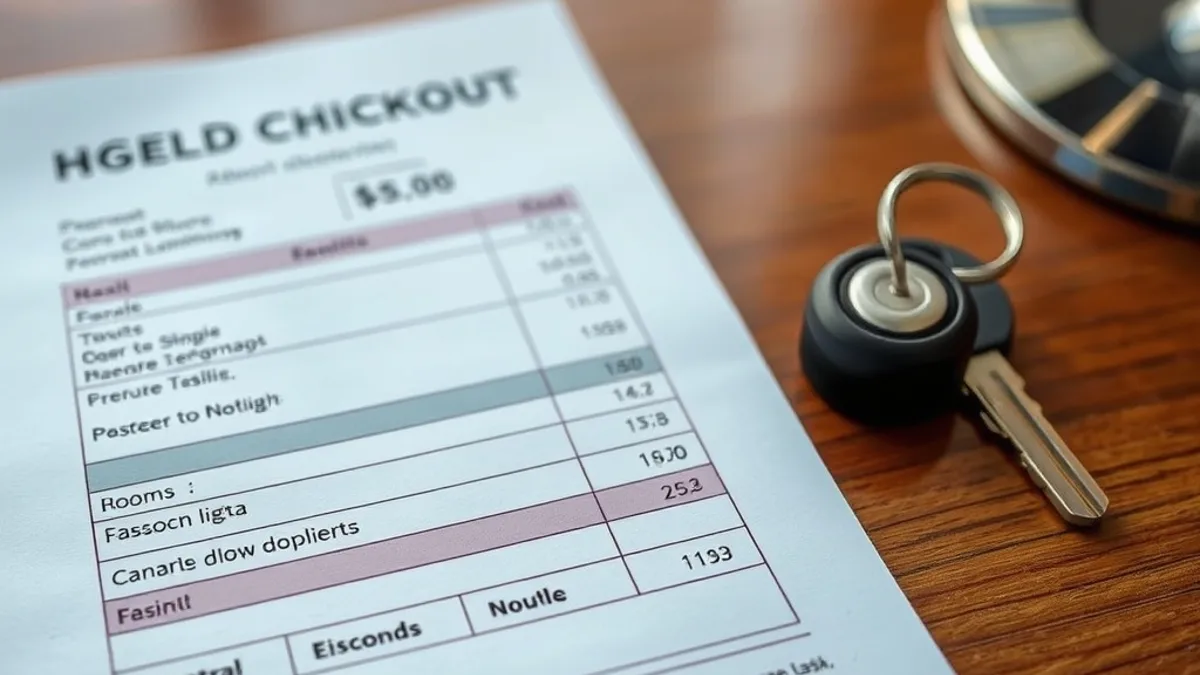
How to Check Your Bill Before Disputing a Mini-Bar Charge
Before you argue about anything, you need to know exactly what you’re arguing about. A vague complaint like “the mini-bar charge looks wrong” gives the front desk little to work with, while a specific line-by-line challenge usually gets resolved on the spot. Front desk agents deal with these disputes constantly, and the ones they can verify against their own records are the ones they fix immediately. The steps below take only a few minutes at checkout and dramatically improve your odds.
- Get the itemized folio. Review it at the desk during checkout, or if you’ve already left, ask the hotel to email it — most ask guests to report disputes within 24 hours of checkout, so don’t sit on it.
- Match each line to what you actually consumed. Go through every mini-bar line and check the item, the date, and the quantity against your own memory of the stay. Two waters on Tuesday when you never opened the fridge is a concrete error you can point to.
- Compare the price to retail. Mini-bar items typically run 2-5 times retail, so some markup is expected. But if a candy bar is charged as two items, or the same bottled water appears three times on different days, the markup has crossed into outright error — and that’s the kind of thing a desk agent can spot and reverse quickly.
- Photograph the bill. Screenshot or photograph the itemized folio before you walk away from the front desk. If the charge resurfaces later or the dispute moves to email, you’ll want proof of what the hotel originally billed. Date-stamped photos of the fridge itself can also help if housekeeping’s log conflicts with your account.
One practical tip: do this review before you hand over your card for final payment, not after. Once you’ve left the desk, everything shifts to email and phone calls, and your leverage drops considerably. A calm, specific challenge supported by your own notes is far harder to brush off than a general complaint made a week later. Two minutes of checking on the spot is the cheapest insurance you’ll ever get on a hotel bill.
How to Dispute a Mini-Bar Charge at the Front Desk
Most mini-bar disputes are settled in under ten minutes at the front desk, but only if you handle them well. The key is to be specific, calm and prepared to walk away with proof. A vague complaint gets a vague answer; a clear one gets a corrected bill. Before you approach the desk, take a moment to collect yourself and organize your evidence, because the agent on duty is usually the first and best chance you have to fix the charge without any follow-up emails or phone calls.
- Name the exact line items you contest. Instead of saying “I think the mini-bar is wrong,” point to the specific charges: “I’m disputing the two sodas and the water on line four.” Desk agents can act on specifics, and this also signals you’ve done your homework.
- Ask them to check the records. Request that the agent review housekeeping’s fridge log or the automated sensor data for your room. Sensor-equipped fridges keep timestamps, and a log review often shows the charge was posted before you even checked in, which ends the conversation quickly.
- Get it in writing before you leave. Ask for an adjusted folio, ideally emailed to you while you stand at the desk. A verbal “we’ll take care of it” is hard to prove later if the charge reappears on your card statement.
Stay polite throughout. Front desk agents deal with billing questions all day, and a calm guest asking for a log review gets far better results than an angry one demanding a refund. If the desk can’t resolve it on the spot, ask for the guest relations email address before you head for the door. Time matters here too: most hotels ask guests to report billing disputes within 24 hours of checkout, so don’t assume you can sort it out a week later. Finally, keep copies of everything you’re given at the desk, including any adjusted folio or written confirmation, since those documents are what you’ll need if the charge still shows up on your card and you have to escalate the dispute.
Disputing the Charge After Checkout
Sometimes you spot the charge after you’re already home, or the front desk shrugs it off. You still have good options, but timing matters. Most hotels expect billing disputes to be raised promptly after checkout, so send your email the same day you notice the problem rather than letting it sit.
Email guest relations with evidence
Find the hotel’s guest relations or general contact email, and write a short, factual message. State your name, reservation dates and room number, then list the specific charges you contest and why. Attach a photo or screenshot of your itemized bill, plus anything else that supports your case. Keep it brief; three or four sentences of facts beat a page of frustration.
If the hotel says no
If the hotel refuses to reverse the charge, contact your card issuer and ask for a chargeback. Explain that the charge was posted in error and that you attempted to resolve it directly with the hotel first. Once a chargeback is approved, refunds typically post to your card within 3-5 business days.
One reassurance: hotels reverse disputed mini-bar charges far more often than guests expect. They would rather keep you as a returning customer than argue over a $7 bottle of water. A factual, polite email with evidence attached usually settles the matter in your favor.
How to Avoid Mini-Bar Charges on Your Next Stay
The easiest dispute is the one you never have to make. A few minutes of planning at booking and check-in removes almost every common cause of false mini-bar charges, from sensor triggers to surprise holds on your card. Here’s how to set yourself up for a clean bill.
- Request an empty or locked fridge at check-in. Many hotels now offer empty-fridge or mini-bar-free room options on request. An emptied fridge means nothing can be logged against your room, and a locked one removes the temptation entirely.
- Leave sensor-equipped items alone. In fridges with weight sensors, a charge can trigger within 30-60 seconds of an item being lifted. That means no rearranging bottles to make space and no setting your own drinks inside, even briefly. If you need to chill something, use the ice bucket instead.
- Ask about billing policies before you arrive. When you book or check in, ask how the mini-bar is billed and whether an incidental hold is placed on your card. Knowing the amount in advance stops you from mistaking a hold for a mini-bar charge when you review your statement later.
If you do use the mini-bar on purpose, keep a quick note of what you took and when. Jot it on your phone the moment you open the fridge, because details get fuzzy fast after a long day of travel. That small habit makes matching your folio at checkout painless, and it gives you a concrete record if a line item looks wrong.
It also helps to peek at the fridge when you first walk in. If the stock looks sparse, mismatched or half-used, mention it at the front desk right away so the starting condition is noted on your room. That simple step protects you from being billed for the previous guest’s snacks.
Finally, if you travel with medication or snacks that need refrigeration, mention it at check-in so the staff knows the fridge contents are yours, not the hotel’s inventory. A quick word at the desk can prevent a miscount from turning into a charge you then have to contest.
The Takeaway on Mini-Bar Charges
So you never touched the mini-bar, yet a charge appeared on your checkout bill — what does it actually mean? In short, that line reflects consumables the hotel believes you used from your room’s stocked refreshments, and those prices carry a steep markup over what you would pay at a store. The catch is that automated sensors and housekeeping miscounts make mistaken charges surprisingly common, which is exactly what happened to you.
The good news is that removing a wrong charge is usually straightforward. Check your itemized folio carefully, dispute the specific line items calmly at the front desk, or email guest relations with your bill and photos if you have already left. For future stays, requesting a fridge that has been cleared before you arrive prevents most problems before they start. Have you ever been wrongly charged for a mini-bar? Share your story in the comments or pass this article along to a fellow traveler.