You’ve found the perfect villa: a cliff-top hideaway or a beachfront escape far from any hotel zone. Then a storm rolls in, the lights flicker, and the whole property goes dark. Suddenly you’re wondering whether the fans will run, whether the fridge full of food will survive the night, and whether anyone on site even knows how to fix it. This is exactly where villa generators earn their keep, yet most travelers never think to ask about backup power until it’s too late.
This guide walks you through what actually happens when the grid fails at a villa. We’ll look at why remote destinations lose power more often, what a backup generator can and cannot run, how long the fuel supply typically lasts, and where the noise will (or won’t) disturb your sleep. You’ll also get the questions to ask before booking, and simple steps to stay comfortable if an outage hits mid-stay. By the end, you’ll know whether your dream villa can keep the lights on.
Why Power Cuts Hit Villa Destinations Hardest
Remote villas are usually the last stop on the power line. A coastal enclave, a hillside cluster, or an island property often depends on a single long grid connection that snakes through forest, over ridges, or along the shore. When a tree falls on that line or a storm damages a pole, there’s no easy detour: the whole enclave goes dark until a repair crew arrives.
Timing matters too. Outages tend to spike during storm and monsoon months, when wind, rain, and lightning put constant stress on overhead lines. In tropical destinations, cuts often peak in the December to March dry-wind season and again during the June to September monsoon. Dry spells bring their own problem: when every villa and guesthouse runs air conditioning at full blast, the local supply can simply get overloaded.
Islands and limited grids
Island destinations face a different challenge. Many rely on diesel-based or limited-capacity grids that struggle to keep up with demand, so even in perfectly calm weather you can experience several short cuts per month. Remote island and rural villas may see outages that city-adjacent properties encounter only a few times a year. That’s not a reason to avoid these places; it’s a reason to understand how the villa copes when the grid gives up.
What a Villa Generator Actually Powers During an Outage
When the grid fails, a villa’s backup system does not bring the whole property back to life. In most cases, it carries the essentials only: the lights, ceiling fans or one or two air conditioning units, the refrigerator, the Wi-Fi router, and the water pumps that keep showers and taps working. Everything else, from the ice maker to the outdoor lighting, usually stays dead until the utility supply returns.
The reason is simple math. A standby generator for a 3-4 bedroom villa typically covers around 10-30 kWh per day of essential load, which sounds generous until you start adding energy-hungry extras. Pool pumps, saunas, wine coolers, and multi-zone air conditioning can each swallow a significant share of that capacity on their own. Most villa owners deliberately leave these circuits off the backup system so the generator is not overwhelmed, and so the fuel lasts longer.
How fast the lights come back on
Speed depends on the setup. Villas with an automatic transfer switch restore power within 10-30 seconds of a grid failure; you may notice little more than a flicker and a brief hum from the generator. Manual systems are a different story: someone has to walk to the unit, start it, and switch the circuits over, which can easily mean 10-20 minutes in the dark, especially if staff are off site or asleep.
This is worth knowing before your stay, because it shapes your experience of an outage. A villa on automatic changeover feels almost seamless, with Wi-Fi, refrigeration, and at least some cooling carrying on as normal. A manually started system can feel like a genuine interruption, particularly if it happens in the middle of the night. If knowing which circuits stay live matters to you, ask the villa manager to walk you through the backup coverage when you arrive, so nobody is surprised when the pool pump goes quiet.
Fuel, Runtime, and How Long the Backup Lasts
Diesel is the standard fuel for villa generators, and most properties keep a storage tank on site sized for roughly 24-72 hours of continuous running. That figure assumes the generator is actually running the whole time, which is rarely the case during scattered short cuts. A villa that experiences a few brief outages per week can stretch its stored fuel across many days of real-world interruptions.
Load matters more than tank size
Runtime depends heavily on what the generator is feeding. A system powering only lights, fans, the fridge, and the Wi-Fi router sips fuel and can easily cover the upper end of that 24-72 hour range. Ask the generator to cool every bedroom with air-conditioning at full blast, though, and fuel consumption climbs sharply. A sensible villa manager runs essential circuits during an outage and brings heavier loads back online once grid power returns.
This is where remote locations get tricky. In places like Ifaty, where barefoot slowness and exotic coastlines come with a genuinely off-grid feel, refueling depends on boat deliveries or long mountain-road runs. A storm can delay the next fuel shipment by a day or more, which means a villa’s stored diesel is the only thing standing between you and candlelight.
The practical takeaway: confirm the fuel autonomy in hours when booking, and ask how refueling is arranged. Villas with staff on site and a standing fuel contract handle this quietly; self-catered rentals in remote areas deserve a closer look.
Noise, Placement, and Sleeping Through an Outage
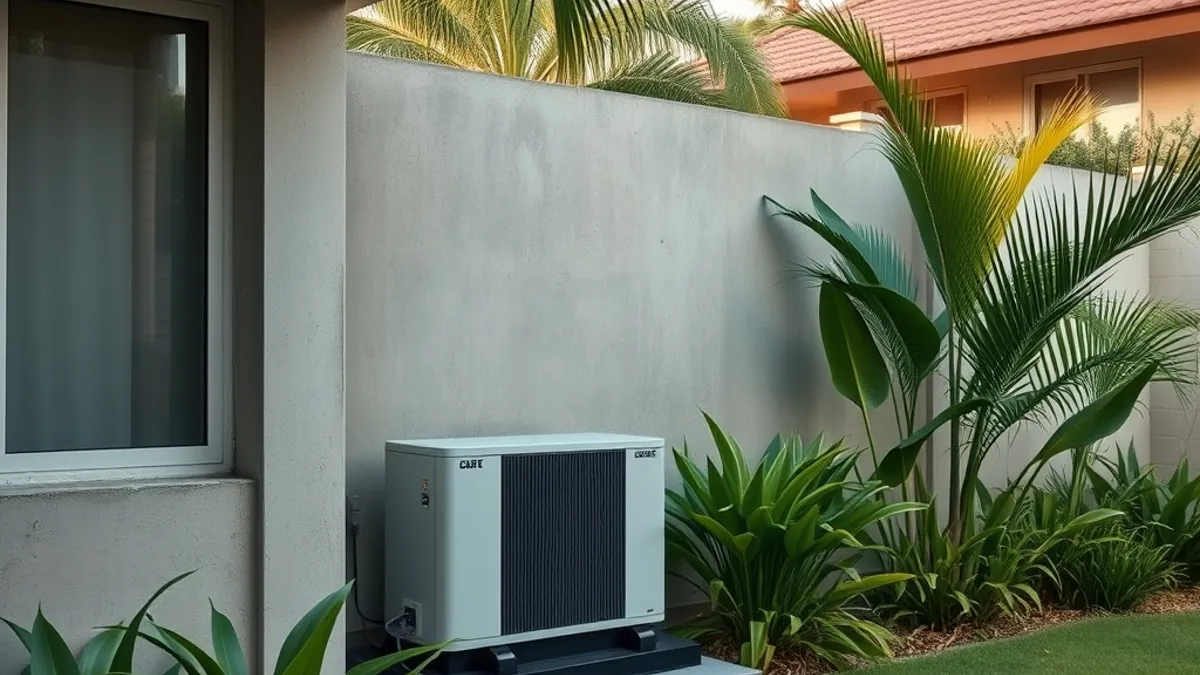
A generator is only as restful as its placement. In well-designed villas, the backup unit sits in a soundproofed enclosure typically 20-50 meters from the guest bedrooms, often tucked behind a garden wall or a separate service block. Done properly, you may hear nothing more than a faint low hum when the system kicks in, and many guests sleep straight through a cut without realizing the grid ever failed.
The picture is very different in older or budget properties. Some still rely on open-frame units with little or no soundproofing, and these can hum audibly through the night, especially when the enclosure sits close to the bedrooms or on the other side of a thin wall. In a quiet hillside or coastal setting, that background drone can be far more noticeable than it would be in town, where traffic and surf already mask noise.
How to protect your sleep
If you are a light sleeper, bring up generator placement and soundproofing before you book rather than after you arrive. Ask which building the unit sits near and how far it is from the rooms you are considering. It is also perfectly reasonable to request a room on the far side of the villa from the generator housing. Most managers can answer this quickly, and a room swap at booking time is far easier than moving luggage at midnight after a cut wakes you up.
Questions to Ask Before Booking a Villa with Backup Power
Backup power claims are easy to make and hard to verify from a listing photo, so a few direct questions will tell you most of what you need to know. The goal is to understand not just whether a generator exists, but what it actually covers, how long it can run, and who manages it when the grid drops. Vague or evasive answers are themselves useful information, because they usually mean the villa has not invested seriously in its backup system.
- Automatic or manual start? An automatic transfer switch restores power within seconds of a failure, while a manual system needs someone to walk out and start it, which can leave you waiting in the dark considerably longer.
- Which circuits are covered? Ask specifically whether air-conditioning, the kitchen, water pumps, and lighting are all on the backup, or lights only. A generator that keeps the fridge and Wi-Fi alive but leaves every AC unit dead changes the character of an outage in a hot climate.
- How many hours of fuel are stored on site? Diesel systems commonly hold fuel for roughly 24-72 hours of continuous running, so confirm where your villa sits in that range and whether staff are on site overnight to handle refueling and restarts.
Timing matters as much as the questions themselves. Raise these points 4-8 weeks before arrival, which leaves you enough room to switch properties if the answers are unclear. This is especially true for wellness-focused trips, where silence and calm are the whole point. If a restorative, low-noise stay is your priority, weigh a silent backup system as heavily as you weigh the spa facilities, the yoga deck, or the treatment menu. Quiet design and quiet power go together, and properties that take one seriously usually take the other seriously too — a point explored in depth in this guide to wellness retreats built around tropical calm and thoughtful design.
Staying Comfortable When the Grid Fails Mid-Stay
Even a well-prepared villa can lose grid power mid-stay, and how comfortably you ride it out depends mostly on the first ten minutes after arrival. A short orientation with the villa manager covers everything you need: where the backup equipment lives, how the staff handle restarts, and what you should personally keep handy. Treat this walkthrough as part of your check-in routine, the same way you would confirm breakfast times or pool access. A few simple habits during the outage itself also keep the backup system from being overloaded, which means fewer tripped breakers and less waiting around in the dark for someone to reset things.
- Locate the essentials on day one. Ask exactly where the torches, spare fuses, and the main breaker panel are kept, and test one torch so you know it works. Doing this in daylight beats fumbling through unfamiliar drawers in the dark.
- Save the villa manager’s direct number. Store it in your phone along with a note of where staff can be reached overnight. A written copy on the fridge is a good backup if your phone battery dies.
- Switch off heat-producing appliances when a cut hits. Turn off the oven, iron, hair dryer, and any nonessential AC units. When the generator takes over, its limited circuits can be overwhelmed if everything tries to restart at once, and tripped breakers mean a longer dark spell.
- Charge devices whenever the grid is stable. Top up phones and power banks each morning and evening rather than waiting for a low battery warning. Repeated short outages drain devices faster than you expect, especially if you lean on them for lighting and communication.
None of this takes more than a few minutes, and it turns an outage from a scramble into a non-event. Guests who know where the torches are and keep their devices topped up often find that a cut passes with little more than a flicker and a brief hum from the generator housing. The difference between an annoying interruption and a genuinely stressful evening usually comes down to preparation, not luck. Families with small children and travelers working remotely during their stay benefit most from this routine, since both groups rely heavily on steady lighting and charged devices. If you are traveling with others, agree on where the torches live and who checks the breaker panel, so nobody wastes time duplicating the job while the rest of the group sits waiting.
The Takeaway on Villa Generators and Power Cuts
So here is the answer to the worry that opens this whole topic: you book a remote villa, a storm rolls in, the grid fails, and the lights, fans, and fridge keep running. A well-sized villa generator turns what could be a trip-ruining blackout into a brief, barely noticed flicker, often over before you finish pouring a drink.
The key checks come down to four things: what circuits the backup covers, how many hours of fuel sit on site, where the generator housing sits in relation to the bedrooms, and asking the right questions before booking. Get those answers, and a remote villa in an outage-prone region becomes just as reliable as a city hotel. If this guide helped you plan a stay, leave a comment or share it with a fellow traveler.