Most families pay for bedrooms nobody sleeps in. Standard villa layouts assume two adults per room, so a family of four or five ends up booking three bedrooms when two would do — if those bedrooms were designed for children in the first place. That is where villa bunk rooms and kids’ suites come in, and they can cut the nightly rate roughly in half compared with booking extra rooms.
This article walks through the family math behind bunk rooms, explains when a kids’ suite genuinely saves money, and shows you how to read a villa floor plan like a pro. You will also find where these layouts are most common, how booking timing affects price, and the exact questions to ask before you pay.
Why Villa Bunk Rooms Change the Family Math
A villa bunk room does something a standard twin room cannot: it sleeps three to four children in the same footprint that would otherwise hold just two beds. Run the numbers for a family of five and the difference is obvious. With a bunk room, you need two bedrooms — a master for the parents and one bunk room for the kids. Without one, you are booking three bedrooms, and paying for beds nobody uses.
The per-person cost advantage
The savings grow with group size. Villas sleeping eight or more guests typically run 40-60% cheaper per person than three separate hotel rooms in the same destination, and that is before you factor in the kitchen and living space you get for free. A large villa essentially replaces three hotel rooms, a restaurant bill or two, and a rental car’s worth of taxi fares.
Shared bunk rooms also change who you can travel with. Cousins or friend families can combine trips in a single property instead of booking multiple villas or hotel rooms, which keeps the group together for dinners and pool days while splitting one rental cost several ways. For multi-family trips, a bunk room is often the difference between one shared villa and a booking headache.
Kids’ Suites: When Paying More Saves Money
A kids’ suite is a connected child bedroom with a play or sleep nook attached, usually adding 15-25% to the base villa rate. Compare that with booking a second full bedroom, which typically adds 50-100% to the price, and the value case writes itself. You are paying a modest premium for a dedicated child space rather than a full second adult room.
Who gets the best value
Kids’ suites work best for families with one or two young children who still want to be close to mom and dad. The adjoining door means no extra corridor rooms, no walking down a hallway for night feeds or bad dreams, and no paying for a bedroom that sits empty because the toddler refuses to sleep alone anyway. For that stage of family life, the suite is the sweet spot between proximity and privacy.
Check the nook before you count beds
One trap catches plenty of families: the listing mentions a “sleep nook” that turns out to be a sofa. Before counting sleeping capacity, confirm whether the suite’s nook contains a real single or trundle bed. Ask the host directly, and request photos of the actual bed setup. A sofa that technically folds out is not the same as a proper mattress for a week of children’s sleep, and the price difference between suite types often comes down to exactly this detail.
Layouts That Work: Reading a Villa Floor Plan
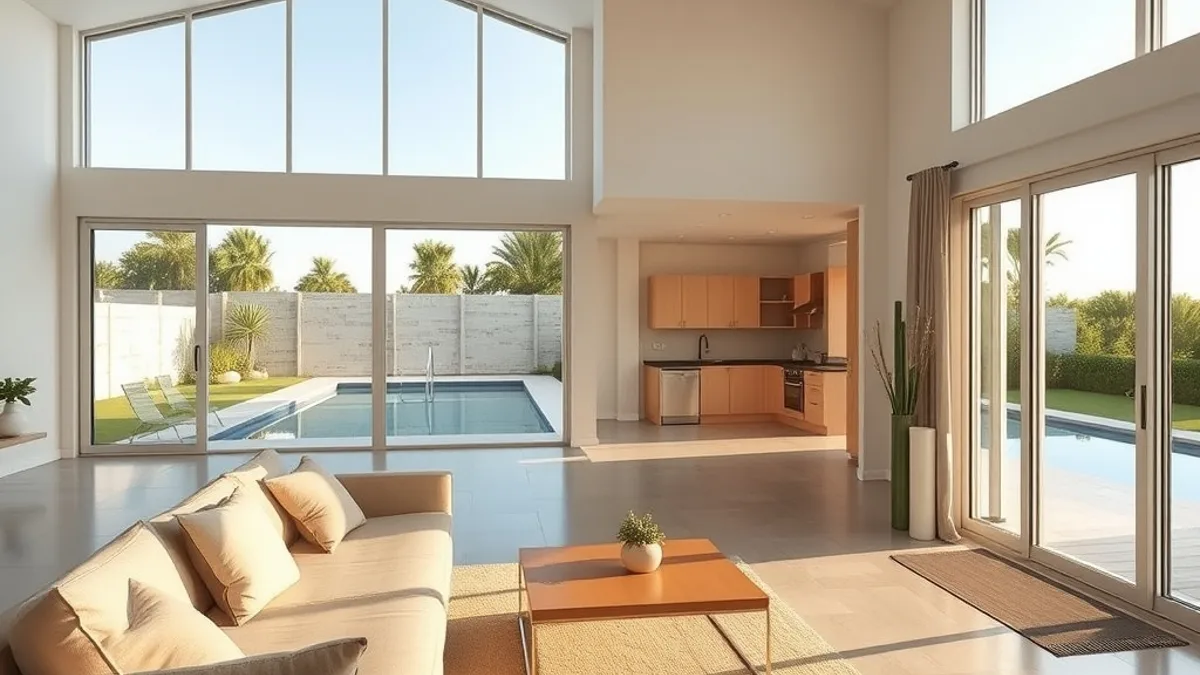
Villa photos sell the lifestyle; floor plans tell the truth. Before booking, learn to read the layout the way a hotelier would, because a few details separate a genuinely family-friendly bunk room from an afterthought cupboard with stacked beds.
Start with the bunk room itself. Look for at least 2 m of clearance above the lower bunk — anything less and an adult cannot sit up to comfort a child, let alone change sheets. Check that the room has its own window, not just access to light through a corridor. A windowless internal room with four children in it is a recipe for stuffy nights no matter how good the air conditioning is.
Next, think about position. Prioritize layouts where the bunk room sits beside the master bedroom, so young children are within earshot. “Kids’ wing” setups at the far end of the villa suit older children and teenagers only — parents of a four-year-old will regret booking one.
- Count real beds, not “sleeps” figures. Listings often reach a headline capacity by counting sofa beds and daybeds in shared living areas. For week-long stays, these are a false economy: nobody sleeps well on a lounge sofa for seven nights, and the living room stops functioning as a living room.
- Two bathrooms minimum for groups of six or more. With a bunk room full of children plus adults, one bathroom means queued showers before breakfast every single day.
- One bathroom per bunk room is the gold standard. If the bunk room has an en-suite, morning bottlenecks disappear and children can get ready while parents use the master bathroom undisturbed.
Where These Layouts Are Common
Some destinations practically design for large families, and it shows in their villa layouts. Tropical islands have long catered to diving and surf crews who travel with children in tow, so family bungalows there often include a built-in bunk nook tucked beside the master bedroom. Bali is full of these setups, and the Maldives has increasingly added them to guesthouse-style and family resort villas where a standard two-bed room simply would not fit a water-sports family.
Langkawi deserves a special mention for families combining beach time with jungle walks and cable car rides. Many of its hillside and beachside villas follow the same pattern: a parents’ room, a compact bunk nook, and a shared pool steps away. If that combination sounds appealing, the Langkawi getaways hidden in green hills above the sea show how much value this island offers outside the usual resort strips.
Cooler climates do it differently
Head to the mountains and the bunk room takes a chalet form. Alpine and lakeside regions, including the Tatras and Lake Balaton, favour sturdy timber bunk rooms that sleep ski groups in winter and cycling or swimming groups in summer. These chalets often target two or three families at once, so bunks are treated as standard equipment rather than a novelty.
The key is matching the layout to your trip. An enclosed kids’ suite with a door and its own nook suits a resort-style stay where younger children need containment and quiet. An open bunk loft, where four to six beds share one big room, works far better for larger multi-family villas where the children are older and the group wants everyone under one roof without wasting bedrooms.
Booking Timing and Season Strategy
Family villas with proper bunk rooms are among the first properties to disappear from the calendar. For July-August school holidays, the good layouts typically sell out 4-6 months ahead, which means families aiming for peak summer should be searching and booking by February. Leave it until spring and you will usually be choosing between leftover villas with awkward layouts or paying a premium for something that was cheaper in winter.
Why February is your friend
Booking early is not just about availability. Owners and agencies often hold their shoulder-season rates steady while peak weeks climb, and the difference between a February booking and a June booking for the same August week can be significant. Set a reminder for early in the year, shortlist three or four villas with the right sleeping configuration, and commit before the school-holiday rush compresses your options.
Shoulder seasons offer a genuine alternative if your children’s school calendar allows it. Stays in May-June and September-October often price 20-35% below peak weeks, and the villa itself usually includes the same sleeping capacity, the same pool, and the same bunk room you would get in August. In tropical destinations the weather is often still very usable; in alpine regions, late June and September suit hiking and lake trips well.
Multi-family groups have one extra layer to check before paying a deposit. Confirm the cancellation terms allow one party to withdraw without repricing the whole villa for the remaining guests. Some owners handle this gracefully by simply reducing the headcount; others recalculate the rate entirely, which can turn a friend’s late withdrawal into an expensive problem for everyone else. Get the answer in writing before you transfer money.
Questions to Ask Before You Pay
Listing photos are styled for a reason, and bunk rooms are the most commonly flattered rooms in any villa portfolio. A wide-angle shot can make a cramped nook look generous, and a neatly made bunk can hide a thin, sagging mattress that no child will sleep well on for a week. Before you pay, ask the owner or manager for recent, unstyled photos of the actual bunk mattresses and the ladder, taken from the doorway if possible. A confident host will send them within a day; hesitation is information too.
Small-item costs are the other silent budget-killer. A cot and a highchair look like standard equipment in the photos, but in many villas both are rented items charged per night, and over a seven-night stay that can add a meaningful amount to what looked like a bargain rate. Ask directly, and ask whether the items are available at all, since some smaller villas keep none on site.
Finally, think about comfort and safety specifics that never appear in the headline description. The questions below are worth sending before you book:
- Independent climate control: ask whether the bunk room has air conditioning or heating that can be adjusted separately from the main villa zone, since a single central thermostat often leaves bunk rooms either freezing at night or unusable in the afternoon.
- Pool safety for under-fives: if children under five are traveling, ask whether the pool can be fenced or gated, whether the villa owns a temporary pool fence, and whether a gate is self-closing rather than a simple latch.
- Bunk weight limits and mattress sizes: confirm the upper bunk’s recommended weight limit and whether mattresses are standard single size, so you know whether an adult can comfortably take a bunk if the group mix changes.
- Night lighting and stair access: ask whether the bunk room has a dimmable light or nightlight and whether children must cross stairs or an outdoor terrace to reach a bathroom during the night.
Written answers to these four or five questions take the host ten minutes and save you the most common family-villa disappointments: a sleepless child, a surprise rental fee, or a pool you cannot relax beside.
The Takeaway
Most families overpay for villas because standard layouts assume two adults per bedroom. You end up booking three or four rooms when the kids only need one well-planned bunk room, and the empty floor space quietly doubles your nightly rate.
Bunk rooms and kids’ suites turn two-bedroom villas into genuine family accommodation at a fraction of the multi-room cost. Read floor plans carefully, count real beds rather than “sleeps” figures, and book 4-6 months ahead for peak weeks to secure the best-value layouts. If this helped you plan a trip, leave a comment or share the article with another traveling family.