Choosing between hotel connecting rooms vs suites is one of those decisions families often make blind, at the end of a long booking form, and the consequences show up the moment you check in. Some parents discover they have paid for more space than they need, while others find the whole family squeezed into one open room with a single bathroom and a sofa bed that nobody actually wanted to sleep on.
This guide walks through how the two layouts really differ, when each one makes sense for your family’s ages and travel style, and how the prices actually compare once you do the math. You will also find practical booking tips for securing the layout you asked for, advice on matching the room type to beach resorts versus city breaks, and a short summary to help you decide quickly. By the end, you should be able to book with confidence instead of hoping the front desk sorts it out on arrival.
Hotel Connecting Rooms vs Suites: The Core Differences
The two options sound similar on a booking site, but they solve completely different problems. Understanding the physical layout first makes every other decision, from price to bedtime logistics, much easier.
What connecting rooms actually are
Connecting rooms are two fully separate rooms that share an internal door. Each room has its own bathroom, its own TV, and often its own mini fridge or desk, so the family effectively gets a duplicated setup on both sides of that door. What you give up is shared space: there is no common living area where everyone can sit together, because the only link between the two rooms is that door itself.
What a suite actually is
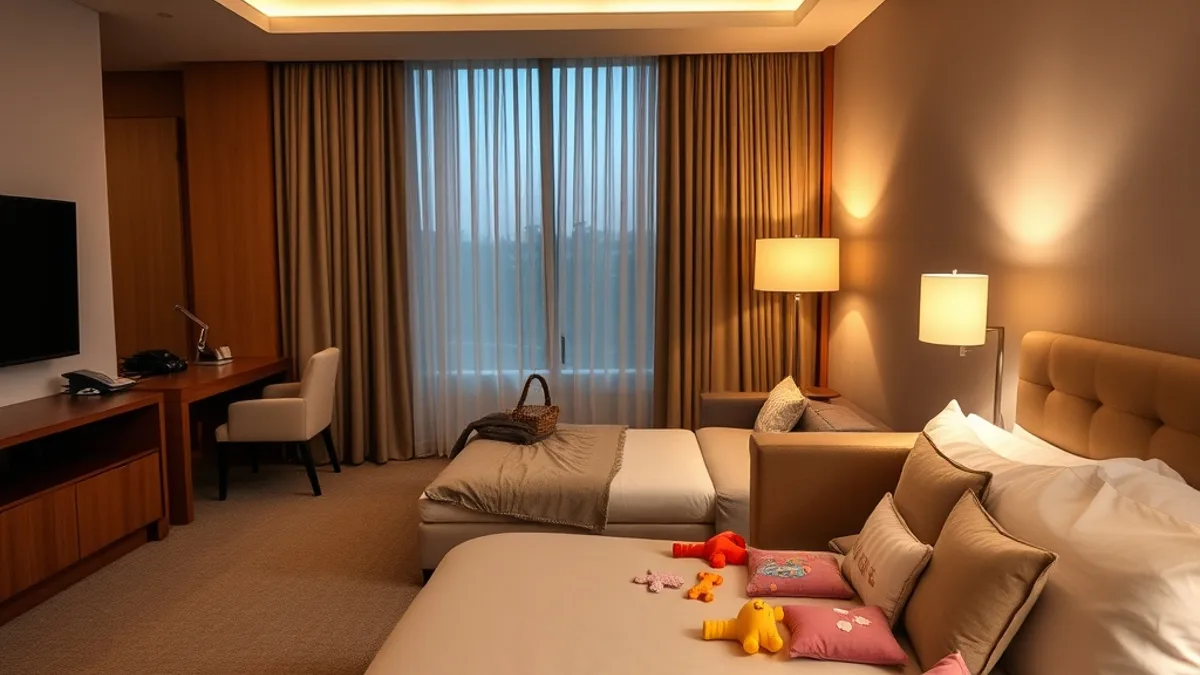
A suite is one open unit, typically divided into a living area and a sleeping area within the same four walls. Most family suites have a single bathroom and use a sofa bed in the living area as the extra sleeping space. Everyone shares the same air, the same light switches, and the same morning queue for the shower.
That difference in layout explains who each option suits best. Families with teenagers often prefer connecting rooms, because the teens get their own room, their own TV, and genuine privacy behind a door that can be closed. Parents of young children usually lean toward a suite: the little ones fall asleep in the sleeping area while the adults stay up in the living space, talking, reading, or watching something at low volume without waking anyone.
Neither layout is universally better. The right answer depends on how old your children are, how many bathrooms your mornings require, and whether you value privacy or shared space more. The sections below break down both sides so you can match the room type to your own family.
When Connecting Rooms Win for Families
Connecting rooms earn their premium in families where space and independence matter most. If you are traveling with school-age kids or teenagers, the two-room layout solves several daily frictions that a single room simply cannot, and it does so without forcing anyone to share a living space they did not ask for.
The most obvious benefit shows up first thing in the morning. With two bathrooms, two people can shower and get ready at the same time, which turns a slow, single-file start into a much quicker departure. Anyone who has queued outside a hotel bathroom while a child dawdles over tooth-brushing knows exactly how much time this saves before breakfast or a tour pickup.
- Real beds for everyone: two connecting rooms typically sleep 4–6 people in proper beds, so nobody gets relegated to a sofa bed or a rollaway squeezed against the wall.
- A door that works both ways: with toddlers, you can prop the internal door open in the evening and keep an ear on the kids’ room; with teenagers, you can close it so both sides get genuine privacy.
- Two TVs and two fridges: teens can watch their own shows while parents wind down with something else, and snacks or baby milk can be stored on the kids’ side without crossing the room.
- A buffer for noise: if one child wakes early or a baby cries in the night, the closed door keeps the disturbance contained to one room instead of the whole family waking up together.
For larger families, the math is simple: two rooms with a door between them deliver more sleeping capacity and more bathrooms than almost any single unit at the same property. You also get the flexibility of two separate entries to the hallway, which helps when parents split up during the day. The trade-off is price and availability, so confirm the connecting door directly with the hotel after booking, and book well ahead for peak season, which we cover further down.
When a Family Suite Is the Better Choice
Suites shine for families with younger children, where the priority is not privacy but staying in the same space after bedtime. The layout is built around exactly that scenario.
When your kids fall asleep at eight, a suite lets you keep living. They settle in the sleeping area, the lights go low, and you move to the living area to talk, read, or watch something quietly without a babysitter, a dark bathroom, or a balcony as your only retreat. In a standard room, bedtime usually means bedtime for everyone.
The cost angle
In city hotels especially, a family suite of 45–70 m² often costs less than booking two full rooms. You get a large, open living space for the whole family at the price of one booking instead of two, which is why suites are frequently the smarter financial choice for parents of small children. Compare the suite rate against two standard rooms before assuming two rooms is the safer budget option.
Is one bathroom really enough?
For most families with children under about 8 years old, yes. Young kids share bath times with a parent anyway, they rarely take long in the shower, and nobody is racing a sibling for the mirror before school. The single bathroom only becomes a genuine bottleneck once you have several independent tweens or teens, each wanting their own morning routine.
The compromise you accept is the sofa bed. Suites with sofa beds commonly sleep 4, so families of five or six may need to check for larger configurations or extra beds. If your family fits within a suite’s capacity and your children are young, the shared living area usually delivers more usable family time per square meter than any two-room setup.
How Prices Really Compare
The good news about connecting rooms is that they rarely cost double. Hotels typically price the pair at around 1.5–1.8 times the rate of a single room, since you are buying two rooms with a shared internal door rather than two fully independent bookings. That discount can add up to a meaningful saving over a week-long stay, so it is worth asking the hotel how they price the combination before you assume two rooms are out of budget.
Suites follow a different pricing logic. In downtown properties, a family suite often runs 30–60% above the rate of two standard rooms in high season, which can make it surprisingly competitive once you divide the total by the number of people staying. The catch is that a suite’s headline rate can look high while actually working out cheaper per person, so always do that quick mental math before ruling one out.
Breakfast is where family totals quietly shift. Some hotels include it per room, others per person, and with a family of four the difference can be one of the largest line items on your bill after the rooms themselves. Before comparing two properties on rate alone, check exactly how breakfast is charged, because a slightly higher room rate with per-room breakfast can easily beat a cheaper room where every family member pays separately.
- Ask whether children eat breakfast free or at a reduced rate, as many hotels set a cut-off age and the policy varies widely between chains and independents.
- Request a written confirmation of the connecting door when booking two rooms, so the rate you were quoted cannot change at check-in if the layout is reclassified.
- Compare the total for your exact dates rather than the base rate, since suites and connecting rooms can peak differently during school holidays and local events.
- Check whether the suite’s sofa bed counts as a made-up bed or costs an extra housekeeping fee each night, as this varies by property.
Booking Tips to Secure the Right Layout
Connecting rooms are among the first room types to disappear from a hotel’s inventory, and the layout you want is not something you can count on getting by chance. Because these pairs are limited — many properties hold only a handful — families who leave it to luck often end up in rooms on different floors, or squeezed into a single room with sofa beds. A little structure in how you book makes the difference between two rooms joined by a door and two rooms separated by a corridor and an elevator ride.
- Reserve well ahead for summer. For travel in June–August, book your connecting rooms around 3–6 months in advance. Families with children lock in these layouts early, so late bookers are usually pushed into separate rooms or a single suite.
- Call the hotel after booking online. Online systems typically show connecting rooms as “on request,” which is not the same as confirmed. Call the hotel directly, reference your reservation, and ask them to note that the connecting door is guaranteed, not merely requested. Get the name of the person who confirms it if you can.
- Check in early in the day. When you arrive in the morning or early afternoon, the front desk still has the full day’s room inventory to work with. Ask specifically for the room numbers of your connecting pair, and confirm the door opens between them before you leave the desk with your luggage.
None of these steps takes more than a few minutes, but together they remove almost all of the risk from a connecting-room booking. If a hotel will not guarantee the layout in writing, treat that as useful information about how likely you are to actually get it — and consider a backup property before rates climb closer to your travel dates.
Matching the Room Type to Your Trip
The right room type depends less on the hotel and more on what your trip actually looks like. The same family can be better served by a suite on one vacation and connecting rooms on the next, so start by thinking about how long you are staying, how old your kids are, and how much time you will spend in the room at all.
Long beach stays vs short city breaks
Beach resorts favour connecting rooms when you are staying a week or more with older kids. Long stays mean everyone needs real privacy and real sleep, two bathrooms stop mornings from turning into a queue, and older children appreciate having their own space to retreat to after days spent together by the pool. Over a week, the extra room stops being a luxury and starts being a necessity.
Short city breaks of 2–3 nights work well in a suite. When you are out sightseeing from morning until evening, the room mainly serves as a place to sleep and regroup, so a shared living area and a sofa bed are usually all the space you need. Spending less time in the room also means the one-bathroom setup is far less of an issue than it would be over a longer stay.
Multi-generation trips
Trips with grandparents, parents and children should look for a combination of both layouts: two connecting rooms plus a suite. The connecting pair gives the parents and kids their own bathrooms and beds, while the suite becomes the shared living space where the whole group gathers in the evenings. It is the most flexible arrangement for a larger family, and asking the hotel early whether they can place all three rooms near each other is the single most useful question you can pose.
The Right Choice in Brief
Choosing between connecting rooms and a family suite comes down to who is traveling and how long you stay. Connecting rooms offer privacy and two bathrooms, which suits larger families or those with older children and teenagers. Suites offer a shared living space and often a lower total cost, which works well for families with younger children or short city stays.
Whichever option you pick, booking early and confirming the layout directly with the hotel makes the whole experience run smoothly, so you get the beds and doors you actually paid for. If this guide helped you sort out your next family booking, leave a comment with your own experience or share the article with other parents planning their trip.