Picture this: you’ve booked a safari camp at a price that suggests real luxury, and the photos show a shimmering pool beside a golden savanna. But is that pool actually swimmable, or is it a shallow, cool waterhole-view deck where the animals are the draw? And what rules — escorts after dark, closed gates, no dawn swims — come with it? Many travelers only discover the answers after arrival, which can be a pleasant surprise or a frustrating one.
This guide breaks down lodge swimming pools in safari camps so you know exactly what to expect before you book. We’ll cover the main pool types, the seasons and hours when a swim is genuinely inviting, the wildlife safety rules that are non-negotiable, the etiquette most camps expect, how to choose a camp with the right pool for your priorities, and what to pack for pool time in the bush.
Types of Lodge Swimming Pools in Safari Camps
Safari camps offer several distinct pool styles, and knowing the difference helps you match a camp to your expectations before you book. The largest option is usually the main lodge pool, a shared swimming pool positioned near the dining deck so staff can keep an eye on it between services. These pools typically seat 6-10 loungers, which means space is comfortable in low season but can feel tight when the camp is full and everyone returns from the morning drive wanting a midday swim. If you’re traveling in high season, it’s smart to ask the camp how many tents share that pool — a small camp with six units feels very different from a 20-room lodge with the same deck.
At the other end of the scale, private plunge pools attached to suites or luxury tents give you a swim on your own deck, whenever you like between activities. They’re sized for 2-4 guests rather than laps or cannonballs, and housekeeping typically cleans and tops them up each morning while you’re at breakfast. Privacy is the real selling point here: you can cool off in your robe, read on the adjacent lounger, and never queue for a chair. The trade-off is price, since these units are limited in number and sell out first.
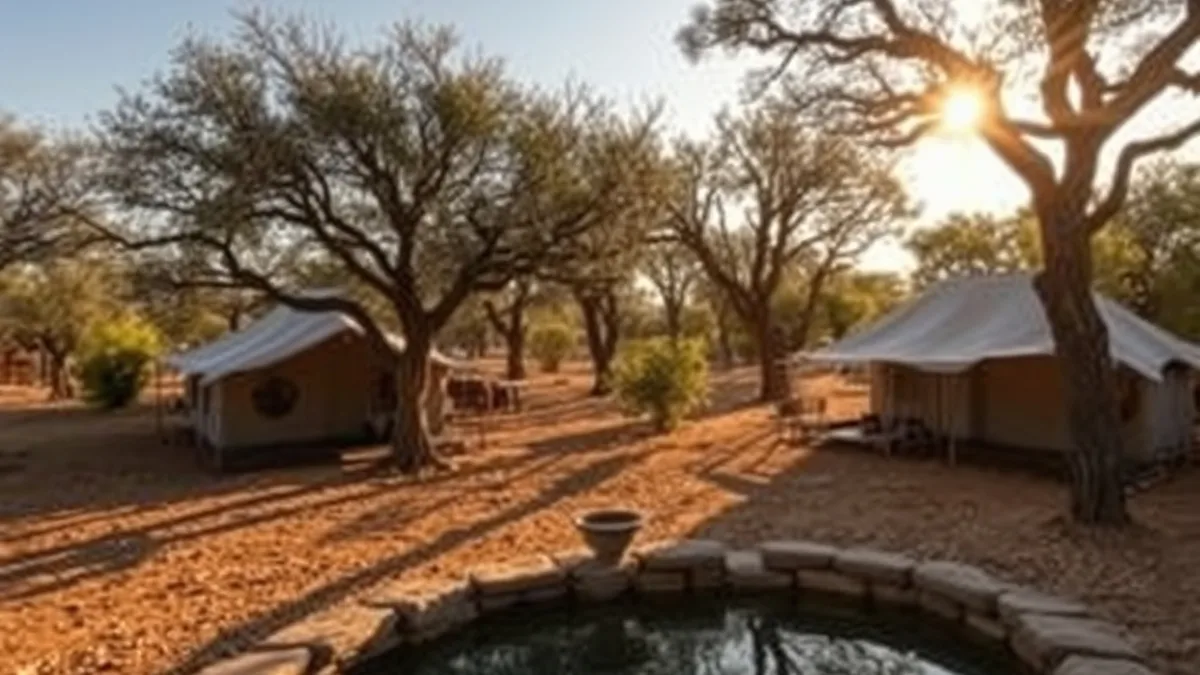
- Waterhole-view infinity pools are designed so the horizon — and whatever walks past it — dominates the view. Expect shallow, cool water made for soaking rather than swimming, since the deck is positioned for watching elephants and antelope, not for exercise. Photographers tend to love these, but swimmers should manage expectations.
- Seasonal or temporary pools appear at mobile tented camps that move with the wildlife. These may be drained between relocations, so if a pool matters to you, confirm with the camp whether it will be filled during your specific dates.
- Deck placement matters too: many camps fence or elevate pools at least 1.2 m, or set them on raised decks, to deter elephants and buffalo from drinking — or worse — at the edge. This design choice also shapes your view, so ask about it when booking.
When the Pool Is Actually Usable
Timing makes the difference between a pool that’s a highlight and one you never touch. In the dry season from June to October, midday temperatures of 25-32°C in most East and Southern African safari regions make a swim between game drives genuinely inviting. This is also when camps see the heaviest pool use, so popular loungers fill up quickly.
The green season from November to March tells a different story. Afternoon rain and cloud cover cut into swim time, and some days the pool simply won’t appeal. The trade-off is price: rates drop noticeably, so if you’re happy to swap guaranteed sunshine for lower costs and lush landscapes, it can still work well.
Winter dips and supervised hours
Southern African winters, from May to August, can drop mornings near 5°C. You’ll be reaching for a hot water bottle at dawn, and unheated pools become strictly a midday proposition. If a warm swim matters to you, it’s worth comparing camps with heated pools — some South African safari and coastal resorts make pool comfort a real selling point.
Whenever you travel, expect typical swim windows of 11:00-15:30. Pools are usually closed at night and during game drives, and the midday window works neatly because most guests are out on morning and afternoon drives, leaving the pool quiet for those who stay in camp.
Wildlife Safety Rules Around the Pool
Wildlife safety is the part of pool life that surprises first-time safari guests most. The rules exist because camps — especially tented ones — are frequently unfenced, and animals move through at will. Many camps fence or elevate pools at least 1.2 m or place them on decks specifically to deter elephants and buffalo, but a barrier is never a substitute for good judgment. Never swim or linger at the pool at dawn or dusk, when predators and elephants are most active and most likely to pass close by. Midday, when the sun is high, is when the bush is quietest and the pool is safest.
After dark, many unfenced camps require a staff escort to and from the pool. If you’re at dinner and want to grab something from your deck, the same rule applies: wait for an escort rather than walking alone, even for thirty seconds. Staff take this seriously, and so should you — the risk isn’t theoretical, and guides have seen enough close calls to enforce the policy without exception.
- Keep gates and deck doors closed. Monkeys and baboons treat open tents and pool decks as an open invitation, and they will raid unattended bags, sunglasses and drinks within minutes. Zip your tent even for a short swim.
- Respond instantly to staff signals. If a guide or waiter waves you out of the water, exit calmly and move to the lodge area — animals can approach faster than you’d expect, and staff won’t signal without good reason.
- Expect night closures as standard. Pools are usually closed at night, so an evening swim isn’t an option you can negotiate; plan your dips for the midday window instead.
Etiquette and Camp Rules Worth Knowing
Safari camps run on a few unwritten rules around the pool, and most of them exist for good reason. The biggest one is the glass ban: dropped wine glasses on a wooden deck or, worse, in the water itself are a hazard that is hard to fix in the bush. Drinks arrive in metal or plastic tumblers instead, even for champagne at sundown, so don’t be surprised when your gin and tonic comes in a weighted steel cup.
Loungers are another area where a little awareness goes a long way. Camps typically set out towels and chairs per tent, so your spot is already assigned when you arrive. Grabbing spare loungers “just in case” tends to frustrate fellow guests whose tents are owed the same setup.
Quiet matters more here than at a resort. Tents and private decks sit within easy earshot of the main pool, and sound carries across open ground. Many camps also restrict young children’s access to shared pools, and at walking-safari camps the minimum age policy is commonly 8+, so check before booking if you’re traveling with kids.
- Ask at check-in whether pool drinks are self-serve or ordered through staff — many camps prefer you ring the bar rather than carry glass bottles across the deck yourself.
- If a lounger cushion or towel gets blown into the water, hand it to staff rather than fishing it out; wet canvas is heavy and camps would rather handle it properly.
- Music through portable speakers is almost universally frowned upon at shared pools; bird calls and hippo grunts are the soundtrack guests came for.
- Children who do meet the minimum age are usually expected to be supervised by a parent at all times, since staff split their attention between the pool and the camp’s wildlife duties.
How to Choose a Camp with the Right Pool
Before you hand over a deposit, quiz the camp about its pool setup — the answers shape your whole stay. Ask whether the water sits behind a barrier, on a raised deck, or completely open to the bush. Camps typically build barriers at least 1.2 m high or position pools on decks to keep elephants and buffalo at a respectful distance. An unfenced waterhole pool delivers the most dramatic views but calls for stricter behavior; a protected one lets you swim with an easier mind.
Heating and seasonal comfort
If your trip falls between May and August in Southern Africa, check whether the pool is heated. Winter mornings can be genuinely cold, and unheated water sits around 18°C — brisk enough that most guests give it a miss. A heated pool keeps midday swims on the agenda even in the cool season.
View versus swim, and booking ahead
Waterhole-view pools are the postcard option, and they carry a premium: expect roughly 15-30% added to nightly rates versus standard rooms at the same camp. Be honest with yourself — will you really spend hours watching elephants from the water, or do you mostly want somewhere to cool off between drives? If a private plunge pool tops your wishlist for the June to October high season, reserve poolside suites 6-12 months ahead. Only a handful of units at most camps include one, and they’re claimed first. For a feel for how calm, well-placed properties near safari country arrange their outdoor spaces, see this piece on spacious homesteads near Nanyuki’s safari country.
What to Pack for Pool Time on Safari
Pool time on safari comes with more sun, more dust and more distance from your tent than a resort swim, so a slightly different packing list applies. Midday temperatures of 25-32°C during the dry season feel glorious in the water but punishing on the deck, and UV at altitude or near the equator is stronger than most travelers expect. Quick-dry swimwear is worth its weight in gold when you’re pulling it on for a midday dip and off again before the afternoon drive. Pack two suits if you can, since one is often still damp from the last swim.
Deck surfaces at bush camps — wooden, stone or tiled — heat up fast under an unbroken sun, and you’ll feel it within seconds of barefoot steps. A cover-up matters too: walking back to your tent in a wet swimsuit is fine at a beach resort, less so at a camp where you may pass other guests on a shared pathway.
- A rash vest doubles as sun protection and a light layer, useful because shade at bush pools is often minimal — a single umbrella or a sliver of acacia cover at best.
- Reef-safe sunscreen is the kinder choice for water systems at remote camps, which often rely on eco-sensitive filtration or natural drainage; reapply after every swim since sweat and evaporation strip it quickly.
- A wide-brim hat with a chin strap or cord survives breezy deck afternoons far better than a loose brim that ends up in the water.
- A dry bag keeps cameras, phones and binoculars sand- and splash-free on the deck, and doubles as a safe pouch when you carry gear to and from your tent.
- Flip-flops or sandals with a rubber sole also handle the gravel path between pool and tent, where thorns and hot stones are common.
Wrapping Up Your Safari Pool Expectations
Safari camp pools come in more shapes than most travelers expect, and knowing which type you’re booking changes the whole experience. Shared lodge pools with 6-10 loungers suit social swimmers, private plunge pools fit two to four guests who want seclusion, and waterhole-view decks put the wildlife — not the swim — center stage. Ask your operator exactly what the pool is before you commit.
Timing matters too. June to October delivers the warmest, most reliable swim windows, typically 11:00-15:30 between game drives. At unfenced camps, the safety rules are non-negotiable: no dawn or dusk swims, and a staff escort after dark. For the best poolside suites in high season, book 6-12 months ahead. Have a safari pool story or a question we didn’t cover? Leave a comment or share this article.