You’ve found a hotel you like, and then you spot it in the room list: a “duplex room” priced well above the standard categories. Many travelers book it on instinct, assuming more money means more comfort, without knowing what the two-level layout actually delivers — or when it’s a poor fit.
A hotel duplex room splits a single suite across two floors, with living space below and sleeping space above. That vertical design changes everything about how the room works, from privacy between adults and children to how much of the space you actually use on a two-night stay. In this guide, we’ll explain what a duplex room is, walk through the most common layouts, compare it with suites and connecting rooms, and show you when it’s worth the premium — and when you should book something else. We’ll finish with practical booking tips to help you secure one at the right price.
What Is a Hotel Duplex Room?
A hotel duplex room is a single guest suite split across two floors, connected by an internal staircase. You’re not booking two separate rooms — it’s one continuous space, but the layout runs vertically instead of spreading out along a corridor. Most duplexes span around 55-90 m² across those two connected levels.
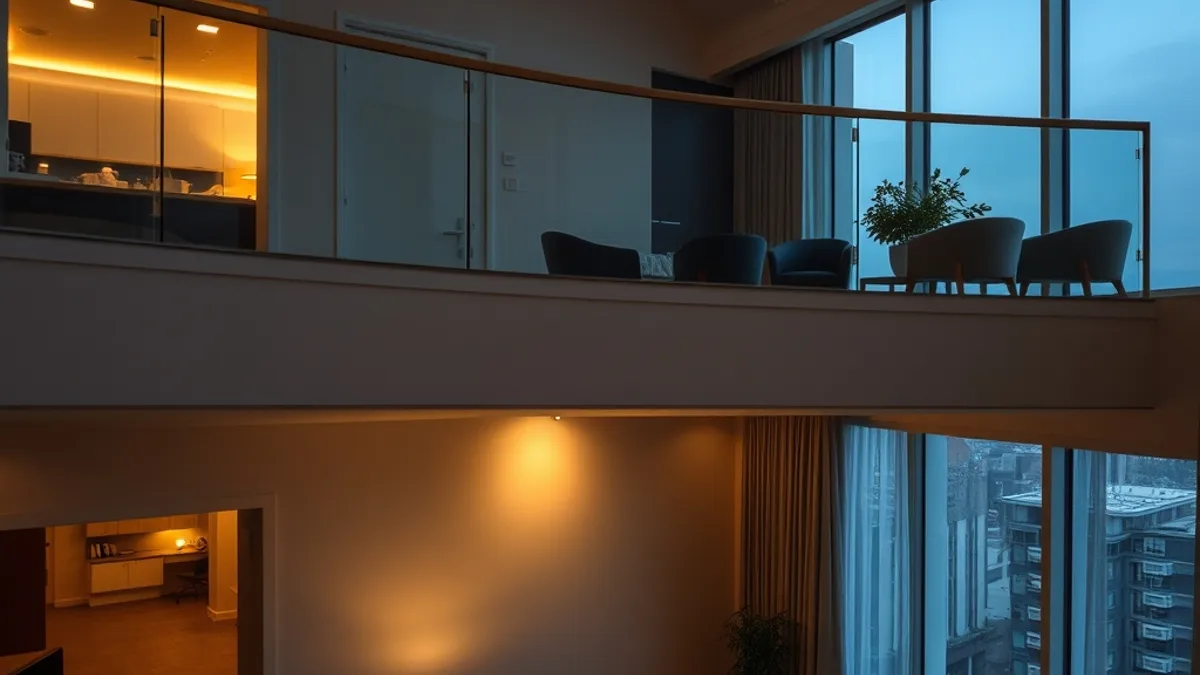
The lower level usually holds the living area: a sofa, often a convertible sofa bed, and in some properties a small kitchenette or dining nook. Head up the stairs and you reach the upper level, which is reserved for sleeping. In many duplexes this upper level takes the form of a mezzanine that overlooks the lounge below, so someone lying in bed can see straight down into the living space.
What makes it different from a suite?
Here’s the key distinction: a suite is defined by having separate living and sleeping areas, but a duplex room’s defining feature is the vertical split, not just extra square meters. You could have a large one-bedroom suite on a single floor and it would never be a duplex. The staircase is what sets this category apart — and it’s also what shapes who the room works for, because every trip between the bed and the bathroom or the sofa involves climbing or descending steps.
Common Duplex Room Layouts
Duplex rooms come in a handful of recognizable layouts, and knowing which one you’re booking matters more than the room category name. The same label can describe a romantic mezzanine suite for two or a practical family setup sleeping five, so read the description carefully before you commit. Since duplexes make up only a small slice of most hotels’ inventory, you often can’t switch layouts on arrival — the version you book is the version you get.
The classic layout puts the lounge and bathroom downstairs, with a king bed on the mezzanine above. This is the version most often photographed for hotel websites, and it works well for couples who want a sense of space and a clear separation between daytime and nighttime zones. The family layout flips the logic: a double bed upstairs, plus a convertible sofa or extra bed downstairs, comfortably hosting 3-5 guests with children sleeping on the lower level. Loft-style duplexes are the compact cousins — typically 55-65 m², with a sleeping loft sitting over a work or dining nook rather than a full lounge.
- Bathroom placement varies by layout. In classic duplexes it’s almost always downstairs near the lounge, which means a nighttime trip means using the stairs — worth knowing if you get up during the night.
- Loft-style duplexes trade lounge space for efficiency. Instead of a full sofa setup downstairs, you get a compact work or dining nook, making them a good match for solo travelers or couples who prioritize location and price over square meters.
- Some duplexes put both bedrooms on the upper level. This two-bedroom-upstairs arrangement is ideal for two couples traveling together, since neither pair sleeps on a sofa bed and both get genuine bedroom privacy behind doors.
- Mezzanine railings differ between properties. Some overlook the lounge with open balustrades, others with solid walls — a detail that matters if you’re traveling with small children.
Duplex Room vs Suite vs Connecting Rooms
The easiest way to understand a duplex room is to compare it with the two alternatives travelers usually consider: a suite and connecting rooms. All three offer more space than a standard room, but the space behaves very differently.
Suites spread their space horizontally on one floor — bedroom, living room and bathroom all side by side. Duplexes go vertical, which changes sightlines and privacy in practical ways: someone on the mezzanine can often see down into the lounge, while someone on the sofa is out of the bedroom’s line of sight. Connecting rooms, by contrast, are two fully separate rooms with a door between them, each with its own bathroom. A duplex shares one bathroom in most cases, so a family of five may queue for the shower in the morning.
Price is another dividing line. Duplexes typically cost 30-80% more than a standard room in the same hotel, while connecting rooms are priced as two rooms — which can work out cheaper or far more expensive depending on the property.
- Suites keep everything at one level. If you want to move between bed, bathroom and sofa without stairs, a single-floor suite is the safer choice, especially in older buildings where duplex staircases can be steep.
- Connecting rooms offer genuine sound separation. Teenagers watching TV downstairs in a duplex share the same air volume as the room; with connecting rooms, closing the interconnecting door dampens noise between the two spaces.
- Stairs are the dealbreaker for some guests. Duplexes are less practical for anyone with mobility needs or heavy luggage, since every entry and exit involves carrying bags up or down the internal staircase.
- Bathroom count affects morning routines. With two bathrooms in connecting rooms versus one in most duplexes, larger families often get out the door faster in the connecting-room setup.
When Booking a Duplex Room Makes Sense
Few room categories reward the right guest as much as a duplex does. The trick is knowing whether your trip actually uses what the room offers, because the premium is real and you want it working for you.
Families and longer stays
For families of 3-5, a duplex often delivers the best value in the entire hotel. Children sleep on the downstairs sofa bed while adults keep the upstairs bedroom, which means real privacy for everyone without paying for two separate rooms. Parents can read or watch TV downstairs after the kids fall asleep, and the vertical split keeps nap time and evening time from colliding.
Stays of 3 nights or longer are the sweet spot for another reason: the separate living zone. On a week-long trip, the ability to relax on a sofa, spread out breakfast, or simply sit somewhere other than the bed changes how the room feels. You live in a duplex; you merely sleep in a standard room.
Remote work and special occasions
Remote workers get a genuine two-zone setup. The lower level becomes a daytime workspace with the lounge table or desk area, while sleep stays upstairs and out of sight of the laptop. On video calls, nobody sees your bed behind you.
Then there is the occasion factor. A honeymoon, an anniversary, or a milestone birthday justifies paying above the standard room rate when the staircase and mezzanine add a sense of ceremony to the stay. Walking up to bed at the end of a celebration evening simply feels different from rolling across the same floor you have crossed all day.
When to Skip the Duplex and Book Something Else
As convincing as the two-floor layout sounds, a duplex is not the right answer for every trip. Paying for space you never use is the fastest way to resent your hotel bill.
Short stays and low-maintenance travelers
One- or two-night stays rarely justify the premium. You arrive late, sleep, and leave in the morning, so the downstairs living area goes barely used. If your itinerary is packed with excursions and you only return to shower and sleep, a well-chosen standard room does the same job for less money.
The same logic applies to travelers who plan to live at the pool. If your ideal day is breakfast, beach, and a sunset drink without ever sitting in the room, the extra 55-90 m² is wasted square meters. Properties built around that lifestyle, like the ones featured in Marbella sanctuaries with sea breezes and private poolside calm, make the outdoors the real living space, and a simpler room pairs perfectly with it.
Mobility and group considerations
Guests with limited mobility should treat the internal staircase as a dealbreaker. Climbing it several times a day, possibly at night, turns a luxury feature into a daily obstacle. Ask the hotel for a single-level suite instead, where the space is spread horizontally and everything is reachable without steps.
Two couples traveling together should also think twice. Sharing one duplex means sharing a single bathroom in most cases, and the mezzanine offers less privacy than a proper door. Two connecting rooms usually deliver better value, two bathrooms, and genuine independence.
How to Book a Hotel Duplex Room at the Right Price
Duplex rooms are scarce inventory. In many hotels they represent just 1-5% of rooms, which means the good ones disappear early and the last-minute market is thin. A little planning goes a long way, and the steps below will help you lock in the right two-floor layout instead of settling for whatever is left.
- Book early for high season. For a June-August trip to a European beach destination, reserve 2-4 months ahead. With so few duplexes per property, waiting until a few weeks out often means choosing between a poor layout and a different room type entirely. If a duplex is the main reason you picked a particular hotel, treat it like a flight ticket and book it first.
- Use the shoulder season to your advantage. Outside peak months, 2-4 weeks ahead is typically enough. This is also when hotels sometimes release unsold duplexes as upgrades at standard-suite rates, so it pays to ask about upgrade options shortly before arrival. A polite question at check-in or a message a few days ahead can occasionally land you the mezzanine for less.
- Search by keywords, not photos. Filter room descriptions for terms like “duplex”, “maisonette” or “two-level”. Wide-angle photos alone can mislead, making a compact loft look like a full suite or hiding an awkward staircase. Reading recent guest reviews will also reveal whether the stairs are steep or the upper floor feels cramped.
- Confirm the sleeping arrangement. Check the exact bed configuration before paying, and ask whether the downstairs sofa bed counts as a paid extra-person rate. Some hotels price the room for two and charge separately for each additional guest, which can change the math for a family.
Once the booking is confirmed, a quick email to the hotel to restate your party size and bed needs removes the last risk. Ask for a specific floor or staircase position if that matters to you, since requests are usually handled in the order they arrive. Do that, and the premium you pay should match the room you actually get.
The Duplex Room, Summed Up
So, what does a duplex room actually deliver for the premium? In short: a single suite split across two floors, with the living space downstairs and the sleeping space upstairs, connected by an internal staircase. That vertical split is the defining feature, not just extra square meters, and it changes how you use the room during your stay.
A duplex fits families of 3-5, stays of 3 nights or longer, remote workers who want a daytime workspace, and special occasions where the mezzanine adds a sense of occasion. It makes less sense for one- or two-night trips or for guests with limited mobility, since stairs are part of the deal. Because duplexes are often just 1-5% of a hotel’s rooms, booking early and confirming the exact bed configuration is what secures the best value for that 30-80% premium. If this helped you decide, leave a comment or share the article with a fellow traveler.