Many villa listings say “pets welcome,” but that phrase can hide fees, size limits and unsafe gardens that only surface after you arrive with your dog. You pay the deposit, pack the car, drive for hours, and then discover the pet fee was per animal, the fence has a gap under the gate, and your dog is not allowed on the tiled ground floor. Pet-friendly villas vary enormously, and the difference between a great stay and a stressful one usually comes down to the questions you asked before booking.
This guide walks through what to check at every stage. We start with what “pets welcome” actually means in a listing, then break down the fees and deposits to budget for. From there, we cover garden safety checks, the house rules to confirm in writing, the vaccination documents and timing you need for arrival, and how to pick destinations where pets are genuinely welcome rather than merely tolerated. Finish with the checklist in the final section and you will book with confidence.
What Pet-Friendly Villas Really Mean in a Listing
The phrase “pets welcome” on a villa listing is a starting point, not a policy. In some properties it means dogs only, while others extend the invitation to cats, rabbits, birds and other small caged animals. Always ask the host or manager which species the policy actually covers before you assume your cat or two-dog household qualifies. A quick message at booking time saves an awkward conversation at check-in.
Size and number limits
Size caps are the most common restriction you will run into. Most villa pet policies cap weight at 20-30 kg and limit guests to 1-2 pets, which rules out large breeds like Labradors and German Shepherds at many properties even when the listing looks welcoming. If you travel with two medium dogs, you are usually fine, but confirm both the count and the combined weight in writing. Some hosts measure the limit per booking rather than per room, so clarify how they count.
Where pets are allowed on the property
Access is the other big variable. Some villas allow pets throughout the entire property, including bedrooms and living areas. Others restrict animals to ground-floor rooms only, or to outdoor areas and covered terraces, which is a very different holiday if you are visiting somewhere with rain or cold evenings. Ask specifically whether your pet can sleep inside, whether certain floors or rooms are off limits, and whether the outdoor restriction changes in bad weather. Getting these details confirmed before you pay protects you if the reality does not match the listing photos.
Pet Fees, Deposits and Cleaning Charges to Budget For
Pet fees at villas typically range from $25 to $100 per stay, or $10 to $25 per night, and these charges sit on top of your room rate. Some hosts fold the fee into the booking total automatically, while others collect it in cash on arrival, so ask how payment works before you travel. A nightly fee sounds small until a two-week stay turns it into a significant line item. It is also smart to get the fee confirmed in writing at booking time, ideally several weeks before peak-season travel, because pet-friendly villas are a small share of inventory and their terms can shift between the listing going live and your arrival. If you are comparing two similar villas, factor the pet fee into the total price rather than the headline nightly rate, since one property can look cheaper and cost you more once your dog is included.
On top of the fee, many villas hold a refundable cleaning deposit. Cleaning deposits for pet stays commonly run $100 to $300, returned after a post-stay inspection checks for damage, stains and excessive pet hair. Ask what specifically the inspection covers, because a host who counts every stray hair on the sofa is harder to satisfy than one who only checks for damage. Bring your own lint roller, old towels and a washable bed cover, and do a quick wipe-down of furniture the night before checkout. These small habits cost nothing and make it far more likely your deposit comes back in full.
- Per pet vs. per booking: A flat $15 nightly fee doubles if you bring two dogs and the charge is per animal, so confirm the structure in writing before paying.
- Extra deep-cleaning charges: Some properties add a separate, non-refundable deep-cleaning line item for pet stays, distinct from the standard fee, so ask for a full cost breakdown.
- Deposit refund timing: Clarify whether the deposit is returned at checkout in cash or refunded through the booking platform days later, since the wait can affect your travel budget.
- Damaged item policies: Ask whether chewed furniture or scratched doors are deducted from the deposit at item replacement cost, or charged separately, so you know your real financial exposure.
Garden Safety Checks Before You Book
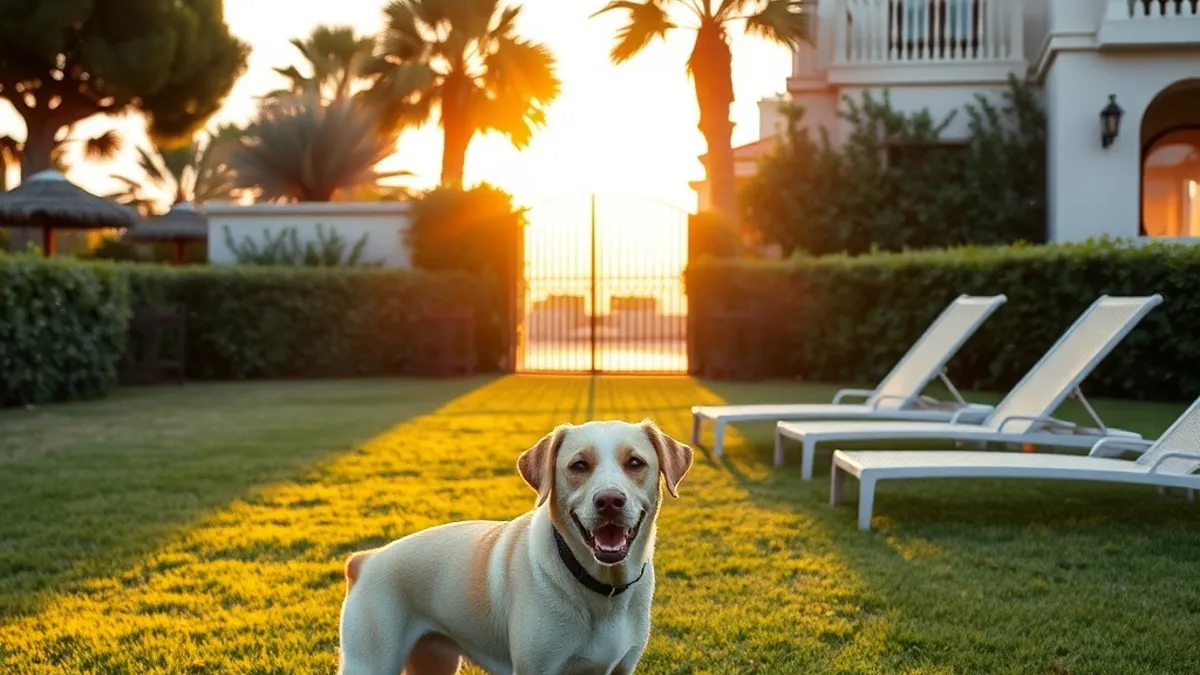
The garden is often the deciding factor for a villa stay with a dog, so treat it as seriously as the bedrooms. For escape-prone dogs, fenced garden walls should be at least 1.2-1.5 meters high, and just as important, there should be no gaps under gates where a determined dog could squeeze through. Ask the host directly about fence height, gate latches and any sections under repair, and request recent photos if the listing only shows the pool. A few minutes of questioning here can save you a stressful holiday spent guarding the gate.
Also find out whether the garden is fully enclosed or opens onto shared grounds, a swimming pool or a driveway. A villa that shares grounds with other guests means foot traffic, other animals and open water, all of which change how closely you need to supervise your dog. Remember that common pool areas usually require pets to stay leashed and off the pool decking, so an enclosed private garden is often the safer and more relaxing option for everyone.
- Toxic plants: Ask whether oleander, sago palm or other plants poisonous to dogs are planted in the garden, especially in warm climates where these are common landscaping choices.
- Water hazards: Confirm whether ponds or pools are fenced separately, since an unsupervised dog can slip into water even if it swims well.
- Staff access: Ask whether gardeners or maintenance staff enter the garden during your stay, and whether they close the gate behind them, because an open gate is the easiest escape route.
- Ground surface: Check whether the garden is grass, gravel or hot tile, since paw-friendly surfaces matter for long outdoor days in summer.
House Rules to Confirm in Writing
One of the most common sources of friction between guests and villa hosts is what happens when nobody is watching the pet. Many properties simply do not allow pets to be left alone inside the villa, even for a short dinner out. The reason is practical: barking dogs disturb neighbors, and anxious pets can scratch doors or have accidents. If a noise complaint comes in, some hosts charge a penalty or ask you to leave without a refund.
Furniture rules are the second thing to pin down. Policies vary widely, and a host who seems relaxed on the phone may have firm expectations once you arrive. Get the answers in writing before you pay a deposit, and put the specific questions below in your booking email so the replies are on record.
- Ask whether beds and sofas are off-limits entirely, or whether the villa provides washable covers and throws you should use instead.
- Check if a crate or playpen is supplied on-site, or whether you need to bring your own for nighttime and travel days.
- Confirm whether hair shedding on upholstery counts against your cleaning deposit, since some hosts deduct for extra vacuuming.
- Ask about designated pet relief areas and whether waste bags and bins are provided in the garden.
Shared spaces deserve their own question. Most villa communities and resort-style properties require pets to stay leashed around pools and keep them off the pool decking, and dining areas, breakfast terraces and shared lounges are usually pet-free zones. If you are booking a villa with a shared pool rather than a private one, ask exactly where your dog may walk and where the boundaries are, so a morning stroll does not turn into a formal warning.
Documents, Vaccinations and Arrival Timing
Paperwork is where pet travel trips people up, because the rules depend on your destination and they are enforced at borders, not at the villa front desk. Many countries require a pet passport or an official record showing a rabies vaccination given at least 21 days before arrival. That waiting period exists because the vaccine needs time to take effect, so a shot given a week before your flight will not satisfy most inspectors. Check the exact requirements with your veterinarian and the destination’s authorities well before you book, since rules differ by country and change over time.
Get the documents to your host early
Even after you clear the border, check-in can stall if the villa manager wants proof on arrival. Email scanned vaccination records and any pet passport pages to the host a few days before you travel. This does two things: it confirms your pet matches the description in your booking, and it gives the host time to flag any missing paperwork while you can still fix it. Ask for a short written reply confirming the documents are in order, and keep copies on your phone as a backup.
Timing your booking
Pet-allowed villas are a small slice of total inventory, so the good ones go fast. For peak-season travel, aim to confirm your rules and booking 4-8 weeks ahead. That window gives you enough choice to compare gardens and fencing rather than settling for the last available property, and it leaves time to complete any vaccination waiting periods. If you are traveling with two pets or a large breed, book at the earlier end of that range, because weight caps and pet limits shrink your options further.
Choosing Destinations Where Pets Are Genuinely Welcome
The label “pet-friendly” only matters if the destination itself works for your animal. A villa with a beautiful garden is little use if the climate makes outdoor time miserable, or if every walk means dodging traffic. Think about where your pet will actually spend the day before you fall in love with a listing.
Warm regions for garden-loving pets
In warm-weather destinations, outdoor living is the norm, and that suits pets that need room to roam. Langkawi’s green hills, for example, pair villa gardens with a tropical setting where dogs can spend much of the day outside. Just remember that tropical heat and humidity are demanding for some breeds, so plan garden time for mornings and evenings and make sure shade and fresh water are available.
Calm water and cool air
If your pet prefers steady, low-key walks, quiet countryside and lakeside settings are hard to beat. The Balaton waterfront in Hungary, for instance, offers long, flat promenades and lakeside paths where you can walk without busy traffic, which is ideal for older dogs or puppies learning leash manners.
Finally, match the climate to the breed. Heat-sensitive types such as huskies, malamutes and flat-faced breeds like pugs and bulldogs struggle in hot, humid regions, and they do far better in alpine or highland villa areas where evenings cool down. A cooler mountain destination also means longer, more comfortable walks, which many high-energy dogs need to settle quietly in a villa at night.
Wrapping Up Your Pet-Friendly Villa Search
So what is the answer to that frustrating gap between “pets welcome” in the listing and the reality at check-in? Most surprises come down to three things: money, rules and the garden. Pet-friendly villas come with fees of $25-$100, deposits up to $300 and policies that vary by species and size, so asking about all three before you pay solves most of the problem. A quick email covering which pets are allowed, what they cost and where they can go is usually enough to filter out unsuitable properties.
The garden deserves the same attention. Fencing of 1.2-1.5 meters and written confirmation of house rules prevent most problems, from an escape-prone dog slipping under a gate to an unexpected complaint charge. Finally, booking 4-8 weeks ahead and preparing vaccination documents makes arrival smooth for you and your pet. If you have a villa story or a tip that saved your trip, share it in the comments below.