Booking a safari lodge should be the easy part of a trip, yet the rate sheet often reads like alphabet soup: DBB, FB, AI, plus footnotes about drinks, park fees and activities. Many travelers pick a plan based on the nightly price alone, then discover at checkout that lunches, soft drinks or game drives were never included. That surprise can add a meaningful amount to a trip that already feels expensive.
This guide breaks down how lodge meal plans actually work, from what each abbreviation covers to how meal timing fits around dawn and afternoon game drives. You will see when DBB is the smarter choice, when full board justifies the extra cost, and when all-inclusive delivers real value on longer stays. We also cover the hidden costs that sit outside every plan, such as conservation fees and premium drinks, and finish with a quick comparison to help you choose with confidence before you book.
What Lodge Meal Plans Actually Mean
The three most common lodge meal plans follow a simple ladder of inclusions, but the details matter more than the labels. Understanding what each tier covers helps you match the plan to how you actually spend a day on safari.
The three plans in plain language
DBB stands for dinner, bed and breakfast. You get two meals plus your accommodation, while lunch and all drinks are paid separately. It is the lightest option and works well if you expect to be away from the lodge at midday.
Full board covers breakfast, lunch and dinner, but usually excludes drinks beyond water, tea and coffee. If you order a soda, beer or glass of wine with dinner, that lands on your bill at the end of your stay.
All-inclusive bundles all meals, most drinks and often scheduled activities into one nightly rate. At many lodges this means two daily game drives are part of the price, which is where the real value sits for longer stays.
Why the label alone is not enough
Naming varies by lodge. One property’s “full board” might include picnic lunches on full-day drives, while another charges for them. Some all-inclusive rates exclude premium wines, champagne and top-shelf spirits. Before booking, read the inclusions list line by line rather than trusting the plan name, and ask the lodge directly about anything ambiguous.
How Meal Timing Shapes a Safari Day
A safari day is built around wildlife activity, not restaurant hours. Animals are most active at dawn and late afternoon, so game drives at many lodges run around 05:30-06:00 in the morning and again from 15:30-16:30 into dusk. That schedule leaves long gaps at the lodge, and those gaps are exactly where your meal plan either saves you money or quietly costs you extra.
The rhythm of drives and meals
Because dawn drives leave before sunrise, breakfast is often served as an early, lighter spread before departure, with the full breakfast following once you return. Confirm the serving window when you book, especially if you have an early departure or a hot-air balloon morning that leaves before the kitchen opens. The midday heat between roughly 11:00 and 15:30 is when lunch matters most: you are stuck at camp anyway, and guests on lighter plans pay per meal during these long lodge hours. The afternoon drive ends near dusk, which makes dinner the natural anchor meal of the day and explains why plans built around the evening meal suit shorter stays so well.
Bush meals and sundowners
Bush lunches and sundowner stops can add real pleasure to a safari day, but they are not automatically covered. If your itinerary includes full-day drives, ask whether a picnic lunch comes with your rate or is billed separately. Lodges in quieter settings, such as the spacious homesteads near Nanyuki’s safari country, often shape their meal service around drive times rather than fixed restaurant hours. It pays to ask how the kitchen schedule aligns with your planned activities before you arrive, so you are not caught hungry between drives or paying for meals you rarely sit down to eat.
When DBB Is the Smarter Choice
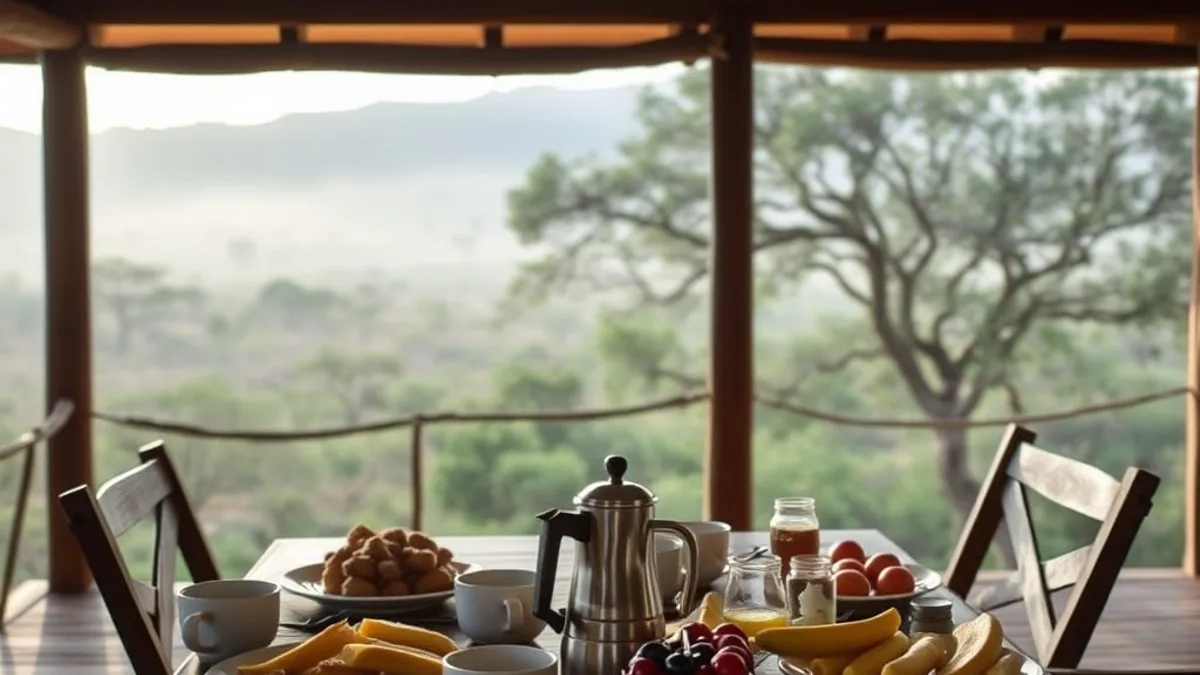
DBB, which stands for dinner, bed and breakfast, is the smallest step up from a room-only rate. It typically adds about 15-25% to the nightly price, making it the lightest-touch upgrade for a brief safari stopover. You get the two meals that matter most when your visit is short: dinner when you arrive tired from the drive, and breakfast before or after your dawn game drive.
This plan also suits travelers who genuinely plan to be away at midday. If you have a self-drive day on the itinerary, want to explore a nearby town and eat lunch at a local restaurant, or have booked a spa afternoon at a neighboring property, paying for a lodge lunch you will not eat makes little sense. DBB keeps your rate lean and leaves your midday plans open.
One detail deserves a close look before you commit: how dinner is served. Check whether dinner is a set menu or a la carte, because an a la carte arrangement can cap the value of the plan if dishes are priced individually and the plan only covers a fixed value.
- Arrival-day flexibility: if you land late or arrive after a long transfer, DBB guarantees dinner without committing you to a full day of lodge dining you may not use.
- Pairing with self-catering or town stops: travelers combining a lodge night with a self-drive route can stock a cooler for lunch and let DBB handle evenings only.
- Budget predictability at checkout: with only lunches and drinks outside the plan, your final bill stays short and easy to reconcile, unlike plans where bar tabs accumulate over many nights.
When Full Board Justifies the Extra Cost
Full board adds lunch to the dinner, bed and breakfast formula, and that single extra meal usually pushes the rate roughly 25-40% above room-only. In exchange, you stop thinking about lunch entirely. On a safari schedule, where the midday hours are spent at the lodge between the morning and afternoon drives, knowing that lunch is covered removes one of the last budgeting decisions from your day.
This plan makes the most sense at lodges that sit far from any alternative restaurant. If the nearest town is an hour away on rough roads, leaving the property for a cheaper meal is simply not practical, and paying per meal at the lodge quickly erodes the savings of a lighter plan. Full board also suits travelers booking full-day drives, where you are out from dawn until late afternoon and need food in the field rather than back at camp.
Before you book, ask a few specific questions, because the details vary more on full board than on any other plan:
- Bush lunches on full-day drives: some lodges include a packed or served lunch in the bush as part of full board, while others charge it as a separate excursion, so confirm in writing before your arrival.
- Lunch format: at some properties lunch is a lighter set plate or buffet rather than a full menu, which matters if you were expecting the same variety as dinner.
- Drinks with lunch: most full board plans cover water, tea and coffee only, so soft drinks and juices at midday may still appear on your final bill.
- Early departures: if you leave on a dawn drive before the kitchen opens, ask whether a light breakfast or coffee snack is provided, since policies differ between lodges.
When All-Inclusive Delivers Real Value
All-inclusive is the priciest plan on the menu, typically adding 40-60% over a room-only rate, but it bundles most drinks and scheduled activities into that nightly price. The math only works in your favor on longer stays. If you are booking four nights or more, the daily value of included drinks and two game drives can easily outpace the premium you pay per night.
The most important habit before booking is reading the drinks list carefully. Many all-inclusive rates cover house wines, local beers and standard spirits, but leave the top end of the cellar off the plan. If you are set on celebrating with a specific bottle, expect it to appear on your bill separately, sometimes at a significant markup.
Activities deserve the same scrutiny. Two daily game drives can otherwise add a meaningful per-person cost on top of your rate, so an all-inclusive plan that includes them may be the better deal even if the nightly price looks steep. This plan is genuinely best for travelers who want no on-site spending decisions at all, rather than for those hunting the cheapest nightly rate.
When comparing lodges, look at these specifics rather than the label:
- Scheduled versus private activities: all-inclusive rates often cover shared game drives but bill private vehicles and private guides separately, which matters if you are a photographer wanting flexible timing.
- Mini-bar and in-room items: some lodges stock the room fridge as part of the plan, while others count it as bar consumption, so check the fine print.
- Transfers and flights: light-aircraft transfers between camps are rarely part of an all-inclusive rate, so budget them on top of the nightly price.
- Children’s rates: family lodges sometimes apply different inclusions for children, such as earlier dinner sittings or restricted activity ages, which affects the real value of the plan.
Hidden Costs That Sit Outside Every Meal Plan
Whichever plan you choose, the nightly rate is not the whole bill. Conservation and park fees are usually billed separately from any meal plan, and at many safari destinations they are substantial enough to change your total noticeably. A family of four staying a week can easily find these charges adding the equivalent of an extra night or more to the final invoice. Budget them on top of the rate you were quoted, and check the current fee with the lodge or your operator before booking, since these amounts are revised regularly and vary by park and country.
Even the most generous all-inclusive plan leaves some items out. At most lodges, premium drinks, private guides, spa treatments and laundry sit outside all three plans, so it pays to know where the boundaries are before you arrive rather than when the bill lands at checkout. Ask for a written list of exclusions when you book, and keep it handy so you can compare it against what you actually plan to spend money on during your stay.
A few questions worth asking before you travel:
- Gratuities: ask whether a service charge is added automatically to your bill or whether tips are settled in cash at checkout, and ask whether there is a shared staff tip box alongside individual guide tips.
- Curio shop and community purchases: lodge shops and village visits are always extra, and card facilities can be unreliable, so carry some cash in small denominations for souvenirs and local crafts.
- Special dietary items: lodges cater well to dietary needs, but imported specialty products requested in advance are sometimes billed as a supplement rather than covered by the plan.
- Currency and payment: confirm which currency your extras are billed in and whether card payments carry a surcharge, since this affects what your bar and spa spending actually costs.
Choosing Your Plan at a Glance
Safari meal plans boil down to three straightforward concepts. DBB covers dinner and breakfast with your room, a good fit for a night or two and for travelers who plan to eat lunch away from the lodge. Full board brings lunch into the equation, which makes sense at remote properties where leaving for a meal is impractical or on days built around long drives and bush lunches. All-inclusive rolls most drinks and scheduled activities into one nightly rate, and that is where the value shows up on stays of four nights or more, as long as you genuinely use what is included each day.
The real takeaway is that plan names are not standardized between lodges, so the inclusions list matters far more than the label itself. Read it closely, budget for conservation and park fees on top of your nightly rate, and you will sidestep the surprise costs that catch so many safari-goers off guard. If this helped you plan your stay, leave a comment or share the article with a fellow traveler.