You’ve found a resort with great reviews and a pool your kids will love, so you click through to book. Then comes the confusing part: three different options, all labeled “family”. There’s an interleading room, a family suite, and a garden bungalow annex — and the resort gives you no real clue about how they differ in space, privacy or price. Choosing wrong can mean a cramped week, an awkward walk with tired kids, or money spent on space you never use.
This guide breaks down how resort family rooms actually work. We’ll explain what interleading rooms, suites and annexes each offer, how to match the room type to your children’s ages, what to know about timing and costs, and the specific questions worth asking before you pay a deposit.
What Interleading Rooms Actually Offer Families
An interleading room setup is simple in theory: an internal connecting door joins two standard rooms, so children get their own beds and space while parents keep direct access next door. In practice, this is often the closest thing to having a two-room apartment without paying suite prices. Kids can nap or go to bed early, and you can slip between rooms without walking through corridors or calling reception.
Cost is where interleading rooms usually win. They typically run 15-25% above the price of two separate standard rooms at the same resort, making them the most affordable option that carries the “family” label. You’re paying mainly for the connecting door, not extra floor space — each room remains a standard room in size and layout.
Who interleading rooms suit best
These setups work best for families with younger children who need night-time proximity. If you have a four-year-old who wanders in at 2 a.m. or a baby whose cot you want within earshot, the connecting door removes the anxiety of being several buildings apart.
The catch is availability. Only certain floors and specific room pairs are physically built to connect, so resorts have a limited number of these configurations. They tend to sell out before standard rooms do, especially at busier times of year, so it pays to book early and confirm the connecting door exists in your booking.
Family Suites: Space and Layout Explained
A family suite is defined by shared space rather than a connecting door. Suites typically span 45-70 m² and include a separate living area, where kids usually sleep on a sofa bed or rollaway. That shared lounge becomes the real value: somewhere to eat takeaway on a rainy evening, spread out toys, or watch a film together without everyone sitting on a bed.
Capacity is the main limitation to understand before booking. Most suites with a sofa bed or rollaway cap at 4-5 guests, which suits two adults with two to three children comfortably. If you’re a family of six or more, you’ll generally need either two units or a proper two-bedroom suite — a single standard suite rarely stretches that far.
Check the bathroom count
Because many suites are a single open layout with a partitioned sleeping area, one bathroom is common. For a family of five queuing for showers before breakfast, that single bathroom becomes the pinch point of the whole holiday. Ask specifically how many bathrooms the suite has before you commit.
On the plus side, suites often come with extras that add value beyond the floor space: club lounge access, breakfast upgrades, or evening drinks included in the rate. Weigh those inclusions against the price difference — sometimes they offset a good part of the premium over a standard room.
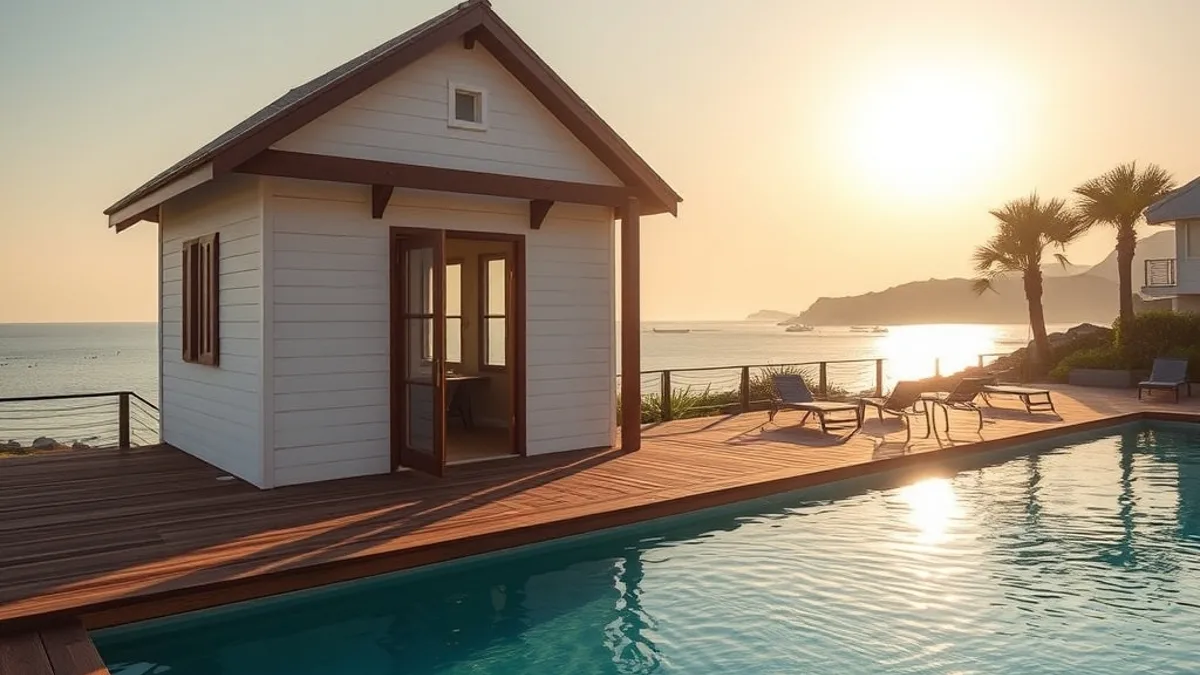
Annexes and Garden Bungalows: Privacy at a Distance
Annexes and garden bungalows trade convenience for quiet and space of a different kind. These detached units usually sit 50-200 m from the main building, which translates to a 2-5 minute walk to restaurants and pools. That may sound trivial, but multiply it by several trips a day — forgotten sunscreen, swimsuits, a toddler’s water bottle — and the distance starts to feel real.
What you get in return is privacy. No corridor noise, no neighbors through the wall, and often a veranda, garden or outdoor area that main-building rooms simply don’t have. Annexes typically run 10-20% cheaper than equivalent main-building suites, so you’re trading a short walk for both quiet and savings.
The trade-offs to know
Service levels can differ. Housekeeping may be less frequent than in the main building, and room service is often limited or unavailable. If daily turndown and an easy lunch delivered to your room matter to you, check exactly what annex guests receive before booking.
Annexes suit families with teens particularly well. Older kids value independence from their parents’ room, and a separate bungalow a short walk away gives everyone breathing room while keeping the family together in one unit. It’s often the configuration that keeps teenagers happy at the lowest price per square meter.
How to Choose Between the Three Room Types
Choosing the right family room comes down to one question: how much supervision do your children need, and at what time of day? A toddler who wakes at 2 a.m. needs a very different setup from a fourteen-year-old who wants nothing to do with your room until lunchtime. Match the room type to your family’s daily rhythm rather than to the resort’s floor plan.
If your children are under 8, interleading rooms usually win. The internal connecting door means you can hear them overnight, check on them without crossing outdoor walkways, and still close things off for naps. For young parents, that direct access matters more than extra square meters ever will.
A suite makes sense when your family actually spends time together in the room — playing cards on a rainy afternoon, feeding a baby, or winding down with a movie. One shared living area is the real draw here, and everyone can stay in a single unit rather than splitting across two.
An annex or garden bungalow suits families whose kids are old enough to walk to breakfast on their own. You trade a short stroll for privacy, outdoor space and often a lower rate. Before you book, work through the options:
- Interleading rooms: best when a child under 8 still needs overnight access to you, and you want two real bedrooms without paying suite prices.
- Suites: the pick when shared living space matters more than separate bedrooms — think long evenings indoors, naps in the lounge, or a family of five in one unit.
- Annexes: the choice when privacy, a terrace or garden, and a cheaper rate outweigh a short walk to the pool and restaurants.
Booking Resort Family Rooms: Timing and Costs
Timing matters most with interleading rooms. Connecting pairs are limited in number at almost every resort, and for July-August peak season you should reserve them 3-6 months ahead. At popular family resorts, these configurations are typically the first rooms to sell out — sometimes before standard rooms have even filled.
What extra beds actually cost
Children under 12 often stay free or at a discount when they sleep in existing beds, which makes a room with two double beds excellent value. The moment you add an extra bed, expect the nightly rate to rise by roughly 20-40%. That single rollaway can quietly turn a bargain booking into an expensive one, so run the numbers before you assume a “cheap” family room is cheap.
Also be careful with the label itself. “Family room” can mean anything from one large room with a sofa bed to two fully connected units, and resorts use the term loosely. Ask the resort to confirm the exact bed configuration in writing — how many beds, what sizes, and whether the extra bed is a proper mattress or a fold-out. A written confirmation in your booking correspondence gives you something to point to at check-in if the room doesn’t match what you expected.
Finally, check whether the rate includes breakfast and whether children’s meals are charged separately, since food costs can add up faster than the room upgrade itself.
Questions to Ask the Resort Before You Pay
Resort websites describe family rooms in broad, optimistic language, and photos rarely show the details that matter at 10 p.m. with a tired toddler. A few direct questions before you pay will save you from most unpleasant surprises, and the answers tell you a lot about how family-friendly the property really is. Treat the exchange as a test: a resort that answers patiently and precisely will usually handle problems well once you arrive, while vague replies are a warning sign worth taking seriously.
Call or email the resort directly rather than relying on a booking platform’s description. Front desk and reservations teams can usually answer specifics in minutes, and their willingness to check details is itself a good sign. If the person you speak to seems unsure, ask them to confirm with housekeeping or the duty manager and get back to you the same day.
- Interleading door mechanics: ask whether the connecting door locks from both sides and whether it can be kept propped open — some doors only latch shut or open, with no in-between.
- Annex distances: request the exact walking distance from the annex to the pool, restaurant and beach, not just “close to everything.”
- Suite bathrooms and beds: confirm how many bathrooms the suite has, and whether the sofa bed uses a proper mattress or a thin fold-out pad.
- Cots and age limits: ask whether cots are free or rented, whether you must reserve one in advance, and what the age cut-off is for children sharing existing beds.
Get the answers in writing where you can. If the resort confirms the sofa bed has a real mattress or that a cot will be waiting in your room, that confirmation gives you leverage at check-in if anything falls short. Screenshot the email thread or save the chat transcript on your phone, and bring it up politely at the front desk if the room does not match what you were promised. Most resorts will fix a genuine discrepancy on the spot when you can show exactly what was agreed, so this small extra step often pays for itself.
Finding the Right Family Room Fit
So what does “family room” actually mean? As it turns out, three very different setups hide behind the same label. Interleading rooms balance price and proximity for young families, giving kids their own beds while parents stay just a door away. Suites deliver the most shared space but cost the most per night. Annexes offer privacy and value at the cost of a short walk.
The right choice comes down to your children’s ages, budget and how you plan to spend your days. A toddler who wanders in at 3 a.m. needs something different from a teenager who wants to sleep in. Match the room type to your family’s rhythm, ask the right questions before you pay, and the “family room” label stops being a gamble. If this helped you sort out your options, leave a comment or share the article with another planning parent.