It’s a familiar travel day headache: your room isn’t ready at noon and checkout was at 11 a.m., so what do you do with your bags in the hours in between? Dragging a suitcase through museums, cafés and train stations is nobody’s idea of a good time. The good news is that learning how to store luggage properly turns those awkward hours into usable time.
This guide walks you through every option. We’ll explain why storage gaps happen on travel days, how to use hotel luggage storage both before check-in and after checkout, and what off-site options like lockers and storage apps cost. You’ll also find packing and security tips for handing over your bags, plus advice on planning your day around a storage spot. By the end, you’ll have a simple plan for any travel day, whether you arrive at dawn or depart at midnight.
Why Luggage Storage Gaps Happen on Travel Days
The storage gap exists because hotels run on fixed schedules. Standard check-in time is 2-3 p.m., while checkout is usually 10-11 a.m. That means on the day you arrive and the day you leave, you can easily face a 3-5 hour stretch when you officially have no room, even though you’re clearly staying at the hotel.
When the gap gets bigger
Certain travel plans stretch that gap dramatically. An early morning flight that lands at 8 a.m. puts you at the hotel five or more hours before your room opens. A late evening train or flight does the same on departure day, and if the hotel is fully booked the night before or after, staff often can’t hold your room early or let you stay late. In those cases, the gap can swallow a full day.
The key is knowing the gap exists before you travel. Once you accept that you’ll have hours without a room, you can plan around it: arrange storage in advance, book a hotel that’s flexible, or structure your itinerary so the bag-free hours fall when you want to be out exploring. Travelers who don’t plan end up improvising, hauling bags through lunch stops and attractions, which wastes both energy and time.
Using Hotel Luggage Storage Before Check-In
Before you look for outside options, start with the hotel itself. Most properties will hold your bags free from the moment you arrive until your room is ready, even if that’s hours before the standard 2-3 p.m. check-in. This costs you nothing, requires no app downloads, and puts your luggage in the hands of staff who already know the building. For most travelers, it’s the simplest and cheapest solution on arrival day.
The key is asking early rather than assuming it’s automatically available. Small properties like guesthouses and boutique hotels often have limited lobby space and may not advertise the service, but most will still help if they know you’re coming. Here’s how to make it work smoothly.
- Ask about storage when booking. Raise the question ideally 1-2 weeks before arrival, especially at small properties where storage space is tight. A quick email or a note in your booking request is usually enough to get a clear answer.
- Confirm on arrival day. When you reach the hotel, head straight to the front desk even if it’s early morning. Staff will typically tag your bags and stow them in a storage room until your room is ready.
- Get a claim ticket or receipt for each bag. Don’t skip this step. A tagged stub or written receipt is your proof if a bag goes missing or gets mixed up with another guest’s luggage.
- Note the names of staff who took your bags. If there’s a mix-up later, knowing who handled the handover makes resolving it much faster and less stressful.
One practical note: storage rooms at busy hotels can get crowded during peak season, and bags sometimes sit unattended for hours. Keep anything fragile, valuable or essential with you rather than in a stored bag, and give the front desk a rough idea of when you’ll return to collect your things. Arriving early with a plan and a claim ticket in hand is far better than hovering near the front desk with luggage piled at your feet.
Storing Bags After Checkout
Checking out at 10-11 a.m. doesn’t end your relationship with the hotel. Most properties will store your bags free for the rest of the day, letting you squeeze in a final lunch, a museum visit or a last stroll without dragging suitcases behind you. It’s one of the most underrated free services in travel, and all it usually takes is a quick word at the front desk when you settle your bill.
Know the pickup cutoff
Free storage typically covers the day, but late-night departures can exceed those hours. If your flight leaves at 11 p.m. or your train departs after dinner, ask at checkout what the latest pickup time is. Some hotels close their luggage room or reduce front desk staffing in the evening, and you don’t want to discover that at 9 p.m. with a boarding pass in hand. Confirming the cutoff when you hand over your bags takes thirty seconds and saves a scramble later.
Making the most of a late departure
If you have a late flight, go one step further and ask whether the hotel offers a day-use room or shower access while your bags are stored. Many properties rent rooms by the hour or let departing guests freshen up, which is a genuine upgrade when you’ve spent the day walking. Even if the answer is no, you’ll often get a recommendation for a nearby option. Either way, your last hours in town stay bag-free and comfortable instead of spent guarding suitcases in a lobby corner.
Off-Site Luggage Storage Options and Costs
When your hotel can’t hold your bags, off-site storage fills the gap nicely. The most convenient option in most cities is a luggage storage app or service that partners with local shops, cafes and hotels. You book a spot online, drop your bags at the partner location and pick them up when it suits you. These services typically charge $5-12 per bag per day, and many let you adjust your pickup time on the fly if your plans shift.
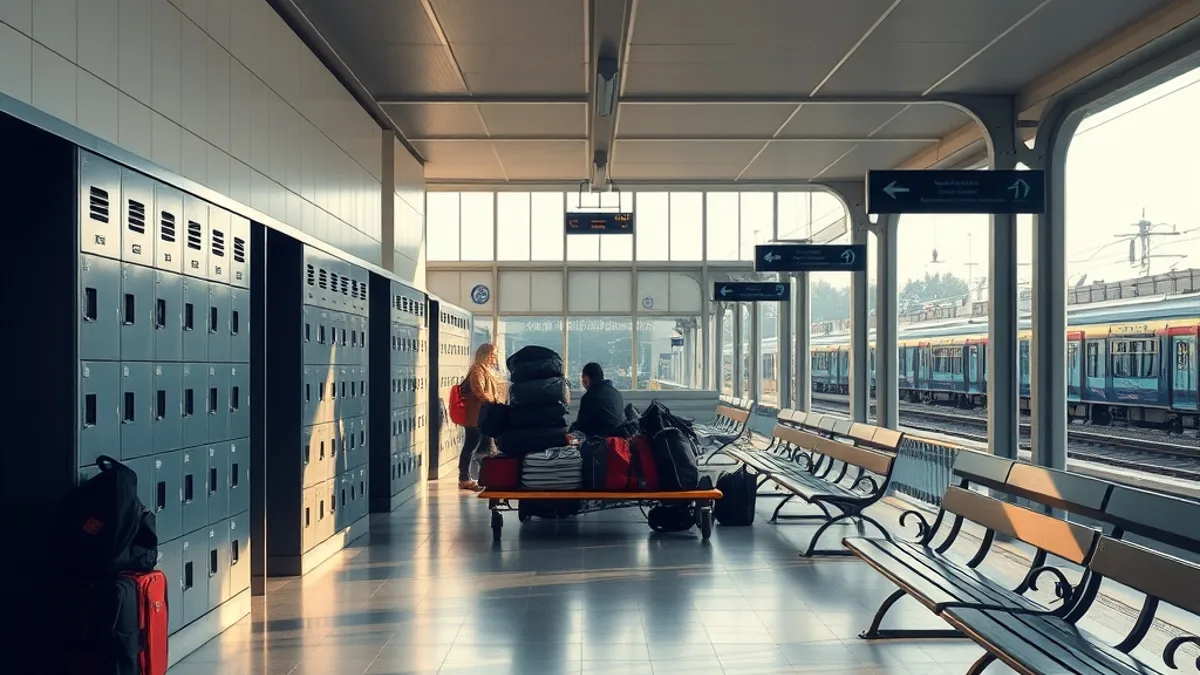
Train stations are another reliable bet, especially in Europe, where major stations offer self-service lockers. These commonly cost €4-8 for 24 hours, and the big advantage is independence: no staff, no claim tickets, no waiting. You drop your bag, keep the key or code and retrieve it whenever you pass back through. Lockers suit travelers on tight rail schedules particularly well, since you can store and collect in minutes.
Airport storage is usually the priciest route, typically running $10-20 per bag per day. That premium buys you serious convenience during a long layover, though, since you can leave the terminal, explore the city and return unburdened. If your layover stretches past six hours, the cost often feels justified.
- Size limits matter at stations: some European lockers only fit standard suitcases, so oversized ski bags or bike boxes may need an attended storage counter instead.
- Apps vary by city coverage: a service with dozens of drop points in one capital city might have only one or two partners in a smaller town, so check the map before relying on it.
- Ask about hourly rates: a few services and lockers charge by the hour rather than by the day, which can cut costs for short gaps of two or three hours.
- Book ahead in peak season: popular partner shops near major attractions can fill their storage slots during busy travel periods, so reserving a spot online avoids a wasted walk.
Packing and Security Tips for Stored Luggage
Before you hand any bag to a hotel desk, a locker or a storage shop, decide what absolutely cannot leave your side. Passports, cash, credit cards, medications, electronics and a day’s essentials belong in a small daypack you carry yourself. Stored luggage is generally safe, but you should never be in a position where a delayed bag ruins your day or puts your trip at risk.
Locks are your next layer of protection. Checked-style bags left with a hotel, in a locker or at a storage shop should be secured with a TSA-approved lock or a simple combination lock. This deters casual tampering and keeps zippers from sliding open in transit. For soft-sided bags, a lock through the zipper pulls is a reasonable deterrent, though it is not a substitute for keeping valuables out of the bag entirely.
Documentation takes five minutes and pays off if anything goes wrong. Photograph each bag from a couple of angles, then open it and take a quick inventory of the contents before handing it over. If you ever need to file a claim with a hotel, a storage service or your travel insurance, timestamped photos make the process dramatically simpler and faster.
- Remove old baggage tags: peeling stickers with barcodes from previous flights can confuse handlers or automated systems, so strip them off before storing.
- Note existing damage: photograph any pre-existing scuffs, cracks or broken zippers so you can prove new damage did not happen in storage.
- Keep a written inventory on your phone: a simple checklist of what went into each stored bag speeds up any claim and helps you remember what you packed where.
- Zip pouches help too: packing cubes or a locked pouch inside the bag make it harder for anyone to rummage quietly through your clothes.
Planning Your Day Around Stored Luggage
Storage only helps if it sits in the right place. Before you drop your bags, spread out your day on a map and match the storage location to your actual route. If you catch a 6 p.m. train, a locker at or near the station beats a hotel across town, even if the hotel storage is free. The ten minutes you save on retrieval is worth more than a few dollars, and it removes an entire taxi leg from your afternoon.
Build in a buffer
Whatever your retrieval plan, add 30-60 minutes of buffer before your check-in time or departure cutoff. Lines form, staff get busy, and claim tickets go temporarily missing at the worst moments. If your train leaves at 6 p.m. and boarding closes shortly before departure, aim to have your bags in hand by around 5 p.m. at the latest. The same logic applies to hotel check-in: arriving with bags already retrieved means you can go straight to the desk instead of making a second trip.
Check the closing hours
Opening hours are the detail travelers forget most often. Some station lockers and partner shops close by 8-10 p.m., and a handful of small storage shops shut even earlier or take a midday break. If you have a late-night departure, confirm the latest possible pickup time before you drop anything off, and have a backup location in mind. A quick check on the storage app or the station’s website takes a minute and can save you from an expensive, stressful scramble at the end of a good day.
Wrapping Up Your Luggage Storage Plan
That stretch between an 11 a.m. checkout and a 2-3 p.m. check-in doesn’t have to mean dragging bags around town. The gap is really just a planning problem, and the solutions are simple and often free. Most hotels will hold your luggage for a few hours on either side of your stay, and when they can’t, lockers and storage apps step in.
Each option fits a different itinerary and budget: hotels suit travelers staying put in one neighborhood, station lockers work well for self-service drops, and storage apps and shops offer flexibility when pickup times get tricky. A little advance planning turns those awkward bag-dragging hours into usable travel time. If this guide helped you sort out your own travel day, leave a comment or share it with a fellow traveler.