Many travelers rule out rainy season villas because they picture a week trapped inside with nothing to do but watch the rain. That fear is understandable, but it usually points to the wrong problem. The issue is rarely the rain itself, which in most tropical destinations arrives as short, predictable afternoon bursts. The issue is villas that were never designed for wet weather, with token awnings, slippery floors and no sheltered way to move between bedroom and pool.
Get the design right, and green season becomes the smartest time to book. This guide walks through what separates a genuinely rain-ready villa from a dry-weather fair-weather rental: how to read listing photos for real verandas, when to time your stay around the monsoon calendar, which drainage and material details to verify before you pay, and how to approach green season pricing. We will also look at destinations where the wet months shine, then pull everything into a simple checklist you can use before booking.
Why Rainy Season Villas Reward the Right Kind of Outdoor Space
The wet months are when the tropics look their best. Rice fields glow electric green, jungle canopies fill out, and waterfalls run at full force after months of trickling. Crowds thin out noticeably too, so the viewpoints, beach clubs and restaurants that require advance bookings in high season become walk-in affairs.
The rain itself is less dramatic than most travelers imagine. In much of tropical Asia and Central America, a typical green season day follows a rhythm: bright mornings, building cloud after lunch, then a heavy but predictable afternoon shower that often lasts just 1-3 hours before skies clear for the evening. You are dealing with scheduled bursts, not all-day washouts.
The price advantage is real
Then there is the money. Green season rates typically run 20-40% below high season prices, which means the same villa budget suddenly buys a bigger pool, an extra bedroom or that clifftop view you could not justify in peak months. For travelers who value space and privacy over guaranteed sunshine, the math is hard to argue with.
But the villa has to cooperate
Here is the catch. None of this matters if the villa was designed only for dry weather. A beautiful open deck with no overhang, a pool lounger zone with zero shade cover, and bedrooms connected to the kitchen by exposed outdoor paths all mean one thing: every afternoon shower sends you scurrying indoors. A rain-ready villa flips that script, letting you sit outside with a coffee and watch the storm roll through. The sections that follow show you exactly what to look for.
Covered Outdoor Space: What Separates a Real Veranda from a Token Awning
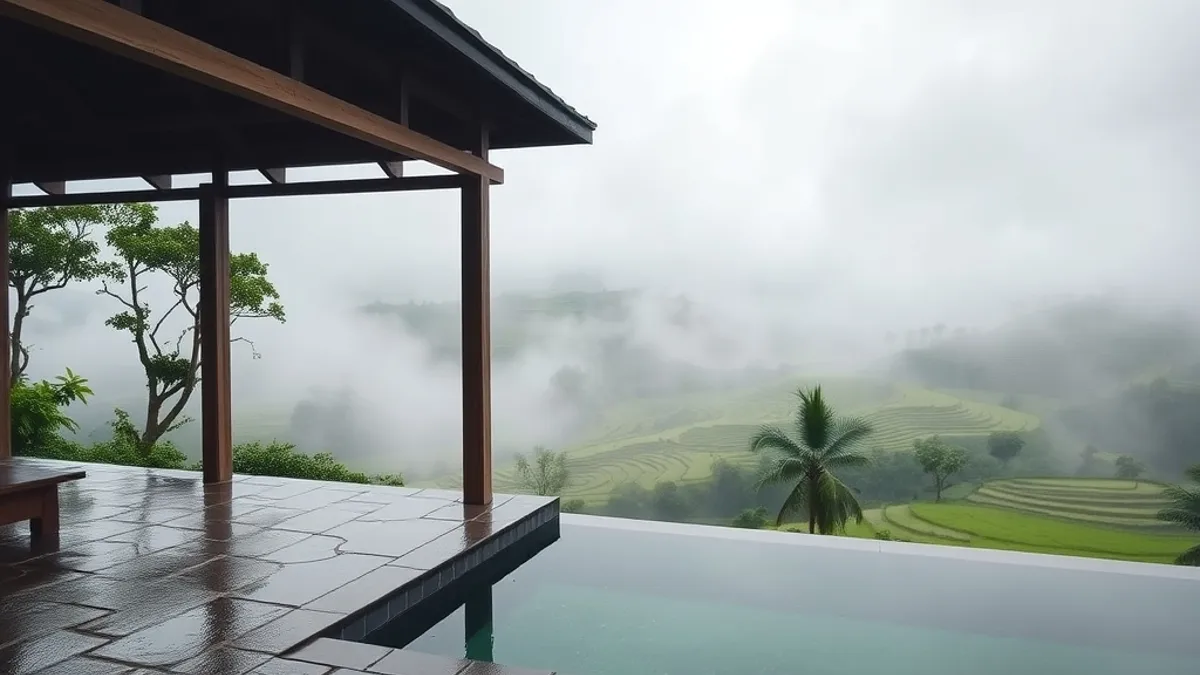
The difference between a real veranda and a token awning comes down to depth and intent. A roof overhang of at least 1.5-2 meters beyond the walls is what keeps seating and furniture dry when rain arrives at an angle on wind. Anything shallower, and the first gust turns your “covered” terrace into a wet floor and soaks the cushions you were counting on. Look for photos taken during rain if you can find them, since they reveal more than any sunny glamour shot. Guest photos on booking platforms and review sites are especially useful here, because travelers tend to upload the honest versions of a property, umbrella in hand.
Size matters just as much. A covered terrace of 20-40 square meters comfortably fits both a dining table and a lounge zone, so a three-hour shower does not force a choice between eating and relaxing. Open-sided pavilions and deep verandas are the gold standard here: you stay dry, the breeze keeps moving, and you get a front-row seat to the storm. When you message a host, ask directly how much of that space is genuinely sheltered rather than shown in carefully chosen dry-season photos.
Timing Your Stay Around the Monsoon Calendar
Green season is not one uniform block of rain, and knowing the calendar shapes everything from your destination choice to your daily routine. In Southeast Asia, the monsoon runs roughly May to October, with the wettest stretch arriving in September and October. Costa Rica’s green season runs May to November, and it follows the same late-season pattern, with the heaviest rain falling in September and October.
Why shoulder months win
This timing creates an obvious sweet spot. Shoulder months like May-June and late October often deliver the best mix of low rates and manageable rain: prices have dropped into green season territory, but the really intense downpours have not arrived or have already passed. If your dates are flexible, shifting a trip by a few weeks can meaningfully change how much of each day you spend outdoors.
It also pays to think in days rather than months. Mornings are frequently dry in green season, with clouds building through late morning and rain typically arriving in the afternoon. That rhythm should shape your itinerary, not ruin it.
Structure your day around the rain
Plan excursions early. Sunrise temple visits, morning jungle hikes, dives and market trips all belong in the first half of the day, when skies are clearest and trails are firmest. Then leave afternoons for the veranda: a long lunch under cover, a nap with the sound of rain on the roof, or a book and a breeze as the shower passes. Travelers who fight the afternoon rain get frustrated; travelers who plan around it often call it the best part of the trip.
Drainage, Materials and Design Details to Verify Before You Book
A beautiful villa in the wet season lives or dies on details that never make it into the headline photos. The first thing to ask about is the flooring underfoot. Smooth polished tile becomes an ice rink the moment rain blows across it, so you want textured stone, sealed teak or another slip-resistant surface on every terrace, walkway and pool deck you plan to use during the green season.
Drainage is the second dealbreaker. A villa can have a generous veranda and still flood if rainwater has nowhere to go. Look for properties with proper gutters, downspouts and storm drainage rather than open ground around the buildings. Bare earth beside a deck turns to mud within the first heavy shower, and that mud ends up tracked across your floors for the rest of the stay. This matters just as much in the rice-field settings around Ubud, where enclaves surrounded by rice fields and quiet tropical serenity sit on land that soaks up water fast.
Evening usability is the third question. Rain brings mosquitoes with it, and an open-sided pavilion without screening becomes unusable at dusk exactly when you want to sit out with a drink. Screening on the open sides lets you keep the breezes and the rain-watching while keeping the bugs out.
Finally, watch for the quiet markers of a rain-ready villa. These small signs tell you the owners actually live with the wet season rather than just photographing it:
- Dehumidifiers or dry modes on air conditioning — constant damp makes linens and sofas feel clammy, and a host who owns a dehumidifier has clearly dealt with it.
- Cross-ventilation on multiple sides of each pavilion — windows or openings on opposite walls pull humid air through instead of letting it settle.
- A fast, covered laundry-drying setup — swimwear and towels that dry overnight instead of staying damp for days.
- Furniture made for humidity — quick-dry cushions, teak or synthetic wicker rather than fabric that mildews.
Booking Strategy and Price Expectations for Green Season
The single best predictor of a happy green season stay is booking early enough to get a villa that was actually designed for rain. Properties with deep overhangs, covered walkways and generous sheltered terraces sell out first once the wet months approach. Book 2-3 months ahead and you will have real choices; leave it until a few weeks out and you are mostly choosing between places whose outdoor space was an afterthought.
What the Pricing Actually Looks Like
Rates fall noticeably across the wet months, and the same budget that buys a mid-range villa in peak season can stretch to a larger layout, a better view or a longer stay. The deepest discounts land in the peak-rain months, when demand drops hardest. If you can handle a daily shower in exchange for a substantially bigger veranda, those months offer the strongest value of the year. Just remember that a bargain price means little if the covered space is too small to use.
Vet the Villa Before You Commit
Photos lie by omission. A terrace shot in brilliant dry-season sunlight tells you nothing about how it behaves in a downpour. Read recent reviews with a specific filter in mind: search for mentions of leaks, flooding, musty smells or terraces that were unusable during rain. Even a couple of passing complaints in otherwise glowing reviews deserve attention.
Then message the host directly and ask a plain question: which outdoor areas are covered, and how deep is the roof overhang? A good host will answer with specifics — square meters, overhang depth, whether the walkway to the pool is sheltered. Vague answers like “there’s plenty of outdoor space” usually mean the space is uncovered. Ask before you pay, not after.
Destinations Where Rainy Season Villas Shine
Picking the right destination matters almost as much as picking the right villa, because some places handle the wet months far better than others. The best green season spots share a pattern: short, predictable showers, landscapes that get more dramatic rather than less, and villa culture built around covered outdoor living.
Ubud, Bali
Ubud’s rice-field enclaves turn misty and vivid in the wet months, and the rain is exactly what keeps the paddies that electric shade of green. Afternoon showers typically arrive, pass and leave the air rinsed clean, which makes veranda mornings over the terraces the highlight of the day. Villa layouts here tend to suit the season well, with open pavilions and deep eaves built into the traditional style.
Langkawi, Malaysia
Langkawi’s green hills and sea views stay dramatic under monsoon cloud, and the island’s showers tend to be short and intense rather than drawn out. You can lose an hour to a downpour and still get a full afternoon on the water or by the pool. For a closer look at what makes the island work in the wet months, see these Langkawi getaways hidden in green hills above the sea.
Nosara, Costa Rica
Nosara’s wellness havens embrace green season as their reset season, and the jungle responds at full volume — vines, flowers and wildlife all ramp up while the crowds thin out. Yoga decks and open-air pavilions here are built for the rain rather than despite it, so a shower often just becomes part of the daily rhythm. The green season runs May to November, with the heaviest rain in September and October, so the shoulder months around it offer the easiest balance of price and weather.
Wrapping Up Your Rainy Season Villa Checklist
Booking a villa in the wet season does not have to mean watching the rain through a window. The right design turns those afternoon showers into the best part of the day: a deep veranda with generous overhangs that keep wind-driven rain off your seat, a covered terrace big enough for both a dining table and a lounge zone, and covered walkways that keep you dry between the bedroom, pool and kitchen.
Timing does the rest. Aim for shoulder months like May-June or late October, when rain is manageable and rates typically run 20-40% below high season, and book 2-3 months ahead to secure the villas with genuinely covered outdoor space. Get that combination right and green season becomes one of travel’s best value plays: same villa, better price, and a front-row seat to the storm. If this helped you plan, leave a comment or share the article with a fellow traveler.