A safari lodge stay is high on many travelers’ wish lists, yet it often stalls at the same question: is this area actually risky, and when is it safe? Lodge malaria zones confuse even experienced safari-goers, because risk rarely matches the borders on a map. A country can be labeled “malaria present” while specific lodges inside it sit in low-risk or even malaria-free terrain.
This guide breaks the problem down into practical pieces. We explain what lodge malaria zones really mean and how regions compare, from malaria-free reserves to seasonal wet-season zones. We look at safe seasons for booking, the precautions to take before departure, and how good lodges reduce bite risk on site. We also cover how to recognize symptoms during and after your stay, and pull everything together so you can plan a confident, well-prepared lodge trip.
What Lodge Malaria Zones Actually Mean
Malaria zones are geographic bands, not whole countries. On a risk map, shaded areas follow climate and mosquito habitat, so risk can change within a single park or province. One corner of a reserve may carry real transmission risk while a lodge an hour’s drive away sits in terrain where the parasite simply cannot complete its life cycle.
This is why the lodge’s location matters more than the country name printed on your itinerary. Two lodges in the same country can demand completely different levels of preparation. Before booking, check the exact coordinates or concession area of the property against an up-to-date malaria risk map, rather than treating the destination as one uniform zone.
What actually creates risk at a specific lodge
Three factors do most of the work: altitude, rainfall and standing water. The Anopheles mosquitoes that transmit malaria generally struggle at higher elevations, and they breed in standing water left by rain. A lodge on a cool, elevated ridge after a long dry spell faces very different conditions from a low-lying camp beside a floodplain in the wet season.
It also helps to understand the language of risk maps. Many famous safari regions are classed as low-risk rather than risk-free, which changes how you prepare. Low-risk still means taking sensible bite-avoidance measures and discussing prevention with a travel-health professional, while genuinely malaria-free areas allow you to relax those preparations considerably. Knowing which category your lodge falls into is the first real step of trip planning.
Low-Risk and Higher-Risk Lodge Regions Compared
Southern and East Africa offer a surprisingly wide spread of malaria risk, and some of the best-known lodge country needs no prophylaxis discussion at all. In South Africa, the Eastern Cape reserves, the Waterberg and Madikwe are widely regarded as malaria-free, which makes them popular choices for families with young children and travelers who prefer to avoid preventive medication. Several of these areas pair big-game viewing with easy access to the coast, and you can see how that combination works in South African resorts that blend safari elegance with coastal relaxation.
Other classic lodge destinations sit in low-to-moderate risk zones where risk is seasonal rather than constant. The fringe lodges around Kruger National Park and Botswana’s Okavango Delta and Chobe region fall into this category: mosquitoes are present, but transmission is uncommon outside the warm, wet months. Higher-risk periods concentrate in the November to April wet season across most southern African safari zones, while the dry winter months bring risk down sharply.
Altitude is the other great divider. Kenya’s Laikipia plateau, around Nanyuki, sits at over 1,700 m, high enough that transmission risk is very low despite the country as a whole being mapped as a malaria zone.
How the main lodge regions compare
- Eastern Cape reserves: malaria-free big-five country within reach of Port Elizabeth and the Garden Route, ideal for first safaris with children.
- Waterberg and Madikwe: malaria-free reserves close to Johannesburg, often reached by short road transfers or light-aircraft hops.
- Kruger fringe and Okavango: low-to-moderate risk with a strong seasonal pattern, so your preparation should match your travel dates.
- Laikipia plateau: high-altitude ranchland where cool nights suppress mosquitoes, offering an alternative to lower-lying Kenyan parks.
Safe Seasons: Timing Your Lodge Stay Around the Risk Calendar
If you have flexibility in your calendar, use it. The low-risk dry season runs roughly May to October, when mosquito activity drops sharply. Nights are cool, vegetation thins out, and animals concentrate around permanent water, which makes this window both the safest and the most rewarding time for game viewing at a lodge in a malaria zone.
When risk peaks
From November to April, southern Africa’s safari regions get warm and wet. Rain leaves standing water, mosquitoes multiply, and lodge-zone risk climbs to its annual peak. This is also when many lodges are greenest and most photogenic, so a wet-season trip is not a bad idea — it simply demands more careful bite prevention and a proper conversation with a travel-health professional about prophylaxis.
The shoulder-month trade-off
Shoulder months like May and November offer a middle path: slightly higher risk than midwinter, but lower rates, greener landscapes and far fewer vehicles at sightings. For many travelers this trade is worthwhile, provided they are diligent with repellent and covered accommodations.
One practical note: dry-season lodge pricing is typically higher, and the best camps fill early. Booking 6 to 12 months ahead is the reliable way to secure the safest window at the lodge you actually want, rather than settling for whatever remains. Check current rates and availability directly with lodges or operators, as they vary widely by property and season.
Pre-Trip Precautions: Preparing for a Lodge in a Malaria Zone
Good preparation starts weeks before you zip your suitcase, because the most important malaria decisions for a lodge stay are medical ones, and they are easy to postpone until it is almost too late. A short conversation with a travel-health professional will tell you whether your specific lodge area needs prophylaxis at all, and if so, which option suits you best. That single appointment shapes everything else: what you pack, what you take each morning, and how confidently you relax around the fire after dinner. Here is how to get ready properly, starting early enough that nothing feels rushed.
- Book a travel-health consultation 4 to 8 weeks before departure. This timing matters because some antimalarial courses need to begin before you travel, and appointments at travel clinics can fill up in peak safari season. Bring your itinerary, including every lodge and park on the route, so the practitioner can judge the actual risk rather than the country as a whole.
- Match the medication to your trip. Prophylaxis options differ in how often you take them and in their side-effect profiles: some are daily tablets, others weekly, and some suit travelers with certain health conditions better than others. Discuss your medical history honestly and ask what to do if you miss a dose mid-trip.
- Pack for the zone, not the brochure. Brochure photos show short sleeves around a firepit, but dawn game drives and dusk dinners are exactly when biting mosquitoes are active. Bring long-sleeve, lightweight layers in neutral tones, plus socks and closed shoes for evening walks between your tent and the dining area.
- Confirm your lodge’s location against an up-to-date risk map. Agents sometimes summarize a whole country as “safe” or “risky,” but risk maps are drawn at a much finer level. Check the current map from a reputable health source and place your lodge on it yourself before finalizing medication decisions.
Ten minutes of map-checking and one clinic appointment will do more for your safety than any gadget in your luggage. Do these two things early and you avoid the two most common mistakes: travelers starting antimalarials too late, and others taking medication they never needed for a malaria-free region. It also leaves you time to fill prescriptions, test a new medication at home, and swap it if side effects bother you. Once the medical side is settled, the rest of your preparation becomes straightforward packing and planning, and you can put your energy into choosing game drives rather than worrying about mosquitoes.
On-Site Protection: How Lodges Reduce Bite Risk
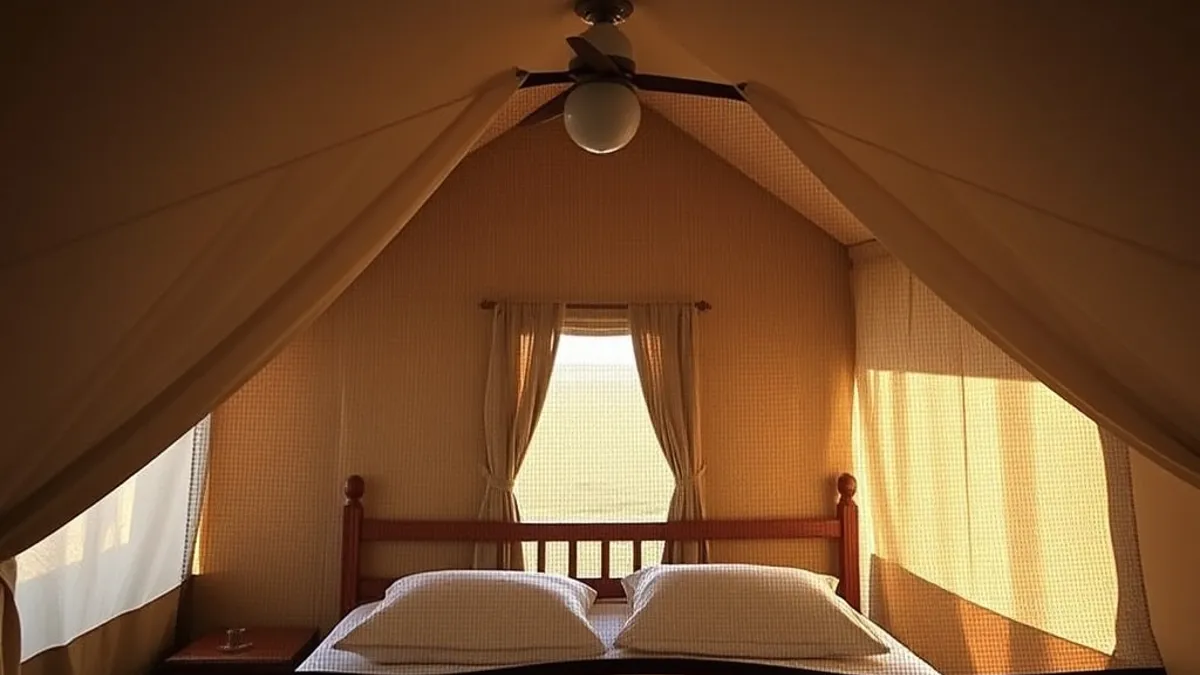
Well-run lodges in genuine malaria zones take bite prevention seriously, and you will usually notice it the moment you check in: screened windows, nets draped over the beds, and tented suites that are fogged or sealed between guest stays. Staff in these areas are trained to spot problems early, from a torn net to a pool of standing water after a storm. Your job is to add your own layer of protection on top of what the lodge already provides, especially during the evening hours when your defenses matter most.
Timing is the part most travelers get wrong. The Anopheles mosquitoes that carry malaria feed mainly from late afternoon onward and through the night, so repellent applied at breakfast does very little for you by dinnertime. Keep a bottle with you on drives and reapply from late afternoon onward.
- Use a repellent at the widely recommended strength. Products containing 20-50% DEET are the standard recommendation for safari evenings. Apply to exposed skin after sunscreen has dried, and reapply after sweating heavily on a walk.
- Treat sundowner stops and open-air dinners as your highest-exposure moments. These are lovely traditions, but they put you outdoors exactly at dusk when mosquitoes are most active. Wear long sleeves, apply repellent before you step out, and favor venues with fans or coils where available.
- Ask about water features and veranda protection at check-in. A good lodge treats or manages standing water in ponds and plunge pools, and many provide plug-in repellent units or burned coils for verandas. If they do not, ask for a net repair or a room farther from water.
None of these measures is complicated, and together they cover the small number of hours each day when risk is real. Think of the lodge’s defenses as your baseline and your own evening habits as the second layer.Handled well, they become routine within a day or two of your stay.
Treatment Awareness: Recognizing Symptoms During and After Your Stay
Malaria is one of those illnesses that rarely announces itself while you are still on safari. Symptoms can appear anywhere from 7 to 30 days after an infected bite, which means many travelers first feel unwell after they have flown home and unpacked. That delay is why awareness matters long after your lodge stay ends.
What to watch for
The classic cluster is fever, chills, headache and body aches, and it is easily mistaken for ordinary flu. Some people also experience nausea or fatigue. If you develop flu-like symptoms in the weeks following a stay in a malaria zone, do not simply assume it is a cold you caught on the plane.
Getting tested quickly
When you see a doctor, say clearly that you have recently stayed in a lodge inside a malaria zone and ask that malaria be tested for first. Standard walk-in consultations often do not consider malaria unless the patient raises it, and a missed initial diagnosis is the most common reason treatment starts late.
Seek same-day medical care for any suspected symptoms rather than waiting to see if they pass. Caught early, malaria is highly curable with a straightforward course of medication, and most travelers recover fully. The difference between a minor episode and a serious one usually comes down to how quickly you got tested.
Planning a Confident Lodge Stay in Malaria Zones
The hesitation most travelers feel about safari lodges comes down to one confusion: treating whole countries as malaria zones. In reality, risk depends on the lodge’s exact location and the season, not the country on your itinerary. A reserve in South Africa’s Eastern Cape, the Waterberg or Madikwe carries no malaria risk at all, while a lodge in Botswana’s Okavango is a low-to-moderate risk that shifts with the calendar.
That calendar points clearly to the May to October dry season as the safest and most rewarding window for zone lodges, with cool nights, thin vegetation and superb game viewing. Preparation then spans three simple stages: pre-trip medical advice, on-site bite prevention and post-trip symptom awareness. With the right zone, season and precautions, a safari lodge stay is a manageable and safe decision. If this helped you plan your trip, leave a comment or share the article.