Most travelers love the idea of a Baja trip that pairs desert nights with ocean mornings, but the planning part stops them cold. Multiple bookings, unfamiliar roads, and the fear of “roughing it” in a tent make a desert-to-sea itinerary feel like more work than a vacation should be. The good news is that Amanecer glamping in Baja solves both problems at once, combining comfortable tent and dome stays with short, manageable drives between very different landscapes.
This guide keeps the planning simple. We’ll look at why Baja California works so well for combining desert, valley, and coast, how to choose between a desert base, the Valle de Guadalupe, or the Pacific shoreline, and when to go for the best weather, whales, or harvest season. You’ll also find a straightforward route built around two bases, a checklist of what to verify before booking a tent or dome, and realistic budgeting and booking lead times. By the end, you’ll have everything needed to plan a desert-to-sea glamping trip without the usual confusion.
Why Baja Works So Well for Desert-to-Sea Glamping
Baja California has a rare talent: it compresses three completely different landscapes into drives short enough to feel effortless. In a single trip you can wake up among the vineyards of Valle de Guadalupe, spend an afternoon in the high desert, and fall asleep to the sound of Pacific waves. Few destinations in North America offer that kind of variety without long transfers or complicated logistics.
Short drives, two very different nights
Most desert-to-sea combinations here fit within two to three hours of driving, which changes the entire shape of a trip. Instead of losing a day to transit, you can check out late, stop for lunch along the way, and still arrive with the afternoon ahead of you. That makes it realistic to sleep in two very different settings on one vacation, a desert dome one night and a coastal tent the next, without ever feeling rushed.
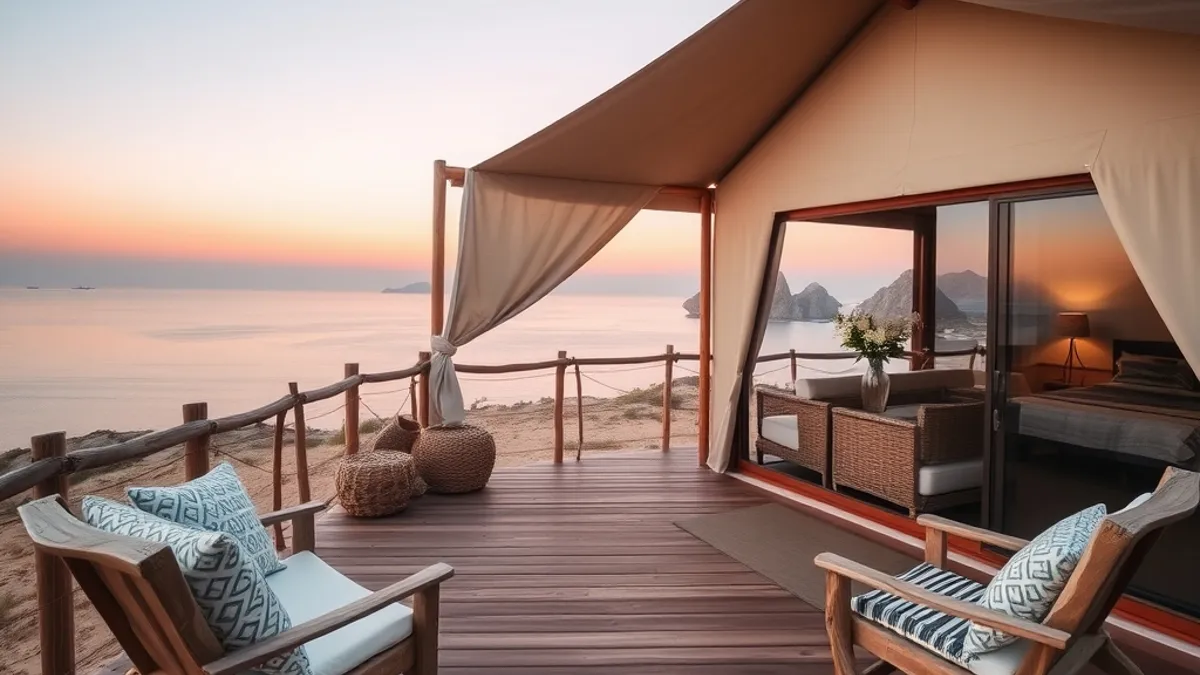
The other reason this works so well is the quality of the accommodations. Amanecer-style glamping in Baja means real beds, en-suite bathrooms, and outdoor showers rather than basic camping gear. You get the star-filled skies and fresh ocean air of camping, plus the comfort of a boutique hotel. For travelers who want nature without sacrifice, that combination is exactly why the region has become a favorite for this style of trip.
Choosing Your Base: Desert, Valley or Coast
Baja’s glamping sites cluster in three distinct settings, and the right base depends on what you want your mornings and evenings to feel like. The good news is that no choice is wrong, and you don’t have to commit to just one. The trick is matching each base to the experience it does best, then combining two of them into a single trip.
Wine-country travelers gravitate to the Valle de Guadalupe, where vineyard views stretch from your tent and evenings revolve around food. The valley has become one of Mexico’s most talked-about dining regions, so dinners here are a destination in themselves. If slow mornings and long meals appeal to you the way they do in places like the lavender-scented countryside hideaways of Provence, the valley will feel instantly familiar.
Desert sites near the Sierra foothills trade restaurants for silence. Nights here run five to ten degrees cooler than the coast, and the lack of town light makes stargazing the main evening event. Pacific coast spots near Ensenada or further south deliver the opposite energy: soft morning ocean light, salt air, and whale sightings offshore in season.
- Valley base: Book a site within a short drive of several wineries so you can taste in the afternoon and walk or take a short ride back, avoiding any need to drive after wine tastings.
- Desert base: Pack an extra layer, since the cooler nights that make desert sleeping comfortable also mean you’ll want warm clothing for evening stargazing outside your tent.
- Coastal base: Face your mornings toward the water by booking a unit with an ocean orientation, and ask the host which months whales are typically visible from shore at that specific stretch of coast.
- Two bases max: On a four to five day trip, limit yourself to two locations so you only pack up once, keeping one move between the desert or valley and the coast.
Whichever combination you choose, confirm drive times between your two bases before booking, so the move itself becomes part of the trip rather than a chore.
When to Go: Seasons, Whales and Harvest
Timing shapes a Baja glamping trip more than almost any other decision. The sweet spot runs from October to May, when days sit around 70 to 80°F and nights drop to a cool 45 to 55°F. That nighttime chill is exactly what makes tent and dome sleeping comfortable, since you get crisp air for sleeping and warm afternoons for the pool, trails, or the beach.
Whale season and harvest season
Two windows are worth planning around. From January to late March, gray whale watching in Magdalena Bay adds a memorable element to a coastal stay, and it’s the single most popular reason travelers book coastal bases in winter. From August to October, Valle de Guadalupe hits harvest season, the liveliest and busiest window in the valley, with crush activities and a full social calendar at the wineries.
Both windows come with a trade-off: demand. If whales or harvest are your priority, book further ahead than you would for a standard trip, and expect valley weekends in autumn to fill first.
Summer is the season to avoid inland. Desert areas can exceed 95°F from June through September, which turns tent sleeping into an endurance test rather than a pleasure. If your trip falls in those months, stick to the coast, where the ocean moderates temperatures, and save desert and valley bases for the October to May window.
Building a Simple Desert-to-Sea Route
The best part of a Baja desert-to-sea trip is that the distances are short enough to feel effortless. You can wake up surrounded by vines and end the day with waves a short walk from your tent, all without a single long-haul driving day. The roads are paved and well signed for most of the route, and the scenery changes so gradually that the drive itself becomes part of the vacation rather than a transfer between hotels. Here is how the route comes together.
- Start in San Diego and head to Ensenada. The drive covers about 70 miles and usually takes 1.5-2 hours once you factor in the border wait. Crossing early in the day keeps the line shorter and leaves your afternoon open. Have your documents ready and check current border conditions before you set out, since wait times vary.
- Continue from Ensenada to Valle de Guadalupe. This leg runs roughly 45 miles of highway and valley roads and takes about 1.5 hours. It is an easy morning drive with vineyard views the whole way in, and there are plenty of places to pull over if a viewpoint or roadside stand catches your eye.
- Build a 4-5 day loop with two bases. That gives you two nights in the desert or valley and two nights on the coast, which is enough time to settle in at each instead of rushing through. Two bases also means you only unpack twice.
- Do your driving in the morning. Roads are calmer, light is better for photos, and afternoons stay free for the pool, a trail walk or time by the ocean. Morning drives also leave room for a spontaneous detour without eating into your evening.
Keep the plan loose. Because every leg is short, you can linger over a long valley lunch or an unplanned beach stop without throwing off the rest of the trip. Fill up on fuel before leaving Ensenada and again before longer stretches, since stations can be sparse in rural areas. The route rewards travelers who treat the drives as part of the experience rather than a chore between stops, so build in time to simply pull over and enjoy the view.
What to Check Before You Book a Tent or Dome
Not every tent or dome marketed as glamping delivers the same comfort level, and in Baja the details matter more than the photos suggest. Desert nights can surprise you with a chill that no amount of stylish canvas will fix, and a property that looks dreamy in daylight can feel isolating after dark if the practical basics are missing. Before you commit a deposit, it pays to ask a few pointed questions and compare answers across several properties. A little diligence before booking is the difference between a memorable stay and a shivery, inconvenient one.
- Confirm climate control in both directions. Desert nights can fall to 45°F even in spring, so ask specifically about heating, not just shade and ventilation. A dome with a heater and good insulation is a very different proposition from one with a fan alone.
- Check for en-suite bathrooms and hot outdoor showers. This is the real line between glamping and plain camping. Shared restroom blocks a few minutes’ walk away change the experience, especially on cool nights.
- Ask about stargazing conditions. Sites set away from town lights offer true dark-sky views, and many hosts can tell you whether light pollution from a nearby highway or valley town will intrude on the view.
- Clarify the food situation. Some sites include meals, while others rely on nearby valley wineries or coastal restaurants. Knowing which applies helps you plan dinners and decide whether you need to drive at night.
Send these questions before you pay a deposit, ideally by email so you have the answers in writing. Good hosts respond quickly, happily share specifics about heating, water pressure and meal options, and may even offer honest advice about which of their units suits the season you are visiting. Vague or evasive replies are usually a sign to keep looking, because the best Baja properties tend to book out well in advance and rarely need to hide anything. If a host hesitates on something as simple as whether the tent has heat, treat that as your answer and move on to the next option.
Budgeting and Booking Lead Times
Baja glamping covers a wide price range, but upscale tents and domes typically run $150-$400 per night, with domes sitting at the higher end of that range. The premium usually buys better climate control, private bathrooms and more dramatic settings, so it is often worth stretching toward the middle of the range rather than booking the cheapest option and losing the comfort that makes glamping appealing.
How far ahead to book
Lead times matter more here than at a regular hotel. For high season weekends, reserve 2-3 months ahead to get your pick of units. Whale season dates are tighter: book 4-6 months ahead, since coastal properties with ocean views fill first and rarely open up at the last minute.
Costs beyond the tent
Factor in a rental car from the start. Most desert and valley sites sit 30-90 minutes from the nearest town, and without a car you will be dependent on arranged transfers for every meal and activity. Build the car into your budget alongside your nightly rate rather than treating it as an afterthought.
One easy saving: midweek stays in the valley often drop 20-30% below weekend rates. If your schedule allows a Sunday-to-Wednesday trip, you get the same vineyards and views at a noticeably lower price, plus quieter tasting rooms.
Your Baja Trip, Made Simple
The desert-to-sea Baja trip you pictured at the start does not require a complicated itinerary. Two bases, four to five days and the October to May window cover everything: cool desert nights under dark skies, vineyard evenings in the valley and mornings with ocean light on the coast. Drives stay short, so you spend your afternoons relaxing rather than behind the wheel.
If you want the most memorable dates, plan around whale season in Magdalena Bay or harvest season in Valle de Guadalupe, and book those furthest ahead. A nightly budget of $150-$400 secures the comfort level that makes glamping worth it, with real beds and hot showers waiting after a day outdoors. If this helped you plan your trip, leave a comment or share the article with a fellow traveler.