You both want a romantic weekend away, but a hotel feels stiff and a tent feels like too much work for two days. Glamping for couples solves that in-between problem, yet the options can feel overwhelming the moment you start searching: domes, safari tents, cabins, seasons that matter, and booking windows that close faster than you expect. When you only have two days to plan and two nights to enjoy, every decision counts.
This guide breaks the planning into simple steps. We start with why a two-night glamping escape works so well for couples, then cover how to choose the right season and setting, which stay type suits two people best, and what to verify before you pay. From there, you’ll find advice on building a slow, romantic itinerary around your stay, packing light in a single duffel, and a short wrap-up that pulls the whole formula together. By the end, you’ll know exactly how to plan a short escape that feels like a real break.
Why Glamping for Couples Works for a Two-Night Escape
A two-night stay is the sweet spot for a couples’ weekend. It gives you enough time to actually unwind instead of spending Saturday recovering from Friday’s drive, and it keeps your travel realistic: aim for a site under 3 hours from home, and you’ll arrive relaxed rather than exhausted. That drive time is short enough to fit comfortably into a Friday-to-Sunday window, yet far enough that you genuinely feel like you’ve left your routine behind.
Glamping makes this kind of short trip work because you skip all the setup that turns regular camping into a project. There are no tents to pitch, no air mattresses to inflate, no cooler to pack. Many units come with real beds, heating, and private bathrooms, so you get the comfort of a small hotel with something hotels can’t offer: privacy in an outdoor setting, whether that’s a forest clearing or a quiet hillside.
Why the 2-night minimum works in your favor
Most glamping sites require a 2-night minimum on weekends, and some ask for 2-3 nights around holidays. Instead of fighting that rule, embrace it. A Friday-to-Sunday trip lines up neatly with these minimums, giving you two full evenings by the fire and one unhurried day in between. You also avoid the midweek rush of packing and unpacking, since one small bag per person covers the whole stay. For couples, that structure is a feature, not a limitation: it forces the trip to slow down, which is usually the whole point.
Choosing the Right Season and Setting
Timing shapes the whole mood of a glamping weekend. In most temperate regions, May-June and September-October are the best windows for couples: nights are mild, sites are quieter than in peak summer, and rates tend to be better than in July-August. You get crisp evenings by the fire without needing heavy winter gear, and you share the property with fewer other guests, which matters when you’re hoping for a romantic, secluded feel.
Match the setting to the mood
Think about what you want to feel when you wake up and when the sun goes down. Forest clearings offer the most seclusion, with trees screening your unit from neighbors and a hushed, cocoon-like atmosphere after dark. Lakesides are the choice for sunrise: morning mist over the water and coffee on the deck make for a memorable start. Hillsides deliver sunset views, with the whole valley glowing below your terrace as evening arrives. Some sites manage to combine these, and a quiet forest hideaway like the one described in a stay tucked into Latvian green stillness shows how powerful the right setting can be for a couple’s escape.
If you’d rather travel in the colder months, that can work beautifully too, as long as you choose the right unit. Look for stays with wood stoves you can light yourselves, or insulated geodesic domes that are specifically rated for low temperatures. Check the listing carefully for these details, and when in doubt, message the host before booking to ask how the unit performs on cold nights. A winter weekend with a crackling stove can be even more romantic than summer, but only if you’re genuinely warm.
Picking a Stay Type That Suits Two People
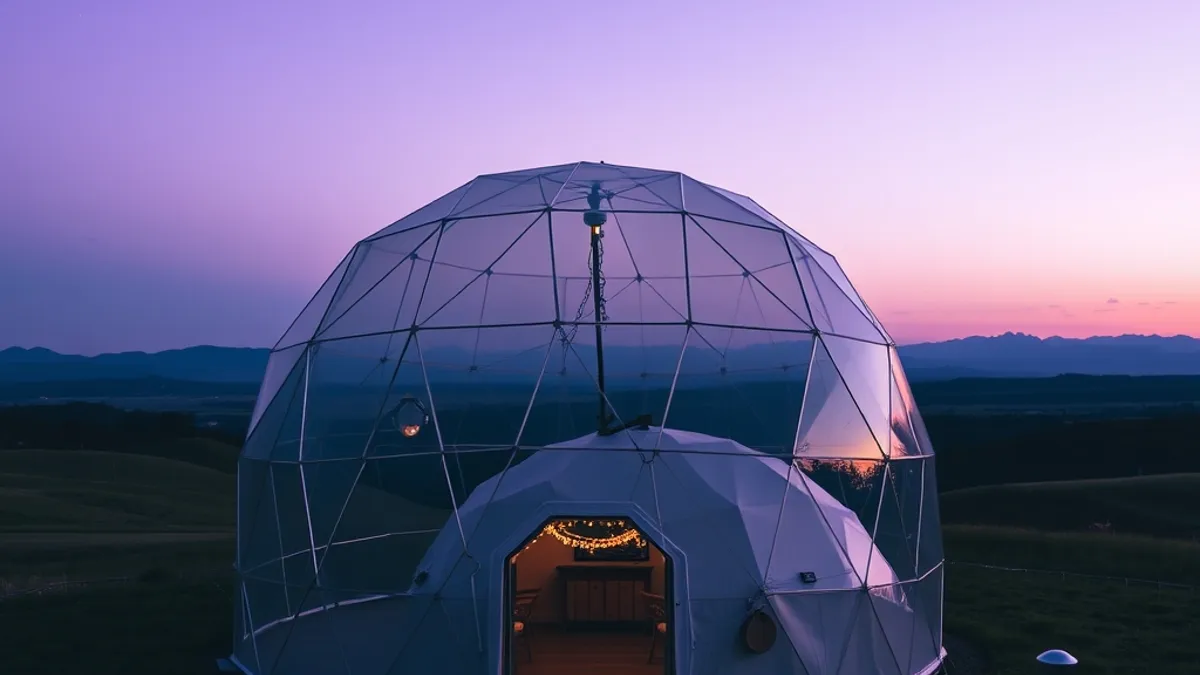
The stay type sets the tone for your weekend, so pick it based on the season and the atmosphere you’re after. Safari tents and bell tents are the classic romantic choice for warm-season trips: canvas walls, soft lighting, and a bed that feels like a proper bed rather than a camping compromise. Geodesic domes take the romance in a different direction, with transparent ceiling panels that let you stargaze from under the covers, which is hard to beat on a clear night. For cold-weather weekends, cabins and A-frames are the practical pick, since they insulate well and usually come with heating built in.
Before you commit to any of them, verify one detail that makes a real difference to comfort: whether the unit has a private bathroom or you’ll be sharing facilities with other guests. For a couples’ weekend, a private bathroom is usually worth prioritizing, and it’s not always included even in higher-priced units. Check the listing, and ask the host directly if it isn’t clear.
Other details worth checking for two
- Bed configuration: confirm it’s one proper double or queen bed, since some safari tents and cabins are set up with twin beds or a sofa bed by default.
- Heating source: ask whether the wood stove or heater is included and whether firewood is provided, or whether you’ll need to buy it on site.
- Privacy spacing: check how far apart units sit on the property, since some sites cluster tents close together while others space them out for seclusion.
- Outdoor space for two: look for a private deck, terrace, or firepit area reserved for your unit rather than a shared communal zone.
- Kitchen or no kitchen: decide whether you want to cook simple meals yourselves or prefer a unit near an on-site dining option or a village with restaurants.
Match the unit to the season and to how much privacy you want, and the rest of the weekend tends to fall into place. A well-chosen stay means you spend your two nights relaxing instead of problem-solving.
Booking Timing, Budget and What to Verify Before You Pay
Glamping sites for couples are small, and the most romantic units — the domes and safari tents with the best views — often have only one or two available at any property. That makes timing your booking almost as important as choosing the stay itself. A little preparation before you pay also saves awkward surprises about shared bathrooms, strict cancellation terms or noisy neighbors in the next tent over.
- Reserve 6-8 weeks ahead for regular weekends. This window usually gives you a real choice of units and dates rather than whatever is left over. For peak summer and holiday dates, push that out to 3-4 months, since popular sites can fill their prime units early, especially the ones with private bathrooms or standout views.
- Budget $150-400 per night for two. Simpler bell tents sit at the lower end, while luxury domes and safari tents reach the top of that range. Always ask exactly what is included — firewood, breakfast baskets, kayaks or hot tub access can change the real value of a rate considerably.
- Confirm check-in and check-out times. These typically fall around 3-4 pm for arrival and 10-11 am for departure, which shapes how much of your first evening and last morning you actually get on site.
- Read the cancellation terms carefully. Small operators often have stricter policies than hotels, and some may offer credit toward a future stay rather than a refund. Ask about weather-related cancellations too, since a stormy forecast should not cost you the whole booking.
- Check whether the site is adults-only or family-friendly. For a couples’ weekend, an adults-only property usually means quieter evenings around the firepit and a more relaxed atmosphere overall.
One short email or message before booking can answer all of these points at once. Owners of small glamping sites tend to reply quickly and happily, and their answers often reveal which unit truly suits two people looking for privacy. Ask for photos of the exact unit you would be assigned, since even within one property the difference between the best and worst spot can be significant.
Planning the Itinerary Around Slow Time Together
The biggest mistake couples make on a short escape is over-scheduling. A two-night glamping trip works best when it feels like the opposite of a normal week, so build the itinerary around slow time rather than sightseeing.
Aim to arrive by mid-afternoon. Check-in typically opens around 3-4 pm, and settling in while the light is still good lets you unpack, wander the site and catch golden hour right from your own deck or firepit — often the single best moment of the whole weekend.
One outing per day, maximum
Pick a single highlight for each day, such as a 2-3 hour hike or a long lunch in a nearby village, and leave everything else unscheduled. The mornings and evenings in between are where a glamping weekend earns its keep: slow coffee outside the tent, an unhurried soak, or simply doing nothing while the view does the work. If an outing turns out to be unappealing on the day, skip it without guilt — the stay itself is the point.
Reserve the extras early
On-site extras like private firepit dinners, hot tub slots or in-tent massages usually have limited availability and are booked on a first-come basis. Ask about them at the time of your reservation rather than after arrival, and lock in at least one treat for your second evening, when a little planned indulgence lands perfectly.
Packing Light for a Short Glamping Trip
Packing for a two-night glamping trip is refreshingly simple: one small duffel per person genuinely covers it. The unit provides the bed, linens and usually towels, so you are really packing for time outdoors and evenings by the fire. A useful filter before anything goes in the bag: skip anything you would not want to get sandy or damp, because grass, gravel and morning dew are part of the setting.
The one thing that catches couples off guard is the evening chill. Overnight temperatures can swing by around 10°C even in mild months, so layers matter more than a bulky jacket. Closed shoes are essential for walking to shared facilities or the firepit after dark, and a headlamp beats a phone flashlight every time since it keeps both hands free.
Then add the small upgrades that make it feel like a couples’ weekend rather than a camping trip:
- A bottle of wine you actually like — many sites sell some, but the choice is limited and prices run high, so bring your own favorite and ask in advance if corkage or open-fire rules apply.
- A deck of cards or a compact two-player game, because screen-free evenings move faster than you expect once the sun goes down.
- A soft blanket dedicated to the firepit, since provided throws are often kept inside for the bed and the temperature drops exactly when you want to stay outside longest.
- A small thermos for morning coffee outside the unit, so the first cup of the day happens with the view instead of waiting on a kettle.
Keep toiletries to a shared minimum and leave the hair dryer at home unless you have confirmed the unit has power for one. With one duffel each, you can go from car to tent in a single trip — a fittingly low-effort start to the weekend.
The Weekend, Wrapped Up
A two-night glamping escape under 3 hours from home really can deliver the reset of a much longer trip. The formula is simple: pick mild-season dates in May-June or September-October, choose a unit type that suits two people, and book 6-8 weeks ahead to lock in your spot without the stress.
Once you arrive, keep the itinerary light, pack everything into one small duffel each, and let the firepit do the rest. The romance comes from the slow hours, not a packed schedule. If this helped you plan your own weekend escape, leave a comment or share this article with someone you’d love to getaway with.