Most travelers book a safari lodge dreaming of magical evenings outdoors, then arrive with no real idea what a bush dinner or sundowner actually involves. Is the drinks stop part of the game drive or a separate event? Is the outdoor meal included in the rate or billed on top? Will you freeze, and how do lodges keep you safe with wildlife nearby? These small unknowns can turn an anticipated highlight into a source of confusion.
This guide walks through bush dinners and sundowners step by step. You will learn what a sundowner actually is and how it fits into the evening game drive, what a bush dinner looks like from setting to menu to timing, and how safety works during outdoor dining. We also cover what to wear and how to handle the cold, which seasons offer the most reliable evenings for outdoor dining, how to book a private bush dinner including notice and cost, and finally some tips for making the most of your lodge evenings.
What a Sundowner Actually Is at a Safari Lodge
A sundowner is the classic safari ritual of pausing for drinks as the sun goes down. In practice, it is a pre-dinner drinks stop, usually taken mid-game-drive or at a scenic viewpoint, and it is typically served between 5:30 pm and 6:30 pm, timed to the evening drive’s return. Your guide pulls over at a spot with a view, and the drinks come out.
The standard setup
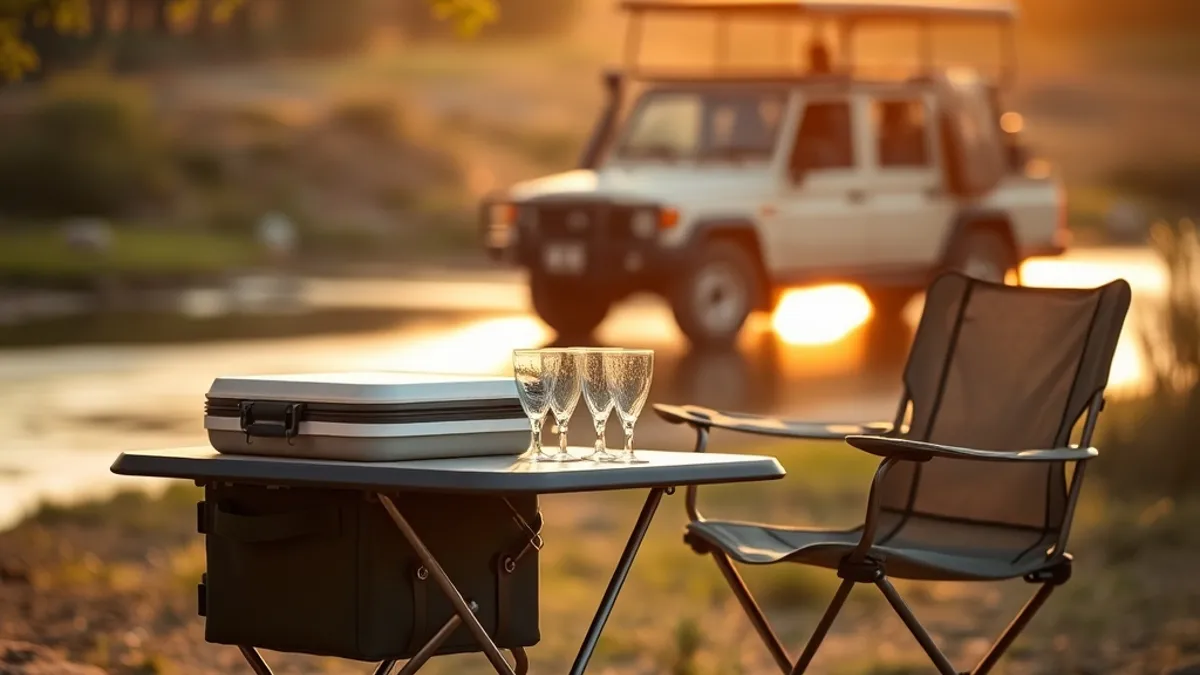
The setup is charmingly simple. Guides unfold a small drinks table, pull out a cooler box stocked with ice, and arrange camp chairs facing the sunset. Snacks appear alongside: biltong, roasted nuts, and similar nibbles that tide you over until dinner. It is not a production, but after a hot afternoon of tracking animals, that cold drink in the open air feels well earned.
One thing worth checking before you go is what your rate covers. Most all-inclusive and full-board lodges include house drinks in the nightly rate, while premium wines, champagne and craft spirits often carry an extra charge. If you care about what is in your glass, ask at booking.
Finally, set your expectations right: a sundowner is a short pause of 20 to 30 minutes rather than a long seated event. Your guide keeps an eye on the light and the drive schedule, so enjoy the view, finish your drink and head back to the lodge.
Bush Dinners Explained: Setting, Menu and Timing
A bush dinner is a step up from the drinks stop: a full multi-course meal served outdoors, either in a lantern-lit clearing or around a boma fire. Dinner usually starts around 7:00 pm to 7:30 pm, after guests have had a chance to freshen up following the evening game drive. The setting is the whole point of the event, with lanterns, firelight and the sounds of the night replacing any restaurant interior.
What’s on the menu
Menus usually lean into open-fire cooking. Expect grilled meats, barbecue-style dishes, and potjiekos, the slow-cooked South African stew that simmers in a cast-iron pot over the coals. Vegetarian options are arranged on request, so mention your dietary needs when reserving rather than at the table. Courses are served at a relaxed pace, and there is often a chef or cooking element visible near the fire that adds to the atmosphere.
Costs depend on the format. Group bush dinners for all guests are often included in the rate, especially at all-inclusive lodges, so check whether your stay covers them. Private tables for two, set up for honeymooners or special occasions, typically cost USD 75 to 250 per person extra depending on the lodge tier.
Timing is different from city dining. A bush dinner lasts roughly two hours and ends earlier than a restaurant dinner back home, because wake-up calls for the morning game drive come early. Pace yourself at dinner, not at bedtime.
How Safety Works During Outdoor Dining
Safety during outdoor dining is handled far more carefully than most guests realize, and it starts well before you sit down. Any dinner set beyond the lodge’s lit perimeter is accompanied by armed guides or scouts who stay present for the whole meal. The dining area itself is checked before guests arrive and lit with lanterns, so the space is inspected and visible rather than left to chance.
Once you are seated, the rules are simple but firm: guests stay within the marked zone for the entire evening. Your guides will brief you on behaviour around the fire, including staying seated and not wandering toward animal sounds in the dark. Curiosity is exactly the wrong instinct here, so listen to the briefing even if it sounds obvious.
- Lighting is deliberate: lanterns are placed to define the guest area and keep the surrounding ground visible, so don’t ask for lights to be moved or dimmed for photos.
- Guides carry radios: staff stay in contact with the lodge and each other throughout the meal, which is how any change in the area gets handled quickly.
- Escorts work both ways: staff walk guests to and from the dinner site, so wait for an escort rather than heading back to your tent alone after the meal.
- Fire discipline matters: keep a sensible distance from the boma fire and follow staff directions about where to stand or sit near the flames.
Children’s policies vary widely between lodges. Some welcome kids at bush dinners, while others set minimum ages of 8 to 12 years, so ask about the policy when booking if you are traveling with children.
What to Wear and How to Handle the Cold
One of the biggest surprises for first-time safari guests is how cold the evenings get. After a hot midday, temperatures on open savanna routinely drop to 10-15°C once the sun goes down, and you will feel every degree sitting still outdoors at a bush dinner. The fix is simple: pack fleece layers and a windproof jacket, and put them on before you start feeling cold rather than after.
The good news is that lodges know exactly what they are doing. At most bush dinner setups you will find fire pits crackling nearby, and staff often hand out hot water bottles and blankets as you take your seat. Accept both, even if you feel warm when you arrive. Twenty minutes into the main course, you will be glad you did.
Shoes and Colors That Work at Night
Closed shoes are essential. Open sandals are impractical on grass, uncomfortable around firelight, and no match for cool evening air on your toes. Sneakers or light hiking shoes are perfect.
Stick to neutral colors like khaki, olive and beige, which are the norm for safari evenings. Skip white, which shows dust from the game drive, and avoid dark blue, which tends to attract insects. If your safari continues to the coast afterward, some travelers pair the trip with beach and bush combinations in South Africa, but the same layering rules apply the moment the sun sets inland.
When to Go: Seasons and Weather for Outdoor Dining
Timing matters more than most travelers realize when it comes to outdoor dining on safari. A bush dinner is only as good as the evening weather allows, so it pays to plan your trip around the seasons that deliver clear, calm skies. The dry season months offer the most reliable conditions: June to October in East Africa, and May to October in Southern Africa. During these stretches, evenings are typically dry, skies are clear, and lodges can plan outdoor events with confidence.
That said, the green season has its own charm, and lodges prepare for its quirks. From November to March, short afternoon storms can roll through and force dinners indoors, so virtually every lodge keeps a covered backup venue ready. You rarely lose the meal itself; you may just eat it under a roof instead of the stars.
- Winter in Southern Africa (June to August): These months produce the crispest, clearest sundowner skies of the year, ideal for photography, but also the coldest evenings, so bring your warmest layers.
- Shoulder months (April-May and November): These often combine lower lodge rates with mostly usable evenings, making them a smart pick for travelers watching their budget.
- Green season trade-off: Landscapes are lush and green after the rains, which makes for beautiful daytime scenery even if a storm occasionally moves dinner indoors.
If outdoor dining is a priority for your trip, aim for the dry season. If value matters more, the shoulder months deliver a strong compromise.
Booking a Private Bush Dinner: Notice, Cost and Occasions
A private bush dinner is one of those safari extras that turns a great trip into an unforgettable one: just the two of you, a lantern-lit table in the bush, and the sounds of the African night around you. It takes a little planning, but the process is straightforward once you know the steps.
- Mention it early. Lodges usually need 24 to 48 hours’ notice to arrange a private setup, so raise it when you reserve your stay, or at the latest at check-in, so the kitchen and staff can prepare.
- Ask what the rate covers. Private dinners usually come with a dedicated waiter, a chef or butler, personalized menu cards and lantern or fire lighting, but the details vary between properties. Get the full scope in writing before you commit.
- Clarify the drinks. Ask whether the private rate covers premium drinks or whether those are billed separately, since premium wines and champagne often sit outside standard house drinks.
- Confirm the backup plan. Ask what happens if the weather turns. Many lodges can move the table to a covered venue, but it is better to know the policy in advance than to argue about it in the rain.
One practical tip: if you are celebrating something specific, say so. Lodges frequently go the extra mile for anniversaries and honeymoons, adding small touches like a personalized menu, a special toast or a decorated table. Mention the occasion when you book rather than on the night itself, so the team has time to prepare.
Timing matters too. Book early in your stay rather than on your last night, so a weather hiccup still leaves room to reschedule. And if your travel dates fall in the dry season, you will have the best odds of a clear, comfortable evening, though most lodges can make a private dinner work year-round with a little flexibility.
Making the Most of Your Lodge Evenings
Sundowners and bush dinners are far simpler than they sound. Sundowners are a daily ritual built into most stays, a short drinks stop with snacks while the light fades. Bush dinners range from communal fire events included in your rate to private lantern-lit tables, which usually add USD 75 to 250 per person. Most evenings follow an easy rhythm: sundowner drinks as the evening game drive winds down in the early evening, dinner around 7:00 pm to 7:30 pm, and an early night before the next morning’s drive.
A little planning goes a long way. The dry season months of June to October in East Africa and May to October in Southern Africa offer the most dependable evenings, and lodges generally ask for 24 to 48 hours’ notice to arrange a private setup. Pack layered clothing and closed shoes to handle the 10-15°C chill, and leave the safety worries behind, since armed guides handle everything beyond the lodge. With expectations set, these outdoor evenings often become the most memorable part of a safari lodge stay. Have a question or a favorite lodge evening story? Leave a comment or share this article.