Choosing between a solid-walled cabin and a canvas tent is the first real decision in any glamping trip, and it’s the one travelers most often get wrong. Both promise a taste of the outdoors with far more comfort than traditional camping, but they suit very different budgets, seasons and group sizes. If you’re torn in the cabin vs tent glamping debate, the answer usually comes down to when you’re traveling, who’s coming with you and how much you value a private bathroom at 2 a.m.
This guide breaks the decision into clear, practical parts. We start with the core differences at a glance, then compare what you actually get inside each stay type, how each handles season and weather, and what they cost with realistic booking lead times. From there, you’ll see which stay type fits which trip, how to spot a quality glamping site before you book, and a bottom-line summary to help you choose with confidence.
Cabin vs Tent Glamping: The Core Differences at a Glance
The fastest way to settle the cabin vs tent glamping question is to understand what each structure actually is. A glamping cabin is a solid, permanent building — wood, timber-frame or stone — with a lockable door, insulated walls and proper windows. A glamping tent is a large, upgraded canvas structure: think bell tents, safari-style tents with canvas and mesh panels, or geodesic domes with a canvas skin over a frame. Both give you a real bed, but almost everything else about the experience differs.
Price is the first divider. Cabins typically run $180–$450 per night in comparable locations, while tents typically run $100–$250 per night. That gap reflects what’s built into each structure — plumbing, heating and solid walls cost more to install and maintain than canvas.
- Private bathrooms: Cabins almost always include an en-suite bathroom inside the unit, while many tent sites rely on shared or nearby bathroom facilities you walk to.
- Heating: Cabins have built-in heating you control with a thermostat or dial; tents typically use a small heater, a wood stove or extra blankets, depending on the site.
- Sleeping capacity: Cabins suit 2–6 guests, often with separate bedrooms or a loft; most glamping tents sleep 2–4, usually on one large bed plus optional singles.
- Structure: Cabins have rigid walls and a fixed roof; tents use stretched canvas over poles or frames, which flexes in wind and lets in more ambient sound and light.
Group size matters here too. Because most tents top out at four sleepers, they’re naturally better for couples and small pairs of friends, while cabins stretch to fit larger families without anyone sleeping on a floor pad.
Comfort and Amenities: What You Actually Get Inside
Step inside a glamping cabin and you’ll find something close to a small vacation home. En-suite bathrooms are almost standard, along with a kitchenette — typically a sink, small fridge, microwave or two-burner cooktop and basic cookware. Climate control is the third pillar: heating for cold nights and often a fan or air conditioning for warm ones. You can cook a real meal, shower without shoes and adjust the temperature without leaving the room.
What tent glamping actually feels like
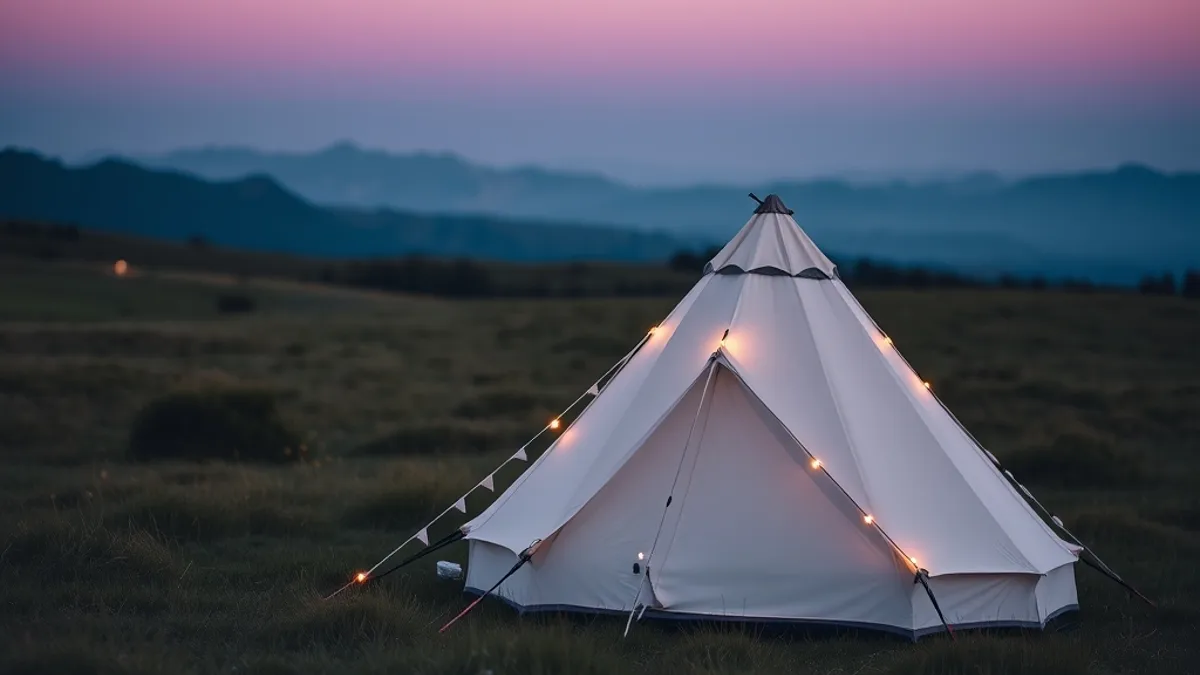
Glamping tents have come a long way from basic camping. You still get a real bed on a proper frame, often dressed with linens, plus rugs, lamps and sometimes a small seating area. What you usually give up is plumbing: in many sites, bathroom facilities are shared or a short walk away, so a midnight trip means shoes and a flashlight. Some upscale safari-style tents do include private bathrooms, so check the listing rather than assuming either way.
Sound and temperature are the other big differences. Canvas is thin — you’ll hear rain drumming overhead, wind moving the walls and owls or distant wildlife at night. Some travelers love this and consider it the whole point of sleeping under canvas. Others find it keeps them awake. Wood walls mute sound, block drafts and hold heat far better, so a cabin night is quieter and steadier, especially when the weather turns. If you’re a light sleeper or traveling with small children, that difference alone can decide the trip.
Season and Weather: When Each Stay Type Works
Season is where the two stay types separate most sharply. Canvas is a fair-weather material: in most temperate regions, tent glamping season runs roughly May through September. Inside that window, a tent is comfortable, breathable and atmospheric. Outside it, canvas gets cold and damp — overnight dew, rain and dropping temperatures make the walls clammy and the interior hard to warm. A few cold-climate sites insulate their domes or add wood stoves, but they’re the exception, not the rule.
Cabins, by contrast, operate year-round. Solid walls, insulation and built-in heating mean an autumn cabin feels much like a summer one, just with fewer bugs and lower rates. That makes cabins the default choice for winter trips, leaf-peeping weekends and shoulder-season stays in April or October, when tent sites may not even be open.
- Rain performance: A steady downpour on a tent means damp canvas, muddy paths to shared washrooms and gear drying indoors; a cabin shrugs it off entirely.
- Wind exposure: Strong gusts can rattle and strain canvas walls and keep you up at night; a rigid cabin structure doesn’t flex or flap.
- Cold mornings: In a tent, the interior temperature tracks the outside air closely, so early mornings can be chilly until the sun warms the canvas; a cabin’s heating makes mornings immediate.
The practical takeaway: a tent trip needs a wind and rain backup plan — know what the site offers if weather turns, and pack layers and rain gear. Cabin stays generally need far less weather contingency, which is one less thing to arrange before you leave.
Cost and Booking Lead Times
Price is often the deciding factor, and the gap between the two stay types is consistent across most glamping destinations. Tents sit at the lower end of the market, while cabins in comparable locations typically cost noticeably more per night. That difference buys you solid walls, a private bathroom and heating, so it is less about luxury and more about the structure itself.
Booking lead times also differ. Cabins are the scarcer option in most regions, so summer weekends fill early — many operators expect cabin bookings several months ahead for peak season. Tents are usually more plentiful and can often be reserved on shorter notice, which gives you flexibility if you are planning a last-minute escape.
- Midweek stays soften both prices. A cabin from Sunday to Thursday often drops well below its weekend rate, sometimes close to what a tent would cost in high summer.
- Multi-night deals are common at larger sites. Many operators discount the third or fourth night, which matters more on a cabin’s higher base rate.
- Festival and holiday periods break the normal rules. Around major local events, even tents can sell out months ahead, so treat the usual lead times as a floor, not a guarantee.
- Ask what the rate includes. Some tent rates cover breakfast or activities while cabin rates do not, which can shift the real cost either way.
Off-season travel changes the math. Cabin rates drop noticeably outside peak summer, often narrowing the price gap with tents to the point where the cabin becomes the better value. If your dates are flexible, comparing an autumn cabin against a midsummer tent can save money and add comfort at the same time. Check current rates directly with operators, as they vary by region and season.
Which Stay Type Fits Which Trip
Start with your group. Tents suit couples best: most glamping tents sleep two to four, so a pair gets the space and the atmosphere without compromise. Cabins suit families and small groups of three to six, where separate beds, a kitchenette and a private bathroom make the trip manageable rather than a negotiation.
Weather is the second filter. If your trip is locked into fair summer days and you want to hear rain on canvas and birds at dawn, a tent delivers that closer-to-nature feel better than any solid structure. If your dates straddle seasons — a September trip, a spring break, a winter escape — a cabin is the safer default, since it works year-round while canvas turns cold and damp outside the warmer months.
When either works
For remote, open-sky destinations where stillness is the whole point, both stay types deliver. Places like Khuvsgul’s remote hideaways are chosen for silence and horizon, not for the four walls around your bed. In those cases, pick by season: a tent for a warm, dry window, a cabin for anything cooler or less predictable.
A quick rule of thumb: if anyone in your group needs a private bathroom or reliable heating, book the cabin and stop second-guessing. If it is two adults, a warm month and a desire to feel the outdoors, the tent will not disappoint.
How to Spot a Quality Glamping Site Before You Book
The fastest way to judge a glamping site is to study the photos with a critical eye, and to do it slowly rather than scrolling past the pretty shots. Check whether they show private bathrooms or shared facilities, because this is the single biggest comfort divider between listings. A beautifully styled bell tent means little if the shower is a two-minute walk down a gravel path in the rain. Zoom in on the details too: the flooring, the storage space, the state of the deck or patio, and whether the interior looks lived-in or freshly staged for the camera.
Reviews matter more than photos, but read them for the right things. Skip the praise for sunsets and search specifically for what people say about insulation, heating and how the tent or cabin performed in rain. A listing that photographs well but leaks in a storm will tell on itself in the reviews. Pay attention to how recent those reviews are as well, since a site can change owners, management or maintenance standards between seasons.
- Ask about the bed configuration, not just capacity. A cabin that sleeps six may do so with a sofa bed and a bunk room, which changes who sleeps where.
- Look for recent photos from guests, not just the operator. Owner photos are staged at the best angle in the best season; guest photos show the site as it is.
- Check how the site handles power and lighting. Some tent setups run on limited solar, which affects charging devices and evening light.
- Read responses to negative reviews. How an owner answers a complaint about heating or leaks tells you more than the complaint itself.
Finally, confirm the exact sleeping capacity against your group size before booking, and put any special needs — a private bathroom, ground-floor access, heating — in writing with the host. A short message now prevents an uncomfortable arrival later. Save the listing’s cancellation terms at the same time, so you know your options if plans shift before you travel.
The Bottom Line for Your Next Glamping Trip
So which glamping stay actually fits your trip? If comfort, a private bathroom and space for up to six guests matter most, a cabin is the clear pick — and it works in any season, from summer weekends to mid-winter escapes. If you’re traveling as a couple, watching your budget and heading out in fair summer weather, a canvas tent delivers more atmosphere for less money.
The simplest way to decide: match the stay type to your season, your group size and your bathroom expectations first, then compare locations within that category. Get those three things right and either choice will feel right. If you’re still torn, or you’ve glamped both ways and have a favorite, tell us in the comments — and share this article with whoever you’re planning the trip with.