You booked a hotel expecting to heat leftovers or make a simple breakfast, then walked into a bare room with no microwave, no sink and nothing but a coffee maker. It happens to travelers constantly, because hotel microwaves and kitchenettes are not standard features in most room types. What you get depends heavily on the category of room you booked, not just the hotel itself.
This guide walks through which room types actually include a microwave or kitchenette, what separates a kitchenette from a full kitchen, and where different hotel categories stand on in-room appliances. You’ll also learn how to confirm a kitchenette before you book, what kind of price premium to expect, and practical workarounds when your room comes up empty. A final section helps you match the right room type to your trip, whether it’s a two-night city break or a week-long family stay. A little checking upfront saves you from the bare-room surprise at check-in.
Which room types include hotel microwaves and kitchenettes
Not all hotel rooms are created equal when it comes to cooking and reheating. The single biggest factor is the room category you book, and knowing the pattern helps you avoid paying for appliances you don’t need or missing ones you do.
Suites are the safest bet among traditional hotel rooms. Almost every suite includes at least a mini-fridge and a microwave, and many add a two-burner cooktop or hot plate for basic cooking. Extended-stay rooms go a step further: these are built for guests staying a week or more, and they typically come with a full kitchen including a stove, full-size fridge, dishwasher and cookware.
Standard rooms in midscale chains are where expectations get broken. These rooms usually have neither a microwave nor a fridge, leaving you with an ice machine down the hall as your only cold storage. If a real kitchenette matters to you, condo-style units and aparthotels are the most reliable choice, since cooking facilities are a core part of their design rather than an upgrade.
- Suites: the microwave is usually built into a wet bar or counter area near the seating space, so you get it without giving up bedroom room.
- Extended-stay rooms: the kitchen is typically separated as its own zone with a dining table, which matters if you’re cooking real meals rather than reheating.
- Standard midscale rooms: some chains let you add a fridge or microwave as a paid add-on or loyalty perk, so ask before assuming there’s no option.
- Condo-style and aparthotel units: many include extras standard hotels skip, like a toaster, dish soap and a dining area sized for actual meals.
What a kitchenette actually includes versus a full kitchen
The word “kitchenette” gets used loosely in hotel listings, so it helps to know exactly what it means before you book. A true kitchenette usually includes a mini-fridge, a microwave and a sink, sometimes with a kettle or coffee maker alongside. What it almost never includes is a stovetop or oven, which rules out anything beyond reheating and simple prep.
A full kitchen is a different animal. Expect a four-burner stove or cooktop, an oven, a full-size fridge and a dishwasher, plus pots, pans and utensils. This is the standard setup in extended-stay properties, where guests routinely cook real dinners for a week at a time.
Which one fits your trip?
Kitchenettes suit reheating and simple meals: breakfast cereal, microwaved leftovers, snacks and drinks. Full kitchens suit multi-day self-catering, where you’re grocery shopping and cooking proper meals to save money or handle dietary needs.
One more caution: cookware counts vary widely even between rooms with the same kitchen description. Some units come with a full pot and pan set, while others offer a single saucepan and two forks. Check the property’s amenities list rather than assuming a stocked kitchen, and if cooking is central to your stay, ask specifically how many pieces of cookware are provided.
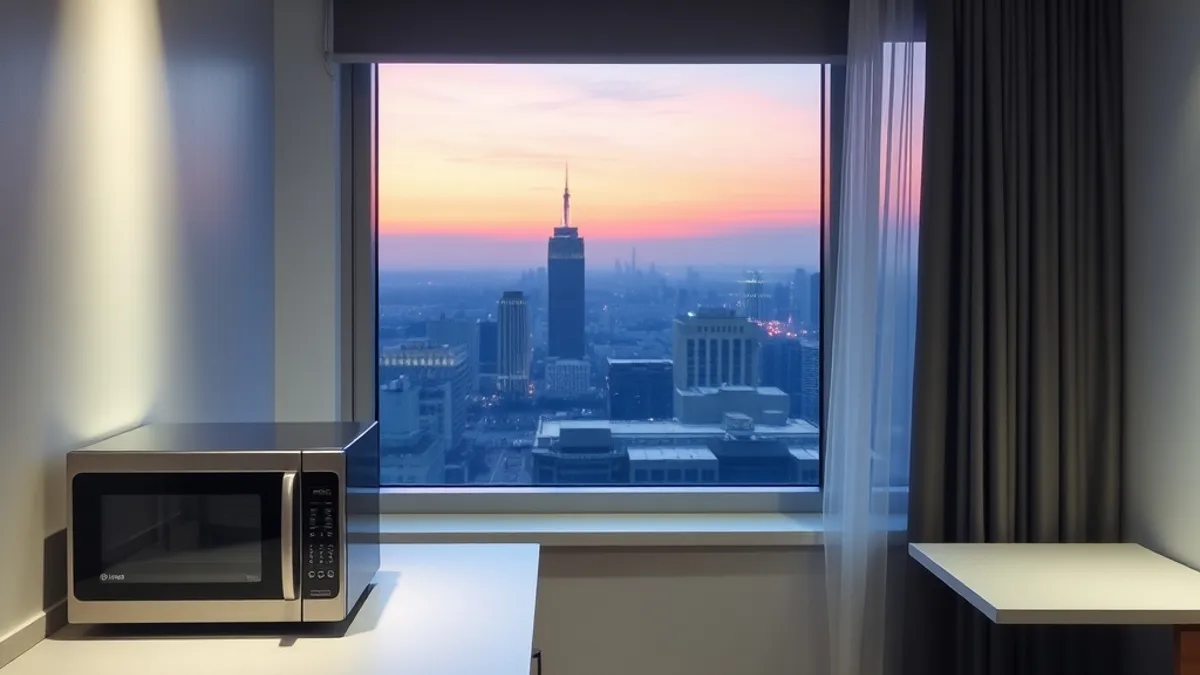
Hotel categories and where microwaves are most common
Hotel category predicts your odds of an in-room microwave better than price does, and the patterns are worth knowing before you filter search results.
Midscale and upscale chains often keep microwaves out of standard rooms entirely, treating them as a suite feature. Many offer them in the lobby or lend them on request, but you shouldn’t count on having one in the room itself. Budget and highway motels sit at the opposite end: they frequently include a microwave and mini-fridge in every room, because road-tripping guests expect them. Resorts and all-inclusive properties most often restrict in-room cooking equipment, relying on their restaurants instead, since dining is central to what you’re paying for.
Boutique and design hotels vary the most of any category. One property might have stylish kitchenettes in every unit while the sister hotel down the street offers nothing but a Nespresso machine. This is where room-level amenity checks matter more than brand reputation.
- Midscale and upscale chains: loyalty status sometimes unlocks a fridge or microwave as a room preference, so check your program benefits before paying for an upgrade.
- Budget motels: the microwave is often stacked on a shelf above the fridge or dresser, so check photos if counter space matters to you.
- Resorts and all-inclusives: some prohibit outside food and appliances outright, which is worth knowing if you’re bringing snacks for kids.
- Boutique hotels: read individual room descriptions rather than the property overview, since kitchenettes may exist only in specific unit types.
How to confirm a kitchenette before you book
Booking a room with a kitchenette is easy to get wrong if you rely on the property description alone. Many hotels list “kitchen available” when only a handful of room types actually include one, and booking filters usually work at the property level rather than the room level. That means a filter result can point you to a hotel with a single kitchen-equipped category while the standard room you selected has nothing but an ice bucket. A few extra checks before you pay can save you from that surprise.
- Filter first, then verify. Use the “kitchen” or “kitchenette” filter on booking sites to narrow your options, but don’t stop there. Open the individual room description and read it line by line, because the filter only tells you that somewhere on the property a kitchen exists, not that your room has one.
- Email the hotel directly. Send a short message 1-2 weeks before arrival asking whether your exact room type includes a microwave, fridge and cooktop. This creates a written record and gives the hotel a chance to move you if something doesn’t match.
- Ask about the microwave specifically. Some properties keep microwaves behind the front desk as loaner units rather than installing them in every room. Loaner stock is limited, so knowing in advance whether yours is in-room or shared matters if reheating meals is part of your plan.
- Screenshot the room description. Take a screenshot at the moment you book, including the room name and listed amenities. If a dispute comes up at check-in, you’ll have proof of what was promised for that specific room type.
These steps take minutes, but they make the difference between a room that fits your routine and one that forces you to eat every meal out. The whole process usually comes down to one email or one filter check, ideally done 1-2 weeks before arrival, while there is still time for the hotel to adjust your room assignment if something doesn’t line up.
It also pays to repeat the check on every booking, even at a brand you have stayed with before. Amenity lists can differ between properties under the same name and between room categories at the same address, so treat each reservation as its own verification rather than assuming last time’s setup still applies. Ten minutes of reading and one short message is a small price for a room that actually works the way you planned.
What to expect to pay for rooms with kitchenettes
Kitchen-equipped rooms rarely come free. Within the same property, a room with a kitchenette typically costs 10-30% more per night than a comparable standard room, and that premium can feel steep if you only plan to reheat leftovers once or twice.
When the premium shrinks
The math changes quickly on longer stays. Once you’re booking four or more nights, the surcharge for a kitchen usually shrinks in relative terms, and extended-stay rates often beat the nightly price of a suite with similar cooking facilities. If a kitchen matters to you, comparing a standard room against an extended-stay room for the same dates is time well spent.
Weekly and monthly rates
Extended-stay brands structure their pricing around longer bookings, and their weekly and monthly rates can drop the effective nightly cost well below what you’d pay for a standard suite elsewhere. For a two-week work trip or a slow family holiday, these rates often make the full kitchen essentially a bonus rather than an expense.
It also helps to weigh the surcharge against what you’ll save. Self-catered breakfasts, packed lunches and reheated dinners add up fast, especially for families or on trips of several nights. In many cases, the kitchen pays for itself before checkout, and anything beyond that is pure savings.
Workarounds when your room has no microwave
Booking a standard room and discovering there’s no way to heat anything is a common travel frustration, especially in midscale hotels where microwaves are usually left out of the room entirely. The good news is that a missing microwave is one of the most fixable problems in hotel travel, and you usually don’t need to change rooms to solve it.
Start at the front desk. Properties frequently hold a few loaner microwaves for guests who ask, though the inventory is small and units go to whoever requests first, so ask early in your stay rather than at dinner time. If the desk has none to spare, the lobby and breakfast area usually offer a backup option, and these appliances are typically free to use and available for most of the day.
- Request a loaner unit on day one. Front desks often keep only a handful of microwaves for lending, so an early request puts you ahead of other guests and gives staff time to arrange delivery to your room.
- Learn the breakfast-area hours. Lobby microwaves are usually accessible outside breakfast service too, but confirming the hours helps you plan reheats around when the space is open.
- Ask about a paid upgrade to a suite. If kitchen access is essential to your stay, a move up one room category often gets you a microwave and mini-fridge built in, and the desk can sometimes offer this cheaper than rebooking elsewhere.
- Look for a guest pantry or shared kitchen. Aparthotels and some boutique inns provide a communal kitchen with a microwave, stove and seating, which can work better than an in-room setup if you don’t mind sharing the space.
Whichever workaround you choose, mention your needs when you book or at check-in rather than mid-trip. Staff can usually accommodate a microwave request, but they need to know you want one.
Matching the right room type to your trip
The bare-room surprise is easy to avoid once you know the pattern. Standard rooms in most midscale hotels skip the microwave, while suites and extended-stay rooms are where kitchenettes and full kitchens actually live. A quick room-type check before booking answers the question in seconds.
Match the room to the trip. Short city breaks rarely need more than a microwave and mini-fridge in a standard or suite room. Week-long family trips justify extended-stay rooms with full kitchens and separate sleeping space. Resort holidays are best planned around on-site dining rather than in-room cooking, since these properties most often restrict cooking equipment. Checking the room type, amenities and price before booking prevents the disappointment of walking into a room with nowhere to heat your leftovers. If this helped you plan a smarter stay, leave a comment or share the article with a fellow traveler.