Choosing between a detached villa vs townhouse vs apartment is where most resort bookings go wrong. You see “private pool” in the listing and assume seclusion, then arrive to find your plunge pool sits three meters from a neighbor’s terrace. The privacy you’re paying for depends entirely on how the building is constructed, and the differences are bigger than most travelers realize.
This guide breaks down what each stay type actually means at resorts, how much privacy the walls and gardens really deliver, and what you pay for it in nightly rates and value per guest. We’ll also look at how season and booking timing shift the price gap, which stay type fits your group size, and the destinations where each one shines. By the end, you’ll know exactly which option matches your budget and your need to be left alone.
What a Detached Villa, Townhouse and Apartment Actually Mean at Resorts
The three stay types sound similar in marketing copy but describe very different buildings. Knowing the physical differences helps you read a listing correctly before you book.
The standalone option
A detached villa is a standalone building with no neighbors attached on any side. It comes with its own pool, its own garden and its own entrance, so you never pass through shared space to reach your door. These properties typically offer 150-400 m² of space, which usually means multiple bedrooms, a full living area and often a kitchen, all under one roof that belongs to you alone for the duration of your stay.
Sharing walls, keeping floors
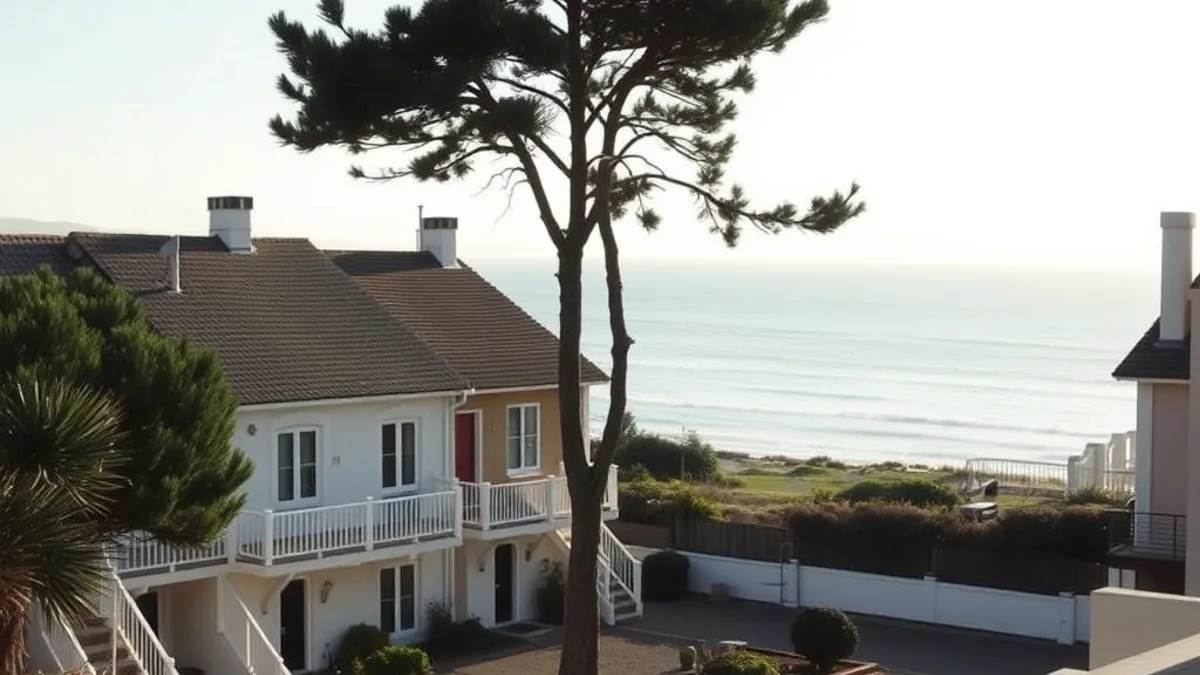
A townhouse shares one or two walls with neighboring units but stacks its living space over two or three floors. That vertical layout typically gives you 90-180 m², so you get separate bedrooms upstairs and a shared living area downstairs, similar to renting a small house. The trade-off is acoustic and visual proximity: the wall you share carries sound, and side windows often face the neighbor’s property rather than open space.
An apartment is a unit inside a larger building, usually 45-110 m². It sits closest to the resort’s shared facilities, meaning pools, lobbies, restaurants and elevators are steps from your door. You trade private outdoor space for convenience and access, which is exactly what many travelers want. Check the unit’s floor plan before booking, because a “two-bedroom apartment” at the small end of that range will feel tight with four adults and luggage.
Privacy Compared: Walls, Gardens and Who Can See You
Privacy is where these three stay types diverge most sharply, and it’s the reason the price gap exists. A detached villa delivers full visual privacy: no shared walls, a pool that only your group can use, and a fenced or walled garden that shields you from sightlines. You can swim at midnight, eat breakfast in your robe and let kids run around without worrying about neighbors. For the purest version of this, look at overwater and beach-pool settings where the property is deliberately isolated, as described in this look at Maldives views floating between water, sky, and privacy.
Townhouses sit in the middle. You gain multi-floor space but accept shared walls, and many townhouse developments cluster units around a shared plunge pool or courtyard rather than giving each unit its own. That shared space is pleasant but means you’ll regularly cross paths with the people next door.
Apartments offer the least privacy of the three. Adjoining units share walls, floors and ceilings, corridors bring foot traffic past your door, and the pool deck is often seconds away, which cuts both ways: easy access for you, easy access for everyone else.
- Balcony sightlines: apartment balconies frequently face other balconies directly, so closing curtains becomes routine in a way it never is at a villa.
- Sound transfer: a shared townhouse wall transmits voices and music more than most listings admit; ask for an end unit to cut one neighbor out entirely.
- Staff access: villa gardens and pools are serviced while you’re out or at your request, whereas apartment corridors and shared pools are cleaned on the resort’s schedule, with housekeeping carts passing your door.
- Gate control: a villa’s fenced entrance means only your group and pre-arranged staff come in; apartment building entrances are shared with every other guest and visitor.
Cost Breakdown: Nightly Rates, Space and Value per Guest
The price differences between these stay types are significant, and the way to judge them is cost per guest, not the nightly rate alone.
The villa premium
Detached villas typically run 40-80% more per night than comparable apartments in the same resort. That sounds steep until you divide it across a full group. For parties of 6-10, a single villa with several bedrooms often works out cheaper per person than booking two or three separate apartments, and you get the private pool and living room included. The premium also buys space: 150-400 m² means everyone gets a bedroom instead of sharing a sofa bed.
Where the other two land
Townhouses sit mid-range in price and offer the best value for groups of 4-6. Sharing two or three floors means couples or friends each get a real bedroom while splitting one rate instead of two, which usually beats booking two apartments at a lower combined total.
Apartments are the cheapest option for 1-3 guests, and for couples or solo travelers nothing else comes close on price. The math flips quickly for larger groups, though. Once you book multiple units to fit everyone, you pay several rates, lose the shared living space, and often end up paying more in total than a single townhouse or villa would have cost. If your group is five or more, price out both configurations before committing; the apartment route rarely wins once the second unit enters the booking.
How Season and Booking Timing Change the Price Gap
Timing changes the price gap between stay types more than most travelers expect. The same villa can carry two very different price tags depending on when you arrive, and the booking window you use matters almost as much as the dates themselves. A villa that looks expensive in February can look like a reasonable step up in May, when demand softens and resorts start offering incentives. Here is how to work the calendar to your advantage.
- Know that peak season widens the gap. During the busiest months, villa rates often climb 50-100% above low-season prices, while apartment rates tend to move less dramatically. The result is that the premium you pay for privacy grows exactly when everyone wants it most. If your budget is fixed, this is the moment to reconsider whether a townhouse covers your needs.
- Book detached villas 4-6 months ahead for high season. The best standalone villas with private pools have limited inventory, and they sell out early for school holidays and festive periods. Waiting usually means paying more or settling for a smaller property.
- Let apartments wait until 1-2 months out. Larger buildings have far more units, so availability stays reasonable closer to arrival. If your group is small and flexible, last-minute apartment deals are often easy to find.
- Use shoulder season to upgrade cheaply. Outside peak months, the difference between a townhouse and a detached villa narrows the most. This is when a villa upgrade becomes genuinely affordable rather than a stretch.
Check current rates for your exact dates before committing, since seasonal pricing varies by destination and resort, and special events can push demand up outside the normal peak calendar. As a rule, plan early for villas in high season and stay loose on apartments. Shoulder season is where smart travelers quietly get the most space for their money, and the savings on one villa week can sometimes cover an extra night or two elsewhere in the trip.
Matching Each Stay Type to Your Group and Travel Style
The right stay type depends less on the property itself and more on who is traveling with you. A villa that feels perfect for eight friends can feel empty and overpriced for a couple, while an apartment that suits two people can quickly frustrate a family of six. Match the layout to your group before you fall in love with photos.
Start by counting heads honestly, including children who need beds of their own. Then think about how your group actually spends time: some travelers want everyone in one shared living room all evening, while others are happy doing their own thing in separate rooms. Both patterns point to different choices.
- Detached villa: best for families or friend groups of 6-10 who want private pool time and shared living space. With 150-400 m² of room, kids can nap upstairs while adults gather downstairs, and the fenced garden lets younger children play without you hovering.
- Townhouse: ideal for 4-6 travelers who want more room than an apartment without villa pricing. Two or three floors mean teenagers or grandparents get real separation, and you still share walls rather than paying for full seclusion.
- Apartment: the pick for couples or solo trips where location and resort facilities matter more than seclusion. Being steps from the shared pool, gym and lobby means you use the resort instead of staying in, and housekeeping logistics stay simple.
If your group sits between categories, lean toward the larger option during peak season and the smaller one in shoulder months. Group dynamics rarely change, but prices do. A townhouse booked for six in low season often delivers villa-like comfort at mid-range cost, which is a trade many groups are glad they made.
Where These Stay Types Shine: Destinations for Each
Where you travel shapes which stay type makes sense, sometimes more than your budget does. The same detached villa that feels like a sanctuary in a quiet valley can feel cut off in a marina town, and an apartment that seems ordinary at home becomes a luxury when it opens onto a skyline. Each stay type has destinations where it clearly performs best.
Green, secluded settings favor villas
Detached villas excel in lush, private surroundings where seclusion is the whole point of the trip. Rice-field valleys and hillside retreats are classic examples: the property sits within its own garden, the pool deck faces nothing but greenery, and the nearest neighbor is out of sight. In places like these, the extra cost buys something an apartment simply cannot replicate, namely silence and your own stretch of landscape. If that idea appeals, it is worth reading about Ubud enclaves surrounded by rice fields and quiet tropical serenity, where villa living and valley views go hand in hand.
Coastal enclaves and urban cores favor the rest
Townhouses work well in walkable coastal and waterfront enclaves, where shared courtyards and plunge pools create a neighborhood feel without full resort machinery. You step out of your front door onto a lane with cafés and a beach path, and the shared walls matter far less because you spend your days outside. Apartments, meanwhile, suit urban and marina settings where skyline views and central location outweigh private outdoor space. In a high-rise above a harbor, the view from your window replaces the garden, and being minutes from restaurants, shops and the water becomes the real luxury. Match the setting to the stay type first, then compare prices, and the decision usually makes itself.
The Bottom Line on Privacy and Costs
So which stay type actually delivers the privacy you’re paying for? A detached villa is the clear winner if seclusion is the goal: no shared walls, your own pool and garden, and space for groups of 6-10. That privacy comes at a price, though, typically 40-80% more per night than an apartment in the same resort, with peak-season rates often climbing 50-100% above low-season. Townhouses split the difference, sharing a wall or two but giving groups of 4-6 real multi-floor space at mid-range prices.
Apartments remain the budget pick for 1-3 guests, trading seclusion for location and easy access to shared pools and lobbies. Match the stay type to your group size, your season and how much solitude you actually need, and the choice becomes simple. If this helped you decide, leave a comment or share the article with your travel crew.