Glamping in Sicily sounds simple until you start planning it. Do you wake up to waves on a coastal site near Taormina, or to vineyards on the slopes of Etna? And when do you go, given that Sicilian summers push temperatures toward 30-35°C and beaches fill fast? Many travelers stall right here, torn between two very different versions of the same island.
This guide sorts it out for you. We’ll look at why Sicily works differently from mainland Italy for tent-based stays, then walk through the seasons: the mild shoulder months of April-May and September-October, and the hot coastal summer. You’ll also find advice on countryside and Etna-side sites, how to choose between safari tents, domes and lodge setups, and how to build an itinerary that pairs coast and countryside without spending your trip behind the wheel.
Why Glamping in Sicily Works Differently from Mainland Italy
Sicily is large by Mediterranean island standards, but not so large that you can’t see a good chunk of it in one trip. That changes how you plan a glamping holiday here. Instead of committing to a single base for a week, you can realistically split your stay between a coastal site and a countryside or Etna-side site, moving between them in a few hours by car. On the mainland, that kind of pairing often means long highway stretches; in Sicily, it’s an easy mid-trip transfer.
The bigger planning constraint isn’t rain, it’s heat. Sitting at Africa’s latitude more than mainland Italy’s, Sicily runs hot from June through August, with coastal temperatures often reaching 30-35°C. Rain rarely disrupts a tent stay, but an unshaded tent in August can genuinely test your comfort. Timing and site selection matter more here than packing for wet weather.
A smaller, more concentrated market
Compared with Tuscany or Puglia, Sicily’s glamping stock is modest. The upside is that the choice is easy to map: quality sites cluster in a handful of coastal zones and on the Etna side of the island. Rather than scrolling through dozens of near-identical listings, you’ll be weighing a few strong options in each area, which makes booking decisions faster and itinerary planning more straightforward.
Spring and Autumn: the Shoulder-Season Sweet Spot
If you have flexibility on dates, aim for the shoulder seasons. April and May bring wildflowers across the hillsides, almond and citrus blossom in the groves, and daytime temperatures of 20-27°C. That’s the sweet spot for countryside tents: warm enough to sit outside with wine in the evening, cool enough to sleep well without air conditioning.
September and October work differently but just as well. The sea holds its summer warmth, so swimming stays firmly on the agenda, while the beaches and the glamping sites themselves empty out after the August rush. You get the coastal experience with a fraction of the crowds, and the light in October is a photographer’s dream.
What you’ll pay and when to book
Shoulder-season rates often drop toward the €90-150 per night range, a welcome contrast to peak pricing at the same sites. That saving can fund an extra night or a nicer setup, like a dome instead of a basic bell tent.
Don’t assume low season means you can book last minute, though. Popular coastal sites still fill quickly on pleasant weekends, especially in May. For shoulder-season dates at well-known coastal spots, booking 2-3 months ahead is usually enough to secure the tent style and dates you want. Countryside sites tend to have more availability, but the same rule keeps your options open.
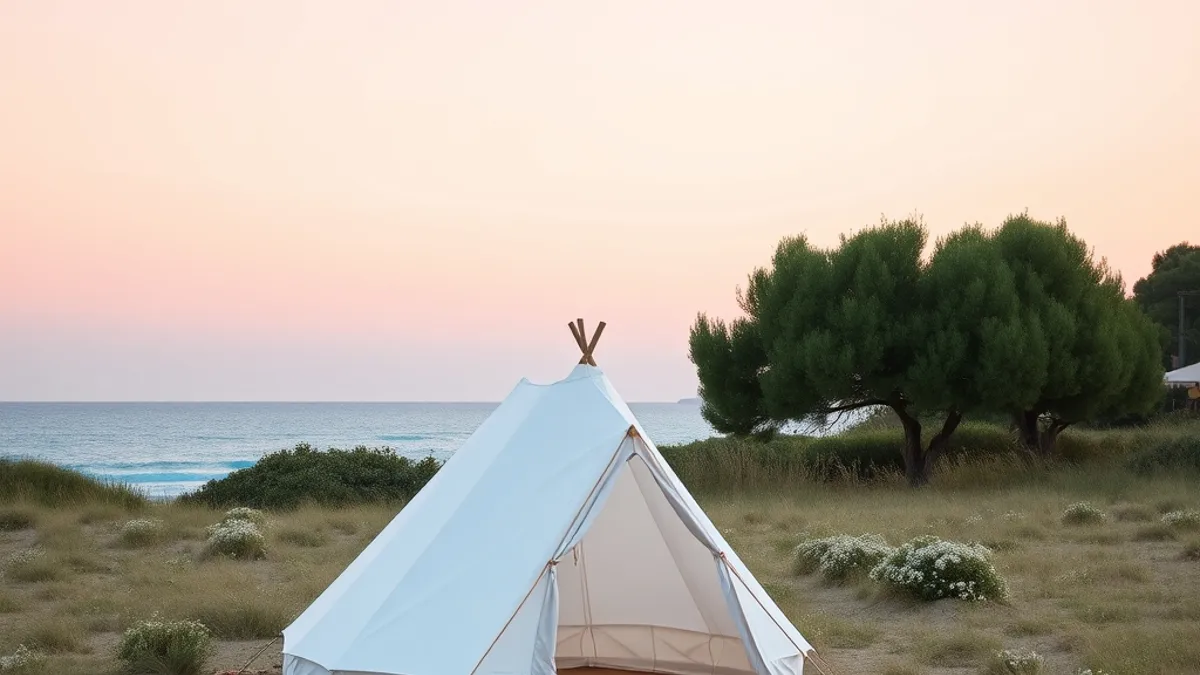
Summer on the Coast: Managing Heat and Crowds
Summer glamping in Sicily is entirely doable, but it rewards planning. June and early July offer the best balance of the season: long hot days, warm sea, and none of the August intensity. By late July and through August, coastal temperatures often sit at 30-35°C, and the beaches are at their fullest. If your trip falls in that window, your choice of site matters more than your choice of dates.
The first rule is simple: stay near the water. Sea breezes take the edge off even the hottest afternoons, and a pool gives you a midday escape when the tent turns into an oven. Inland tents in August can be genuinely uncomfortable, so save the countryside for a different season. If warm-water beach destinations appeal to you, it’s also worth browsing Nessebar shoreline hideaways for Black Sea warmth and spacious ease when planning a second warm-coast trip.
Booking and location strategy
Reserve coastal glamping 4-6 months ahead for late July and August stays. The best-shaded tents with sea views go first, and by spring you may be left with the least comfortable plots.
- East coast hubs fill first. Sites near Taormina and Siracusa are the island’s most in-demand, thanks to their mix of beaches and sightseeing, so treat them as your earliest bookings.
- The west coast has one busy month. Around San Vito Lo Capo, crowds concentrate in August; in June or early July you’ll often find more space and a calmer pace than on the east coast.
- Ask about shade before you book. A pergola, mature trees or a covered terrace can make a 30°C-plus afternoon pleasant, while an exposed tent plot can end your sightseeing days by noon.
Countryside and Etna Slopes: Cooler Nights and Vineyard Settings
When August pushes coastal temperatures toward 30-35°C, Etna’s slopes offer a genuinely different climate. The altitude keeps nights noticeably cooler than the shore, which matters more than you might think when you are sleeping in a tent. If your trip falls in high summer, a countryside site on the volcano’s side is often the most comfortable place to sleep, not a consolation prize for missing the beach.
The setting is the other big draw. Around Etna and in the Noto countryside, glamping sites sit among vineyards, olive groves and citrus orchards. Mornings tend to revolve around slow breakfasts on the terrace, afternoons around winery visits and long lunches. If your idea of a holiday leans toward wine-tasting and unhurried days rather than beach clubs, this side of the island fits. It is a similar rhythm to what you find in Provence hideaways built around lavender air and slow countryside mornings, just with Etna smoking quietly on the horizon.
Timing matters more in the countryside
Rural sites run on a shorter season than coastal ones. Many reduce service or close entirely from November to March, so plan countryside stays between April and October. Check opening dates directly with the site before booking anything else around them.
Day trips are easy enough. Expect roughly 1-1.5 hours’ driving from Etna-side sites to Taormina or Catania, which makes a beach morning or a city afternoon entirely doable from a vineyard tent.
Choosing Your Stay Type: Tents, Domes and Lodge Setups
Sicily’s glamping stock is smaller than in Tuscany or Puglia, so understanding what you are actually booking matters more here than on the mainland. With fewer sites competing for the same dates, there is less room to switch if a tent turns out not to suit you, and the difference between two listings at the same price point can be significant. The main formats are safari-style tents, geodesic domes and lodge-style rooms, and they cater to quite different trips and budgets.
Safari-style tents are the family workhorse. They usually offer real bedrooms under canvas, en-suite bathrooms and enough space for a week-long stay without anyone going stir-crazy. Domes and lodge rooms lean design-forward: curved glass, curated interiors, and plots that often sit on higher-priced coastal land with the view to match. They photograph beautifully, but read the fine print before assuming they come with the same practical comforts as a larger canvas setup.
Before you book, check the specification carefully, because these vary widely between sites:
- Kitchen or kitchenette: some safari tents include a full cooking setup, while domes may offer nothing more than a kettle; self-catering from a vineyard site is very different from eating out every night.
- Air conditioning: far from standard in tents; on the coast in July or August it can be the difference between sleeping and not.
- Private terrace or deck: often included on serviced domes, sometimes an afterthought on basic setups; it is where you will spend your evenings.
- Housekeeping and on-site dining: some sites run daily service and a small restaurant, others leave you fully self-sufficient.
Nightly rates of €90-250 reflect this spread. Basic bell tents sit at the low end, serviced domes at the top, with season and view doing the rest of the work on price. Ask the site directly about anything not listed, and check recent guest reviews for honest comments on heat, noise and shade.
Building the Itinerary: Pairing Coast and Countryside
The good news about Sicily is that you rarely have to choose between beach and countryside. The island is compact enough that a classic 7-10 day trip splits naturally into 4-5 nights coastal plus 3-4 nights on the Etna or Noto side. You get swimming mornings, vineyard afternoons and only one change of base in the middle.
Pick one coast, not two
Resist the temptation to combine coasts. The west coast around San Vito Lo Capo and Marsala sits about 2.5-3 hours’ drive from Taormina, so pairing west and east means losing a full day to transfers and doubling your packing. Choose one coast, then add the countryside on top.
Which coast depends on your dates. The east coast hubs near Taormina and Siracusa fill fastest and suit first-timers who want baroque towns and famous beaches close by. The west is calmer outside August and works well for a slower, more food-driven trip.
Practicalities on the ground
Rent a car. Most countryside glamping sites are not walkable to towns or transport, and even coastal sites often sit a drive from restaurants and supermarkets. A car also unlocks the day trips that make the itinerary work: Etna hikes from your countryside base, baroque towns in the southeast such as Noto and Ragusa, and beach mornings on your chosen coast before the afternoon heat sets in.
Wrapping Up Your Sicily Glamping Plan
Choosing between coast and countryside comes down to timing and travel style. The shoulder seasons of April-May and September-October give you the best mix of pleasant weather, lower prices and open calendars, so start there if your dates are flexible. If summer is the only window you have, book a coastal site 4-6 months ahead for late July and August, or head for the Etna slopes and Noto countryside, where cooler nights make tent stays far more comfortable in the hottest months.
Once you have picked your season, decide what kind of trip you want: a safari tent by the sea, a design-led dome, or a vineyard setting for slow days and wine tasting. Pick one coast rather than trying to cover both, then split your nights between that stretch of shoreline and the countryside. That combination gives you beach mornings, cooler evenings and a genuine feel for the island. If this helped you plan, leave a comment or share the article.