You’ve found a charming countryside listing for a glamping stay, but the photos show a rounded canvas structure that doesn’t quite look like a tent — and the description calls it a lotus belle tent. If you’re wondering how it differs from the classic bell tent you’ve seen at festivals, or from a full safari lodge, you’re not alone. Many travelers book these stays without knowing what makes the design special.
This guide explains exactly what a Lotus Belle tent is, how its shape and window wall set it apart from a bell tent, and which sizes and models you’ll encounter. We’ll also walk through what a typical stay includes, the best seasons for canvas camping, what you can expect to pay, how to book smart, and whether this style of glamping suits your next trip.
What Is a Lotus Belle Tent and How Does It Differ From a Bell Tent?
A Lotus Belle tent is a hybrid canvas design that takes the rounded footprint of a traditional bell tent and stretches it upward and outward. Instead of the single central pole and sloping cone of a classic bell tent, the Lotus Belle uses a wider, flatter roof supported by tall side walls. The result is near-standing headroom across much of the interior, so you can walk around and stand up straight rather than crouching near the edges.
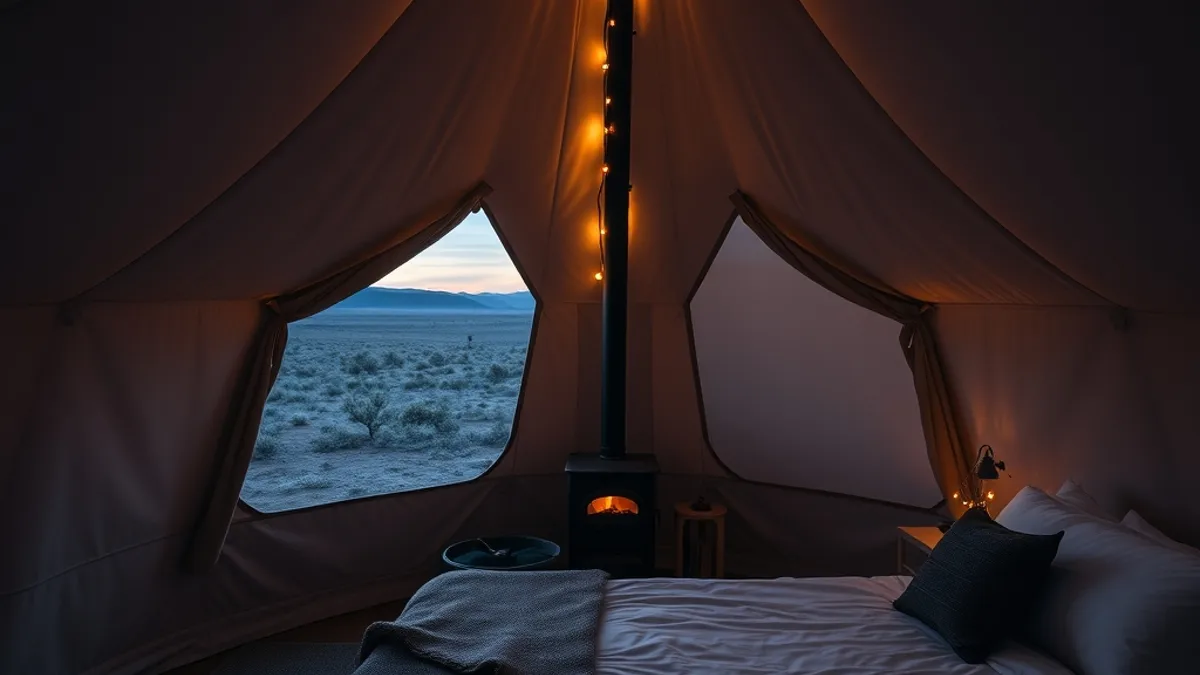
Two signature features give the Lotus Belle its distinctive look. The first is a large panoramic window wall at the front, which floods the interior with light and gives you a view of the landscape from your bed. The second is the option of 360-degree clear roof panels, which turn the ceiling into a stargazing window on clear nights.
How it compares to a bell tent
Set a Lotus Belle next to a classic bell tent of the same footprint and the difference becomes obvious. The tall, vertical side walls create far more usable floor space, since furniture can sit right up to the edges instead of fighting the sloping canvas. The window wall and roof panels also mean better ventilation and airflow, which keeps the interior fresher in warm weather than a mostly enclosed bell tent.
Sizes and Models: Choosing the Right Lotus Belle Tent
Lotus Belle tents come in a handful of sizes, with common diameters running from about 3 m to 5 m across. The smaller end suits couples who want a cozy, intimate space, while the larger diameters are designed for families or luxury setups where the tent doubles as a hotel room. Before booking, it helps to know which model a site uses, because the interior experience differs quite a bit between a compact 3 m tent and a full 5 m one.
The 5 m Stargazer, with its clear roof panels, is the most requested model at glamping sites — and for good reason. Lying in a real bed and watching the night sky through the roof is the experience most people picture when they book a canvas stay.
What fits inside the larger models
- Queen or king bed: the biggest diameters accommodate a full-size bed with a proper headboard, not just a mattress on the ground.
- Side tables and luggage: there’s room for nightstands, a luggage rack and even a small seating area without the space feeling cramped.
- Furniture zones: in the 5 m models, hosts often divide the interior into a sleeping area and a reading or dressing corner, something impossible in a smaller tent.
If you’re traveling as a couple, a 3 m tent keeps things snug and often costs less. Families or anyone planning a longer stay should aim for the 4-5 m range, where the extra floor space makes rainy days far more comfortable.
What a Lotus Belle Glamping Stay Includes
The biggest difference between glamping and camping is that someone else has done the hard part before you arrive. At a Lotus Belle site, the tent is fully pitched and stocked, so there are no poles to figure out, no guy lines to tension and no air mattress to inflate. You simply check in, drop your bags and start relaxing.
Inside, hosts typically provide a real bed with proper linens, rugs on the ground, and lighting — often lanterns or soft lamps that suit the canvas setting. Many sites also include a wood stove or heater, which keeps the tent usable on cool evenings and extends the season well beyond summer.
Bathrooms and outdoor extras
Most stays include access to a bathroom a short walk away, either shared with other guests or private to your tent. The standard varies widely: some sites offer simple, clean washroom blocks, while more upscale properties add private bathrooms, outdoor baths or showers under the stars. A growing number of hosts also add private decks, fire pits or outdoor seating where you can enjoy morning coffee with a view.
In short, you need no camping skills and no gear of your own. Pack as you would for a hotel stay, maybe adding warm layers for evenings, and let the host handle everything else.
Best Seasons and Weather for Canvas Tent Stays
Timing matters more for a canvas tent stay than for a regular hotel room, because the whole experience depends on the weather. In most European and North American glamping destinations, peak season runs from May to September. That stretch offers the longest stretches of warm, dry weather and the best odds of actually using that panoramic window wall and outdoor deck you booked the tent for.
Canvas is a forgiving material, but it has limits. A Lotus Belle tent performs comfortably in temperatures of roughly 5°C to 30°C. Below that range, nights get genuinely chilly; above it, canvas can feel warm by mid-afternoon. This is where the wood stove comes in. Sites that provide one make May, June and September nights surprisingly cozy — you get crisp evenings outside and a warm bed inside, which is exactly the shoulder-season combination glamping does best.
When to think twice
Heavy-rain months are the weak spot for any canvas stay. A well-pitched tent handles a shower fine, but days of steady rain turn grounds muddy and the canvas damp. Unless a site specifically advertises winterized, stove-equipped tents, it’s safer to skip the wettest months and stick to the drier part of the season. Before booking, ask the host how the tent handles rain and whether there’s a covered area for cooking or sitting outside.
How Much Does a Lotus Belle Glamping Stay Cost?
Lotus Belle glamping sits in a middle ground between camping and boutique hotels, and the pricing reflects that. Nightly rates typically range from $120 to $350, depending on location, season and what the host includes. A basic tent in a rural site with shared facilities will land near the lower end, while a tent on a scenic property with added amenities can reach the top of that range.
What pushes the price up
Two features reliably move a listing toward the upper end: the Stargazer model with its clear roof panels, and sites offering private bathrooms rather than shared facilities a short walk away. A private deck, outdoor bath or wood stove can also raise the rate. None of these are small details — they change the experience enough that hosts price them accordingly, so decide which ones actually matter to you before comparing listings.
Timing is your biggest lever for savings. Midweek stays often cost 20-30% less than peak weekends at the same site, and you’ll usually get a quieter property too. If your schedule allows a Sunday-to-Wednesday trip in high season, you can often book a better tent for the same budget that a weekend would cost. Always check what the rate covers — firewood, linens and heating are included at some sites and charged extra at others.
How to Book a Lotus Belle Tent Stay
Booking a Lotus Belle stay is simple, but the good sites fill up fast and setups vary more than you’d expect. A little preparation makes the difference between a smooth, cozy stay and a cold surprise on your first night. The steps below cover the essentials: when to reserve, how to find better availability, and what to confirm with your host before you pay. Follow them and you’ll arrive to a warm, stocked tent instead of a list of questions.
- Book peak-season weekends 3-6 months ahead. Summer Friday and Saturday nights at popular glamping sites are the first dates to sell out, and Stargazer models with the clear roof are especially sought after. If you have a fixed weekend in June, July or August, reserve early rather than hoping for a late cancellation. Popular regions near national parks or coastlines sell out fastest, so treat your booking like a flight.
- Consider midweek dates for flexibility and savings. Midweek stays are often bookable just 2-4 weeks out, so they suit spontaneous trips. They also tend to come with better rates than the same tent on a weekend, which matters if you’re choosing between two models or an upgrade.
- Confirm exactly what’s included before paying. Heating, bedding and bathroom type vary widely between hosts. Some sites stock the tent with a wood stove, firewood and fresh linens; others offer a made-up bed but shared bathrooms a short walk away. Read the listing carefully and message the host with any questions about what you’ll find on arrival, especially if you’re traveling in cooler months.
Once your dates are confirmed, ask the host about arrival logistics — parking, walking distance to the tent and how late check-in is possible. Some sites are a ten-minute walk from the lot on uneven ground, so pack a small bag rather than dragging a suitcase. Most hosts pitch and stock the tent before you arrive, so there’s nothing to set up, but knowing these practical details in advance makes the first evening much more relaxed. Finally, save the host’s contact details offline in case cell coverage is patchy at the site.
Is a Lotus Belle Tent Right for Your Next Trip?
So, what is a Lotus Belle tent? It’s a canvas structure that borrows the round shape of a bell tent but adds taller side walls, a wider flatter roof, a panoramic window wall and optional 360-degree clear roof panels for stargazing. The result is far more usable floor space and near-standing headroom — closer to a small hotel room than a camping tent, but with all the canvas romance.
It suits travelers who want nature immersion without owning or hauling any gear, since hosts pitch and stock the tent before arrival. The sweet spot is the May to September peak season, when canvas stays comfortable and nights are mild. Budget roughly $120 to $350 per night, and book early — 3-6 months ahead — if you want a Stargazer on a peak weekend. If this helped you decode those glamping listings, leave a comment or share the article with a friend planning a trip.