Glamping in Wales sounds simple until you actually start planning it. You find a beautiful dome on the Pembrokeshire cliffs, then a cozy cabin in Snowdonia, and suddenly you’re stuck: which one suits the week you can actually get away? The honest answer is that the coast and the mountains shine at different times of year, and choosing wrong can mean wet canvas, closed sites or crowds at every viewpoint.
This guide breaks the decision down by setting and by season. We’ll compare coastal sites near the Pembrokeshire Coast Path with mountain bases in Snowdonia and the Brecon Beacons, then walk through what each stretch of the year realistically offers, from April bluebells to October wood stoves. You’ll also find practical advice on when to book, what a night typically costs, and what to pack so Welsh weather doesn’t catch you out. By the end, you should be able to match your travel dates to the right site type with confidence.
Coastal Glamping in Wales: Where the Path Meets the Sea
For most walkers, the draw of coastal glamping in Wales is the Pembrokeshire Coast Path, which runs 186 miles along the country’s southwest edge. Basing yourself near St Davids or Solva puts you within easy reach of some of its most dramatic stretches, where the path runs right along the cliff top with sea views for most of the day. From a well-placed site, you can step out in the morning, walk a section, and be back for a hot shower and dinner without touching the car.
The key is site placement. A dome or yurt within a 10-15 minute walk of a cliff-top path section is worth far more than a roadside campsite with a sea view from the car park. Check the actual walking distance to the path on the operator’s map, not just the straight-line distance, and look for sites where you can reach the coast without driving at all.
The quieter alternative: the Llyn Peninsula
If Pembrokeshire feels too busy for your dates, the Llyn Peninsula offers similar sea access with noticeably fewer people. Sites around Abersoch and Nefyn give you the same clifftop walking and beach time, but the villages are smaller and the pace slower. It’s a good pick if you want coastal glamping in Wales without the summer crowds that gather further south.
Mountain Sites in Snowdonia and the Brecon Beacons
Mountain glamping trades sea views for early trailheads. If Snowdon (Yr Wyddfa) is the goal, choose a site in the Llanberis or Beddgelert area. Both put you close enough to start walking at dawn, which matters on the highest peak in Wales at 1,085 m: an early start means calmer weather windows, quieter paths and time to descend before the afternoon clouds roll in. Rolling out of a cabin at 6 am and being on the trail by 6:30 is exactly the advantage these locations give you.
Gentler walking in the Brecon Beacons
Not every mountain trip needs to involve a summit push. Sites near Crickhowell in the Brecon Beacons suit gentler ridge walks, where you can amble along open hillsides and still earn big views. The area is also a dark-sky reserve, so on a clear night you can stargaze straight from your deck with no need to drive anywhere. For many couples, that combination of easy walking and night skies is the whole appeal.
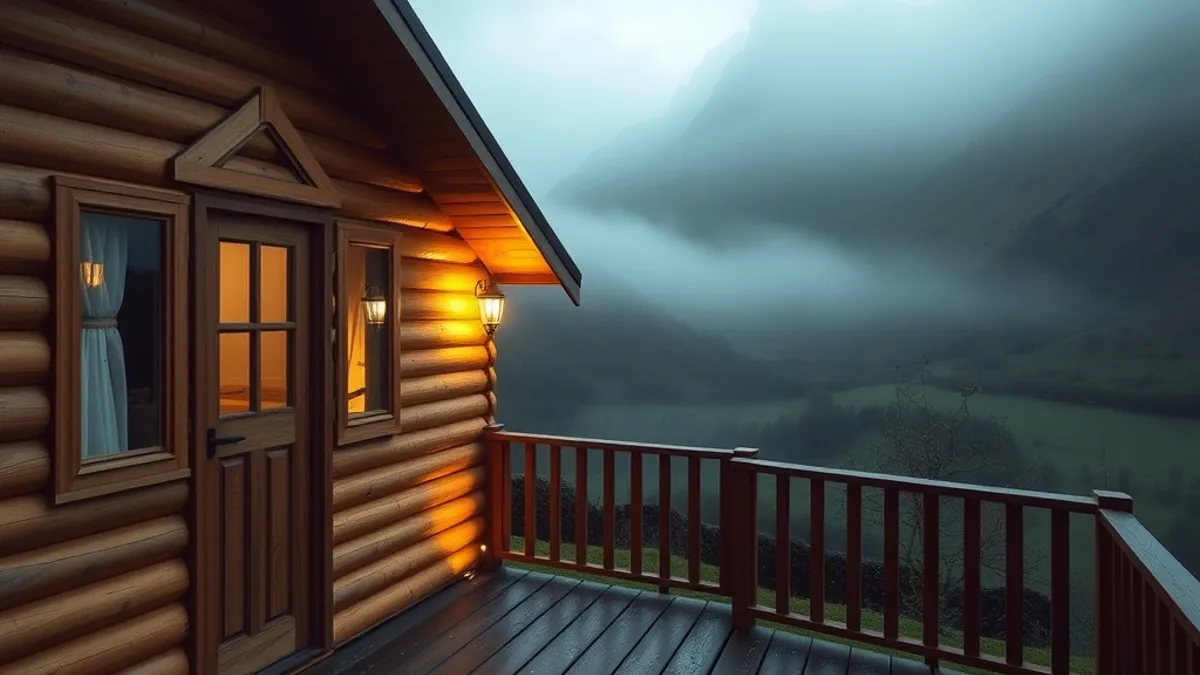
One practical note on site type: exposed mountain weather is hard on canvas. Wooden cabins and shepherd’s huts hold up noticeably better than domes when wind and rain sweep across the fells, and they usually come with proper insulation and a wood stove. If your dates fall outside the warmest months, favor solid structures over canvas.
Spring and Early Summer: April to June
Spring and early summer is when Welsh glamping starts to feel easy again. May and September are the sweet spots in Wales: long daylight, mild weather and rates below peak. May edges out April for comfort, and the hedgerows and woodland floors are at their most colorful. If you can travel mid-week, you’ll often have popular path sections almost to yourself.
April is a different proposition. It brings bluebell woodland sites at their best, carpets of blue under fresh leaves that make even a rainy walk worthwhile. But sea breezes keep coastal nights around 8-10°C, so a dome with good bedding and a heater matters more than it would inland. Pack warmer layers than the calendar suggests.
June is statistically the driest bet on the coast, with the best odds of clear walking days before the peak season crowds arrive. One caveat: peak pricing starts with the late May school holidays, so early June trips cost more than mid-May ones even though the weather is only marginally better.
- Book May weekends early. Even though rates sit below peak, the best coastal domes for May weekends often fill first, so treat them almost like peak-season bookings.
- Choose woodland over clifftop in April. Inland bluebell sites are more sheltered from the sea breeze, so evenings feel warmer than the coastal numbers suggest.
- Shift coastal trips to the first half of June. You get the driest odds on the coast while avoiding the busiest weeks of the school holiday period that begins in late May.
Late Summer and Autumn: July to October
July and August are when coastal glamping in Wales shines. The sea is at its warmest for swimming, evenings stretch late, and sites near the Pembrokeshire Coast Path fill with families making the most of the school holidays. The trade-off is price: expect the highest nightly rates of the year, especially for sea-view domes within walking distance of the cliff path.
September is the month I recommend to fellow walkers. The crowds thin once schools go back, the light turns softer and golden for photography, and the weather often stays mild well into the month. A cliff-top section of the Coast Path feels like a different experience when you can walk an hour without passing more than a handful of people.
October shifts the balance toward the mountains. A wooden cabin with a wood stove in Snowdonia or the Brecon Beacons makes a proper autumn retreat, with crisp mornings and log-fire evenings. Just pack properly: western Wales typically receives around 1,300-1,600 mm of rain a year, and October can deliver a fair share of it.
- Sea swims in July and August are warmest at sheltered bays rather than open cliff-top coves, so ask your host about the safest local swimming spots before you arrive.
- In September, sunset arrives noticeably earlier than in August, so plan Coast Path walks to finish back at your site before dark rather than relying on long evenings.
- October evenings in a mountain cabin are best spent with a book and a stove, so check whether the operator supplies the first basket of logs or expects you to buy your own.
- Shoulder-month rates in September and October typically sit below July-August prices, making a midweek autumn break one of the better-value ways to try a high-end site.
Booking Windows and Nightly Budgets
Good glamping sites in Wales are small, often with only a handful of units, so the best dates go quickly. For a coastal dome in peak season, aim to reserve 6-9 months ahead. Mountain sites give you a little more breathing room, with 3-6 months usually enough, though school-holiday weeks still move fast.
Budget-wise, expect £90-£250 per night for a dome, cabin or yurt for two. Coastal domes with sea views sit at the top of that range, while inland cabins and huts often come in lower. If a site quotes above the range, check exactly what is included before you commit.
The off-season between November and March offers the widest availability, and some operators discount heavily. The catch: a number of sites close entirely in January and February, so don’t assume your favorite year-round. Always check current rates and opening dates directly with the operator, as they change from year to year.
- Midweek nights are far easier to book than weekends in peak season, so if you can only manage 3-4 months ahead, target Tuesday to Thursday stays on the coast.
- Some operators hold a few units back for last-minute bookings, so it can pay to call even when the online calendar shows fully booked for your dates.
- Longer stays of a week or more are sometimes discounted, which can bring a top-of-the-range coastal dome closer to mid-range pricing per night.
- Deposits and cancellation terms vary widely between operators, so read them before booking far ahead, especially for trips planned 9 months out.
Packing and Site Checklist for Welsh Weather
Welsh weather doesn’t respect the calendar, and rain can arrive in any month, even in the middle of a dry-looking summer spell. When comparing sites, prioritize ones with covered outdoor space, a wood stove or a hot tub. A covered deck or a communal barn turns a wet afternoon into a non-event instead of a washout, and a stove makes an evening of drizzle genuinely cozy rather than something you endure. If you’re torn between two similar sites, the one with better wet-weather cover will usually give you a better trip.
Pack for the path, not the forecast. Waterproof layers and grippy footwear belong in your bag even on a July trip, because cliff-top and mountain sections can be slick after a shower. Quick-drying clothes beat jeans, and a small daypack with a spare layer makes coastal walking far more comfortable. A dry bag for your phone and a paper map are cheap insurance on sections where signal is patchy.
Provisions vary enormously between operators, so confirm the details before you book rather than discovering them on arrival.
- Ask whether fire pits or chimineas are allowed at your unit, and whether the operator supplies firewood or expects you to bring or buy your own.
- Check if bedding and towels are included, as some yurt and dome operators provide full linen while others expect you to bring a sleeping bag.
- Confirm cooking arrangements: some sites offer a shared kitchen or covered BBQ area, while others only provide a fire pit outside your unit.
- If you’re walking the Coast Path from your site, ask about parking for a second car or local transport links for linear walks rather than out-and-back routes.
- Ask about phone signal and Wi-Fi coverage, as remote coastal and mountain sites can have little of either, which matters if you need to check weather forecasts daily.
Choosing Your Season and Setting
So which is it: coast or mountains? Let the calendar decide for you. Coastal domes win in summer, when sea swims and long evenings make the clifftops shine, while mountain cabins win in autumn and winter, when a wood stove matters more than a sea view. If your dates are flexible, aim for May or September, which give the best mix of weather, price and quiet.
Then match the site type to the exposure. Canvas structures suit sheltered valleys; solid cabins are the safer bet on clifftops and fells, where Welsh weather shows its teeth. Get that pairing right and either setting delivers a trip worth remembering. If this helped you plan, leave a comment or share the article with a fellow traveler.