Glamping in Quebec looks completely different in June, October and January, and that is exactly where most first-timers go wrong. The same dome that offers long, bright evenings by a cool lake in June becomes a front-row seat to fiery fall color in early October, then a snowbound hideaway with a wood stove in January. Pick the wrong month and you might arrive to blackflies, closed sites or foliage that peaked a week before you got there.
Booking too late is the other common mistake. Foliage weekends and summer Saturdays sell out months in advance, and winter dome stays are limited to a small number of insulated, four-season units. This guide walks through what the different stay types actually offer, how the season map runs from late spring through early fall, when to time the fall foliage window, what changes in winter, which regions suit which trip length, and how to plan your booking windows, budget and packing list.
What Glamping in Quebec and Eastern Canada Actually Looks Like
Glamping in Quebec and Eastern Canada covers four main stay types, and knowing the difference helps you match the experience to your budget. Heated geodesic domes are the postcard version: curved panoramic windows, a proper bed and, at the better properties, a hot tub on the deck. Wooden micro-cabins and pods are compact but solid, often with big windows facing the water or the forest. Yurts offer round, canvas-sided spaces with a cozy feel, and ready-to-camp tents give you a canvas roof over a real bed.
The entry-level option: ready-to-camp
Quebec’s national park network has made glamping genuinely accessible through its ready-to-camp units. These come with beds, a small kitchen setup and a wood stove already in place, so you show up with clothes and food rather than camping gear. Rates usually run CAD 150-250 per night, which makes them one of the easiest ways to try the format without committing to a private property.
At the top end
Private luxury domes sit at the other end of the scale, typically CAD 300-400+ per night. Expect hot tubs, full kitchens, panoramic windows and often serious privacy on forested or waterfront lots. Eastern Canada also adds coastal variants you will not find inland: oceanside domes and oTENTik-style cabins in New Brunswick, Nova Scotia and Prince Edward Island, where you fall asleep to the sound of the sea instead of loons on a lake.
The Season Map: Late Spring Through Early Fall
The main season runs roughly mid-May to mid-October, but it is really three or four different trips depending on when you go. Mid-May to late June brings long daylight, empty trails and cool nights, which makes it a lovely window for lakeside domes: the water is glassy in the morning, the sites are quiet and you often get your pick of availability. Just remember that water temperatures are still bracing if you plan to swim.
Mid-June to early August is peak warmth, with the hottest daytime temperatures of the year, but it is also bug season. Mosquitoes and blackflies are a genuine factor in the forests, so site choice matters more than usual in this stretch. Late August to mid-September is arguably the sweet spot: warm days, far fewer insects and the widest availability outside holiday weekends.
From mid-October onward, most seasonal sites close or switch to limited winter operations, so always confirm opening dates before you book anything in the shoulder months.
- Pick breezy sites in bug season. Lakeside and coastal locations catch wind that keeps mosquitoes down, while sheltered inland forest sites can be far buggier during the same weeks.
- Watch holiday weekends. Long weekends in late August and early September book fastest; a midweek stay in the same period is often easier to find and cheaper.
- Confirm shoulder-season operations. Some domes and ready-to-camp units run year-round while their neighbors close in October, so two properties on the same lake can have very different calendars.
- Match activities to the window. Early season suits paddling and quiet hiking, late summer suits swimming and longer days on the trail, and September suits campfires and cooler evening walks.
Timing the Fall Foliage Window
Southern Quebec’s color peaks between late September and mid-October, and the timing shifts the further south or east you travel. That gradient is your planning tool: if you want the earliest color, go north; if you want to stretch the season, head toward the Maritimes.
Where color turns first
Charlevoix and the Laurentides turn early in the window, often showing strong color while southern areas are still mostly green. The Eastern Townships and the Maritimes hold color into mid-October, which makes them the better choice if your dates fall later in the season. A dome with a panoramic window or a deck facing a valley turns the whole stay into a viewing platform, which is why these properties are the most contested of the year.
Booking around the peak
Foliage weekends are the hardest dates of the year to book, so reserve 4-6 months ahead for dome stays with a view. Even then, nature does not follow a booking calendar: peak color can shift by a week either way depending on the year. Build a 2-3 day buffer around your dates rather than booking a single night, and check foliage reports in the weeks before your trip to fine-tune where to go.
Winter Glamping: What Changes From December to March
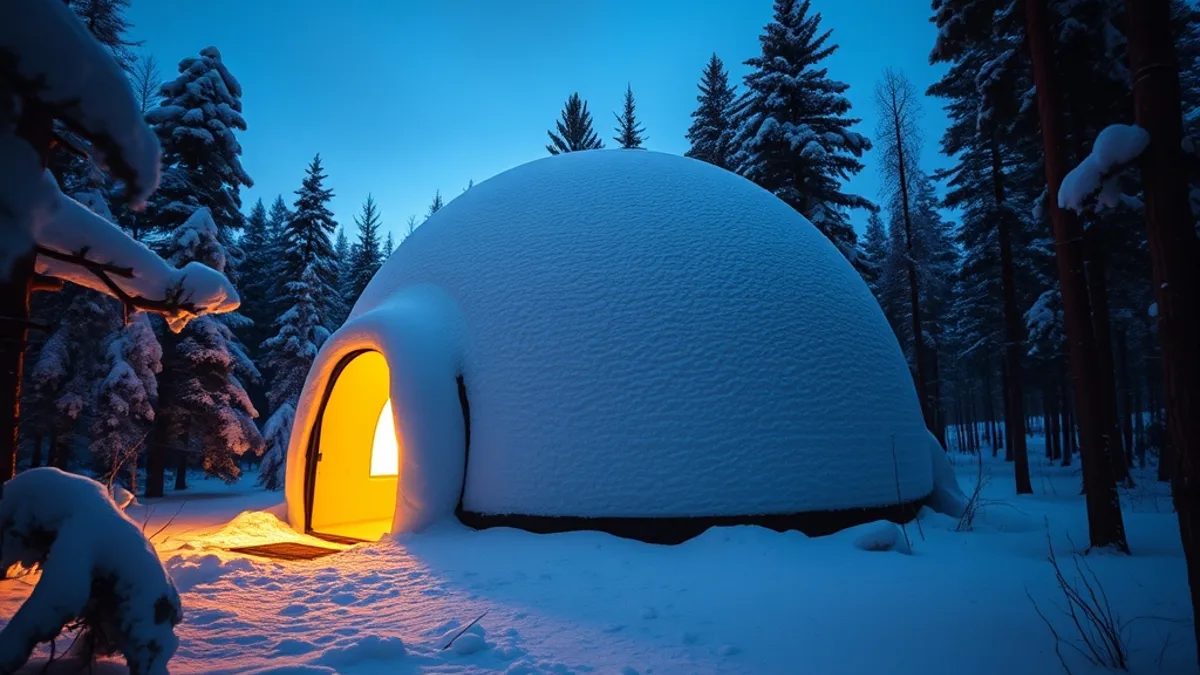
Winter changes the glamping equation completely. From December through March, only insulated, four-season units stay open, and they are usually domes or solid cabins rather than tents or yurts. Heating comes from wood stoves, propane systems or a combination of both, and many winter-focused properties add a private hot tub, which turns a cold-weather stay into something genuinely comfortable rather than simply survivable.
Daylight is the biggest adjustment for first-time winter guests. In December, the sun sets before 5 p.m., so a scenic drive that arrives at 4:30 means checking in almost in the dark. Plan your arrival for early afternoon, do your hiking or snowshoeing in the morning, and treat the long evenings as part of the appeal: cooking, reading by the stove and soaking in the hot tub under the stars.
There is one pleasant surprise: pricing. Winter rates often undercut the fall foliage peak, with heated domes commonly running CAD 250-400 per night. You get the same panoramic windows and wood-stove atmosphere for less money and far more availability.
- Ask about snow clearance on the final stretch. Some forest properties sit down private lanes that are plowed regularly, while others only clear a parking area near the main road, leaving a short walk with your bags.
- Check the heating backup plan. A good host will explain what happens if the wood stove goes out overnight, whether there is a thermostat-controlled propane heater, and how firewood is supplied.
- Confirm what winter gear is on site. Some units lend snowshoes, sleds for hauling luggage and extra blankets, which saves significant packing space.
- Verify winter tire requirements. Remote forest roads can require winter tires or 4WD, and rental car policies in Quebec differ on this, so check both before you book.
Where to Base Yourself: Regions and Drive Times
Quebec is a big province, and picking the right base matters more than picking the right dome. The Laurentides are the easiest entry point: about 1 hour from Montreal, which makes them perfect for a one- or two-night escape in a forest dome or a lakeside pod without burning a whole day on the road.
Charlevoix, northeast of Quebec City, is the region many travelers fall hardest for. It combines St. Lawrence river views, national parks and some of the most scenic dome sites in eastern Canada, often set on hillsides looking out over the water. It pairs naturally with a stop in Quebec City on the way up or back.
For longer trips, Gaspésie and the Saguenay Fjord deliver the wildest scenery: sea cliffs, fjord walls and small fishing villages. These are driving destinations, best tackled from late June to September when every road and attraction is open. If you prefer a gentler pace, the Eastern Townships offer wine-country cabins among vineyards and rolling hills. And if you have extra days, the Maritimes reward a slow coastal road trip, where oceanfront domes and cabins sit steps from the beach in Canada’s three easternmost provinces.
- Match the region to your flight. If you fly into Montreal, the Laurentides and Eastern Townships both work for short stays; Quebec City is the natural gateway for Charlevoix, roughly halfway into the drive.
- Think about how much driving you enjoy. The Gaspésie loop alone is a multi-day circuit, so committing to it means building your whole trip around the peninsula rather than treating it as a stop.
- Consider water access when choosing a dome. Lakeside sites in the Laurentides swim well in summer, while Charlevoix and Maritime properties trade swimming for dramatic coastal views.
- Look for similar forest-stay concepts elsewhere for inspiration. If the idea of small wooden retreats tucked into quiet woods appeals to you, it is worth reading about forest houses hidden in Latvian green stillness to see how the same formula works in Europe.
Booking Windows, Budgets and What to Pack
Glamping in Quebec books differently from hotels. The best units, especially domes with a view, are few in number and get snapped up early. Reserve summer weekends several months ahead, and push that lead time even further for foliage-season dates, which are the hardest of the year to secure. If your schedule allows, aim for midweek: stays from Monday to Thursday are often cheaper than the same unit on a weekend.
What you should expect to pay
Budget CAD 150-250 per night for yurts and ready-to-camp units, including Quebec’s national park ready-to-camp options, which are the most affordable entry point. Luxury domes with hot tubs and full kitchens typically run CAD 300-400+ per night. Prices vary by region and season, so treat these as planning ranges and check current rates when booking.
Packing for four very different seasons
Layers are non-negotiable in every season. Even in midsummer, nights drop to 8-12°C, and shoulder-season stays in May, September and October call for warm sleepwear, a fleece and reliable rain gear. For stays during peak bug season, pack bug spray and a head net, since insects near lakes and forests can be relentless at dawn and dusk.
Finally, confirm what is included before you pack the car. Some units come with bedding, towels and firewood; others expect you to bring sleeping bags or buy wood on site. A quick email to the host saves both trunk space and surprise fees.
Putting the Plan Together
Glamping in Quebec and Eastern Canada works in three windows: the mid-May to mid-October main season, the late September to mid-October foliage peak, and the December to March winter dome season. Picking the window first solves most of the planning puzzle, because a June lakeside dome, an October foliage cabin and a January wood-stove hideout are three very different trips. Match the region to your trip length, from the 1-hour Laurentides escape from Montreal to the multi-day Gaspésie and Maritimes routes.
Then book on the right lead time: 2-4 months ahead for summer weekends and 4-6 months for foliage dates, when the best units go first. Budget roughly CAD 150-400+ per night depending on whether you choose a ready-to-camp unit or a luxury dome with a hot tub. If this helped you plan your trip, leave a comment or share the article with a fellow traveler.