Most travelers arrive at a safari lodge with no idea how the day actually unfolds. Will you be rushed to check in? Do you head straight out on a drive, or is there time to unpack first? That uncertainty is exactly what this guide removes. A lodge arrival day follows a fairly predictable rhythm, and once you know it, everything from your flight timing to your packing choices gets easier.
Below is an hour-by-hour walkthrough from the gate to the first activity. We cover how to time your arrival, what check-in and the welcome briefing involve, how to use the lunch and downtime window, what to expect on your first afternoon game drive, and how the evening flows into the next morning. We also break down what an arrival day costs and how the season shapes the experience, then wrap up with the key takeaways for planning a smooth start.
Before You Arrive: Timing Your Lodge Arrival Day
The single biggest factor in a relaxed lodge arrival day is timing your flight or transfer correctly. Aim to land or reach the airstrip in the late morning so you comfortably make the 12:00 to 14:00 check-in window without rushing. Most lodges are 30 to 90 minutes from the nearest airstrip by road transfer, so confirm that transfer time when you book rather than guessing on arrival day. If your charter lands at 11:00 and the drive takes an hour, you will still walk in with time to spare.
When to book
Booking lead time matters as much as flight timing. For the June to October high season, plan to reserve your stay 3 to 6 months ahead, as the best guides and suites go first. Green-season stays are easier to secure, and 1 to 2 months out is often enough. Whenever you book, ask the lodge to confirm your road transfer arrangement in writing so there are no surprises at the airstrip.
How long to stay
Most travelers plan 2 to 4 nights, and 3 nights is the sweet spot. That gives you a full cycle of game drives, including both morning and afternoon outings, plus a buffer day in case weather or wildlife viewing shifts your plans. Arriving with a 3-night stay also means your first afternoon drive feels like a bonus rather than pressure to see everything at once.
Check-In and the Welcome at a Safari Lodge
The welcome at a safari lodge sets the tone for your whole stay, and it is usually far more relaxed than a hotel check-in. Expect a welcome drink the moment you step out of the vehicle, followed by a briefing that typically runs 15 to 30 minutes. This covers the practical essentials: meal times, drive schedules, and camp rules such as walking after dark or leaving your suite at night. Listen closely here, as the answers to most of your upcoming questions are delivered in this one conversation.
One of the nicest touches is what you do not have to do. Luggage is delivered to your suite while you complete registration, so there is no need to haul bags around or wait for a room key. Once the paperwork is done, head straight to lunch or settle onto the deck with your drink and let the camp do the rest.
Your guide and tracker
Most lodges assign a dedicated guide and tracker at check-in, and this team stays with you for the entire stay. Introduce yourself properly and mention your interests, whether that is birds, big cats or photography. A good guide will shape every drive around what you want to see, which is why lodges in places like Botswana are known for beautifully paced, personal safari experiences.
It also pays to build a little rapport early. Ask how long your guide has worked in the area and what animals have been moving through recently. Guides and trackers share information between vehicles, so a friendly relationship often means you hear about a leopard sighting before it is announced to the whole camp. Small gestures like these can quietly shape the quality of every drive that follows.
Lunch, Downtime and Settling Into Your Suite
By early afternoon, the pace slows down in the best way. A light lunch is typically served between 13:00 and 14:00, and on many properties this is the main sit-down meal before the afternoon drive. Think salads, cold plates and fresh bread rather than a heavy spread, since you will be climbing into an open vehicle in a few hours.
Making the most of the 14:00 to 15:30 window
Use the stretch from 14:00 to 15:30 to genuinely settle in. Suites are usually ready by early afternoon, so this is your chance to unpack, test the bed, and figure out where your charging points are. If your suite has a plunge pool, a quick dip is a classic arrival-day ritual, and a short siesta will serve you well when the wake-up knock comes before dawn the next morning.
This window is also the right moment to ask your host about the practical setup in your room. Check how the water system works, including whether drinking water is provided in bottles or refillable containers. If you brought camera gear or binoculars, ask about the best place to store and charge them, and whether the camp offers cleaning equipment or beanbags for vehicle photography. Sorting these details now means you are fully ready when the first drive is called.
Your First Afternoon Game Drive
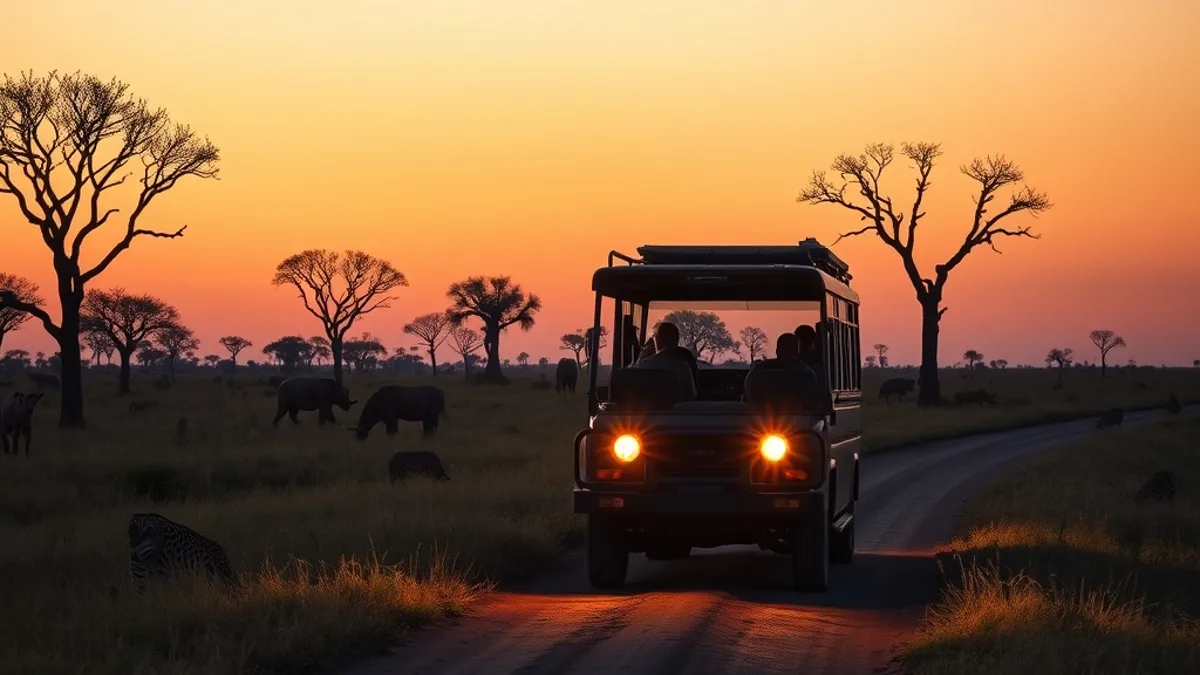
Your first afternoon game drive is the moment the whole arrival day has been building toward. Vehicles roll out between 15:30 and 16:00, when the heat has eased and animals begin moving again. You will usually spend about 3 hours out in the bush before returning, and the rhythm of the drive follows a familiar pattern at most lodges. Here is how it typically unfolds, step by step, so you know what to expect before you ever climb aboard.
- Boarding and seat allocation. Open-sided vehicles seat 6 to 9 guests, usually in three tiered rows. If photography is a priority, mention it at check-in and ask for a front seat, since those offer the clearest angle and the most legroom. Seats are generally rotated between drives, so do not worry if you miss out on the first afternoon.
- Setting off. Your guide and tracker head out from camp and start reading the landscape for fresh tracks. The first half hour often covers ground quickly before the real searching begins, and your guide may radio other vehicles to share information about recent movements.
- Tracking and sightings. Drives last about 3 hours, but the pace is dictated by what you find. Your tracker may cut the engine and follow a spoor line on foot signs, and your guide will position the vehicle for the best light and view. Expect plenty of stopping, quiet waiting and whispered conversation when a sighting is good.
- The sunset stop. Around sundown the vehicle pauses at a scenic spot for drinks and snacks. It is a tradition worth savoring, so bring a light layer because temperatures drop quickly once the sun goes.
- The return. You arrive back at camp by 19:00, leaving enough time to shower and change before dinner around 19:30 to 20:00.
A few practical tips make this first drive more comfortable. Dress in neutral colors, close the zippers on your camera bag before the vehicle moves, and keep your arms inside the vehicle at all times. Tell your guide what species you most hope to see, because a good guide will balance the whole vehicle’s wish list across the drive. Finally, keep your binoculars within easy reach rather than buried in your bag, since sightings can appear at any moment.
Evening Rhythm: Dinner, Firelight and the Next Morning
By the time you return from the afternoon drive, the camp has transformed. Lanterns are lit along the paths, the fire is being stacked in the boma, and the kitchen is finishing the evening’s menu. The rhythm from here is relaxed but runs on a schedule worth knowing.
Dinner around the fire
Dinner is commonly communal or boma-style, served around 19:30 to 20:00. Instead of a quiet table for two, you will often share a long table or fireside setting with other guests and sometimes your guide. This is the best part of the evening for many travelers: comparing sightings, hearing where the leopard was found, and picking up tips on what to ask for tomorrow. If you prefer privacy, mention it when booking, as some lodges can arrange a separate table.
Evenings end early by city standards. Most guests turn in soon after dinner, because the next morning starts with a wake-up knock between 05:30 and 06:00.
The morning routine
That knock comes with light pre-drive refreshments, usually coffee, tea and something small to eat, served in the main area before you board. You will head out in the dark with blankets or hot-water bottles if the season calls for them, and the drive lasts roughly 3 hours as the bush wakes up. Predators are often most active in these cool early hours, so it is a trade worth making.
You return to a full brunch around 10:00, which doubles as breakfast and lunch and carries you through the middle of the day. One full cycle, from the wake-up knock to that late-morning plate, is why a 3-night stay works so well.
What a Lodge Arrival Day Costs and How Season Shapes It
How much your arrival day costs depends less on the lodge’s brochure and more on when you arrive. The same suite, the same drives and the same meals can carry very different price tags depending on the season you choose.
High season versus green season
High season runs from June to October, when game viewing tends to be at its most reliable and skies stay clear. Rates in these months typically run 30 to 60 percent above green-season rates, and the best suites sell out first. Because demand is so strong, lodges reward early planners: the further ahead you lock in your dates, the better your chances of getting both the suite you want and a rate before the last-minute premium kicks in. If you are set on a specific camp for the dry months, treat it like a flight booking and reserve as early as your travel plans allow.
Green season trades some game density for lower rates and lusher scenery. Landscapes turn green and dramatic, many animals have young, and camps are quieter. Afternoon showers can interrupt a drive now and then, but photographers often prefer the light and the color. Because demand is softer, you can often arrange a green-season stay much closer to your travel dates, which makes it a good fit for spontaneous trips.
What the rate actually covers
Most safari lodges price on an all-inclusive basis that usually covers game drives, all meals and local drinks. That simplifies your budget considerably. The extras to plan for are mainly your road or air transfers to and from the lodge and gratuities for your guide and camp staff. Park or conservation fees, where they apply, are usually billed separately, so ask your lodge or operator to confirm the current amount before you travel. If you keep those line items in mind, the rate you were quoted is close to what you will actually spend.
Wrapping Up Your Lodge Arrival Day
So that’s an arrival day in full: a check-in window from 12:00 to 14:00, a relaxed lunch and time to unpack, then your first game drive heading out between 15:30 and 16:00. By the time dinner wraps up around 19:30, you’ve already been on safari for hours, and the 05:30 to 06:00 wake-up knock the next morning starts the cycle all over again. What feels unfamiliar at the gate becomes routine by evening.
The takeaway is simple: book 3 to 6 months ahead for high season, plan on 3 nights, and arrive in time for that early-afternoon check-in, and the whole day runs itself. The lodge team handles the rest, from luggage to guide assignments, leaving you free to settle in and enjoy the drive. If this walkthrough helped you picture your first afternoon, leave a comment or share it with a fellow traveler.