You want a night under open skies, but you’re stuck on a practical question: does a canvas tent with a real bed and a private bathroom fit your trip, or should you haul a sleeping bag and a cooler into the woods? That’s the glamping vs camping debate, and the right answer depends on your budget, your group and how much effort you actually want to spend on your getaway.
This guide walks through both options side by side. We’ll compare what a glamping stay includes with what classic camping demands from you, break down the real nightly costs, and cover when to go and how far ahead you need to book. Then we’ll help you match each style to your trip — whether that’s a family weekend, a hiking loop or a special celebration — and finish with a clear bottom line so you can choose with confidence.
Glamping vs Camping: The Core Differences at a Glance
Glamping means pre-set accommodation: safari tents, yurts, cabins or domes that are already standing when you arrive. You walk in to find real beds with linens, lighting, and often a private bathroom. There’s nothing to pitch, nothing to inflate and no cooler to pack.
Traditional camping is the opposite arrangement. You bring your own tent, sleeping bag and cooking gear, pitch everything on arrival, and pack it all down when you leave. The site gives you a patch of ground — the rest is on you.
Where the money goes
The financial trade is straightforward. Glamping bundles comfort into the price, so you pay a premium that covers the structure, the furniture and the setup someone else did for you. Camping trades your effort for a much lower nightly rate: you do the work, and the campsite charges you only for the spot.
So the choice is really about how much comfort and convenience you want versus how much you enjoy self-sufficiency. If cooking on a stove and waking up in your own tent sounds like part of the fun, camping wins. If you’d rather spend your weekend hiking than wrestling with tent poles, glamping earns its price tag.
What a Glamping Stay Actually Includes
Step inside a typical glamping tent, yurt or dome and you’ll find a proper bed with real mattresses and linens, lighting, and heating or cooling for the season. Many units also have an en-suite bathroom, while other properties place a private bathroom a short walk away. Either way, you’re not heading to a shared shower block.
Most tents and domes sleep 2-4 guests, which makes them a good fit for couples or small families. Keep in mind that many properties enforce a 2-night minimum on weekends, so a spontaneous Saturday night is rarely possible.
Beyond the basics, extras vary a lot from one property to the next. Some of the more common upgrades include:
- Wood-fired hot tubs — often shared between units or bookable by the hour, and they take an hour or more to heat.
- Breakfast baskets — typically delivered to your terrace in the morning, sometimes with local produce for an extra charge.
- Fire pits with seating — usually with firewood available to buy on site, since bringing your own is often not allowed.
- Terrace seating — a deck or veranda with chairs, which effectively doubles your living space in good weather.
Because inclusions differ so widely, check the listing carefully before booking. Towels, a kitchenette and Wi-Fi are far from universal — some properties supply all three, others none. A quick message to the host saves surprises at check-in.
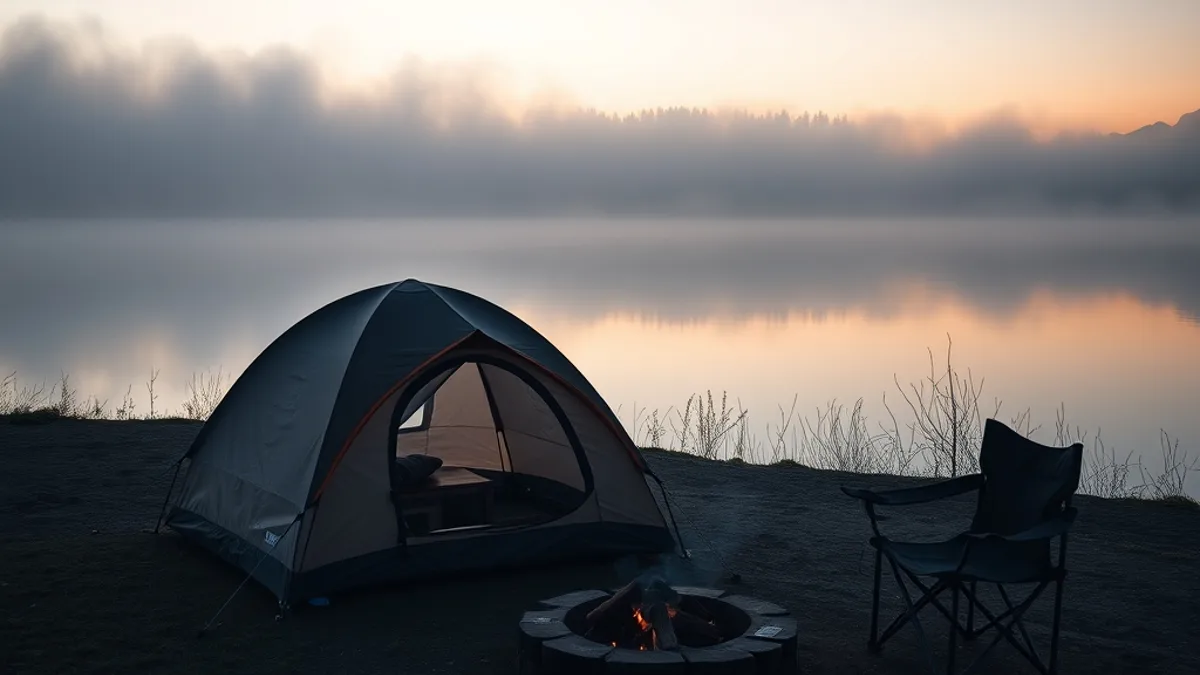
What Classic Camping Demands From You
Classic camping starts at home with a gear checklist: a tent, a sleeping bag rated for the season you’re traveling in, a sleeping pad, a stove and a cooler. Forget any one of these and the trip gets uncomfortable fast, so experienced campers build their packing around this core kit and add from there.
The money side is friendlier. A basic campsite typically runs about $15-$50 per night. If you’re starting from zero, expect a one-time gear investment of roughly $200-$600 for decent entry-level equipment — and that kit, cared for, lasts years of trips.
The effort you sign up for
Be honest with yourself about the workload. Arriving means finding your spot, pitching the tent and organizing the kitchen; leaving means everything in reverse. Weather-proofing is a real task — staking guy lines, putting on a rain fly and keeping gear dry during a storm. Cooking means planning meals that work on a single stove and washing dishes in a basin or at a communal sink, because there’s no kitchen behind the canvas.
What you get in return
The reward is flexibility. With your home on your back or in your trunk, you can move locations mid-trip, hike in further than any vehicle can go, and camp far from developed areas where glamping sites simply don’t exist. For travelers who value independence, that freedom is the whole point.
Costs Compared: What You Really Pay Per Night
The price gap between these two styles is wide. Glamping typically runs at boutique hotel rates for a tent with a view, with the exact cost depending on location, season and amenities. Camping, by comparison, costs a fraction of that for a basic site, which is why a camping trip rarely strains a travel budget.
That difference adds up fast. A family camping for a week might spend less on accommodation than a couple spends on a single glamping weekend. If your trip is activity-heavy — guided kayaking, park tours, dining out — camping’s low nightly rate frees up money for the things you’ll actually remember.
Before you compare the two on price alone, look at the full cost picture. Glamping often carries extras that don’t appear in the headline rate, while camping shifts costs to gear you buy once and reuse for years.
- Cleaning and service fees: many glamping properties add a flat cleaning or turnover fee per booking, which matters more on a one- or two-night stay than on a week-long one.
- Minimum stays: weekend bookings often require a two-night minimum, so a quick getaway can cost double what the nightly rate suggests.
- Seasonal pricing: the same tent can cost noticeably more in midsummer than in the shoulder months, sometimes by a third or more.
- Upfront gear costs: if you’re starting from zero, a basic tent, sleeping bags, pads, stove and cooler add up to a one-time investment that pays off across many trips — check current prices before you buy.
- Consumables: camping adds small recurring costs like fuel canisters, ice for the cooler and firewood, usually a modest amount per trip.
Put simply, a three-night glamping weekend can easily cost as much as a full week of camping. Neither is a bad deal — they’re just buying very different things.
When to Go and How Far Ahead to Book
Timing matters for both styles, but glamping punishes late planners more. Peak season for most glamping sites runs June through September, when rates are highest and the best units — the ones with the private hot tub or the best view — go first. If you want a summer weekend, book two to six months ahead. Popular properties can be fully booked for July by early spring.
Campsites also fill up, but the window is shorter. Reserve popular sites one to three months ahead, and move faster for lakeside and coastal spots in July and August, which are often the first to disappear. Some campgrounds release sites on a rolling basis, so a last-minute midweek spot is still possible if you’re flexible.
The shoulder-season advantage
If your dates are flexible, aim for the edges of the season. May, late September and October bring milder prices and quieter sites for both glamping and camping. Weather is usually still pleasant in many regions, wildlife is active, and you’ll share trails and fire pits with far fewer people.
Shoulder-season weekdays are the easiest bookings of all. Glamping sites that require a two-night minimum on summer weekends often relax that rule midweek, and campgrounds that turn people away in August may have empty loops on a Tuesday in June. Check cancellation policies either way — weather in the shoulder months can be less predictable, and a flexible booking protects you.
How to Choose the Right Style for Your Trip
The right choice depends less on the destination and more on your group, your budget and how you like to spend a morning. Glamping removes the logistics: no packing a car full of gear, no pitching a tent in the dark, no guessing whether the kids’ sleeping bags are warm enough. Camping rewards self-sufficiency with freedom and a much lower bill.
Most glamping sites sit within a one-to-three-hour drive of a major city, which makes them ideal for a car-based weekend — arrive Friday evening, sleep in a real bed, and be home by Sunday lunch. Camping suits travelers who want to go further: hike into a backcountry site, move between campgrounds, or base themselves somewhere remote for a week. Neither style is better in the abstract; the best answer depends on who’s coming along and what you want the trip to feel like.
- Traveling with young children: glamping gives you a proper bed, heating and usually a private bathroom, which makes nap times, bedtime routines and rainy afternoons far easier to manage.
- Special occasions: anniversaries, birthdays and proposals land better in a dome with string lights and a wood-fired hot tub than at a picnic table.
- Moving between locations: if your plan involves hiking in or changing sites, camping wins — you can’t easily repack a glamping tent’s furniture, but a tent and stove go wherever you do.
- Tight budgets: a basic campsite costs a fraction of a glamping stay, which leaves room in the budget for longer trips, rental cars or paid activities.
- Testing the waters: many regions offer both styles within a short drive, so you can book one night of each on the same trip and see which one your group actually enjoys.
If you’re genuinely unsure, that last option is the most useful one. A single night in each style will tell you more than any comparison chart. Whichever you pick, match the trip to the people: a couple celebrating something will value comfort, while a group of friends with their own gear may prefer the flexibility of moving whenever they like.
The Bottom Line on Glamping vs Camping
Both styles put you under open skies — the difference is what you trade. Glamping swaps $150-$500 per night for a real bed, a bathroom and zero setup, while camping trades comfort for $15-$50 nights and full independence. Neither is the better choice on its own; it comes down to your group, your budget and how much roughing it you genuinely enjoy.
Whichever way you lean, book early: reserve glamping 2-6 months ahead for summer weekends, and popular campsites 1-3 months ahead. If you still can’t decide, a short trip in each style usually settles the question fast. Have a favorite camping or glamping memory, or a tip for first-timers? Leave a comment below or share this article with someone planning their next night outdoors.