You’ve probably been there: you book a hotel that lists a “fitness center,” pack your workout clothes with genuine intentions, and arrive to find a single treadmill wedged into a converted closet with no space to stretch. Hotel gyms vary enormously, and the difference between a usable setup and a disappointing one rarely shows up in the booking description.
This guide breaks down exactly how to judge a property’s fitness room before you commit. We’ll cover what equipment a good hotel gym actually needs, how opening hours differ between midscale hotels, luxury properties and resorts, and why towel and water service is a surprisingly reliable signal of quality. You’ll also learn how to match the gym to your training style, how to verify the setup through reviews and direct questions before booking, and how a strong fitness room fits into a genuinely great stay. By the end, you’ll know which details matter and which listing photos to trust.
What Equipment a Good Hotel Gym Actually Needs
The minimum usable setup for most travelers comes down to three things: at least one treadmill, an adjustable bench and a dumbbell rack that goes up to 50 lb (25 kg). With those three pieces you can run, do presses, rows, squats with dumbbells and most accessory work. Strip any one of them out and your options shrink fast, especially for strength training.
Full-service hotel gyms typically stock 5 to 50 lb (2.5 to 25 kg) dumbbells and add cable machines, a pull-up bar and sometimes a Smith machine or a squat rack. That range covers everything from warm-up light work to serious pressing and rowing, and a cable column opens up face pulls, triceps work and rotational exercises that dumbbells handle poorly.
The “fitness corner” trap
Some listings use vague phrases like “fitness corner” or “exercise room.” Read those carefully, because they often mean a stationary bike and a yoga mat squeezed into roughly 15 square meters. That’s enough for a stretch or a spin, but not for a real session.
The best way to check is the property’s own photos. Zoom in on the dumbbell rack and count the pairs. If the free weights top out at 5 to 20 lb, the gym only suits light sessions, no matter how polished the room looks in the wide shot.
How Hotel Gym Hours Differ by Property Type
Hours matter as much as equipment, because a perfectly stocked gym you can’t enter at 5:30 am is useless for your schedule. The good news is that most properties fall into predictable patterns based on their category, so you can usually guess what to expect before you even ask.
Standard midscale hotels typically run their fitness rooms from 6:00 am to 10:00 pm, which covers most workout windows: an early session before breakfast, a midday break or an evening session after dinner. Luxury and business hotels increasingly go further, offering 24-hour access to the fitness room through a keycard, so guests on odd schedules or different time zones can train whenever they like. Resort gyms often open later, around 7:00 am, because staff unlock and service the space each morning rather than leaving it open unattended.
That said, patterns aren’t guarantees, and a few situations deserve extra caution:
- Early flight departures: if you like to train before a 6:00 am airport run, a 6:00 am opening may be too late, so look for a property with keycard access or confirm the exact unlock time.
- Late arrivals: red-eye landings can put you at the hotel after 10:00 pm, when a standard gym has already closed and staffed properties won’t reopen it for you.
- Holiday and maintenance closures: some properties close the fitness room temporarily for deep cleaning or equipment servicing, which no listing usually mentions.
If your training window is tight, confirm hours before booking rather than after check-in. One short email saves you from a wasted week of hotel-hopping to find a treadmill.
Towel and Water Service: Small Details That Signal Quality
Towel and water service sounds like a minor detail, but it’s one of the most honest signals of how well a hotel manages its fitness space. Anyone can install a treadmill; keeping the room stocked, clean and comfortable every day takes actual attention.
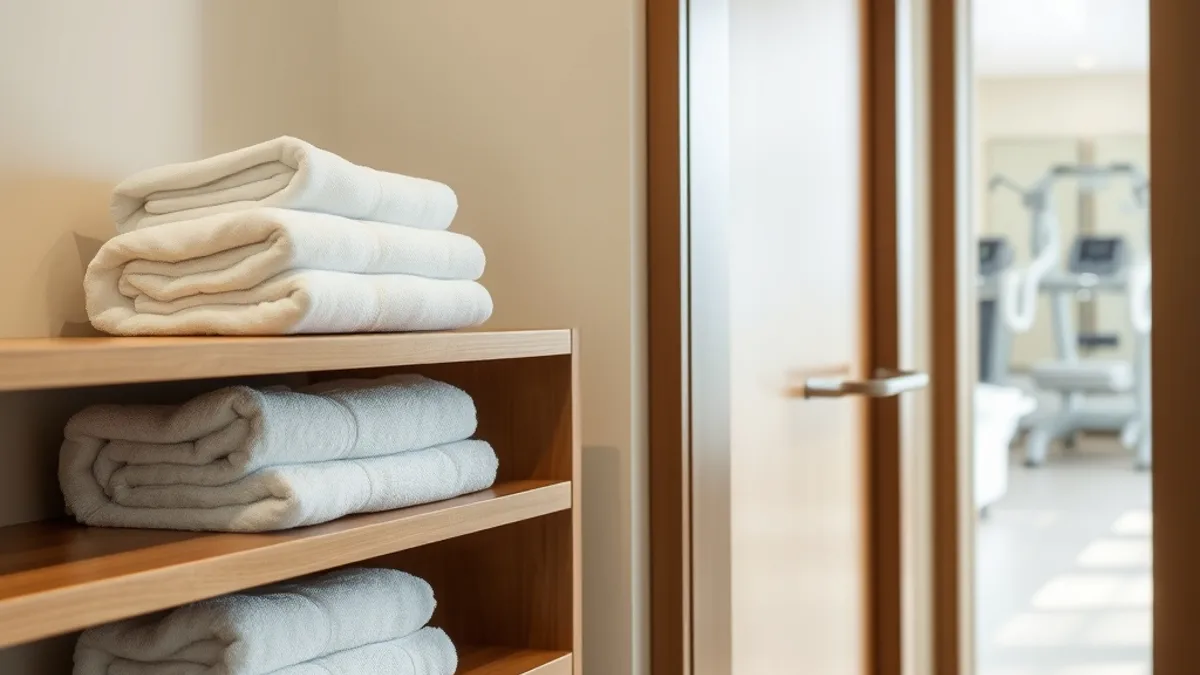
Midscale and full-service hotels almost always stock a towel rack or a small cooler with chilled bottles of water near the entrance. You grab what you need on the way in, and housekeeping restocks through the day. It’s a small touch that makes a morning session far smoother, especially in warm climates or after a sweaty interval session.
When you’ll need to ask
Select-service properties handle things differently. Many keep no supplies in the gym itself and expect you to request towels at the front desk, which means planning an extra stop before your workout. It’s not a dealbreaker, but it’s worth knowing so you don’t show up at 6:00 am expecting a stack of fresh towels that isn’t there.
Look at the combination of details when you judge a room. Fresh towels, sanitizing wipes for the machines and a proper water station together usually reflect a well-run fitness space, because they show someone checks the room regularly. Conversely, empty dispensers and no wipes suggest the gym gets little day-to-day care, no matter how new the equipment looks.
At the budget end, expectations should drop sharply. Hostel and guesthouse “gyms” rarely include any towel service at all, so pack your own travel towel and a refillable bottle. It’s one of the lightest additions to your bag and removes the most common frustration with budget fitness rooms.
Matching the Gym to Your Training Style
The best way to judge a hotel gym is not by how big it is, but by whether it matches what you actually do in a workout. A huge room with two treadmills and a stack of light dumbbells is useless to a lifter, while a compact setup with one good treadmill can be perfect for a runner. Before you book, sort properties by your training style rather than by star rating.
Runners are the easiest to please. One decent treadmill in good repair covers the need, but hours matter more than equipment: if you run before 7:00 am, confirm the fitness room is actually open and staffed, or favor hotels that let guests swipe into the gym on their own. Strength travelers have the harder search. Filter listings for free weights above 25 lb (12.5 kg), and check photos for a bench or rack, because a wall of 5 to 20 lb dumbbells will not sustain a real session.
Casual movers have the most flexibility. A small fitness corner is fine if the hotel makes up for it with a pool, a scenic walking area or a safe running loop nearby. Business travelers benefit most from 24-hour access close to the room floor, since workouts happen whenever a meeting gap appears.
- Runners: check treadmill belt condition in guest photos, since a slipping or worn belt can end a training block mid-trip.
- Strength travelers: look for a pull-up bar or cable machine in addition to dumbbells, as these open up back and accessory work when weights run light.
- Casual movers: ask whether the pool is heated or indoor, since an outdoor pool in the wrong season removes the compensation entirely.
- Business travelers: confirm the gym is on your floor or one elevator ride away, because a 24-hour gym two floors down gets used far more often than one across the property.
How to Verify a Hotel Gym Before You Book
Listings overstate hotel gyms more often than almost any other amenity. A “fully equipped fitness center” can turn out to be little more than a single exercise machine and a rolled-up mat in a converted storage room, so it pays to verify before your card is charged. The good news is that a careful check takes about fifteen minutes, and most of it can be done from your couch while you compare rates anyway.
- Search recent guest reviews. Use the words “gym” or “fitness” in the review filter on booking sites. Complaints about broken treadmills, missing dumbbells or rooms that double as storage show up here long before they show up in photos. Pay attention to how recently those reviews were posted, since management changes and renovations can improve or ruin a fitness room within a year.
- Email or call the property. Ask about equipment, hours and towel service in the same message, and keep the reply. A specific answer, such as “dumbbells to 50 lb and a bench,” tells you far more than “yes, we have a gym.” Vague or evasive replies are themselves useful information.
- Study the listing photos. Look past staged wide shots and check floor space, mirror placement and ventilation. Mirrors that face equipment, windows or visible air conditioning suggest a space someone actually maintains, while dim corner shots usually mean the hotel is hiding something.
- Plan a backup. If the hotel gym looks inadequate, search for day-pass gyms within 1 to 2 km of the property. Many cities have commercial chains or local studios that sell single visits, and a short walk beats a skipped workout.
Do this check once and it becomes a habit that takes minutes. The travelers who skip it are the ones writing the frustrated reviews you will later read, and the difference between them and you is simply one email sent before booking. Fifteen minutes of verification protects weeks of training consistency on the road.
Where a Great Gym Fits Into a Great Stay
There is a particular pleasure in finishing a workout at 7:00 am in a quiet coastal town, opening the blinds, and seeing the water before breakfast. A strong fitness room pairs naturally with calm, scenic destinations, where mornings are unhurried and the gym is empty. In busy city centers, the same equipment competes with every other guest’s schedule; in a quieter setting, it feels like a private training room with a view.
Coastal and lakeside stays
Coastal and lakeside luxury properties often get this combination right. They tend to offer both a well-equipped gym and a pool, and the early morning light over the water makes an early session something to look forward to rather than a chore. When comparing these properties, look at the gym photos with the same care you give the pool photos, since the two amenities are not always equally maintained.
Longer trips reward the extra check
On a weekend away, a weak gym is easy to forgive. On trips of a week or more, it matters whether your routine survives, because routines are what keep travel from feeling like a pause on your normal life. Choosing a property for both comfort and workout quality, rather than one or the other, means you come home feeling like yourself. The extra fifteen minutes of verification before booking is what makes that possible, and the payoff compounds every morning you train.
The Bottom Line on Hotel Gyms
So does a hotel gym actually support your routine, or is it just a treadmill in a converted closet? The answer comes down to three things: equipment range, hours and towel service. A “fitness center” listing alone tells you almost nothing, since properties with the same label can differ wildly in what they offer.
Verify all three details before you book, because photos and listings often overstate the setup. Then think about how you actually train, whether that means early treadmill miles, heavy free weights or just a quick stretch between meetings, and pick a property that fits those habits. Get this right, and travel never has to derail your routine. If this helped you plan your next trip, leave a comment or share the article with a fellow traveler.