You want a cold drink at midnight, but every hotel brand seems to handle ice and vending differently — here’s how they actually compare. Some properties put a free ice machine on every guest floor, others expect you to call room service and wait, and a surprising number have no ice at all unless you ask at the front desk. Vending is just as inconsistent, ranging from cheap snack machines to minibars where a bottle of water costs more than a sandwich.
This guide walks through how hotel ice machines and vending policies differ across the major categories: US midscale and economy chains, upscale and luxury brands, European boutique and historic properties, Asian business hotels, and resorts both all-inclusive and not. You’ll also find practical tips for checking ice and vending access before you book, so a midnight craving never turns into a frustrating hallway hunt. Let’s break down what each brand type actually offers.
Why Hotel Ice Machines Vary So Much Between Brands
The biggest split in hotel ice machines comes down to brand positioning. US midscale and economy chains have standardized the free self-serve model for decades: you walk down the hall with your bucket, fill up at a machine on most guest floors, and head back to your room. It’s cheap, fast, and predictable, which is exactly why these brands keep it.
Upscale and luxury properties take the opposite approach. Many skip hallway machines entirely, partly for aesthetics and partly because they’d rather control the guest experience. Instead, you call room service, and a staff member typically delivers ice to your door within 10-20 minutes. It feels more polished, but it’s slower if you just want to chill a bottle of water.
The European gap
European boutique and historic properties frequently have no ice machine at all. Ice is often treated as a front desk courtesy, if it’s available at all, and in some smaller inns you may get a puzzled look just for asking. If cold drinks matter to you, this is the category where you’ll need the most planning.
Vending Machine Policies at Major Hotel Categories
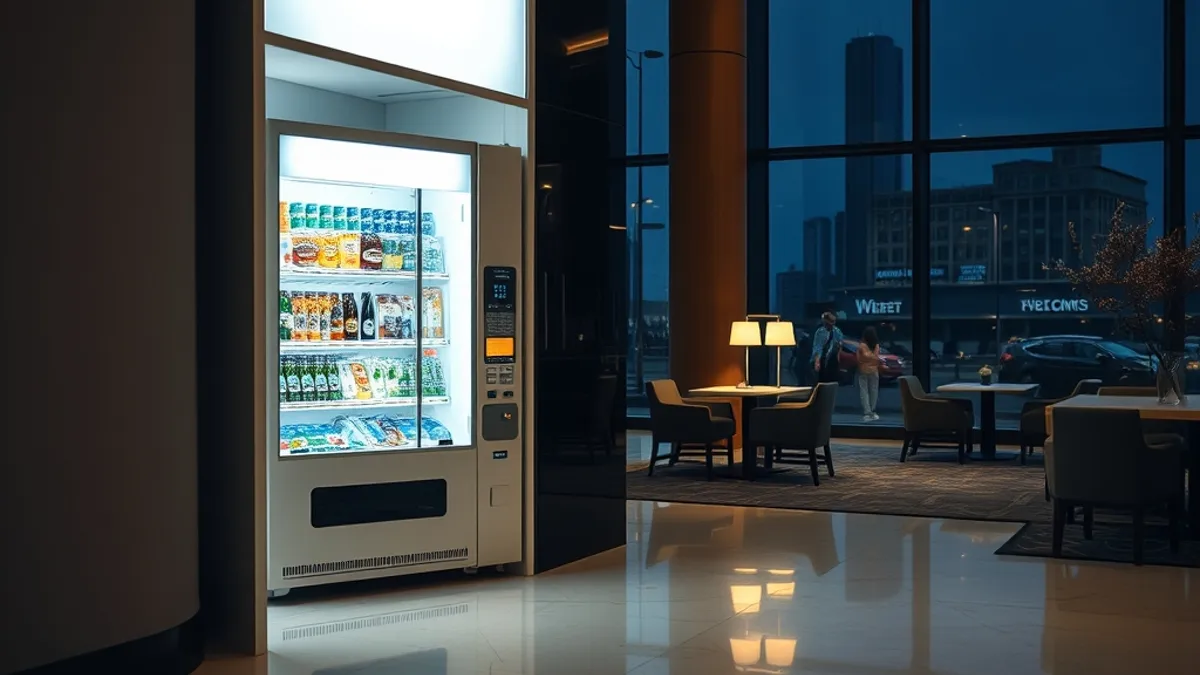
Vending policies track closely with a hotel’s price point, so it pays to know what to expect before you arrive. US midscale and economy brands place drink and snack machines on select floors, and pricing is typically reasonable — expect roughly $1.50-$4 per item. That’s not free, but it sits close to convenience-store pricing, which is why these machines get heavy use from families and road-trippers who would rather grab a soda downstairs than pay a delivery fee or drive somewhere late at night.
Resort brands often drop vending altogether and push guests toward the minibar instead. That’s where costs jump: bottled water alone can run $3-$7, and the markup on everything else in the fridge is usually similar. All-inclusive resorts work differently again, bundling vending-style snacks and non-alcoholic drinks into the room rate so you never see a per-item charge — a setup that makes it much easier to keep the family hydrated without doing math at the fridge door.
A few practical points worth sorting out at check-in:
- Restocking rules vary: some resorts check the minibar daily and charge for anything removed, while others only bill items you actually consume, so it pays to ask at check-in.
- Minibar vs. vending placement: resorts that skip vending often keep a small shop or market near the lobby, where prices typically fall between vending and minibar rates.
- All-inclusive fine print: the bundled rate usually covers non-alcoholic drinks and packaged snacks, but premium brand-name items and minibar restocks can still carry surcharges at some properties.
Ice and Vending Culture in European and Boutique Hotels
If you’re used to American-style self-serve, European and boutique hotels will require a small mindset shift. Smaller inns and independent properties often treat ice as a front desk courtesy rather than a machine service. You ask a staff member, they fetch a bucket or a bag from the kitchen or bar, and there’s usually no charge — but there’s also no guarantee, especially late at night when the desk may be lightly staffed or closed.
Why the machines are missing
Historic buildings frequently lack the plumbing and space for guest-floor ice machines. A centuries-old inn converted from a townhouse or farmhouse simply doesn’t have the water lines, drainage, or spare closets that a purpose-built US chain hotel does. Adding an ice machine to every floor can mean serious renovation work, so most owners skip it and handle requests manually.
The practical fix is simple: plan to ask staff instead of hunting for a machine. If you know you’ll want ice — for a cooler on a road trip, for example — mention it at check-in so the kitchen can prepare. And if ice is genuinely important to your stay, confirm before booking rather than assuming a machine exists somewhere in the building.
How Asian Business Hotels Handle Ice, Vending and Guest Floors
If you have ever wandered a Japanese or Korean business hotel late at night looking for a cold drink, you have probably noticed something American hotels rarely offer: a dedicated service floor. Many of these properties, especially the business-oriented chains popular with domestic travelers, cluster their vending machines, ice maker and guest laundry equipment together on one floor. You take the elevator up once and handle everything in a single stop.
The practical effect is bigger than it sounds. Instead of calling the front desk and waiting, you simply ride up, buy a drink from the vending machine, scoop ice from the machine beside it, and head back to your room. Late-night needs are solved without a phone call, a language barrier or a delivery fee.
Vending Prices That Put Minibars to Shame
Here is where Asian business hotels genuinely shine. Vending prices often undercut Western hotel minibars by a wide margin. A canned coffee, bottled tea or soft drink from a hallway machine typically costs about what you would pay at a neighborhood convenience store, not the marked-up resort rate you might expect inside a hotel. The machines are restocked regularly and are usually reliable, since local guests use them heavily too.
For travelers accustomed to American-style free ice on every floor, the one adjustment is location. Ice is rarely on your own hallway; it is on that service floor, often alongside the laundry room. Check the hotel directory card in your room or ask at check-in which floor holds the machines. Once you know, it becomes one of the most convenient setups in the hotel world.
Resort and All-Inclusive Ice and Drink Policies
Resort drink policies split into two very different worlds, and knowing which one you are in changes your whole approach to staying hydrated. At all-inclusive properties, ice and non-alcoholic drinks are part of the deal. Bar staff will happily fill a cooler or pitcher for you when asked, and you can order soft drinks, juices and water without ever glancing at a price list. The whole point of the model is that you stop counting.
Non-inclusive resorts are another story entirely. Bottled water from the minibar or a vending machine can cost several dollars a bottle, and that adds up fast in hot climates where you are drinking far more than usual. If you are watching your budget, the humble ice machine becomes your best friend: fill your room’s ice bucket, buy one bottle, and keep refilling it with tap water and ice where the water is safe to drink, or use the ice to chill drinks you picked up yourself at a nearby store. Coastal destinations, from beach towns in Mexico to Marbella hotels with private poolside calm, each handle this differently, so it pays to know the rules before you arrive.
Why Poolside Ice Access Varies So Much
Self-serve ice around the pool is not universal, and the reasons are practical rather than stingy:
- Liability concerns: Wet ice bins near slick pool decks create slip hazards, so some resorts keep ice behind the bar and hand it out on request instead of leaving open scoops by the water.
- Waste control: Resorts that let guests fill unlimited coolers free of charge often see buckets abandoned half-melted around the deck, so staff may portion ice at the bar to keep consumption and costs in check.
- Health rules: In some regions, local food-safety codes treat open ice for drinks more strictly than enclosed machines, which is why you may see staff-only ice access at the pool but a normal guest machine upstairs.
- Service positioning: Luxury properties sometimes limit self-serve deliberately, preferring that attendants deliver ice to your lounger as part of the polished experience you are paying for.
The workaround is simple: ask. Most resorts that restrict poolside self-serve will still bring ice to your chair or fill a small cooler if you request it. If ice matters to your trip, whether for a beach cooler or a sore knee, confirm the policy at check-in rather than assuming the machine by the elevator applies everywhere on the property.
How to Check Ice and Vending Access Before You Book
Ice sounds like a trivial detail until you are the one walking three floors at midnight with a melting cooler, or managing a medical need that depends on reliable cold packs. A few minutes of checking before you book can save you that frustration, and the process takes less time than choosing a room category. Here is how to do it in three quick steps.
- Scan recent guest reviews. Search reviews from the past several months for the phrases “ice machine” and “vending.” Recent mentions tell you whether the machines actually exist and, just as useful, whether they were working. A hotel that had an ice machine in 2019 but removed it during a renovation will only show up in newer reviews, so sort reviews by date before you read.
- Message the property directly. Use the contact form or messaging feature on the booking platform and ask one clear question: is ice self-serve, delivered by room service, or available only at the front desk? The answer shapes your expectations, especially outside the US where desk-only ice is common. Save the reply, because it gives you something to reference if the reality on arrival does not match what staff promised.
- Confirm access hours if your need is serious. Travelers packing coolers for day trips, or those who need ice for medications or injury care, should ask specifically whether machines run overnight. Some properties switch ice machines off at night or lock vending areas, and a desk-only policy means a phone call or a walk to the lobby at 2 a.m. If that sounds like a dealbreaker, ask about it before you pay, not after.
Doing this homework matters most at boutique hotels, historic properties and resorts, where ice access is the least standardized. Large US midscale chains rarely surprise you, but anywhere else, the difference between “self-serve down the hall” and “ask at the desk” is worth one short message before you confirm your reservation. Five minutes of typing now beats an inconvenient trip to the lobby later.
The Bottom Line on Hotel Ice Machines by Brand
So how do the brands actually compare? US midscale chains favor free self-serve ice machines on guest floors, luxury brands favor room service delivery, and European boutiques often offer neither — you’ll need to ask the front desk. Vending follows a similar spread, from $1.50-$4 snacks and drinks in midscale hotels to $3-$7 bottled water at resorts.
The fix is simple: one quick question before you book tells you whether ice is self-serve, delivered or desk-only. That small step saves a frustrating midnight walk down a hallway that may not have a machine at all. If this helped you plan a trip, leave a comment or share the article with a fellow traveler.